

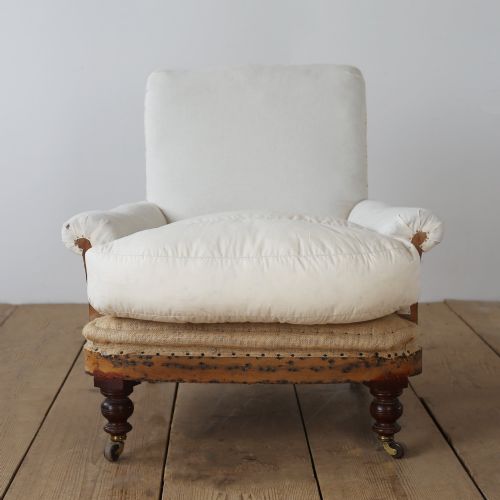
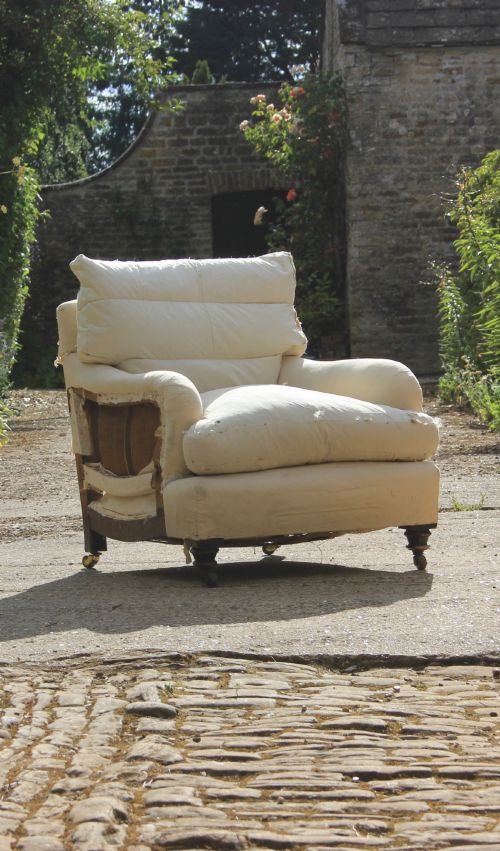

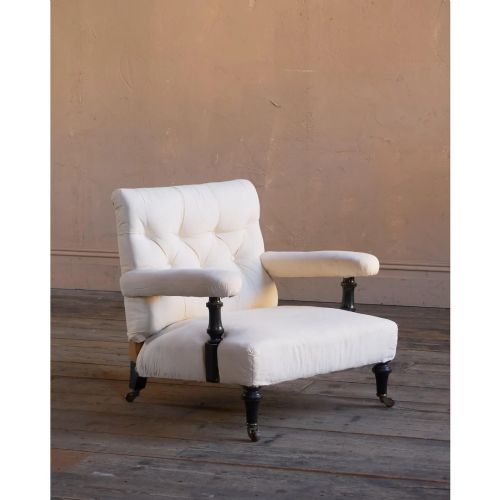
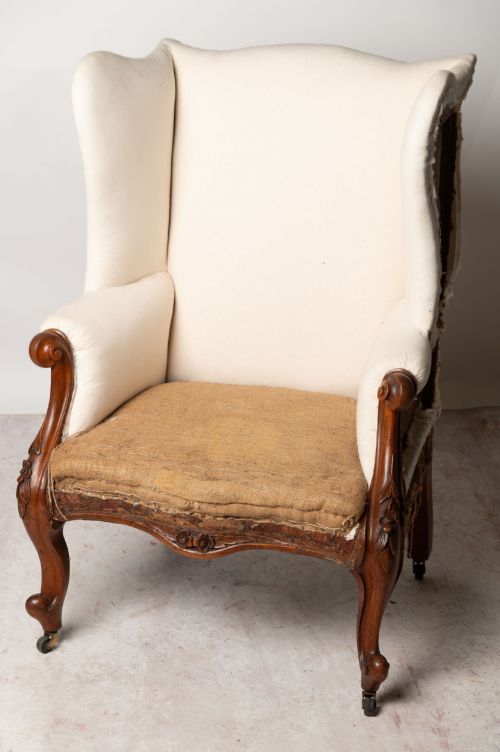
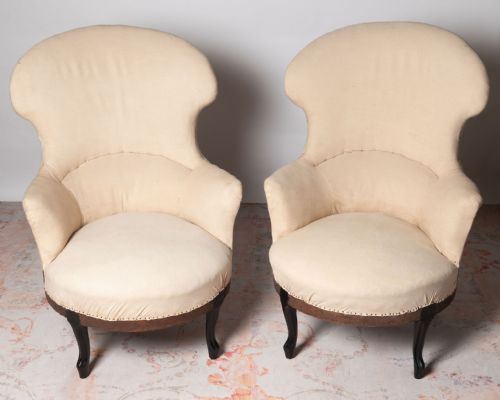
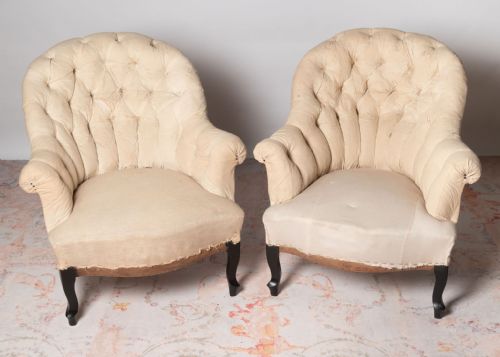
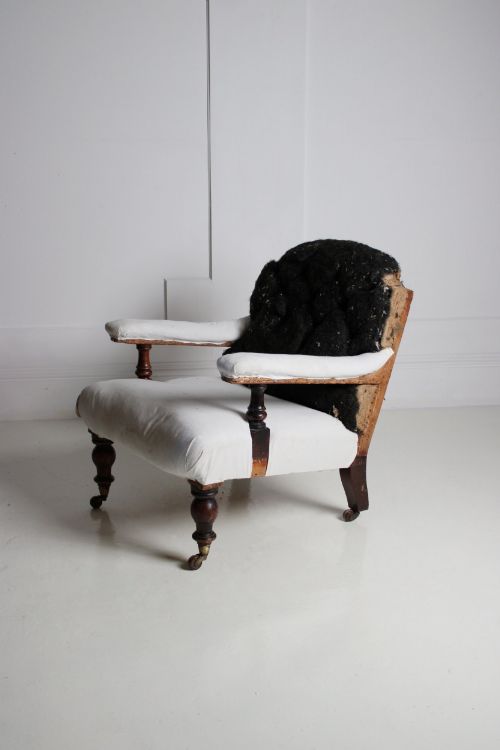
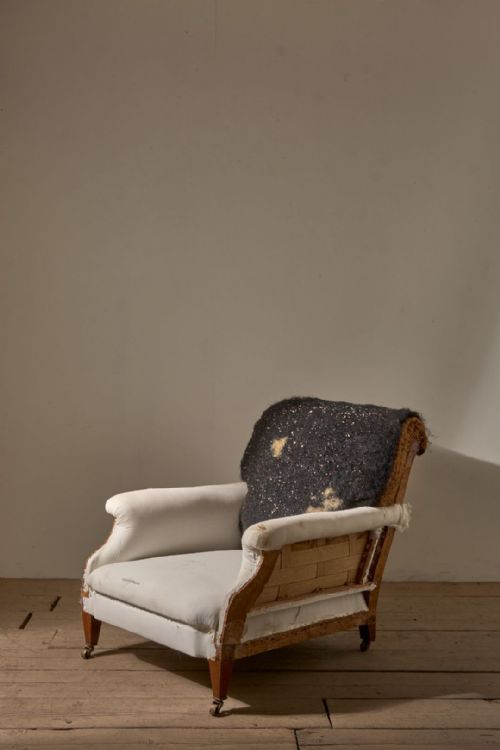
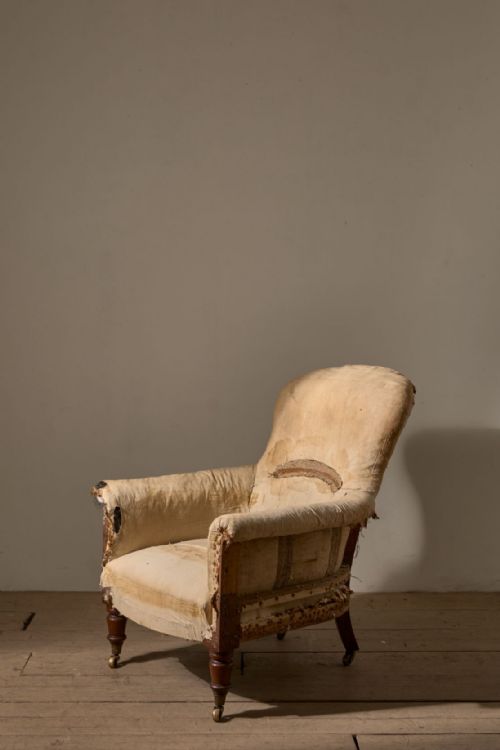
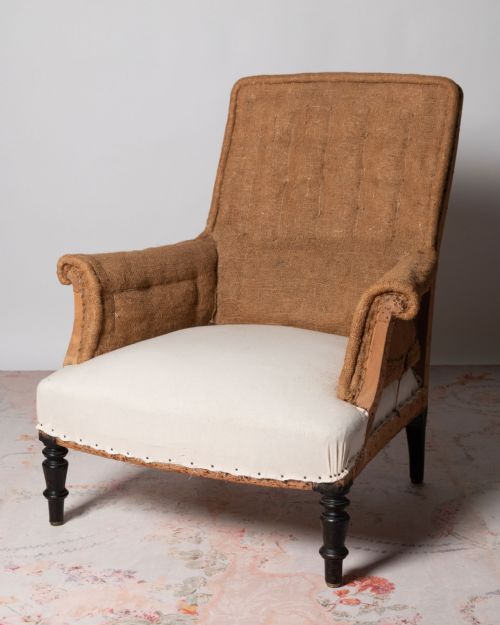
Calico Fireside Chair
A calico fireside chair provides deep-seated comfort ready for your choice of top cover, bringing period character directly to your hearth.
Calico Fireside Chair
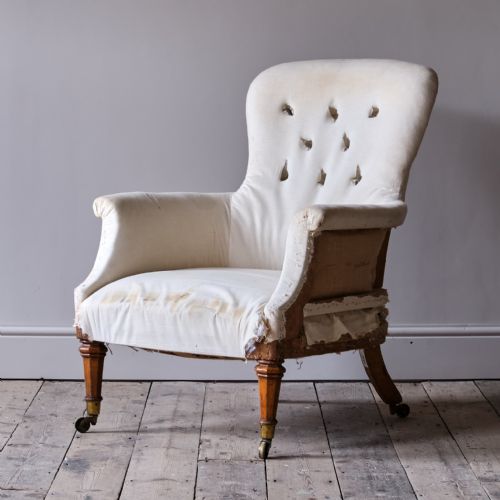
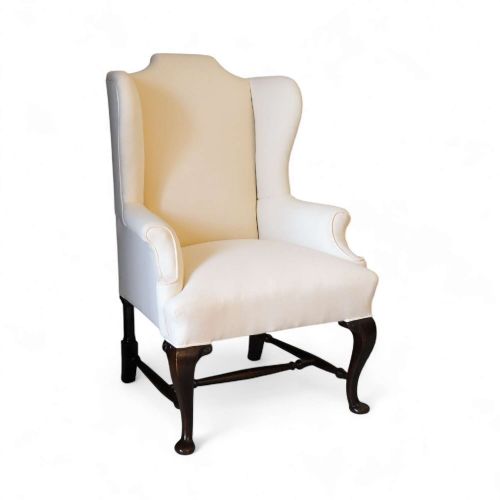
A calico fireside chair is an upholstered seating form prepared in plain cotton fabric, awaiting final textile selection. When you search for a calico fireside chair, you encounter sturdy armchairs and wing chairs designed for domestic warmth and fireside repose.
The selections span the eighteenth, nineteenth, and early twentieth centuries, encompassing English country house styles, French Napoleon III designs, and Georgian wingbacks. Victorian iterations frequently feature deep seats, scroll backs, and low profiles suited to warming oneself by an open grate.
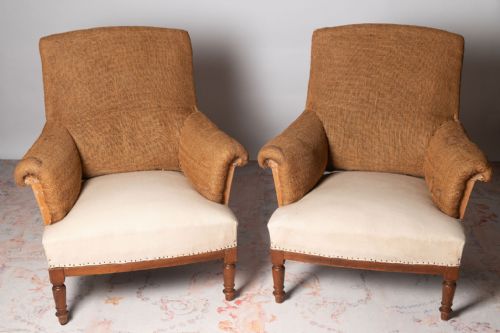
Makers and workshops of the period, including Howard and Sons, Gillows, and Trollope and Sons, constructed these frames for rigorous daily use. Many examples arrive stripped and re-webbed in calico or hessian, offering a structural foundation for bespoke upholstery.
Materials and construction
Frames rely on sturdy timbers such as mahogany, walnut, beech, and general hardwood timber to withstand decades of heavy use. Cabinet makers shaped these woods into substantial legs, scrolled arms, and supportive wingback structures.
Traditional upholstery builds up layers of supportive materials beneath the outer skin. Iron and brass hardware, webbing, and hessian provide the essential internal tension before the final calico layer is tacked tightly into place.
Listings feature woods including mahogany, walnut, beech, and general timber, paired with calico, hessian, and brass details.
Assessing quality and craftsmanship
Quality rests primarily in the integrity of the underlying wooden frame and the precision of the joinery. A superior armchair displays robust timber construction that remains firm under weight, avoiding any looseness in the joints.
The nuance of proportion and the grace of the carved or turned wooden legs distinguish workshop output from standard production. Well-balanced scroll arms and correct lumbar angles indicate superior nineteenth-century craftsmanship.
Howard and Sons·SF Cullen·Mellier and Co·Gillows·Trollope and Sons·Sopwith·William Birch
The Calico Fireside Chair Glossary
- Calico
- A plain-woven cotton fabric used as a tight foundational upholstery layer on antique frames. It holds the stuffing securely in place before decorative top fabric is applied.
- Hessian
- A coarse woven fabric, typically made from jute fibres, utilised for internal webbing and support beneath the upholstery layers. It provides breathable strength within the seat base.
- Wingback
- An armchair featuring protective side panels designed to shield the occupant from draughts near a fireplace. These wings extend from the arms up to the back of the head.
- Napoleon III
- A nineteenth-century French revival style known for comfortable, sprung upholstery and decorative turned woodwork. Pieces from this period often emphasise deep cushioning and scroll backs.
- Slipper chair
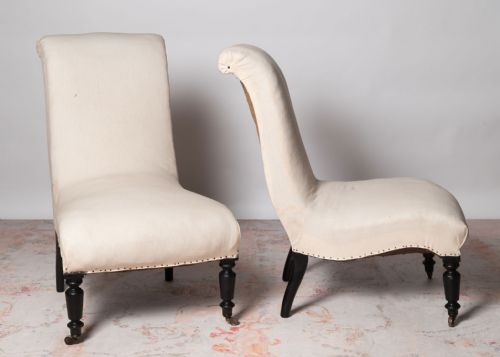
- A low-seated upholstered chair originally designed for bedrooms to assist with putting on footwear. Their compact profile translates well into intimate fireside settings.
Calico Fireside Chair: Frequently Asked Questions
What is a calico fireside chair?
A calico fireside chair is a traditional armchair or wing chair upholstered in plain cotton calico rather than a decorative top fabric. This preparation stage allows buyers to inspect the underlying frame and apply their own choice of textile.
These pieces range from eighteenth-century wingbacks to Victorian deep-seated club chairs designed for comfort near the hearth.
Why are these chairs upholstered in calico?
Upholsterers finish a piece in calico to stabilise the internal stuffing, springs, and hessian layers before the final decorative fabric is fitted. It acts as a clean, durable lining that demonstrates the structural integrity of the upholstery.
Leaving the chair in calico enables the new owner to select a top fabric that matches their specific interior design scheme.
How do I identify a Victorian armchair?
Victorian armchairs often feature robust wooden frames made of mahogany, walnut, or beech, paired with generous padding and deep seats. Common stylistic markers include scroll backs, buttoning, and turned wooden legs fitted with brass castors.
Many of these nineteenth-century pieces reflect the comfortable proportions associated with English country house seating.
Are French Napoleon III chairs comfortable?
French Napoleon III chairs prioritise soft, sprung upholstery designed for relaxed lounging. Their low profiles and generous cushioning make them particularly well-suited for sitting close to a fireplace.
These mid-nineteenth-century chairs frequently incorporate graceful scrollwork and elegant wooden framing beneath their calico upholstery.