


Dark Wood Club Chair
A dark wood club chair brings immediate substance to a room, offering deep seating and rich timber frames that anchor an interior.
Dark Wood Club Chair
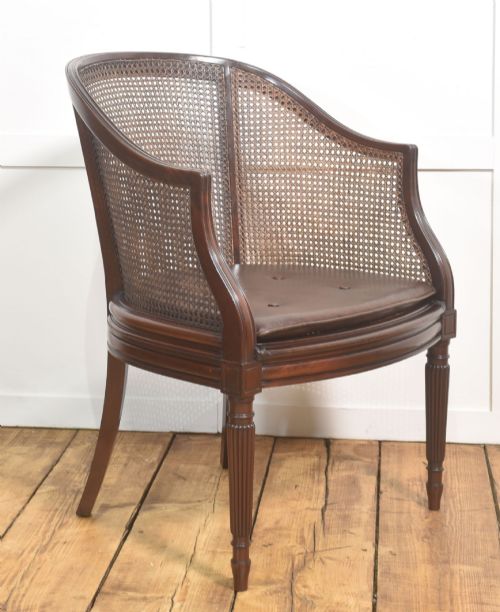
A dark wood club chair encompasses sturdy seating options built from robust timbers, designed for comfort and enduring daily use. When exploring a dark wood club chair, you encounter forms ranging from low library seats to capacious tub armchairs.
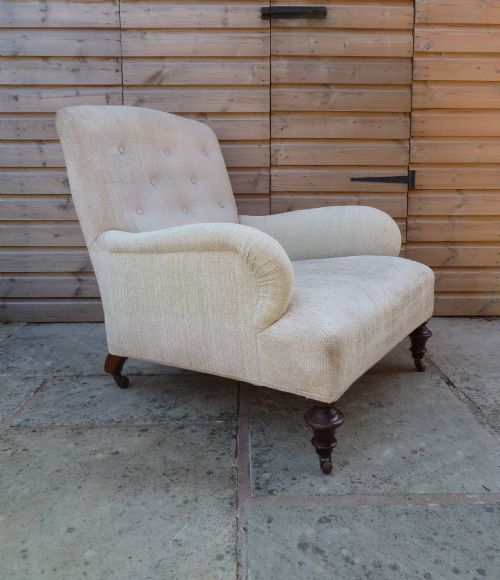
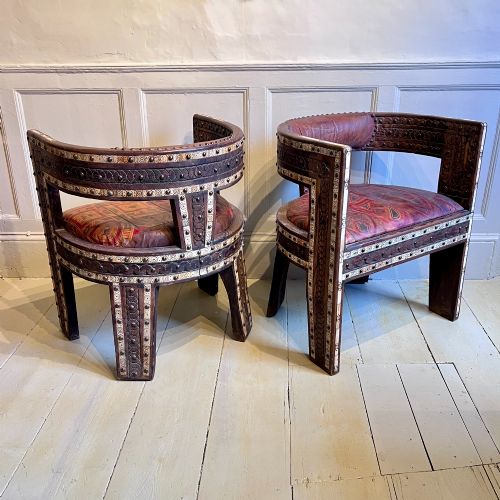
The selections span distinct eras, including Victorian specimens, Edwardian models, and pieces influenced by French Louis XVI style or English Country House aesthetics. You will frequently find styles such as the Howard style armchair, alongside North African hardwood examples and traditional smoker's bow chairs.
Makers and workshops of the nineteenth and early twentieth centuries shaped these armchairs to serve studies, libraries, and drawing rooms. Each piece reflects the functional requirements of its period while maintaining a commanding presence through its dark timber frame.
How they were made
Cabinet makers utilised dense timbers such as mahogany, ash, elm, and general hardwoods to construct the principal frames of these armchairs. These woods provided the necessary structural integrity to support deep seating and frequent use over generations.
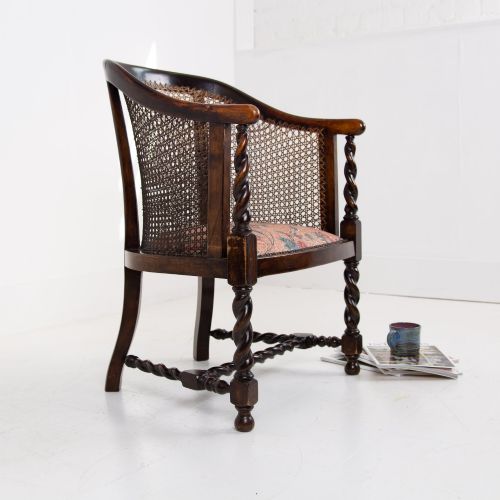
Upholstery methods incorporated traditional leather and fabric coverings, frequently complemented by detailed elements like brass tacking. Caning was also employed on specific frames, such as Edwardian tub armchairs, to introduce lighter textural contrast against the dark timber.
Listings feature hardwood, mahogany, ash, and elm structures, paired with leather, cane, and fabric upholstery across the nineteenth and early twentieth centuries.
What varies in quality
The caliber of a dark wood club chair rests largely on the fidelity of its timber selection and the rigour of its joinery. Superior examples demonstrate tight, precise construction in the frame, allowing the hardwood to age with stability and grace.
Attention to detail in secondary materials, from the grade of the leather or cane to the subtlety of carved revival details, distinguishes standard utilitarian seating from finer parlor and library pieces.
Howard and Sons·Mellier and Co
The Dark Wood Club Chair Glossary
- Tub armchair
- An upholstered seat featuring a continuous curved back and arms that form a protective enclosure. This form provides a compact yet deeply supportive sit.
- Bergere
- A French-style enclosed armchair with upholstered sides and a exposed wooden frame. It typically includes a loose seat cushion resting over a webbed base.
- Smoker's bow
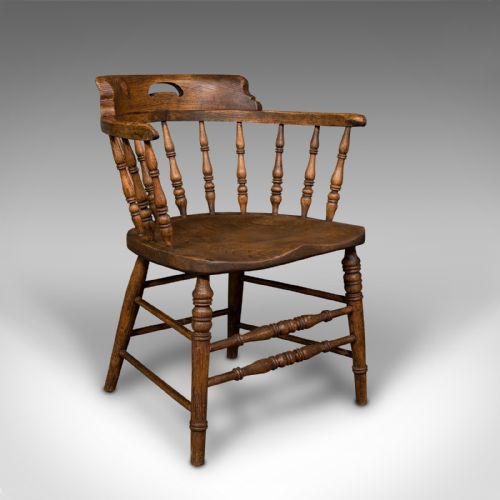
- A sturdy, low-backed wooden armchair originating in nineteenth-century England. It utilises a continuous bentwood rail supported by turned spindles.
- Ebonised
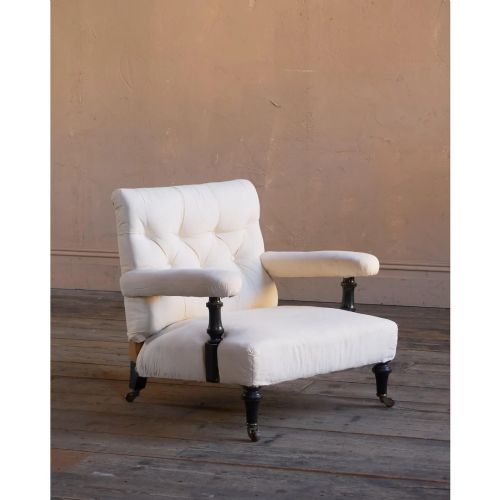
- Timber treated with a finishing process to give it the deep, dark appearance of ebony. This treatment was common on nineteenth-century library and reception chairs.
Dark Wood Club Chair: Frequently Asked Questions
What defines a club chair?
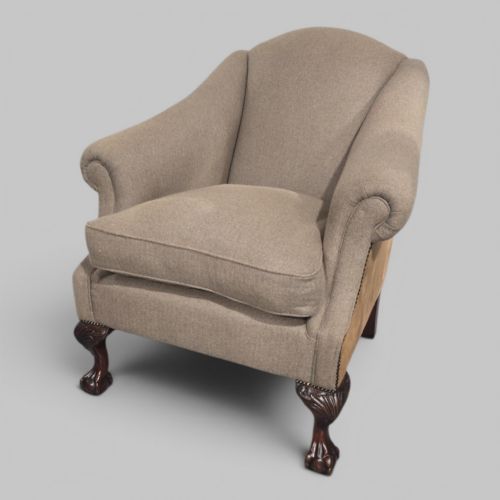
A club chair is a heavily upholstered, deep-seated armchair designed for relaxation in studies, libraries, or smoking rooms. The form prioritises comfort through supportive cushioning and a solid frame.
Historically, these chairs served as substantial reading seats where occupants could sit comfortably for extended periods. Their robust construction ensured they withstood daily domestic use.
How do I identify a Victorian armchair?
Victorian armchairs are typically identified by their heavy timber frames, dense hardwood construction, and period-specific upholstery details. They often feature stylistic nods to earlier eras, such as Jacobean or Chippendale revivals.
Examining the underframe, timber grain, and fastening methods helps confirm nineteenth-century origins. Makers of this era favoured durable materials like mahogany, ash, and leather.
Where should I place a dark wood armchair?
These armchairs suit spaces that benefit from grounding elements, such as studies, home libraries, or spacious sitting rooms. Their dark timber frames pair well with traditional bookcases, rugs, and leather-topped desks.
Because of their visual weight, they work effectively as standalone statement pieces or paired with matching settees and smaller companion chairs.
Are cane seats durable?
Caning on Edwardian and antique armchairs offers a flexible, breathable seating surface that adds textural lightness to dark wood frames. While resilient when treated with care, older caning requires gentle handling to prevent snapping.
Many pieces from this era retain their original woven panels, while others feature expertly renewed seating designed to match historical specifications.