




Calfskin Leather Books
Calfskin leather antique books are bound volumes offering tactile history and literary heritage, spanning centuries of craftsmanship.
Calfskin Leather Books
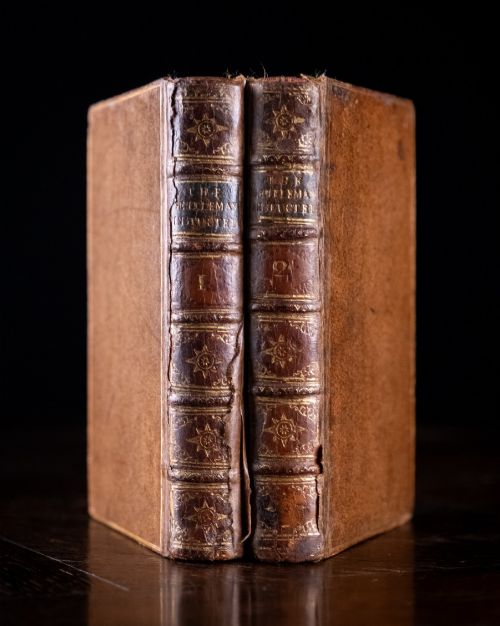
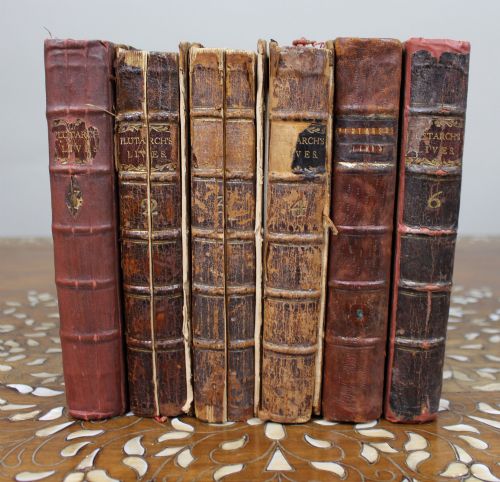
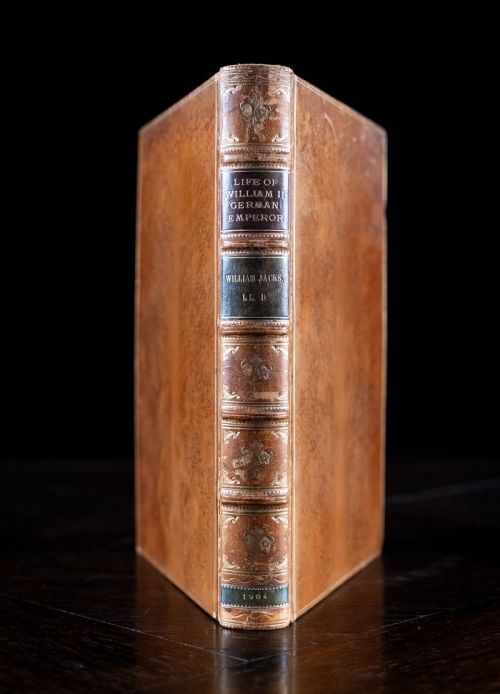
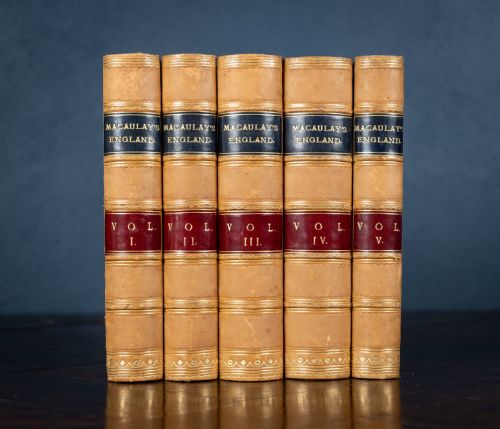
Calfskin leather antique books encompass volumes created from the eighteenth century through the early twentieth century, presented as single editions or extensive multi-volume sets. When exploring calfskin leather antique books on this page, readers encounter works covering history, literature, biography, and specialised subjects.
Evaluating Quality and Execution
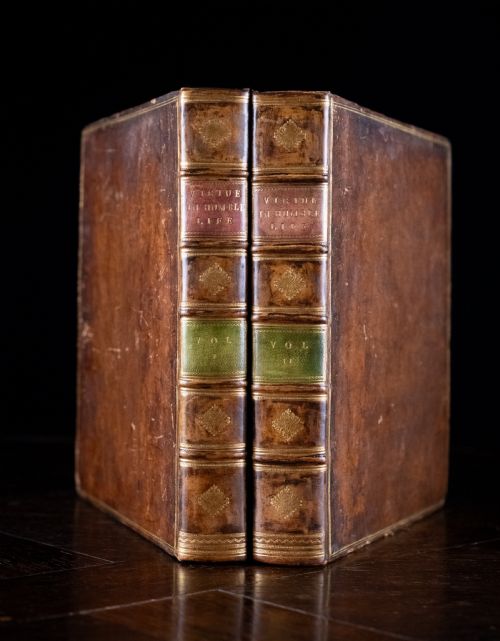
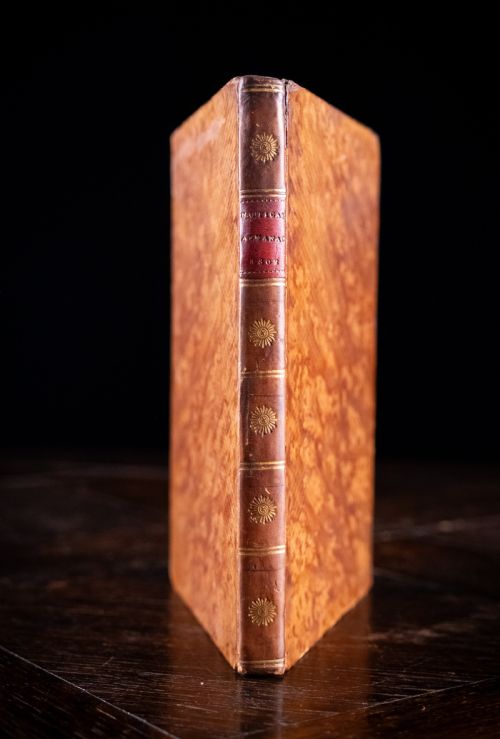
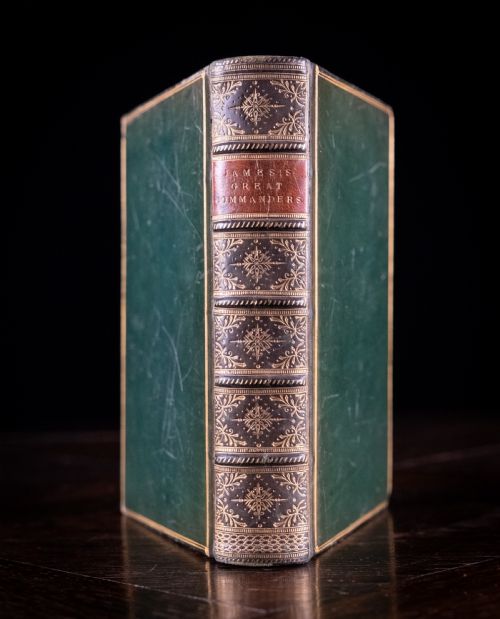
Quality in these volumes rests on the precision of the binding execution, the clarity of the gilt tooling, and the preservation of the original calfskin leather. Superior examples display crisp lettering, intact gold leaf details, and structurally sound hinges that secure the text block.
The distinction between standard printings and exceptional library sets depends on the completeness of multi-volume runs and the preservation of internal marbled paper and paper leaves. Editions produced by established publishers or featuring detailed artistic tooling command greater attention from collectors.
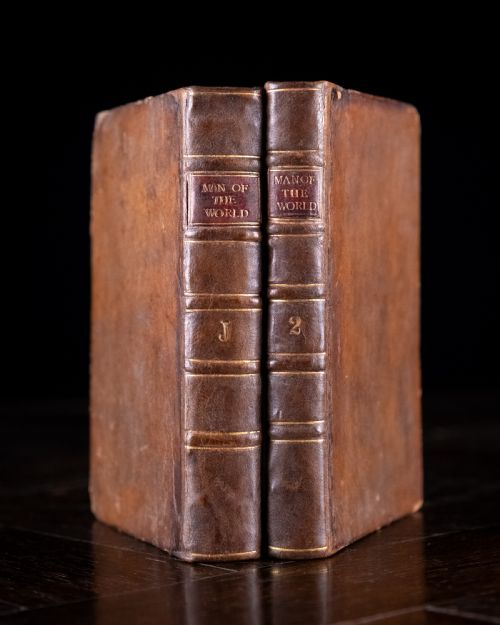
Some miniature volumes measure so small they require careful handling with two fingers to turn the historic pages.
The Calfskin Leather Books Glossary
- Calfskin
- A fine, smooth leather derived from the hide of a calf, prized for bookbinding due to its supple texture and durability.
- Gilt
- A thin application of gold leaf or gold powder used to decorate the edges of pages, leather covers, and spine lettering.
- Marbled paper
- Paper decorated with colourful swirling patterns, traditionally used for the endpapers inside the front and back covers.
- Miniature book
- An exceptionally small volume, often measuring only a few inches in height, designed for portability or novelty.
- Text block
- The inner block of gathered and bound paper pages that forms the core of a book before the cover is attached.
Calfskin Leather Books: Frequently Asked Questions
How do I care for calfskin leather bindings?
Keep these volumes away from direct sunlight and damp environments to protect the organic leather and paper materials.
Maintain stable room temperatures and handle the spines carefully when removing books from shelves to preserve the original structure.
What periods do these leather books represent?
The available selection spans from the mid-eighteenth century through the Georgian, Regency, and Victorian eras into the early twentieth century.
Each period reflects distinct publishing formats, from multi-volume historical sets to single religious texts and literature.
Are complete book sets common?
Many listings feature multi-volume sets, including complete novels, historical runs, and extended magazine collections published over several years.
These sets often share uniform calfskin bindings and gilt tooling created for private libraries.
How are miniature books different?
Miniature books are produced in exceptionally small formats while retaining legible typography and full leather bindings.
Examples include concise religious histories created in the eighteenth century as portable devotional items.