

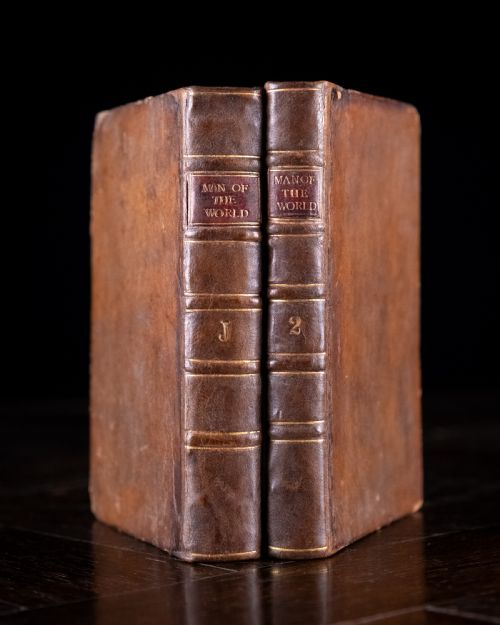


18th Century Leather Book
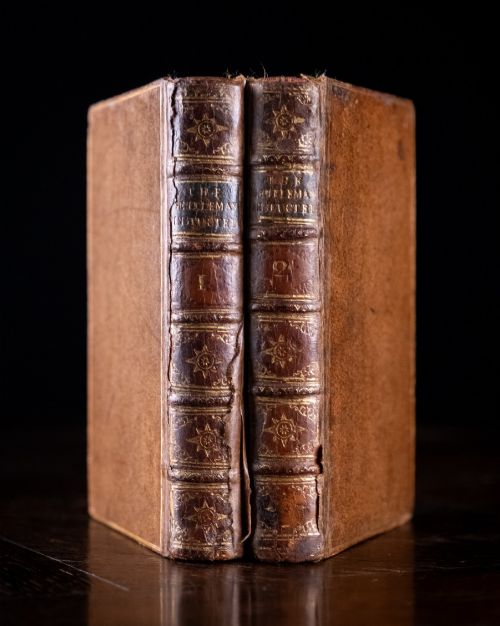
An 18th century leather book brings tangible age to a shelf, bound in calfskin and gold leaf for practical study or display.
18th Century Leather Book
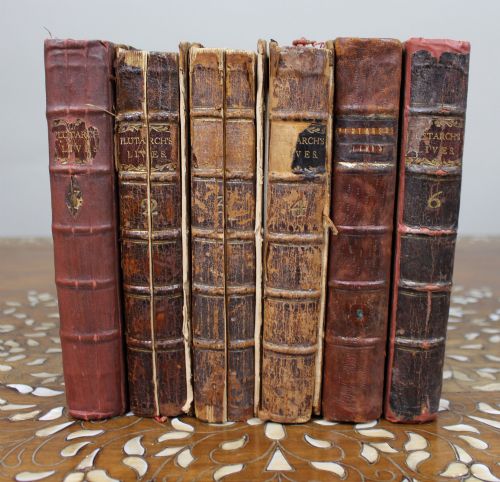
An 18th century leather book comprises antiquarian volumes, sets, and miniature books dating from the Georgian era through to the turn of the nineteenth century. These pieces encompass various literary works, religious texts, almanacs, and magazines originating from English, French, and Dutch presses.
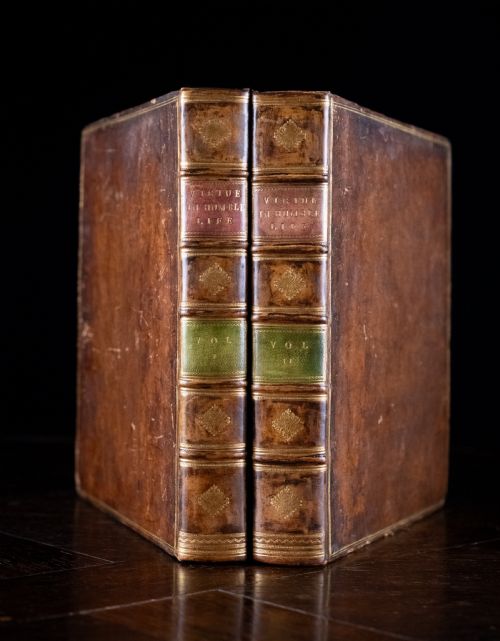
The versions most frequently met on this page include multi-volume sets such as histories, letters, and religious tracts, alongside smaller formats like thumb Bibles and miniature books. Bindings typically utilise calfskin or vellum, often accented with gold leaf lettering and tooling.
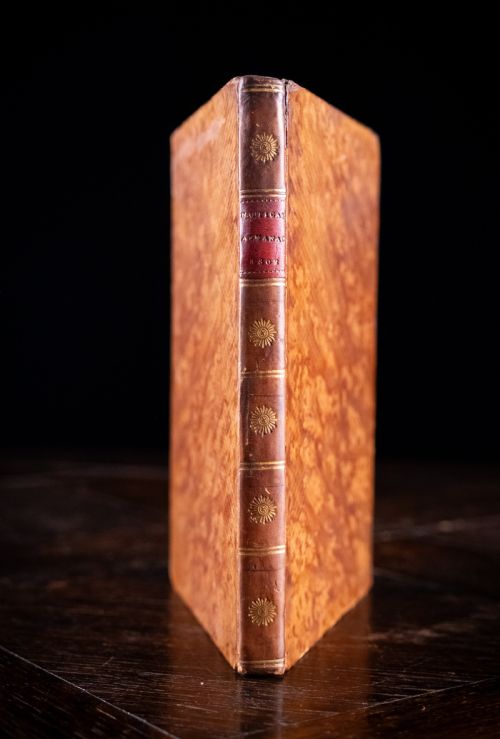
Collectors encounter individual items like the 1796 Nautical Almanac alongside substantial collections spanning multiple volumes, such as the eight-volume Turkish Spy set or the multi-volume sporting magazines. Each volume reflects the publishing standards and literary tastes of the seventeen-hundreds.
How They Were Made
Binders constructed these books using sturdy materials like calfskin leather and vellum to encase handmade paper pages. Craftsmen applied ink by hand or early printing press, sewing signatures together securely before attaching the outer leather covers.
Decoration relied on gold leaf applied to spines and boards, creating titles and decorative borders that endure across the centuries. Artisans also utilised silver elements and bronze medals in specialised bindings and commemorative works.
Listings feature materials such as calfskin, vellum, paper, gold leaf, silver, and ink across Georgian, French, and Dutch styles.
What Varies in Quality
The caliber of an 18th century leather book rests upon the completeness of multi-volume sets and the preservation of the original binding. Volumes retaining their crisp gold leaf tooling and sound calfskin or vellum covers stand apart from heavily worn examples.
The fineness of the typography, the clarity of the handmade paper, and the presence of original publisher details or notable publishing houses elevate certain editions above standard reading copies.
J. & R. Tonson·J. Wheble·Jean Dassier
The 18th Century Leather Book Glossary
- Calfskin
- A soft yet durable leather prepared from the skin of a calf, commonly utilised for binding quality books during the Georgian period.
- Vellum
- A fine parchment prepared from calfskin, used historically for durable book covers and manuscript pages.
- Miniature Book
- An exceptionally small book designed to be portable, including thumb Bibles and pocket-sized devotional texts.
- Gold Leaf
- Gold beaten into an extremely thin sheet, pressed onto leather bindings to create lettering and decorative tooling.
- Antiquarian
- Pertaining to books or objects of ancient times or significant age, typically exceeding a century.
18th Century Leather Book: Frequently Asked Questions
What are 18th century leather books?
These pieces are antiquarian volumes, sets, and miniature books produced during the seventeen-hundreds. They include religious texts, almanacs, novels, and historical works bound in leather or vellum.
Many survive as multi-volume sets, offering a direct link to the literature and publishing methods of the Georgian period.
How were these books used?
Original owners utilised them for daily reading, religious devotion, astronomical calculation, and keeping up with contemporary literature and sports.
Subscribers collected multi-volume sets like magazines and histories to display their learning and interest in current affairs.
How do I care for leather books?
Keep them out of direct sunlight and away from damp environments to protect the fragile paper and organic leather bindings. Handle the spines carefully when removing volumes from a shelf to prevent separation.
Allow adequate air circulation around the books to maintain the stability of the calfskin and vellum.
Are miniature books common?
Miniature formats such as thumb Bibles and pocket prayer books appear alongside standard octavo and quarto volumes. These small pieces demonstrate the precision of Georgian printing and binding.
Publishers created them for private devotion and portability during travel.
How do I identify periods?
Examine the title pages for printed publication dates, such as seventeen-fifty-eight or seventeen-ninety-six. Stylistic clues in the calfskin binding, gold leaf tooling, and typography further indicate the Georgian era.
Reference volumes often carry explicit publication details naming specific printers and years.