

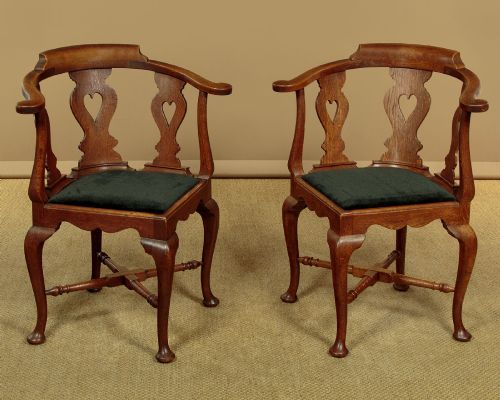


Cabriole Leg Tub Chair
A cabriole leg tub chair offers deep, curved seating supported by the distinct graceful sweep of double-curved legs.
Cabriole Leg Tub Chair
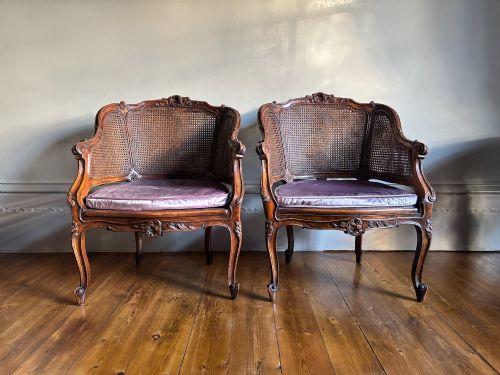
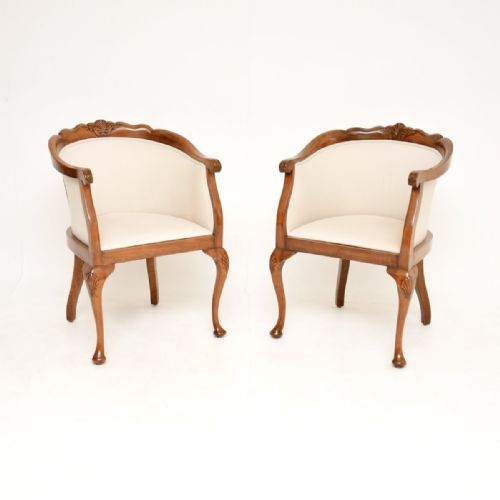
A cabriole leg tub chair combines a rounded, enclosing backrest with outward-curving legs that terminate in a pad, scroll, or plain foot. Buyers searching for a cabriole leg tub chair often encounter nineteenth-century French designs alongside Edwardian and Victorian British interpretations.
The form spans versatile seating arrangements, including low occasional seats, library chairs, and deep upholstered armchairs designed for comfort. Surviving examples frequently draw on Louis XV, Queen Anne, and French Provincial design vocabularies.
Many of these chairs function as desk chairs, salon armchairs, or corner seating within a room. The rounded barrel back envelops the sitter, creating a compact silhouette that fits neatly into both traditional and eclectic interiors.
Materials and construction
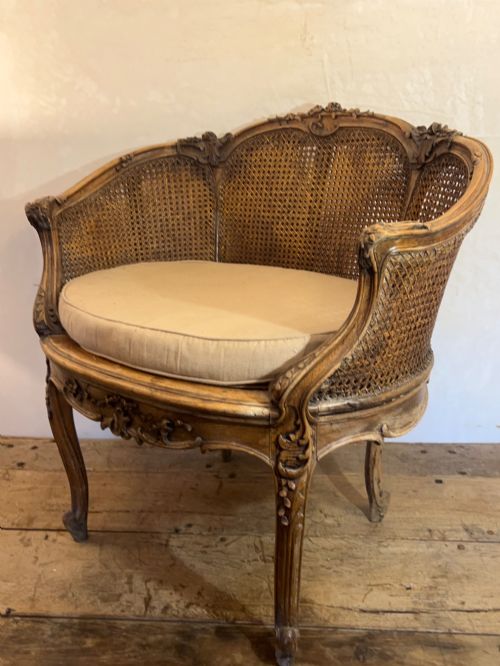
Makers shaped the frames of these chairs from dense hardwoods such as mahogany, walnut, oak, and rosewood, often carving the cabriole legs directly from the solid timber. Where lightness was required, such as in French cane bergère chairs, woven cane panels were integrated into the wooden framework.
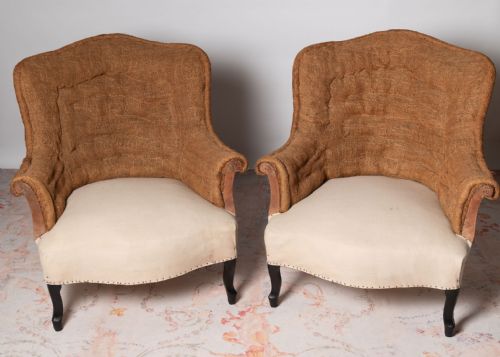
Upholstery techniques varied from traditional horsehair stuffing beneath fabric or leather covers to buttoned silk and textile finishes. Brass accents, decorative brass tacks, and marquetry inlay frequently embellished the wooden structures.
Cabriole Leg Tub Chair Retail Price Guide 2026
Typical asking prices for cabriole leg tub chair among the pieces listed under this phrase on Sellingantiques today, from the lower quarter to the upper quarter. They describe what is for sale here now, not the wider market.
Listings feature walnut, mahogany, oak, and rosewood frames paired with leather, cane, and fabric upholstery across nineteenth-century and early twentieth-century periods.
What separates the fine examples
Quality rests in the fluidity of the carved cabriole leg and the proportion of the curved tub back. Crispness in hand-carved floral motifs or scroll arms distinguishes finer workshop output from simpler commercial production.
The integrity of the underlying timber frame and the quality of the upholstery materials determine how well a chair has survived over time. Subtle details like marquetry inlay or original leather upholstery elevate an individual piece.
The Cabriole Leg Tub Chair Glossary
- Cabriole leg
- A furniture leg that curves out in a convex arc at the knee and tapers inward in a concave arc to the foot, mimicking animal limbs. This form appeared widely across eighteenth-century furniture styles and later revivals.
- Tub chair
- An armchair featuring a continuous curved back and arms that form a single rounded enclosure. The design provides an enclosed, supportive seat.
- Bergère
- An enclosed upholstered armchair with wooden framing exposed around the border and cane or upholstered sides. These chairs often include a loose cushion over a sprung seat.
- Marquetry
- Decorative patterns formed by fitting contrasting veneers onto a structural wood surface. Makers used this technique to ornament cabinet fronts and chair backs.
- Corbeille
- A French term denoting a rounded, basket-like seat shape typical of nineteenth-century boudoir and salon chairs. It describes the enveloping nature of the curved backrest.
Cabriole Leg Tub Chair: Frequently Asked Questions
What rooms suit a tub chair?
Tub chairs fit well in studies, bedrooms, and drawing rooms where compact seating is required without sacrificing comfort. Their rounded profile allows them to sit comfortably in corners or beside desks.
The enclosed back provides privacy and lumbar support, making these chairs practical for reading or desk work.
How do I date a Victorian tub chair?
Dating relies on examining the timber species, upholstery construction methods, and stylistic revival cues. Victorian pieces often employ walnut, rosewood, or mahogany alongside heavier padding.
Comparing the decorative carving style to documented periods helps narrow the decade of manufacture. Hardware details and secondary woods also offer clues to age.
Are these chairs comfortable for daily use?
Many of these armchairs are designed for relaxed sitting, offering deep upholstery and supportive curved backs. The level of comfort depends on the condition of the interior webbing and stuffing.
Chairs upholstered in leather or soft fabric provide firm support suitable for working at a desk or reading for extended periods.