
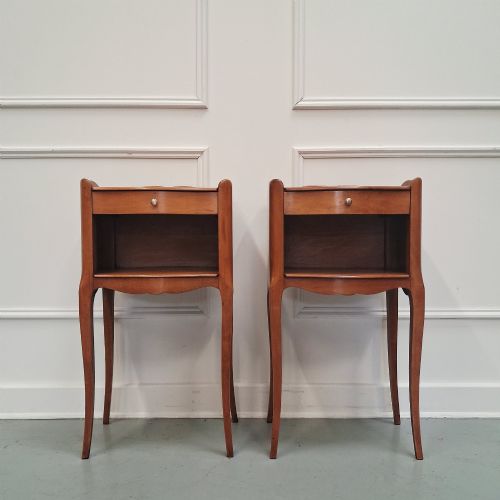
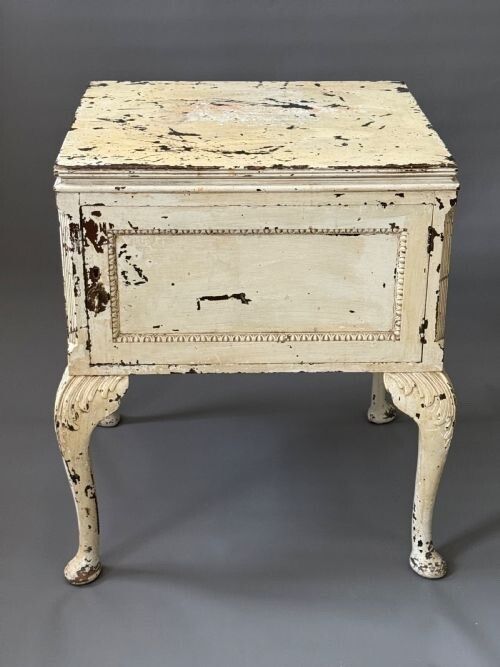
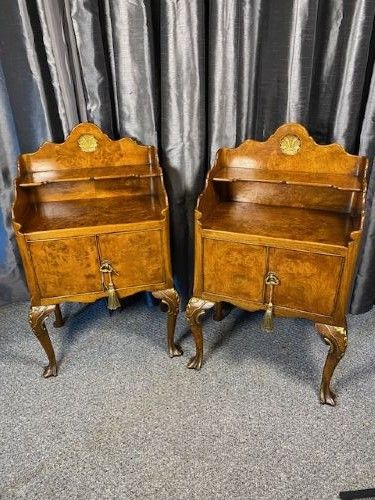
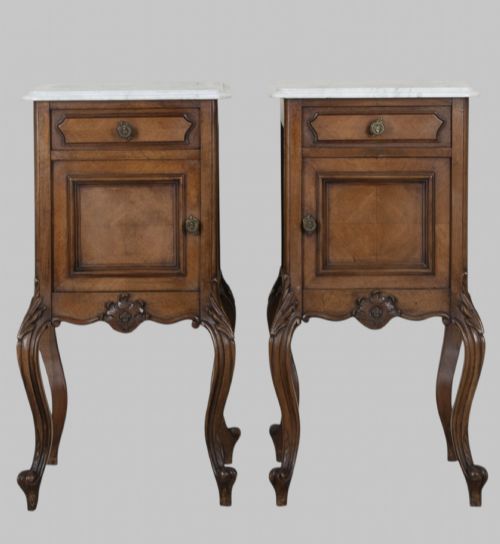
Cabriole Leg Table Cabinet
When you handle a cabriole leg table cabinet, you see how these curved supports lift small storage pieces from the floor with genuine grace.
Cabriole Leg Table Cabinet
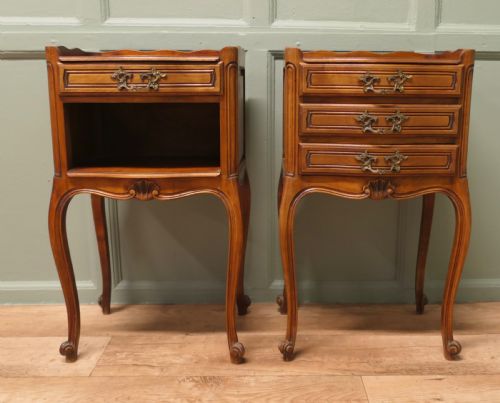
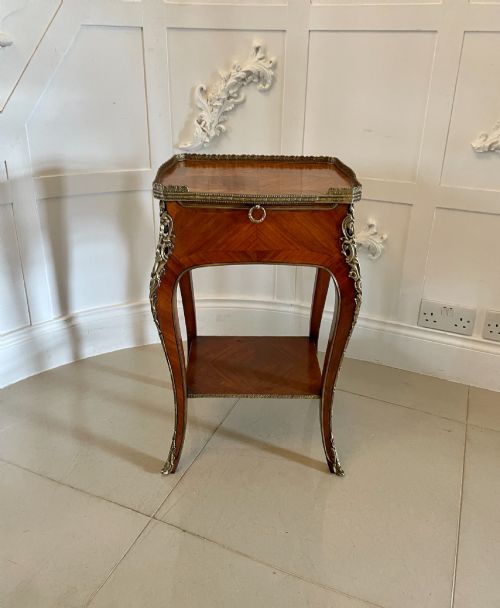
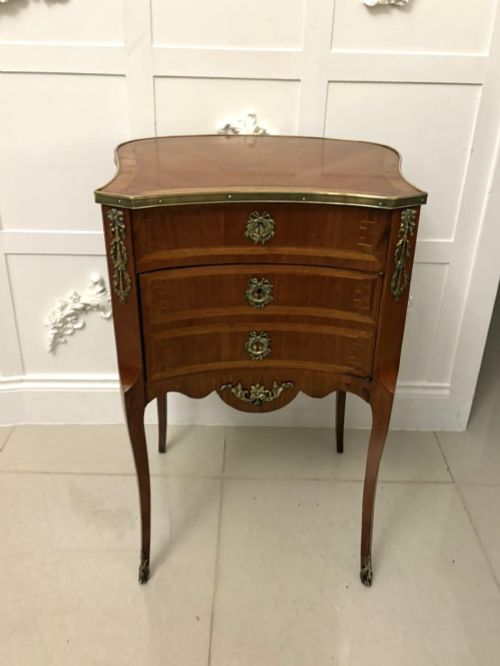
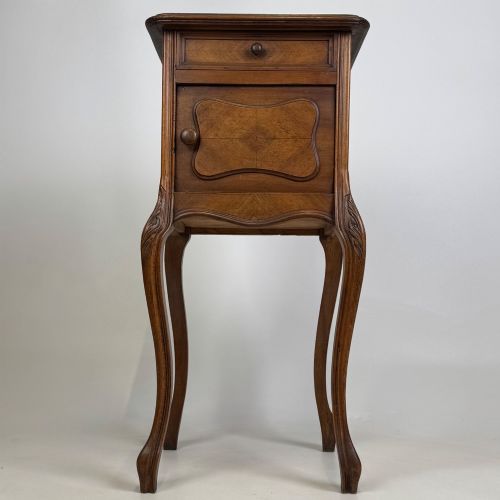
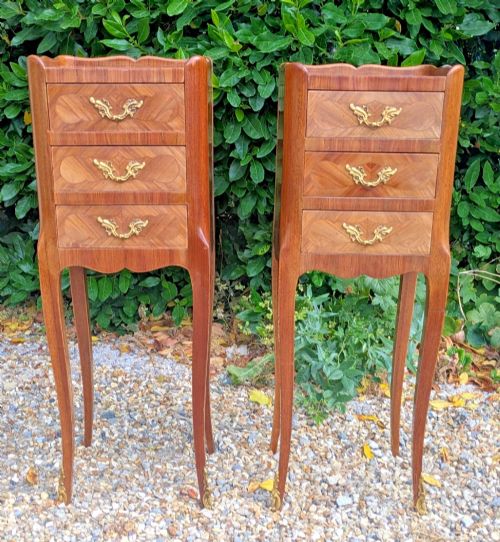
A cabriole leg table cabinet combines the surface utility of a small table with the enclosed storage of a compact cupboard or chest. You encounter these pieces most frequently as bedside tables, lamp tables, and bedside cabinets dating from the Edwardian era through the nineteen-thirties.
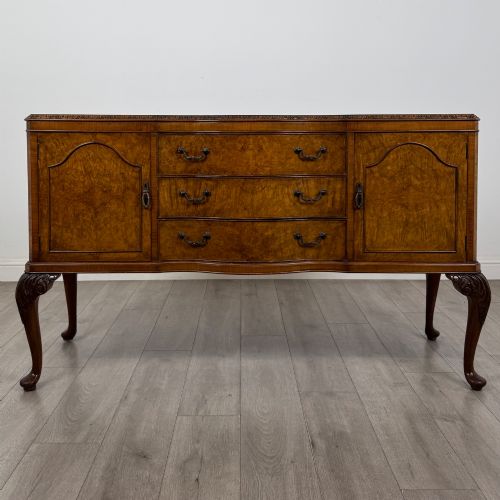
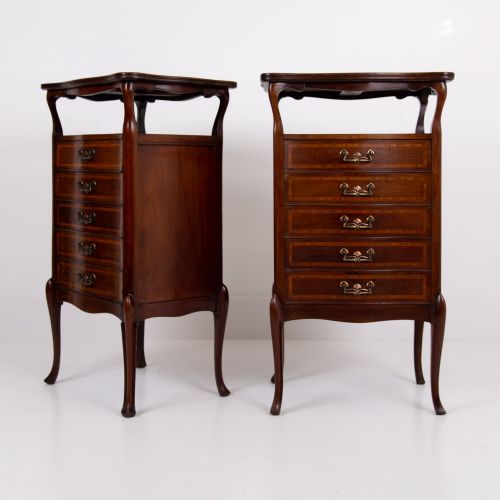
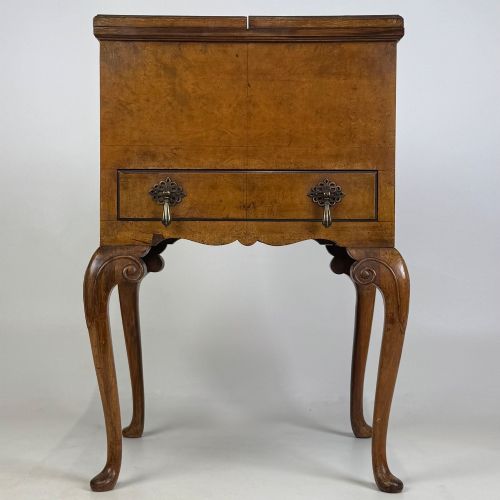
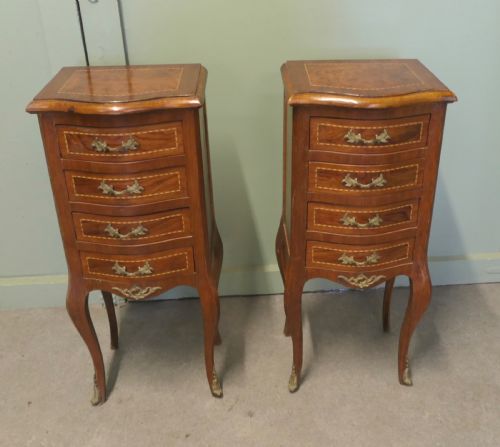
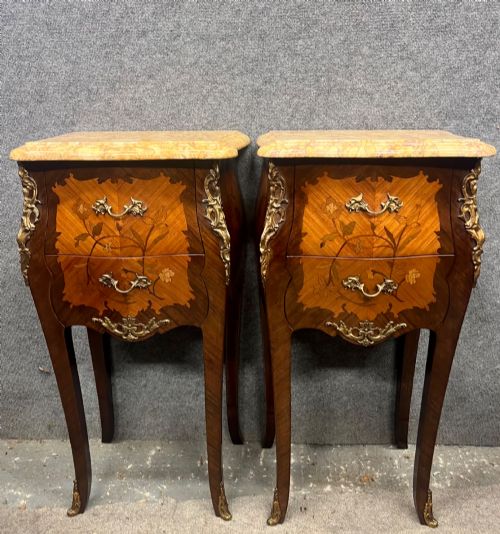
The selection leans heavily towards continental influences, particularly French provincial and Louis styles, alongside domestic Queen Anne revivals. Forms range from simple single-door cupboards to tall four-drawer side lockers and marble-topped bedside chests.
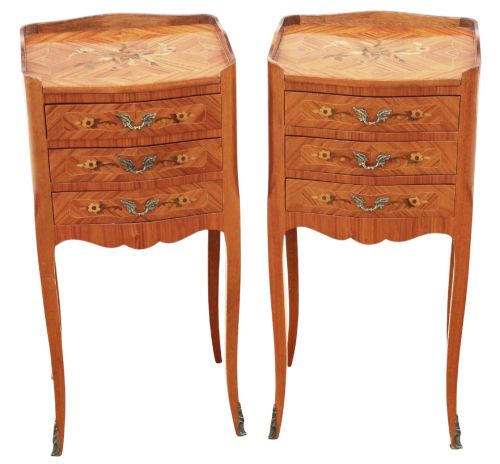
The evidence shows a strong preference for matched pairs, especially in twentieth-century production where bedside storage was designed to balance a bedroom scheme. Alongside conventional cabinets, the selection includes specialised pieces such as bijouterie display tables, writing desks, and dough bins.
Materials and Construction
Cabinet makers utilised a rich palette of timbers, relying on walnut, burr walnut, mahogany, and kingwood as primary foundations. Marquetry inlay and decorative veneers frequently adorn the surfaces, supported by secondary woods in the internal carcases.
Many examples incorporate contrasting elements such as inset marble tops, glass panels for display surfaces, and cast or gilt brass ormolu mounts. These metal fittings accent the shoulders and feet of the distinctive curved legs, defining the continental aesthetic.
Among the bedside storage, an occasional unexpected dough bin provides a rustic touch for anyone seeking truly unusual kitchenalia.
Assessing the Standard
Quality rests primarily in the precision of the timber selection and the crispness of the carving on the legs. The transition from the knee of the leg down to the pad or scroll foot reveals the hand of a skilled maker.
The integration of decorative details such as hand-cut marquetry, fitted marble slabs, and substantial ormolu mounts separates standard production from finer examples. Structural integrity in the joints and smooth operation of drawers and doors indicate superior workshop standards.
The Cabriole Leg Table Cabinet Glossary
- Cabriole leg
- A furniture leg that curves out at the knee and tapers inward to an ankle and foot, mimicking animal limbs. This form became a defining feature of eighteenth-century design and later revival periods.
- Marquetry
- Decorative veneer work forming pictures or geometric patterns using various coloured woods. Craftsmen assemble thin slices of timber onto the carcase to create ornamental surfaces.
- Ormolu
- Gilded bronze mounts applied to furniture for decorative effect. These metal ornaments highlight architectural corners and structural joints.
- Bijouterie table
- A glass-topped display table designed for small valuables and curiosities. These pieces often feature glazed sides to let light reach the objects inside.
- Demi-lune
- Half-moon or semicircular in shape. This profile allows cabinets and tables to sit flush against a wall while projecting into the room.
Cabriole Leg Table Cabinet: Frequently Asked Questions
What rooms suit a small cabinet?
These compact pieces fit easily beside a bed, serving as functional storage for lamps and books while introducing period character to a bedroom.
They also function effectively in smaller reception spaces as lamp tables or occasional display surfaces.
How do I identify revival styles?
Revival pieces borrow decorative vocabulary from earlier monarchies, such as the curved lines and floral marquetry associated with Louis periods.
Examination of the timber backing and internal construction usually reveals whether a piece dates to the original eighteenth century or a later nineteenth and twentieth-century revival.
Are marble tops original features?
Marble inserts frequently appear on continental bedside cabinets to provide a durable, heat-resistant surface for jugs and water glasses.
These stone slabs were set directly into the wooden framework during initial manufacture.
Why buy a matched pair?
Pairs of bedside cabinets or lamp tables provide visual symmetry when placed on either side of a bed or fireplace.
Finding surviving pairs from the Edwardian period or nineteen-thirties ensures consistent timber ageing and matching decorative details.