



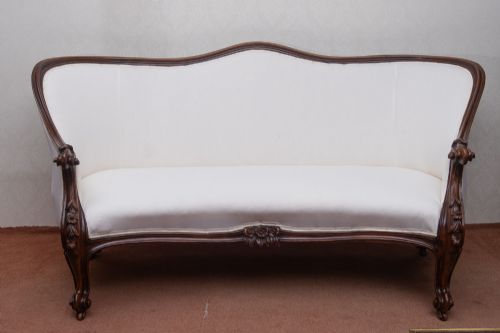
Cabriole Leg Salon Sofa
A cabriole leg salon sofa brings formal nineteenth-century seating into a modern interior through curved timber frames and elegant proportions.
Cabriole Leg Salon Sofa
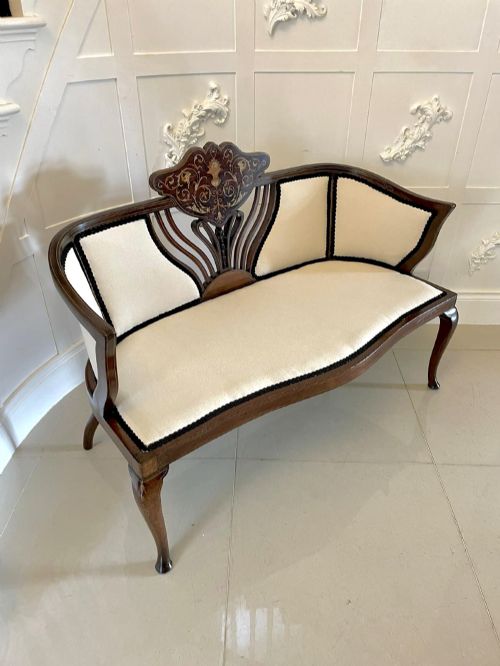
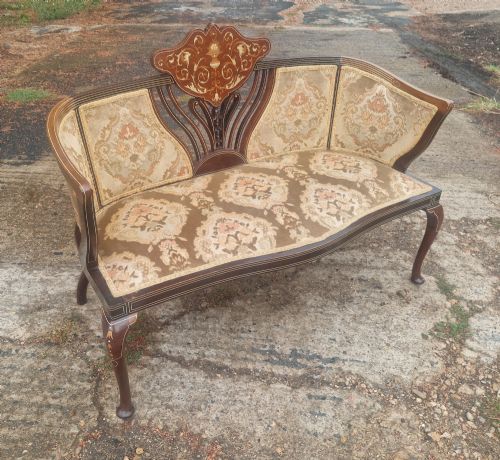
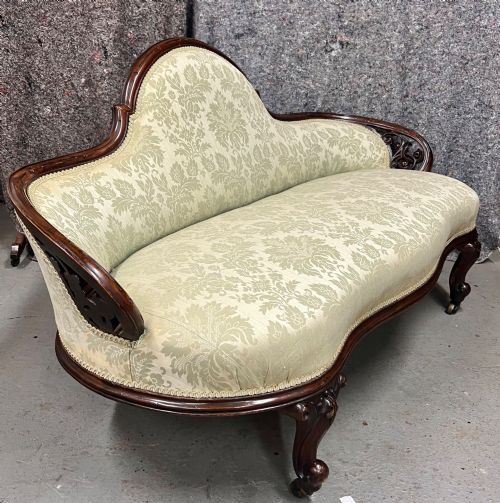
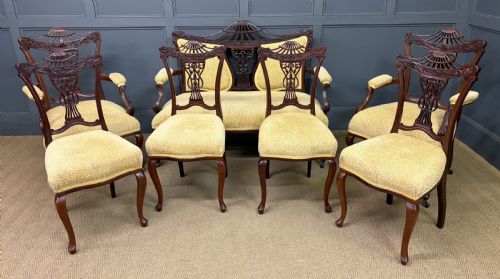
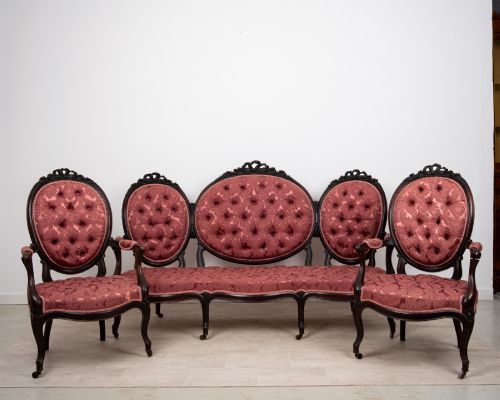
A cabriole leg salon sofa is designed for formal entertaining and drawing rooms, appearing across the nineteenth century and into the Edwardian period in various revival styles. These pieces function as decorative seating for parlours, reception rooms and grand chambers, taking forms such as settee, canapé and salon suite components.
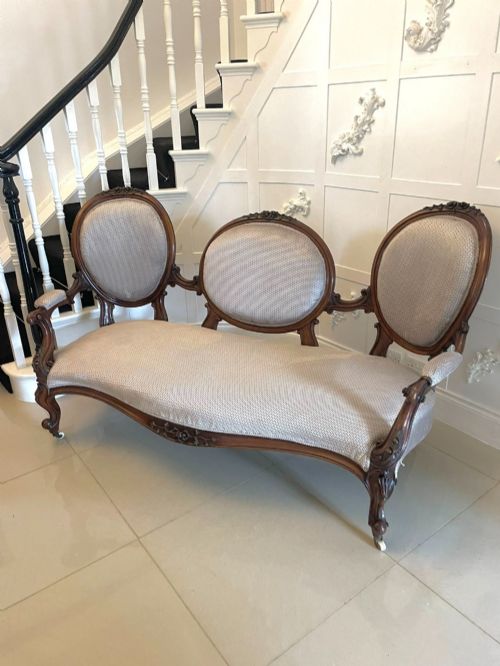
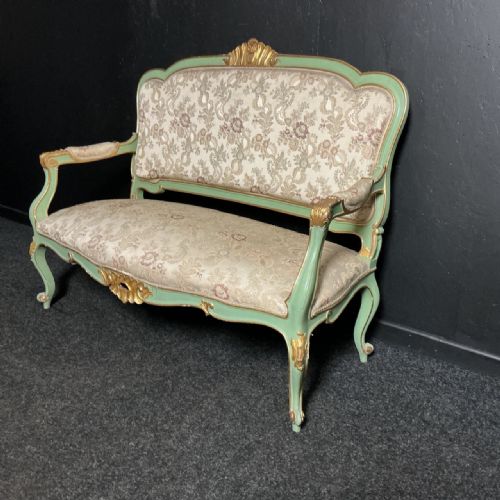
The version most commonly met on this page is the Victorian walnut or mahogany framed settee, often shaped with carved ornament and upholstered backs. Makers drew inspiration from French Louis XV designs and English Rococo revival patterns, resulting in curved lines and prominent wooden framework.
Materials and construction
Frames are constructed from solid timbers including mahogany, walnut and satinwood, frequently shaped with hand-carved details or decorative inlay. Giltwood and painted finishes also appear on French-influenced pieces, while brass elements are utilised in fittings and castors.
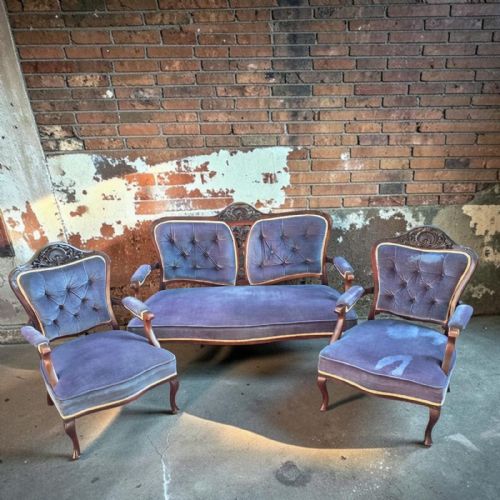
Upholstery techniques involve textiles such as damask fabric, velvet and various patterned fabrics, occasionally featuring deep buttoning over sprung or padded foundations. Woodworkers joined these components using traditional cabinet-making methods suited to the curving profiles of the period.
At least one Edwardian maker imagined these stately frames working at the foot of a bed.
Distinctions in quality
Quality in these sofas rests upon the crispness of the timber carving and the architectural balance of the frame, where finer examples display deeply moulded contours and well-selected grain. The integration of the cabriole leg into the seat rail demonstrates the joiner's skill, separating standard production from superior craftsmanship.
The choice of primary wood and the execution of inlay or gilding also define the tier of the piece, alongside the integrity of the underlying structure. Suites and matched salon groupings show a higher degree of unified design across the frames and upholstery.
Morison & Co Edinburgh
The Cabriole Leg Salon Sofa Glossary
- Cabriole leg
- A furniture leg that curves outward in an S-shape before tapering down to a pad or scroll foot, mimicking animal limbs.
- Canapé
- A French term for an upholstered sofa or settee with an exposed wooden frame.
- Cameo back
- An oval-shaped upholstered back panel framed in carved wood, frequently seen on Victorian seating.
- Rococo Revival
- A nineteenth-century style drawing on eighteenth-century asymmetrical scrollwork, floral motifs and curvilinear forms.
- Salon suite
- A matching set of seating comprising a settee and companion armchairs intended for a drawing room.
Cabriole Leg Salon Sofa: Frequently Asked Questions
What is a cabriole leg salon sofa?
A cabriole leg salon sofa is an upholstered nineteenth-century seating piece defined by curved legs and formal wooden frames intended for reception rooms.
These items encompass settees, drawing room suites and French-style canapés dating from the Victorian and Edwardian eras.
How were these sofas used?
These sofas were placed in formal reception rooms, parlours and drawing rooms to accommodate guests during social calls and afternoon gatherings.
They served both as functional seating and as decorative centrepieces that demonstrated the household's taste and status.
How do I live with one?
Integrating a nineteenth-century settee into a modern room works best when the surrounding decor allows the carved wooden frame and traditional upholstery to stand out as a focal point.
Placing the sofa away from direct sunlight and maintaining stable indoor humidity helps preserve the antique textiles and polished timber.
How can I tell the periods apart?
Victorian pieces often feature heavy walnut or mahogany frames with deep buttoning and Rococo revival carvings, whereas Edwardian examples tend to show lighter inlay and simpler lines.
French-influenced pieces utilise painted finishes, giltwood or canapé forms that reflect Louis XV styling across the nineteenth and early twentieth centuries.