
Cabriole Leg Gaming Table
A cabriole leg gaming table brings folding surfaces, polished timber and subtle curves together for cards and social play.
Cabriole Leg Gaming Table
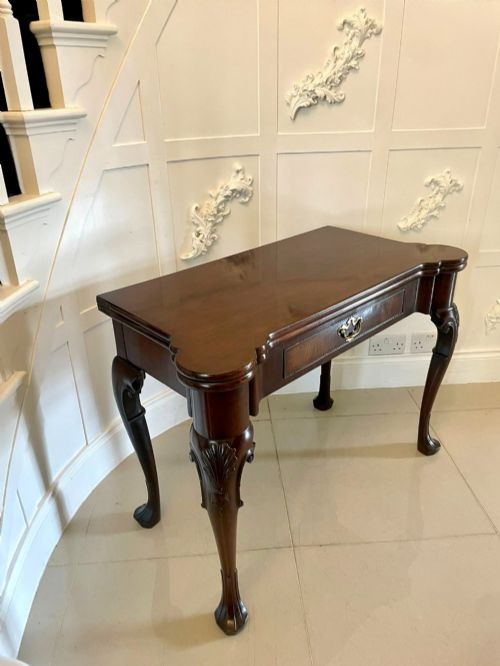
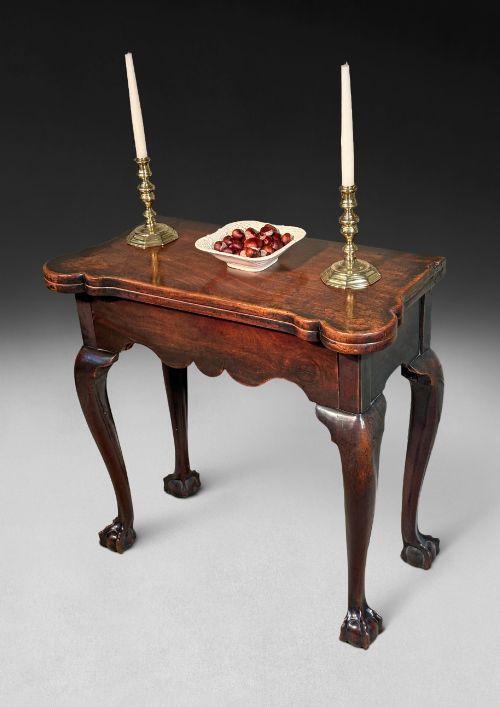
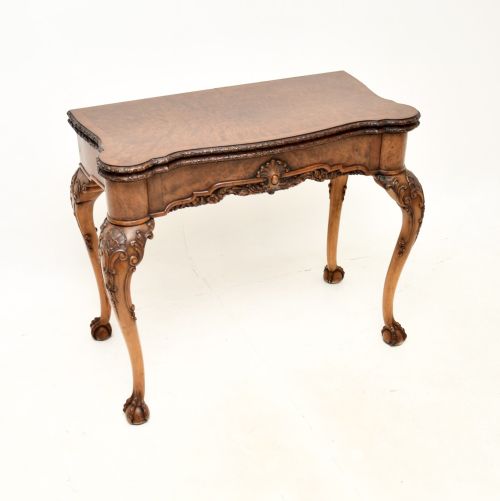
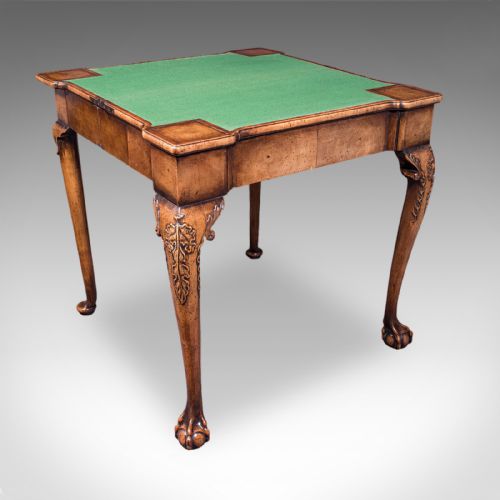
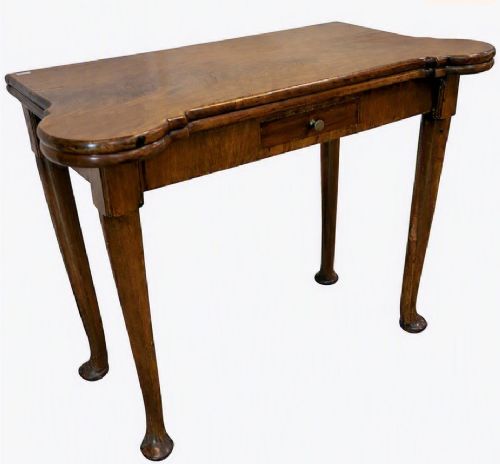
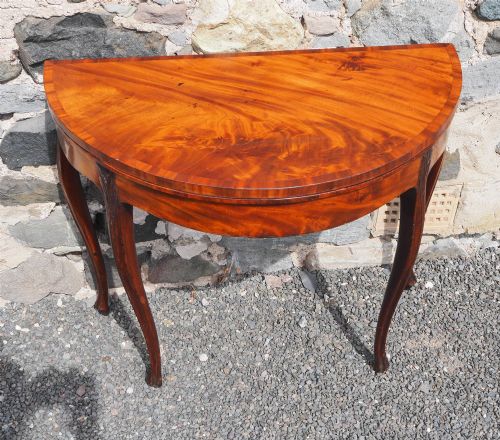
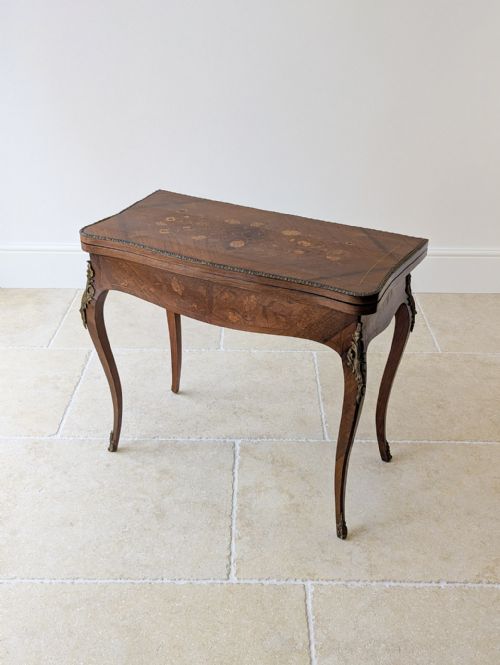
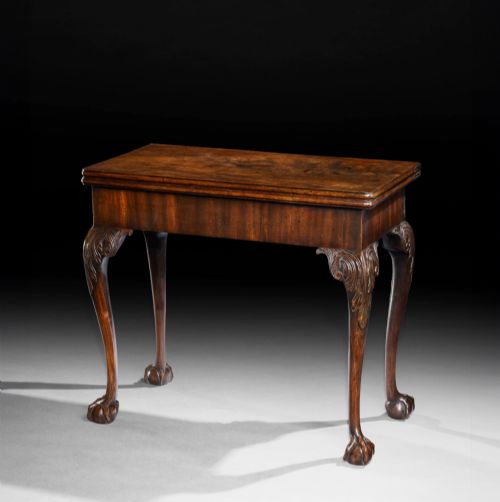
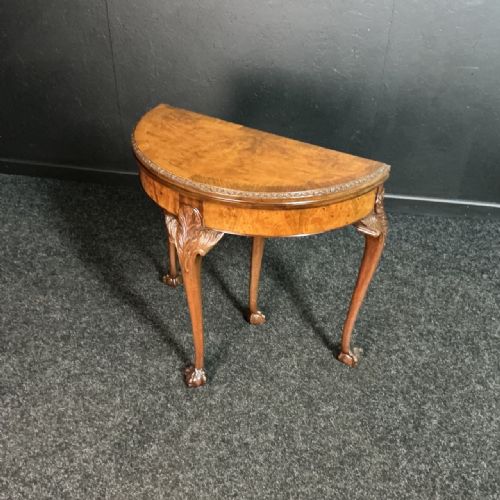
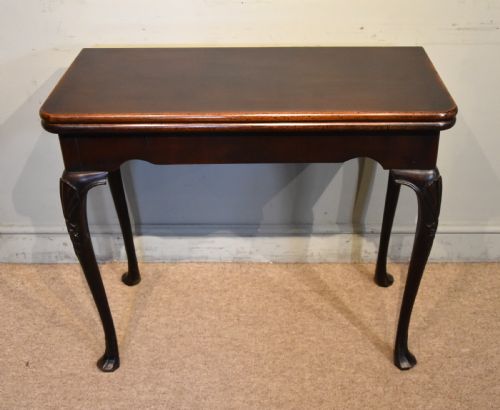
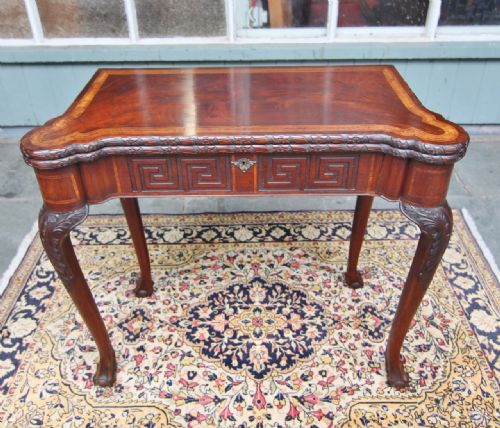
A cabriole leg gaming table provides a dedicated surface for cards and social play, emerging most visibly through Georgian and Victorian cabinet-making traditions. These pieces predominantly take the form of fold-over card tables, games tables, and tea tables designed with curved legs that terminate in pad, claw-and-ball, or scroll feet.
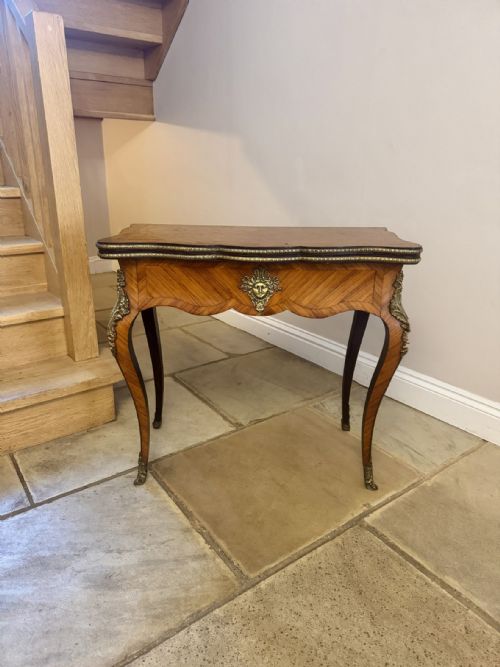
The selection here spans from mid-eighteenth-century walnut and mahogany examples to later nineteenth-century French-inspired revivals. Buyers encounter walnut, mahogany, and kingwood constructions, often outfitted with baize-lined playing surfaces and clever concertina or fold-over mechanisms.
How They Were Made
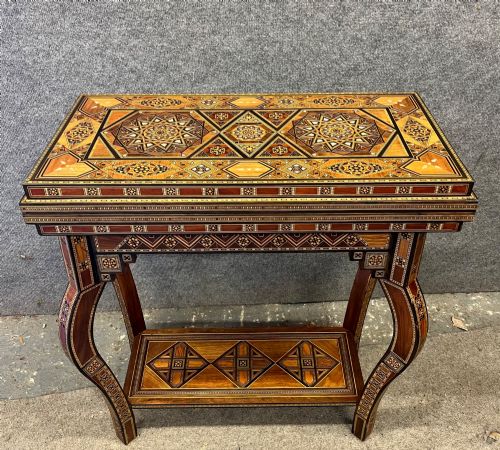
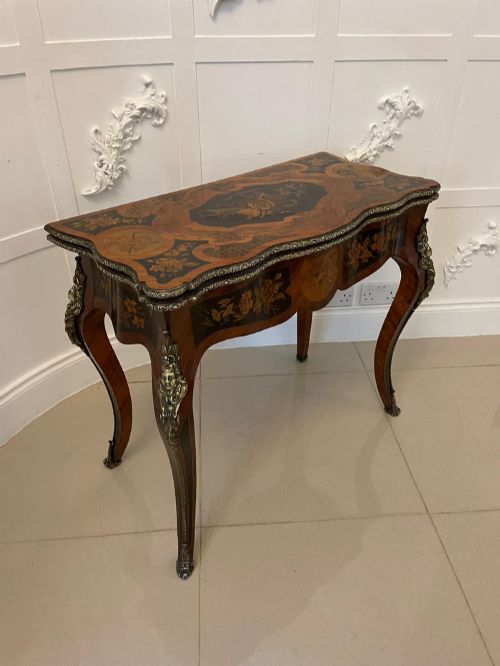
Cabinet-makers relied heavily on dense primary timbers like mahogany and walnut, frequently applying figured veneers, cross-banding, and intricate marquetry inlays across the folding tops and aprons. Secondary woods provided structural stability for the internal framing and concertina hinges.
Metal components played a structural and decorative role, with brass hinges securing the folding leaves and cast or chased ormolu mounts embellishing revival pieces. Playing surfaces were typically lined with wool baize to provide a soft counter for card play.
Some eighteenth-century walnut tables conceal unexpected details like inlaid bird designs and dished wells designed to keep runaway gaming counters from rolling onto the floor.
What Varies in Quality
The sophistication of the timber selection dictates much of the visual distinction, separating plain domestic woods from highly figured flame mahogany, burr walnut, and matched kingwood veneers. Mastery of the cabinet-maker is evident in the crispness of the carved knees on the cabriole legs and the precision of the joints.
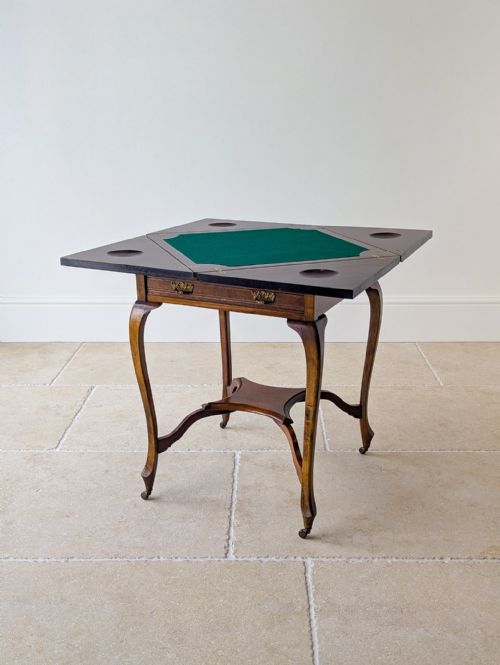
Internal engineering marks the division between standard folding leaves and complex concertina actions that expand evenly on all four legs when opened. The integration of fine ormolu mounts, parquetry patterns, and original baize interiors further separates workshops of distinction from standard production.
Giles Grendey·G T Morant London·François Linke·Epstein and Co·Gillow
The Cabriole Leg Gaming Table Glossary
- Cabriole leg
- A furniture leg that bends outward in a convex curve at the knee and tapers inward in a concave curve toward the foot, mimicking animal limbs. This form became a defining characteristic of early Georgian and Louis XV revival design.
- Concertina action
- An expanding table frame mechanism that pulls outward on all four sides simultaneously to support an open fold-over top. It allows the table to maintain symmetrical legs whether closed or extended for play.
- Cross-banding
- A narrow strip of veneer laid around the border of a table top with the grain running perpendicular to the centre panel. This technique creates a distinct visual frame for figured timbers like mahogany or walnut.
- Baize
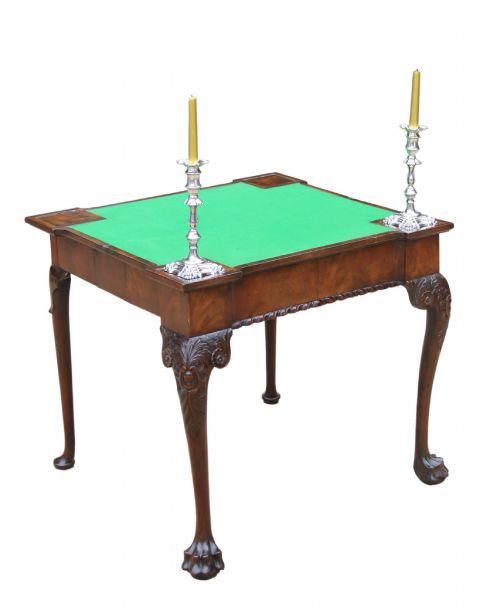
- A coarse woollen fabric, traditionally green, used to line the playing surface of card and games tables. It provides a soft, non-slip texture for dealing cards.
- Marquetry
- Decorative patterns created by fitting thin pieces of wood veneer, shell, or ivory into a fastened background. It appears extensively on nineteenth-century French revival tops.
Cabriole Leg Gaming Table: Frequently Asked Questions
What is a cabriole leg gaming table?
A cabriole leg gaming table is a specialised piece of antique furniture featuring curved, animal-inspired legs and a folding top designed for card games and social gatherings.
These tables date primarily from the eighteenth and nineteenth centuries, utilising timbers such as mahogany, walnut, and kingwood to blend domestic utility with refined decorative style.
How were these gaming tables used?
These tables remained closed against a wall as side or console tables when not in use, saving space in period parlours and drawing rooms.
When guests arrived for an evening of cards, the top leaf folded open or swung out on concertina frames to reveal a baize-lined playing surface complete with corners for counters or candlesticks.
How do I identify a Georgian gaming table?
Georgian examples are characterised by solid mahogany or walnut construction, restrained carving on the knees of the cabriole legs, and functional concertina actions.
Unlike later Victorian or Edwardian revival pieces, they rely on the natural grain of the timber rather than heavy marquetry or ormolu mounts for their visual impact.
How do I care for a wood gaming table?
Keep the timber away from direct sunlight and extreme temperature fluctuations to prevent the polished veneers from drying out or splitting.
Dust the surface regularly with a dry cloth and avoid placing liquid containers directly on the polished wood or historical baize lining.