

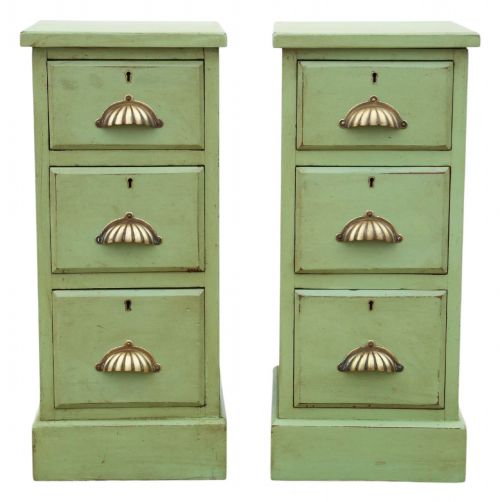

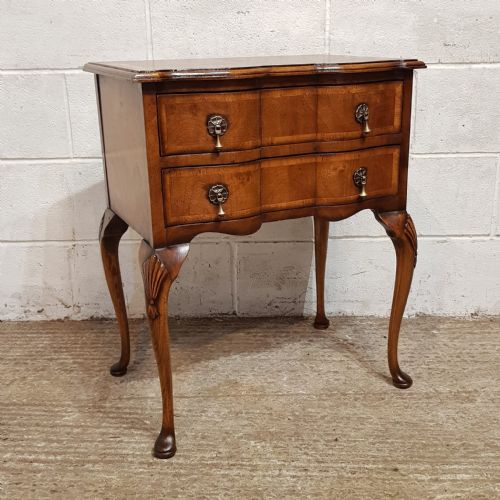


C1900 Chest of Drawers
These c1900 chest of drawers pieces offer practical storage with period character, ranging from Edwardian mahogany to French walnut examples.
C1900 Chest of Drawers
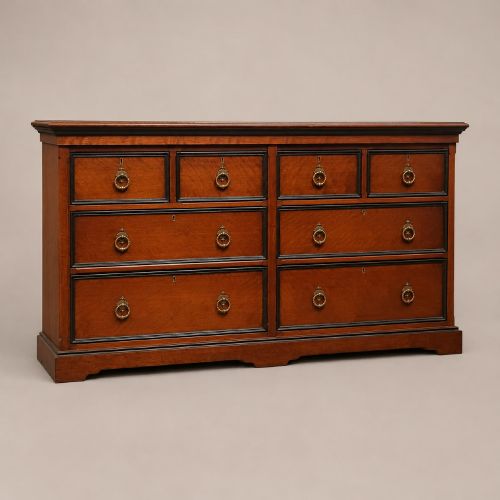
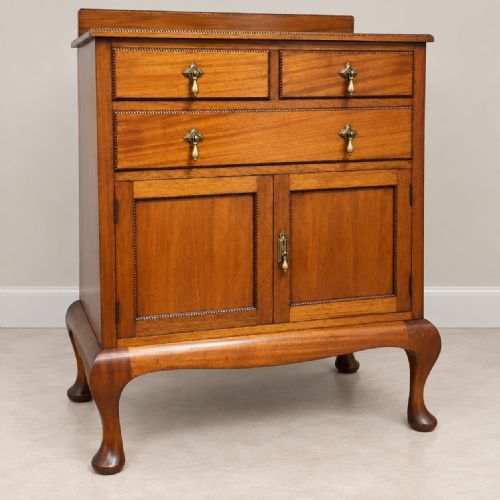
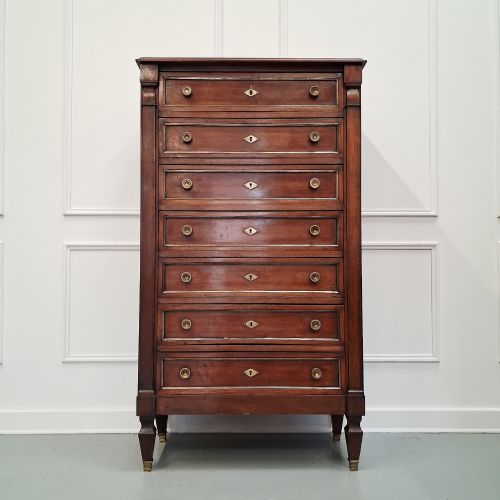
When you search for a c1900 chest of drawers, you encounter a varied selection of domestic storage pieces originating around the turn of the twentieth century. The inventory spans straightforward Edwardian mahogany designs alongside taller forms like tallboys and semainiers.
Beyond standard chests, the selection includes bedside tables, music cabinets, side tables, and specialised pieces in French provincial, Queen Anne style, Arts and Crafts, and Chinese export manners. Mahogany and walnut dominate, accompanied by burr walnut, satinwood, painted wood, and limed oak.
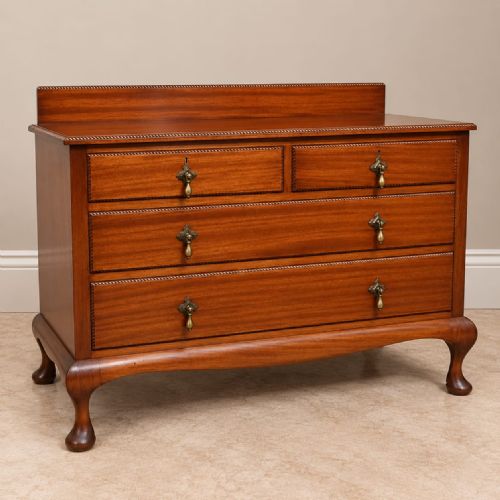
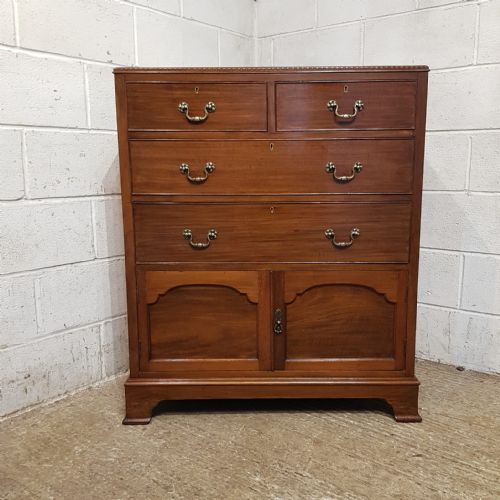
Edwardian mahogany examples represent the type most frequently met on this page, often built as three-height chests or tallboys with brass hardware. Buyers also encounter Continental furniture, including Italian painted commodes with Venetian scenes and French walnut bedside tables.
How They Were Made
Cabinet makers of this era utilised solid woods and selected veneers over secondary timbers, applying mahogany, walnut, and burr walnut surfaces to carcass structures. Grain matching is visible on figured surfaces like burr walnut fronts.
Joinery techniques combined traditional drawer construction with decorative elements such as serpentine fronts, glass panels, and painted finishes. Brass handles, escutcheons, and drop-front mechanisms served both functional and aesthetic purposes across different regional styles.
C1900 Chest of Drawers Retail Price Guide 2026
Typical asking prices for c1900 chest of drawers among the pieces listed under this phrase on Sellingantiques today, from the lower quarter to the upper quarter. They describe what is for sale here now, not the wider market.
Current listings feature pieces spanning the Edwardian period, 1900, 1930, and the nineteenth century, utilising mahogany, walnut, burr walnut, satinwood, and painted wood.
What Varies in Quality
Construction methods and material selection set pieces apart, from standard utilitarian items to workshop-attributed furniture. The choice between simple solid mahogany and figured burr walnut veneer alters the visual presence of a piece.
Stylistic execution creates distinction, ranging from plain Edwardian utility forms to intricate Italian Rococo revival pieces or French classical proportions. Surface treatments, whether polished timber or detailed painted Venetian scenes, reflect the initial tier of manufacture.
J Shoolbred
The C1900 Chest of Drawers Glossary
- Tallboy
- A tall chest of drawers, often comprising a smaller chest stacked upon a larger base. These units maximise vertical storage space.
- Wellington chest
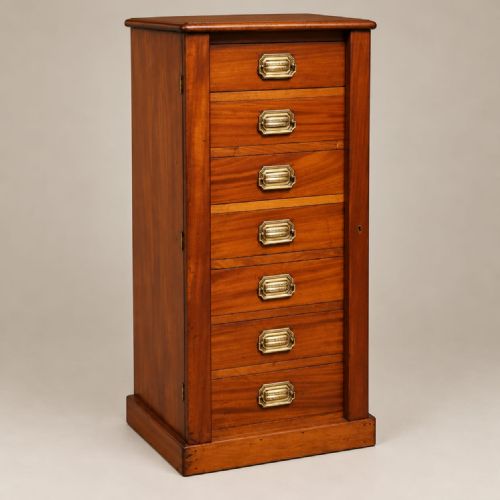
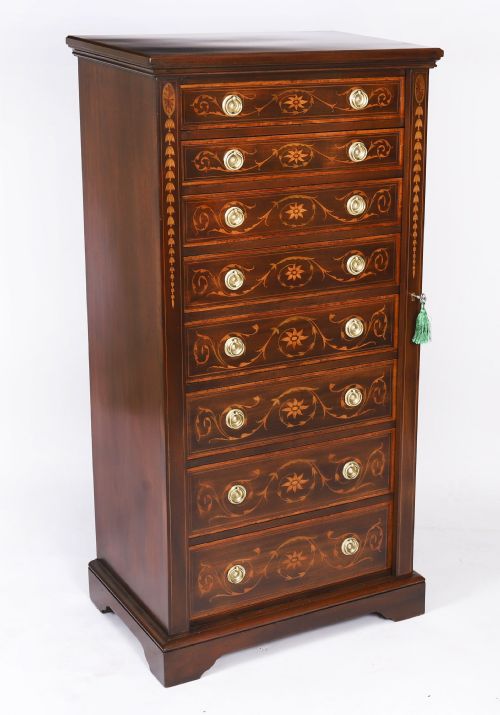
- A tall, locking chest of drawers secured by a hinged side locking bar. This format was popular during the nineteenth and early twentieth centuries.
- Serpentine front
- A piece of furniture featuring a gently undulating convex-concave-convex front profile. This shape requires skilled woodworking to curve the drawers and frame.
- Drop-front
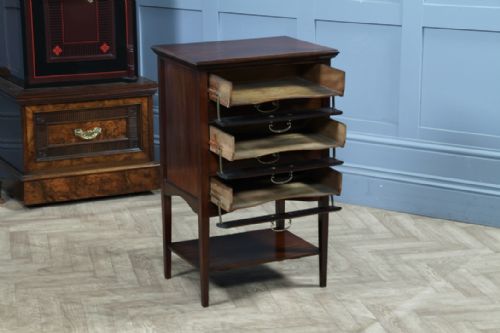
- A hinged panel that folds forward to reveal interior compartments or shelves. In music cabinets, these drop fronts conceal sheet music storage.
C1900 Chest of Drawers: Frequently Asked Questions
What styles are available in c1900 chests?
The selection includes Edwardian, French provincial, French classical, Queen Anne style, Italian Rococo revival, Arts and Crafts, and Chinese export designs.
Materials range from mahogany and walnut to burr walnut, satinwood, and painted wood with glass elements.
How do I identify an Edwardian chest?
Edwardian pieces date from roughly 1901 to 1910, frequently constructed in mahogany with clean lines and traditional brass hardware.
They often appear as three-height chests, tallboys, or music cabinets suited for domestic bedrooms.
What is a semainier chest?
A semainier is a tall, narrow French chest typically containing seven drawers, one for each day of the week.
These pieces are often veneered in mahogany or walnut and offer vertical storage for smaller spaces.
Where were these chests made?
Originating around the turn of the twentieth century, these pieces come from British workshops, French makers, and Italian studios.
Some items reflect international trade, such as Chinese export lacquer work and Oriental centre chests.