


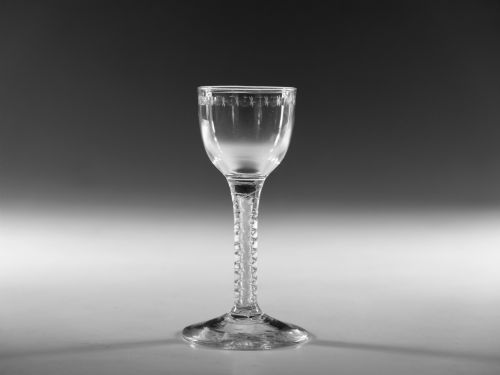
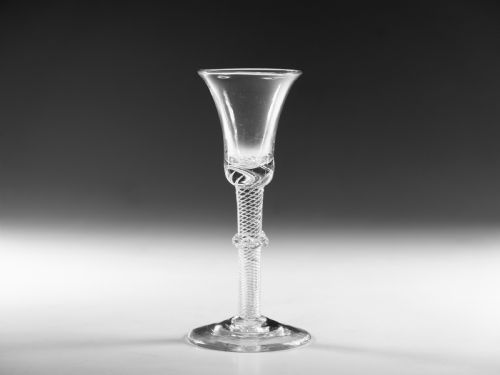


C1755 English Glass
These c1755 english glass pieces are Georgian drinking vessels that collectors seek for their hand-blown stems and historical weight.
C1755 English Glass
When you search for c1755 english glass, you are looking at drinking vessels from the Georgian period, predominantly wine glasses, ale glasses, and cordials. These pieces form a clear picture of mid-eighteenth-century tavern and dining table culture.
The version you are most likely to meet on this page is the wine glass or cordial glass, frequently shaped with distinctive stem formations. Goblets and ale glasses also appear regularly among the drinking glasses.
Every item originates from the eighteenth century, grounding your collection in the Georgian era. The forms remain consistent across listings, showing the standard drinking vessels of the period.
Materials and methods
Makers utilised lead glass, lead crystal, and flint glass to achieve clarity and weight in each hand-blown vessel. These materials allowed artisans to manipulate the molten substance into complex forms.
The characteristic twists within the stems were created using specific techniques to trap air or white enamel inside the glass. Artisans also combined different stem sections to produce composite examples.
C1755 English Glass Retail Price Guide 2026
Typical asking prices for c1755 english glass among the pieces listed under this phrase on Sellingantiques today, from the lower quarter to the upper quarter. They describe what is for sale here now, not the wider market.
Among the drinking glasses sits a single lacemaker's lamp, proving eighteenth-century glassmakers cast their skills beyond the dining table.
Judging quality in glassware
Quality rests in the precision and complexity of the stem formations, particularly how cleanly the air twists or opaque twists run through the glass. Simpler single formations contrast with intricate multi-spiral patterns.
The proportion between the bowl, stem, and foot dictates the visual balance of the piece. Superior examples display symmetry and clarity in the clear glass body.
The C1755 English Glass Glossary
- Air twist
- A decorative stem formation containing elongated bubbles drawn into spiral threads. This technique defines many eighteenth-century drinking glasses.
- Lead glass
- A heavy, clear material containing lead oxide that increased brilliance and malleability. It served as the primary medium for Georgian drinking vessels.
- Composite stem
- A stem combining two or more distinct construction methods, such as joining a knop above an air twist section. These represent more complex manufacturing choices.
- Cordial glass
- A small drinking vessel designed for strong spirits or liqueurs. Their compact bowls sit atop slender stems.
- Opaque twist
- A stem containing white enamel threads twisted into linear or spiral patterns inside clear glass. This method created a distinct contrast against the transparent bowl.
C1755 English Glass: Frequently Asked Questions
What are c1755 english glass pieces?
These are Georgian drinking vessels made from lead glass and flint glass.
They include wine glasses, ale glasses, goblets, and cordials created during the eighteenth century.
How were these glasses used originally?
People used them at dining tables and in taverns for serving wine, ale, and cordials.
Their specific shapes suited the particular strengths and volumes of different drinks.
How do I live with antique glass?
Display these pieces in cabinets or on stable surfaces away from heavy traffic areas.
Wash them gently by hand in lukewarm water without harsh detergents to protect the glass.
How do I tell twist types apart?
Look inside the stem with a light source behind the glass to examine the internal threads.
Air twists show transparent channels, while opaque twists reveal solid white enamel lines.