


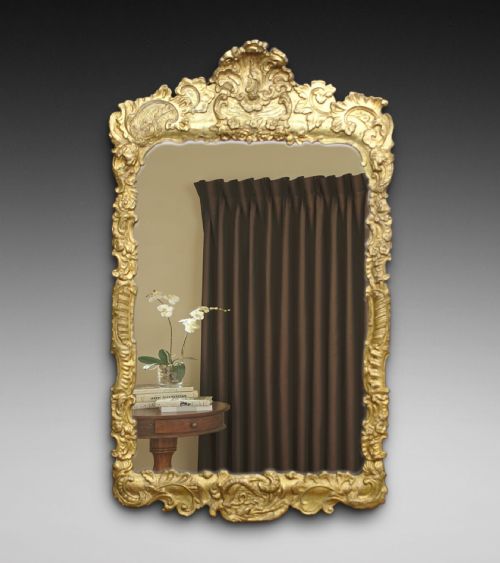

C Scroll Gold Mirror
These c scroll gold mirror pieces bring exuberant Rococo carved frames and gilded surfaces into a room.
C Scroll Gold Mirror
A c scroll gold mirror is primarily a wall mirror, overmantel mirror, or dressing table mirror framed in carved timber, giltwood, or composition. When searching for c scroll gold mirror, buyers encounter examples stretching from the seventeenth century through to the interwar period.
The selection ranges from grand nineteenth-century overmantel mirrors and pier glasses down to smaller vanity and dressing table mirrors. French Rococo revival, Italian Rococo, and Chippendale revival pieces dominate the selection alongside Georgian and Victorian originals.
How they were made
Frames are constructed from timber such as walnut or carved giltwood, frequently finished with layers of gesso and gold leaf or composition. Craftsmen shaped these materials into intricate scrolling forms and arched tops.
Glass plates are set within the carved surrounds, sometimes featuring engraved plates or hand-painted details. Gilding techniques applied gold leaf over red bole to achieve the characteristic metallic sheen.
Listings feature periods spanning from the seventeenth century through the 1930s, using materials such as giltwood, walnut, gesso, and mirror glass.
What varies in quality
The depth and crispness of the hand carving separate standard frames from superior examples, particularly in the definition of the scrolling motifs and foliage. Solid timber frames with deep relief work show greater sculptural skill than moulded composition alternatives.
The condition and authenticity of the original mirror plate and the integrity of the antique gilding determine the overall character. Later replacements of glass or gilding alter the visual weight and historical honesty of the piece.
The C Scroll Gold Mirror Glossary
- Giltwood
- Timber, commonly lime or pine, that has been prepared with gesso and covered in thin sheets of gold leaf. This surface finish creates a warm metallic glow that ages with a fine craquelure.
- Gesso
- A plaster-like mixture applied to wooden frame foundations to provide a smooth base for gilding. Carvers cut fine details directly into this dried layer.
- Overmantel mirror
- A large horizontal mirror designed to sit directly above a fireplace mantelpiece. These pieces often feature arched tops and substantial frames to anchor a room.
- Pier glass
- A tall, narrow mirror traditionally hung on the pier or wall space between two windows. They reflect additional light into darker spaces.
- Rococo
- An ornate decorative style characterised by asymmetrical C-scrolls, shell motifs, and naturalistic plant forms. The style heavily influences eighteenth-century and revival frames.
C Scroll Gold Mirror: Frequently Asked Questions
Where should I hang a large overmantel mirror?
These large mirrors sit naturally above a fireplace mantelpiece, where they anchor the room and draw light upwards. Secure them directly into structural wall studs using appropriate heavy-duty fixings.
Alternatively, position them on a main living room wall opposite a window to maximise natural daylight and create an illusion of greater spatial depth.
Are these mirrors heavy to mount?
Many of these pieces possess substantial timber and gesso frames that carry considerable weight. Professional wall mounting into solid brick or timber studs is essential for safety.
Check the integrity of the original hanging loops and wooden frame joints before attempting to suspend any heavy wall mirror.
How do I distinguish an 18th century frame from a revival piece?
Examine the backboards, fixings, and the tool marks left within the gesso and wood carving. Eighteenth-century pieces typically show hand-cut joinery and older patination on the timber.
Revival pieces from the nineteenth or twentieth centuries often utilise machine-sawn backing timbers and standardised modern screws while mimicking earlier Rococo styles.