

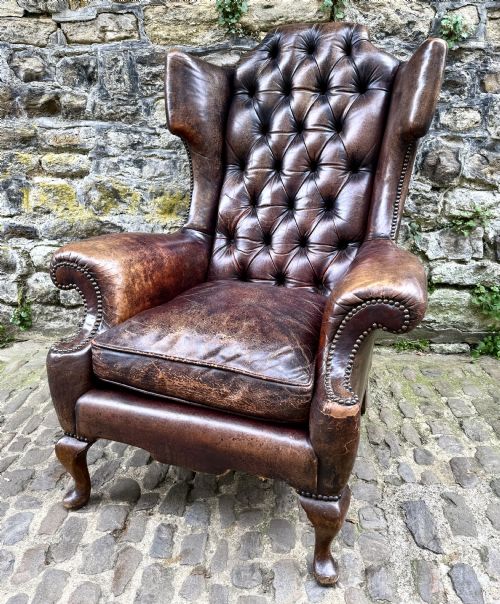


Buttoned Wingback Chair
A buttoned wingback chair offers high sides to block draughts and a deep buttoned back for firm support, bringing classic comfort to any room.
Buttoned Wingback Chair
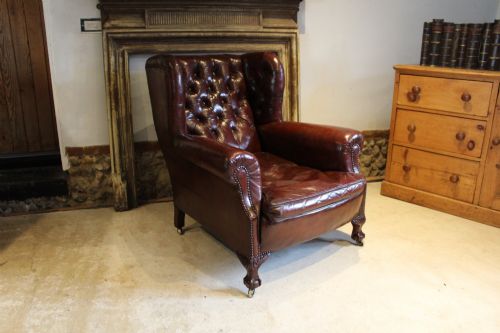
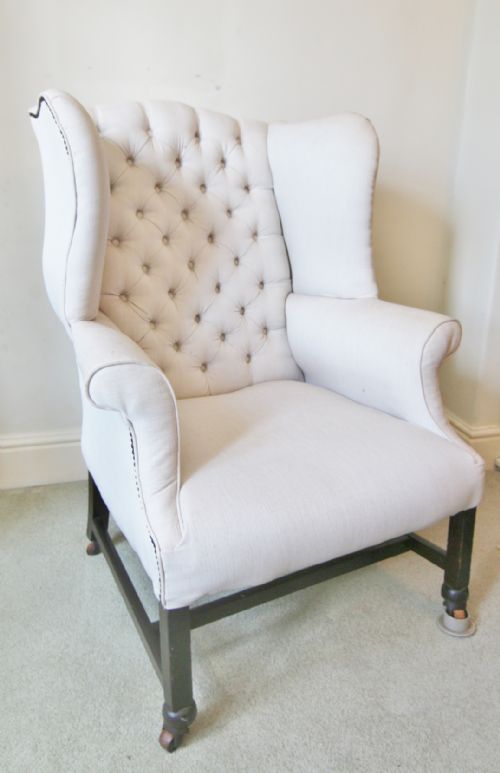
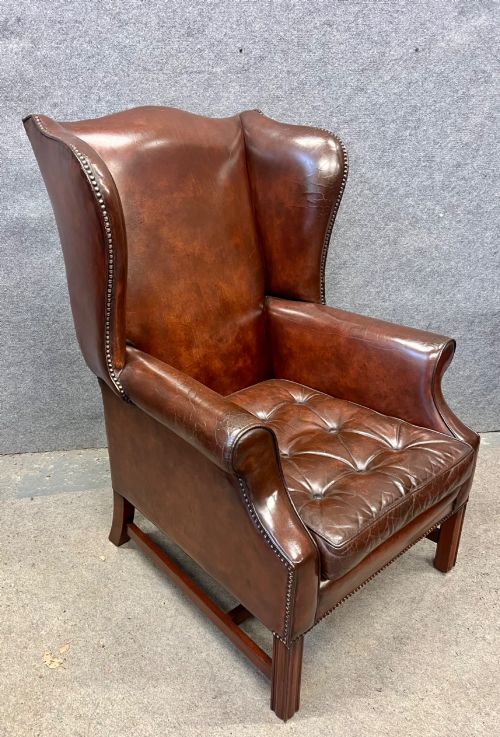
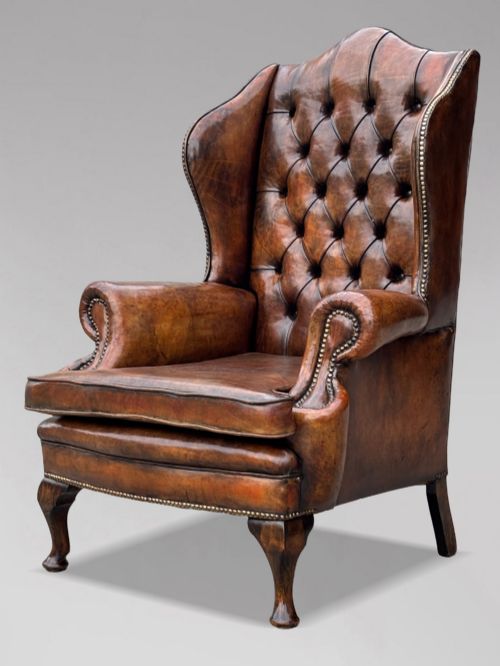
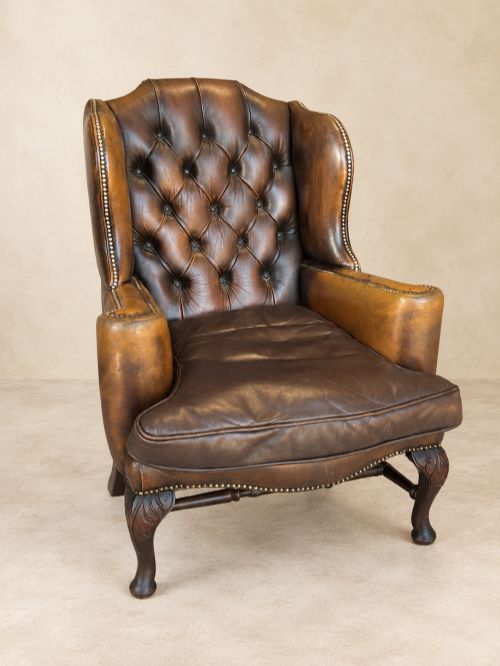
A buttoned wingback chair combines an upright upholstered seat with protective side wings and characteristic deep tufting across the backrest. These pieces emerge across several periods, with Victorian and Edwardian examples sitting alongside earlier Georgian items and later 20th century revivals.
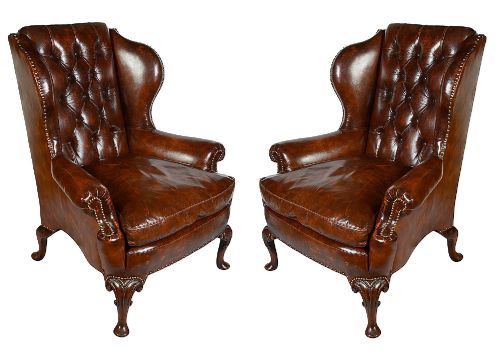
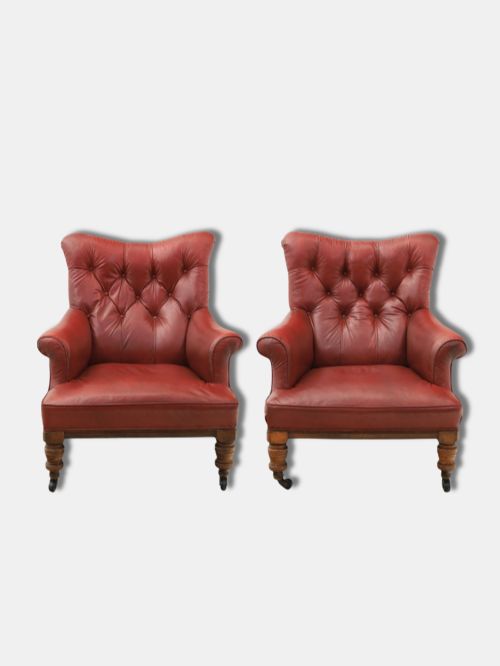
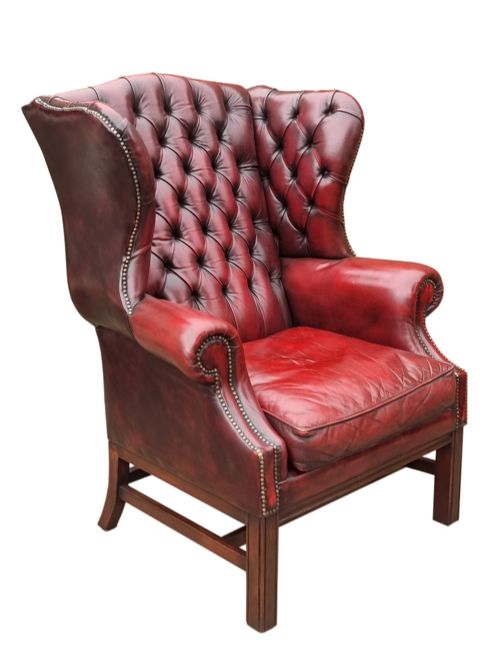
Most items you encounter on this page date from the 19th and early 20th centuries, often upholstered in brown, tan or oxblood leather. Alongside traditional armchairs, the selection includes matched pairs, larger Chesterfield variants, and occasional reclining forms.
The proportions range from standard fireside seating to generous library proportions and higher porters chair designs. Wood frames in mahogany and hardwood provide the underlying structure for these substantial pieces of domestic furniture.
Materials and Construction
Makers built the foundational frames using timber such as mahogany and various hardwoods, often shaping supports with carved detailing on the legs and arms. Brass elements appear in structural fixings, castors, and mechanical reclining adjustments.
Upholstery relies heavily on leather, fabric, and rexine, secured with deep buttoning techniques that create the signature dimpled surface across the backrest. Hand dyed treatments and full button configurations add texture and depth to the outer hide.
Buttoned Wingback Chair Retail Price Guide 2026
Typical asking prices for buttoned wingback chair among the pieces listed under this phrase on Sellingantiques today, from the lower quarter to the upper quarter. They describe what is for sale here now, not the wider market.
Listings feature pieces spanning the 18th, 19th, and early 20th centuries, alongside Georgian Revival and George III style interpretations.
Assessing Quality and Execution
The distinction between standard examples and superior pieces rests on the crispness of the timber carving and the weight of the frame. Heavier, solid mahogany or hardwood foundations provide lasting stability compared to lighter alternatives.
Leather quality dictates the tactile experience of the surface, with hand dyed hides offering richer tonal variation than uniform synthetic finishes. The precision of the buttoning work and the symmetry of the wings reflect the skill invested by the original upholsterer.
Sopwith·Foot and Son·John Ward·Gillows
The Buttoned Wingback Chair Glossary
- Wingback
- An armchair featuring protective side panels designed to shield the occupant from draughts. These wings project from the upper back of the frame.
- Buttoned
- An upholstery style where buttons are pulled tight through the padding to create a diamond pattern of indentations. This secures the internal stuffing and shapes the backrest.
- Chesterfield
- A traditional furniture style characterised by button tufting and rolled arms of equal height to the back. It denotes a substantial, deep seated profile.
- Rexine
- A branded artificial leather fabric made from cloth coated with nitrocellulose and pigment. It offers a durable, wipeable alternative to natural hide.
- Library armchair
- A generous and sturdy seating form designed for reading rooms and studies. These often feature wider proportions and substantial wooden frames.
Buttoned Wingback Chair: Frequently Asked Questions
What is a buttoned wingback chair?
A buttoned wingback chair is a traditional seat featuring protective side panels and a deeply tufted backrest secured with upholstery buttons. The design developed to keep fireside heat close to the occupant while blocking cold room draughts.
Over time, makers adapted the form into larger library chairs and Chesterfield styles upholstered in leather or fabric. These pieces remain popular for their distinctive silhouette and supportive upright posture.
Are these chairs comfortable for daily use?
These chairs provide firm, upright support thanks to their rigid internal framing and dense buttoned padding. The high back and padded wings offer a secure resting place for the head and shoulders.
While older springs and stuffing feel firmer than modern foam seating, their ergonomic proportions suit reading and relaxation. Pairing them with a matching footstool extends their comfort for longer periods.
Where should I place a wing chair?
A wing chair works naturally beside a fireplace, reading corner, or study desk where its high sides can block peripheral distractions. Its traditional profile makes it a strong anchor piece for a living room layout.
Ensure you measure the floor space carefully, as the generous wings and rolled arms require more room than a standard armchair. Positioning them away from direct heat sources helps preserve the leather or fabric upholstery.