

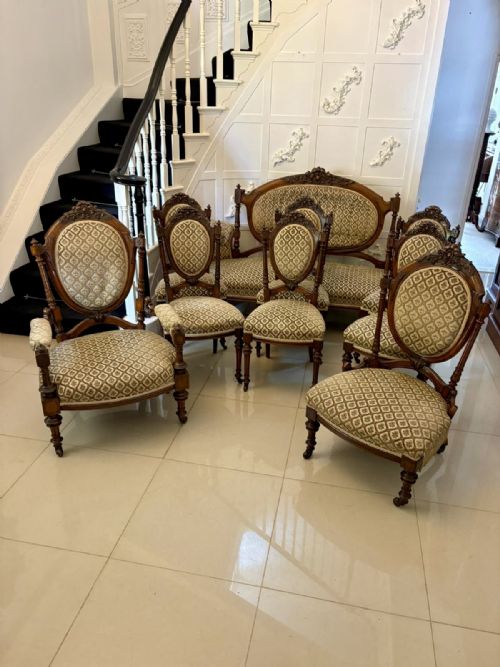
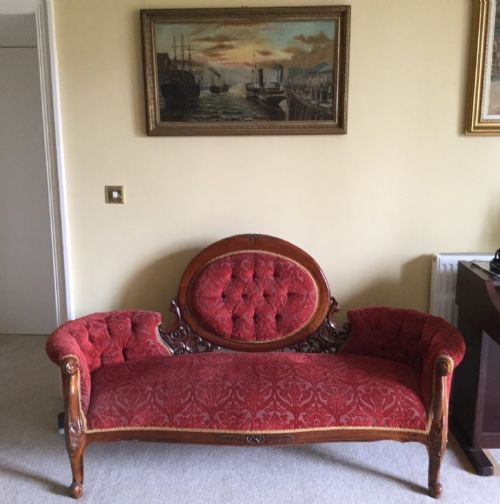


Buttoned Salon Sofa
A buttoned salon sofa brings deep buttoning and rich textiles to a formal room, offering refined Victorian and Edwardian seating.
Buttoned Salon Sofa
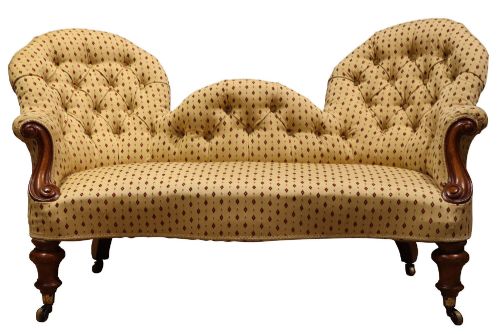
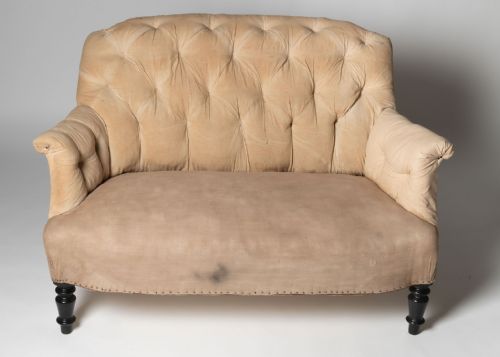
A buttoned salon sofa is a formal seat designed for the nineteenth and early twentieth century drawing room, combining structural timber with deep upholstery. These pieces appear in periods spanning the Victorian era, the Edwardian years, and the late nineteenth century.
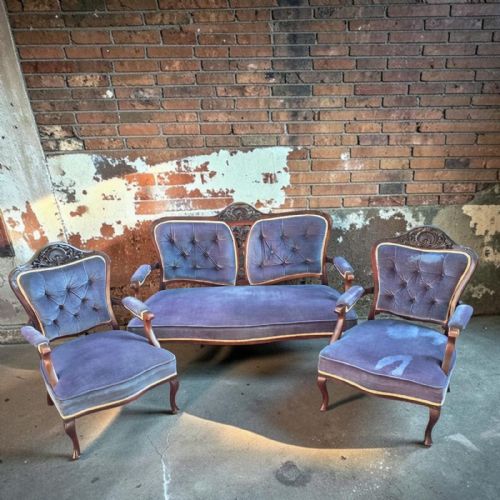
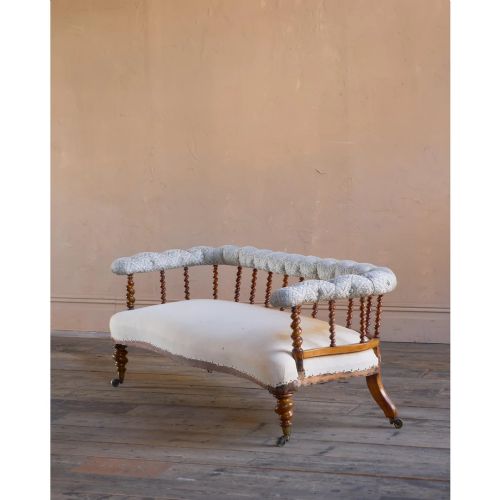
Forms include double-ended settees, cameo back settees, spindle backs, and pieces within larger salon suites or drawing room suites. Walnut and mahogany frames dominate, alongside ebonised finishes.
Makers such as C. Hindley & Sons and James Shoolbred produced notable examples, often pairing the sofa with matching chairs. Most examples date from the mid-nineteenth century to the early twentieth century.
Construction and materials
Frames rely on solid timbers including walnut, mahogany, and rosewood, sometimes shaped with carved details or inlaid decoration. Brass elements occasionally appear alongside ceramic components.
Upholstery involves textiles such as velvet, damask, fabric, and deep pile brocade. Sprung settee bases provide underlying support for the padded and buttoned surfaces.
Buttoned Salon Sofa Retail Price Guide 2026
Typical asking prices for buttoned salon sofa among the pieces listed under this phrase on Sellingantiques today, from the lower quarter to the upper quarter. They describe what is for sale here now, not the wider market.
Listings feature walnut, mahogany, and rosewood frames paired with velvet, damask, and brocade upholstery across the Victorian and Edwardian periods.
Distinctions in quality
The refinement of the timber carving and the complexity of the frame geometry separate standard seating from exhibition quality pieces. Walnut and rosewood frames with intricate detail represent higher tiers of craftsmanship.
The choice of covering textile and the precision of the deep buttoning dictate the finish of the upholstery. Suites that retain matching chairs and unified stylistic details hold greater cohesion.
C. Hindley & Sons·Jas / James Shoolbred
The Buttoned Salon Sofa Glossary
- Button back
- A style of upholstery where depressions are formed in the padding by pulling ties or threads through to the frame, secured with buttons. This technique creates a distinct padded diamond pattern across the backrest.
- Salon suite
- A coordinated set of seating furniture, typically comprising a settee and matching chairs for a drawing room. These suites share identical timber frames, carving styles, and upholstery fabrics.
- Double-ended sofa
- A settee featuring scrolled or raised ends of equal height on both sides, allowing a person to recline against either end. This symmetrical form was popular during the Victorian period.
- Cameo back
- A chair or sofa back carved in relief to resemble a carved gemstone cameo, often framed by curving wooden margins. The outline follows the contour of the upholstered central panel.
- Aesthetic movement
- A late nineteenth century design style that emphasised artistic expression, often utilising ebonised timber and simplified forms inspired by Japanese art.
Buttoned Salon Sofa: Frequently Asked Questions
Where were these sofas placed?
These pieces were designed for formal reception spaces, drawing rooms, and parlours where guests were entertained. They served as central seating elements within coordinated salon suites.
Their decorative timber frames and fine textiles suited spaces intended to display taste and social standing to visitors.
How do I care for the upholstery?
Protect the fabric and velvet surfaces from direct sunlight to prevent fading of the textile colours. Gentle brushing removes surface dust from deep pile brocade and damask.
Avoid placing these items near direct heat sources to protect the underlying wooden frame and sprung base.
What defines the Victorian style?
Victorian seating encompasses diverse revivals, including Rococo Revival and Louis XVI Revival motifs. Walnut and mahogany frames feature prominent carving and curved silhouettes.
Upholstery often employs rich materials such as velvet and damask, frequently finished with deep buttoning.
Are matching chairs common?
Many examples form part of larger salon suites that include matching pairs or sets of chairs. These suites share identical timber types, decorative carving, and upholstery fabrics.
Individual settees also appear independently from larger suites, reflecting varied furnishing arrangements of the period.