

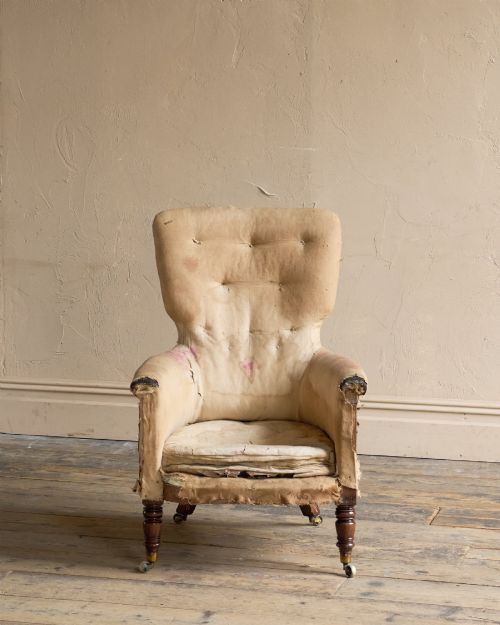
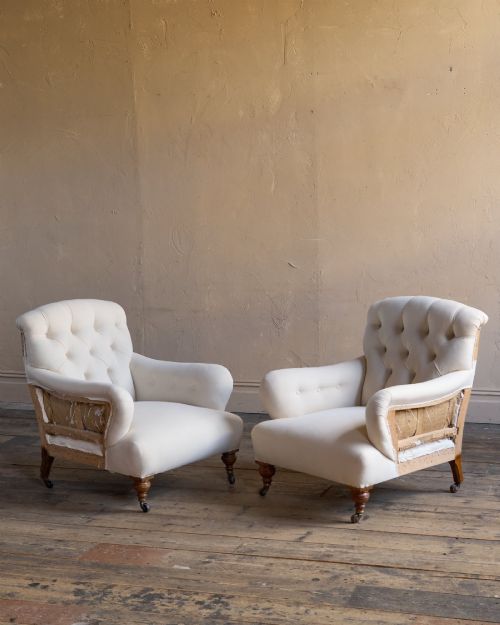
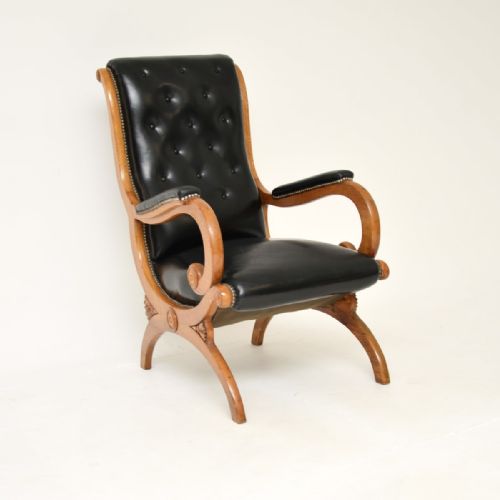
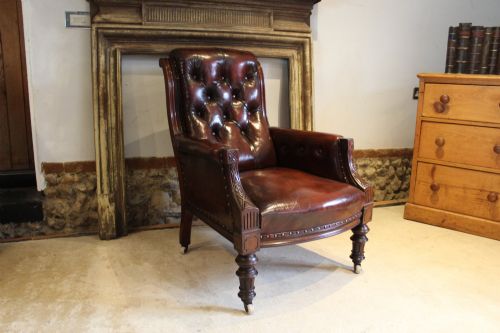
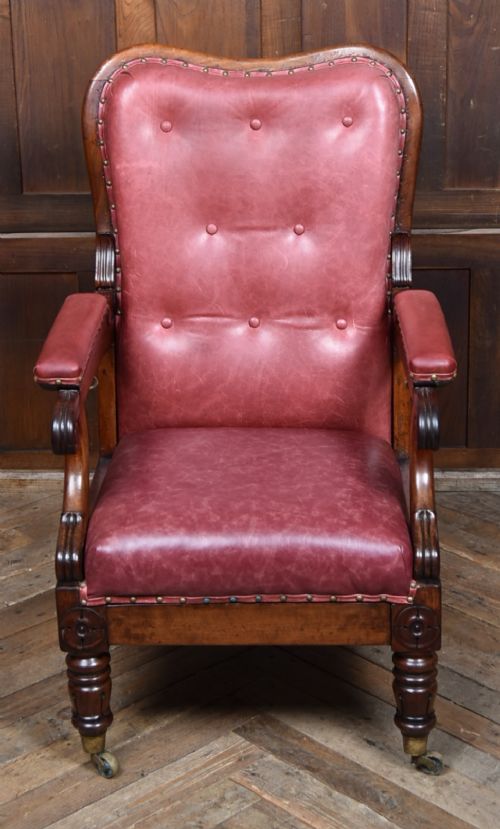
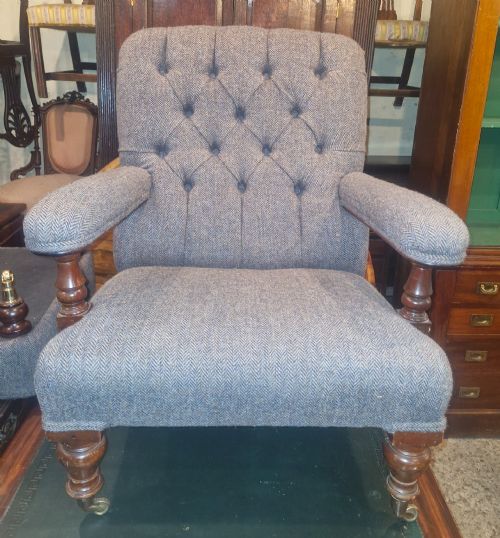
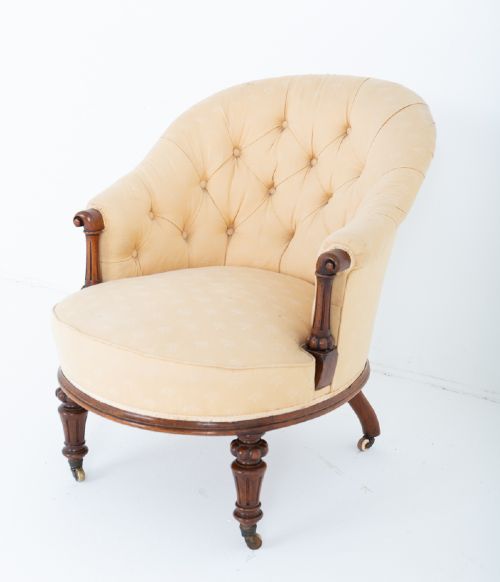
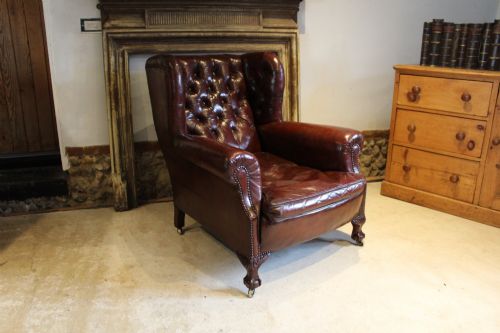
Buttoned Reading Chair
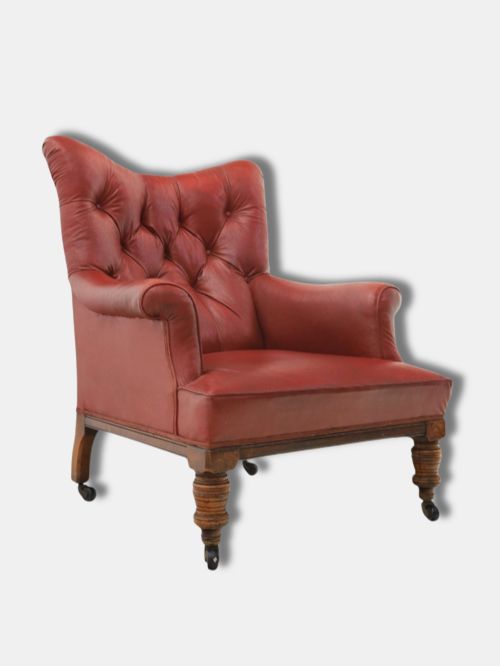
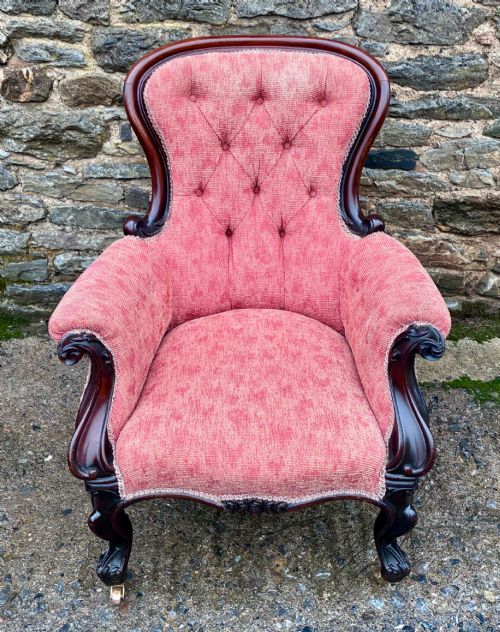
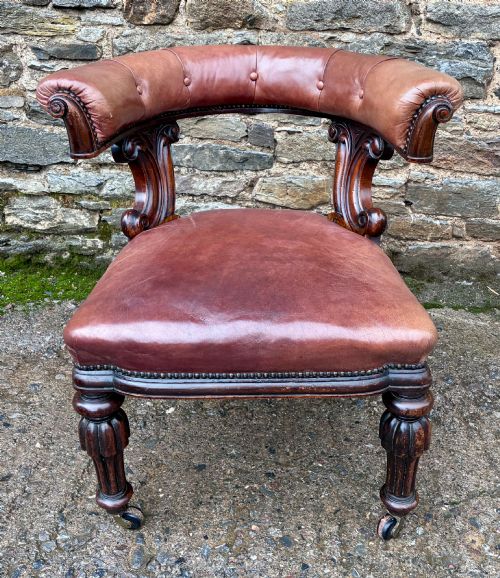
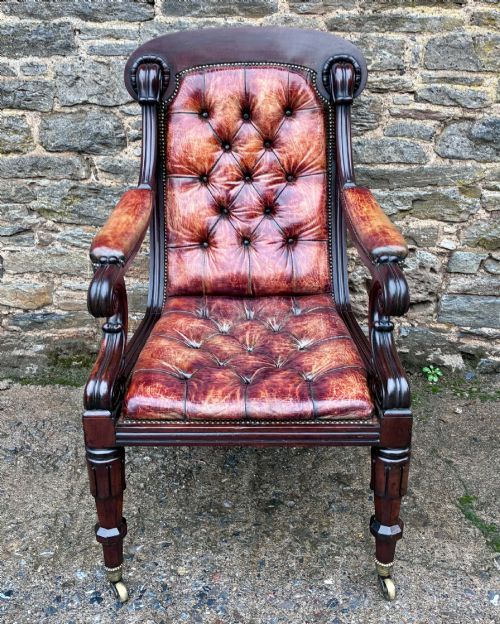
A buttoned reading chair offers deep-seated comfort paired with tailored buttoning, serving as a traditional piece for long hours with a book.
Buttoned Reading Chair
A buttoned reading chair is primarily an upholstered armchair designed for comfort during long periods of study or leisure. The selections on this page span the 18th century, the Regency period, and the 19th century, drawing on Victorian, William IV, and Georgian styles.
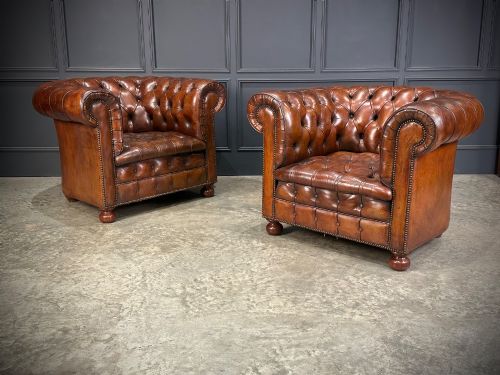
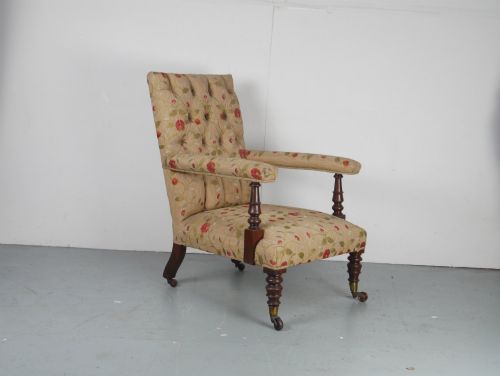
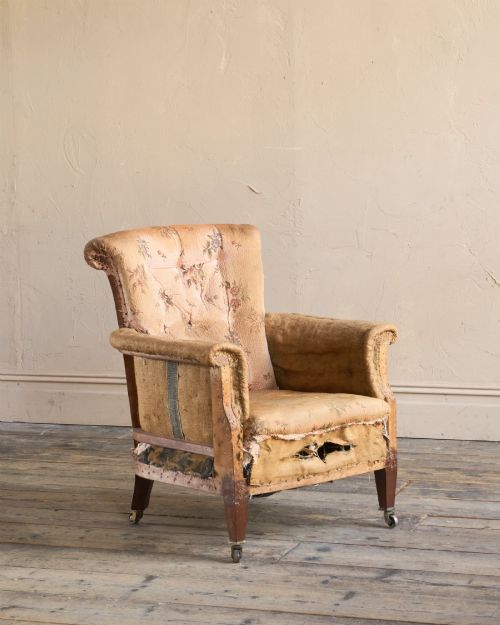
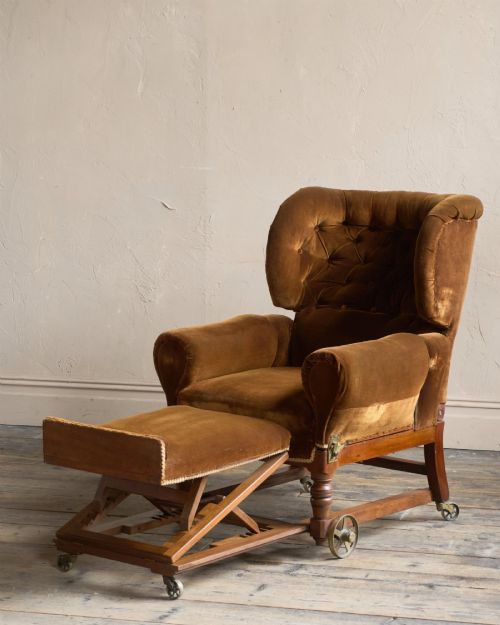
Most pieces you encounter here take the form of library armchairs, wing armchairs, or tub chairs framed in solid mahogany, walnut, oak, and rosewood. Makers and workshops of the 19th century adapted these forms with deep buttoning and adjustable elements like reading stands or reclining mechanisms.
Originating largely from English country house traditions alongside French Napoleon III designs, these chairs combine sturdy timber frames with padded seating. You will find examples ranging from compact library seats to large wing armchairs upholstered in leather, velvet, fabric, or calico.
How they were made
Frames are constructed from dense hardwoods such as mahogany, oak, walnut, and rosewood, often shaped with carved details or supported by brass castors. Iron components also appear in specific mechanical or structural designs.
Upholstery relies on traditional stuffing secured beneath top covers of leather, velvet, woven fabric, or calico. Deep buttoning is pulled tight to create the characteristic geometric pattern across the backrest, while additional materials like cane and brass fittings complete the construction.
Buttoned Reading Chair Retail Price Guide 2026
Typical asking prices for buttoned reading chair among the pieces listed under this phrase on Sellingantiques today, from the lower quarter to the upper quarter. They describe what is for sale here now, not the wider market.
Some Victorian reading chairs arrived with built-in bookstands, proving that nineteenth-century readers took their comfort just as seriously as we do.
What varies in quality
The distinction between standard examples and the finest works lies in the execution of the timber frame and the precision of the upholstery. Superior pieces display finely carved mahogany or rosewood frames paired with crisp, deep buttoning that maintains its tension evenly across the leather or fabric.
Makers' marks and attribution to renowned workshops introduce notable distinction, alongside the complexity of integrated mechanisms such as patent reclining actions or built-in reading stands. Original materials and untouched timber patination elevate certain chairs well above standard utilitarian seating.
Howard & Sons·Gillows·Holland & Sons·Mellier & Co
The Buttoned Reading Chair Glossary
- Bergere
- An enclosed upholstered armchair with wooden framing and cane panels on the back and sides. This French-inspired form gained popularity during the Regency era.
- Library armchair
- A sturdy, deeply padded seat designed for prolonged sitting in a study or library. These often feature leather upholstery and robust mahogany frames.
- Wing armchair
- A high-backed chair with flanking side panels designed to shield the sitter from draughts. Georgian and Victorian examples frequently utilise buttoned leather.
- Buttoning
- A technique where upholstery is pulled tight and secured with buttons at regular intervals to form a quilted pattern. It provides structural support to the padding.
- Castor
- A small wheel attached to the base of furniture legs to ease movement. Brass castors are common on 19th century library chairs.
Buttoned Reading Chair: Frequently Asked Questions
What is a buttoned reading chair?
A buttoned reading chair is an upholstered armchair featuring tufted buttoning across the backrest, designed for comfort while reading in a library or study.
These pieces typically date from the 18th and 19th centuries, utilising timber frames of mahogany, oak, or walnut paired with leather or fabric covers.
Were these chairs used only in libraries?
While named library armchairs or reading chairs, these seats were placed throughout country houses in studies, drawing rooms, and bedrooms.
Their robust construction and comfortable padding made them suitable for any room where prolonged sitting was required.
How should I care for leather upholstery?
Leather upholstery on antique chairs requires minimal intervention, benefiting mainly from gentle dusting and occasional conditioning to prevent drying.
Keep these chairs away from direct sunlight and heat sources to preserve the natural grain and colour of the vintage leather.