
Buttoned Fireside Chair
A buttoned fireside chair offers deep upholstery and buttoned backs for warmth and comfort, bringing traditional character to any room.
Buttoned Fireside Chair
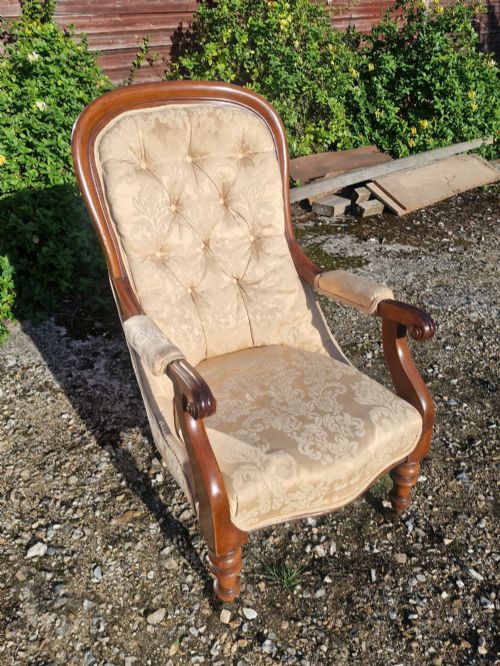
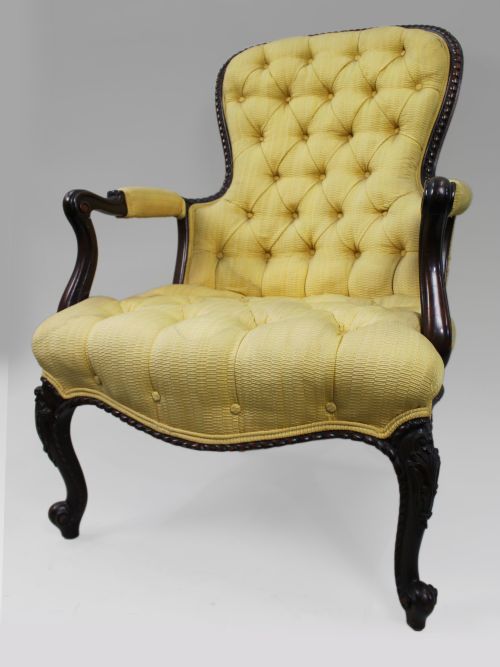
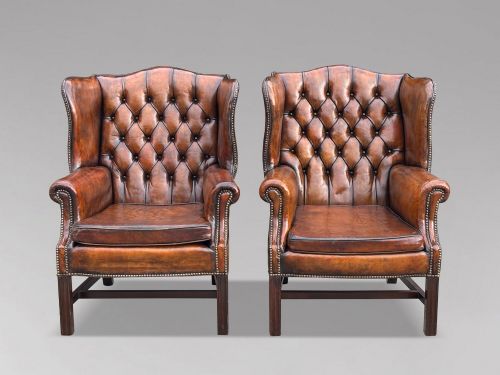
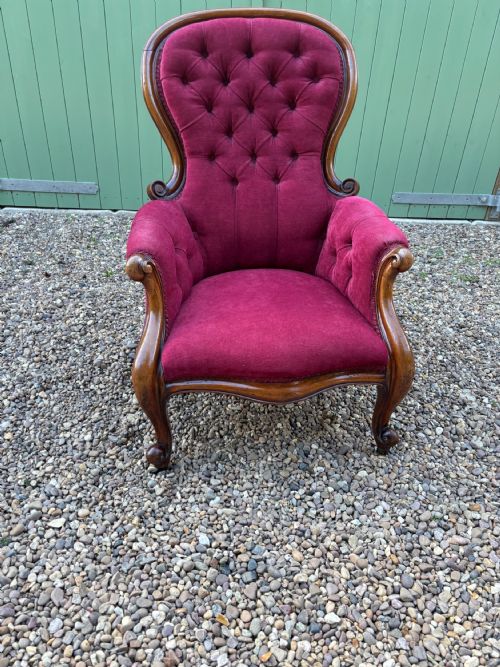
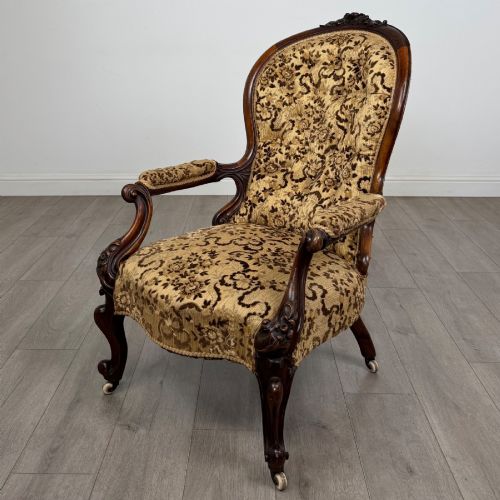
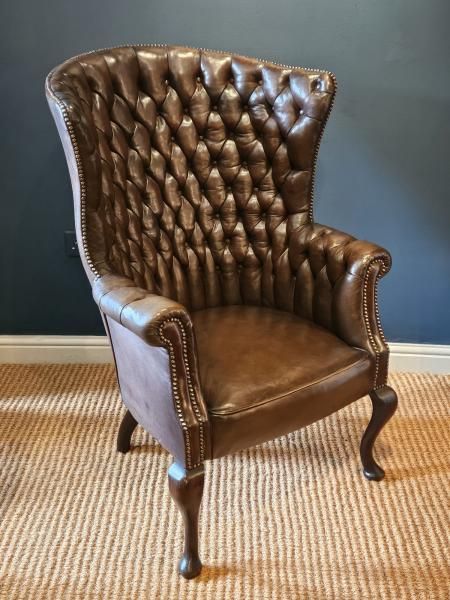
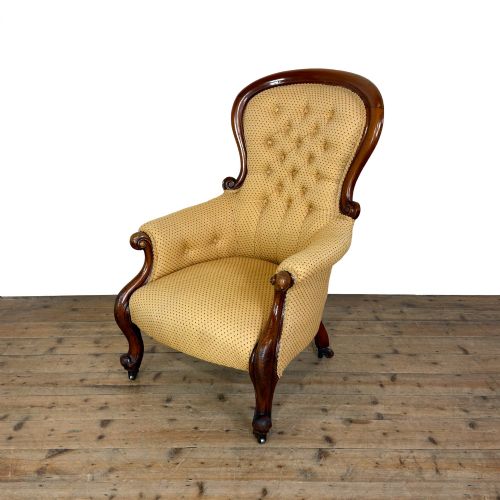
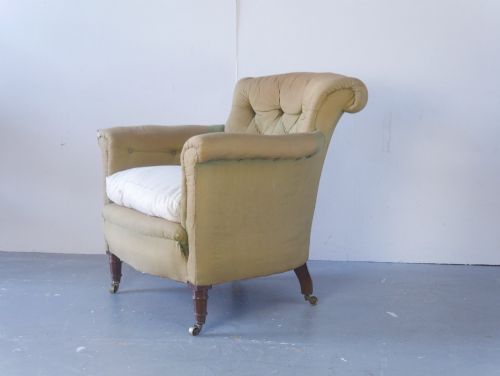
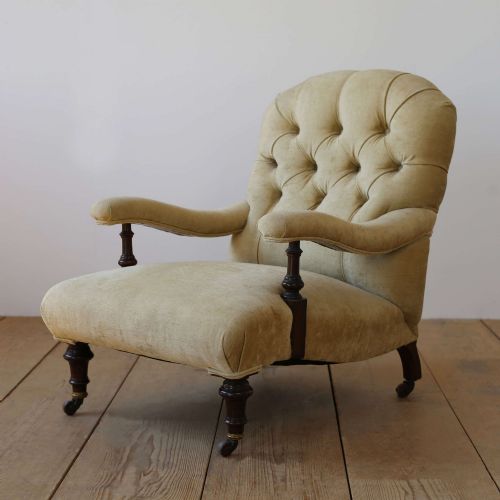
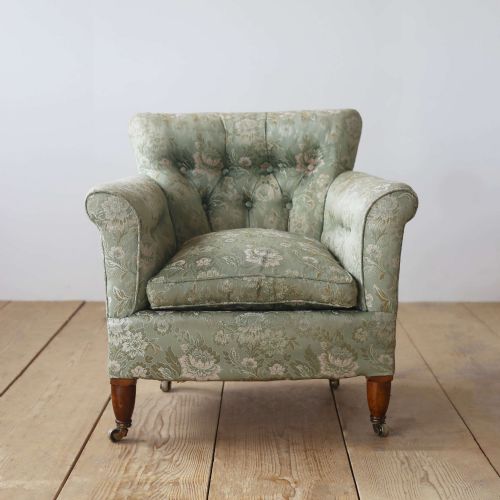
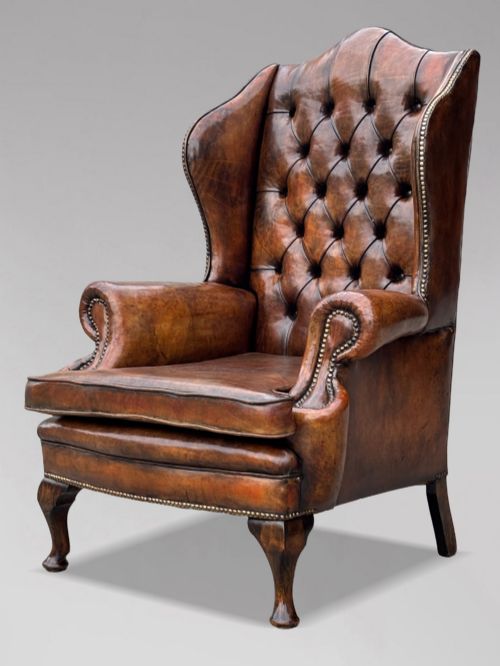
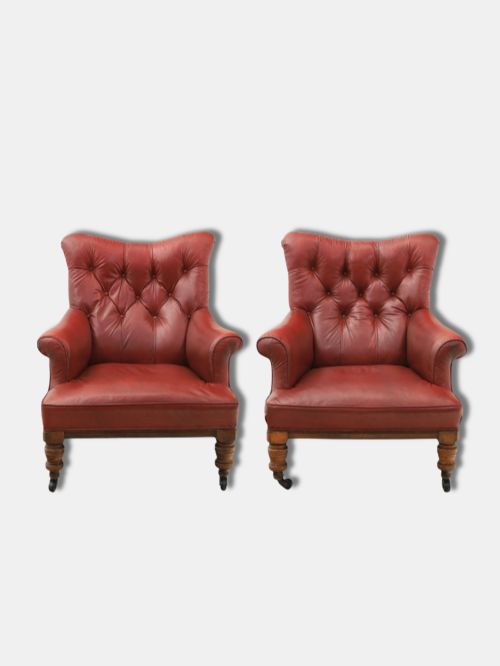
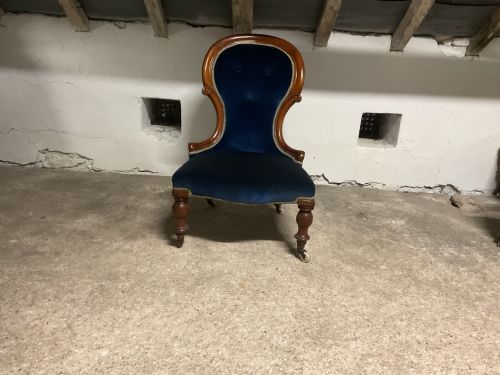
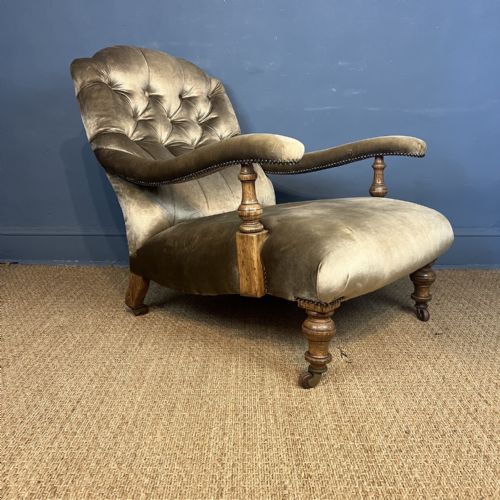
A buttoned fireside chair is a traditional seating form designed for warmth and comfort, typically featuring deep upholstery and a supportive back. When you search for a buttoned fireside chair, you encounter a variety of forms including wing armchairs, nursing chairs, slipper chairs, and library chairs. These pieces originate from periods such as the nineteenth century, the Victorian era, the Edwardian period, and the nineteen-twenties.
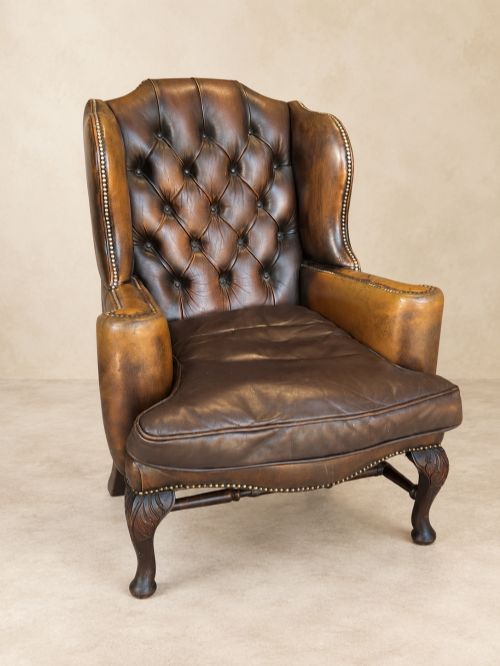
The most common examples on this page are nineteenth-century and Victorian leather or fabric armchairs, often incorporating buttoned backs and turned or carved wooden supports. You also find stylistic revivals like George III style, Regency, and Victorian Rococo Revival, alongside English country house pieces. Makers and workshops such as Gillows, Howard and Sons, Mellier and Co, and Shoolbred influence the design language of these seating options.
How they were made
Makers constructed the frames of these chairs using solid hardwoods like mahogany, walnut, oak, and rosewood, ensuring structural strength beneath the upholstery. Joinery techniques varied from pegged mortise and tenon joints in earlier frames to precise corner blocking in later Victorian and Edwardian examples.
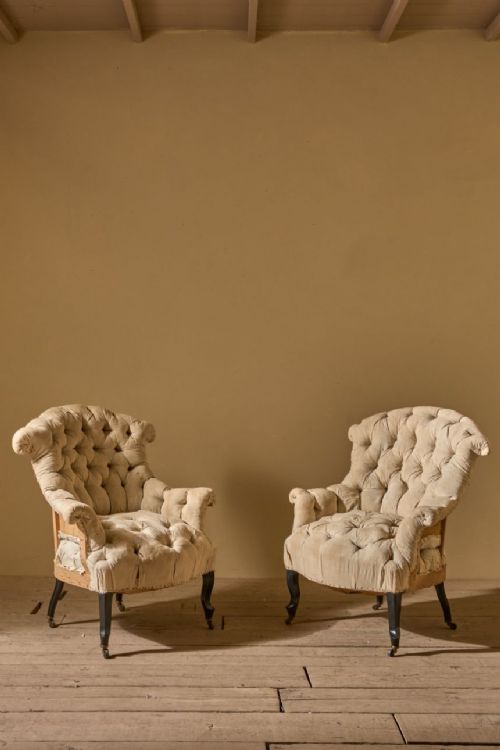
Upholstery relied on natural stuffing materials covered in leather, velvet, fabric, calico, or rexine, secured with brass tacks. Deep buttoning involved pulling twine through the padding and securing it to the frame to create the signature dimpled pattern.
Upholstery materials recorded across the inventory include full grain leather, velvet, calico, fabric, and rexine secured with brass.
What varies in quality
The quality of a buttoned fireside chair depends upon the integrity of the underlying hardwood frame and the skill of the original joinery. Finer pieces display hand-carved mahogany or walnut details, balanced proportions, and robust internal webbing rather than sagging padding or split timber.
Makers attribution also shifts value, with signed or stamped pieces from renowned workshops like Gillows or Howard and Sons representing higher craftsmanship than anonymous provincial equivalents. The choice of covering materials, from premium aged leather to quality velvet or calico, reflects the original commission tier.
Gillows·Howard and Sons·Mellier and Co·Shoolbred
The Buttoned Fireside Chair Glossary
- Button back
- A style of upholstery where buttons are pulled deep into the padding in a diamond pattern to secure the filling and create a textured surface. This technique provides both visual rhythm and firm lumbar support.
- Wing armchair
- An upholstered seat featuring projecting side panels designed to shield the occupant from drafts by the hearth. These wings also trap heat generated by the fire.
- Nursing chair
- A low-seated armchair historically designed for feeding infants, often featuring an upholstered frame without prominent wooden arms. The low stature allowed the sitter to tend easily to a hearth or a cradle.
- Bergère
- An enclosed armchair featuring upholstered sides and back, typically incorporating woven cane panels within a wooden frame. This French-influenced form offers lighter visual proportions while maintaining solid support.
- Rexine
- A brand of leathercloth made from fabric coated with nitrocellulose, used as a durable upholstery alternative to natural hide. It appears on mid-period and twentieth-century utilitarian seating.
Buttoned Fireside Chair: Frequently Asked Questions
How do I date a buttoned armchair?
Dating relies on examining the framing timbers, upholstery techniques, and stylistic clues such as cabriole legs or square Regency supports.
Victorian and Edwardian examples often feature stamped maker marks, heavier mahogany frames, or characteristic buttoning patterns that align with nineteenth-century production methods.
Were these chairs used only by the fire?
While the high wings and enclosed sides were originally designed to trap heat and block drafts from a fireplace, they served various reception rooms.
Library chairs, smoking chairs, and bedroom nursing chairs utilised the same comfortable upholstered construction for reading, resting, and private quarters.
How do I care for leather upholstery?
Leather-upholstered chairs require regular dusting with a soft cloth and occasional treatment with appropriate leather conditioners to prevent drying.
Keeping antique leather away from direct heat sources and strong sunlight preserves the natural hide and maintains the integrity of the surface.