





Buttoned Desk Chair
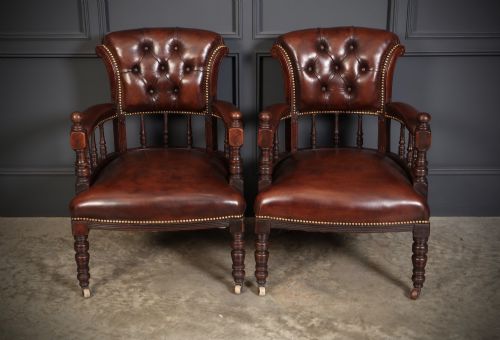
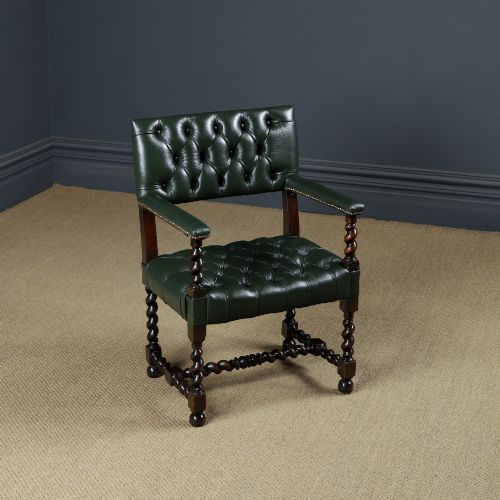
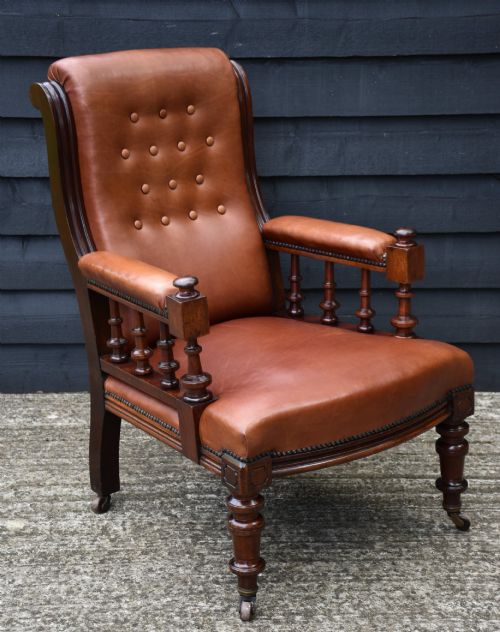
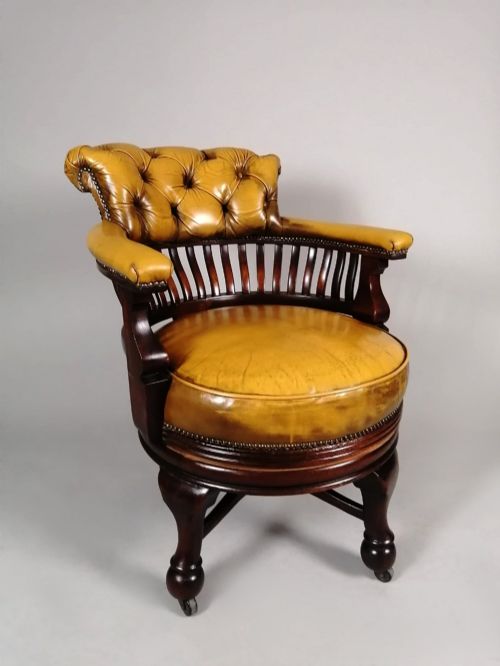
A buttoned desk chair brings tactile comfort and period authority to a study through deep leather upholstery and solid timber framing.
Buttoned Desk Chair
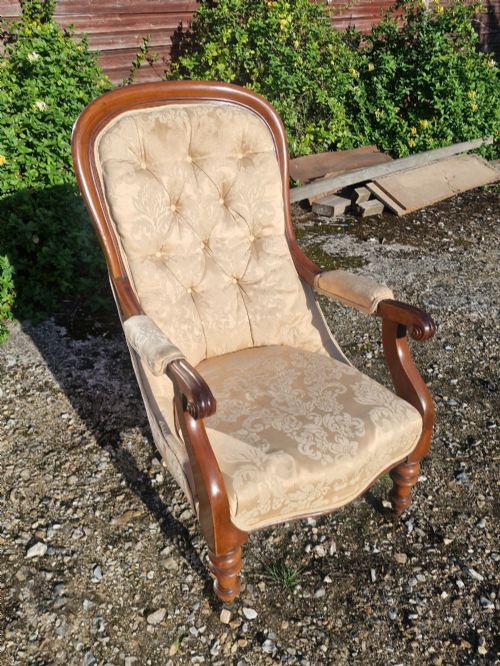
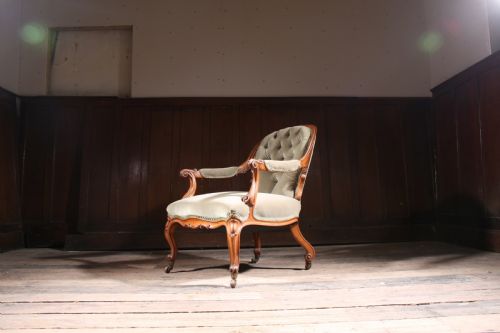
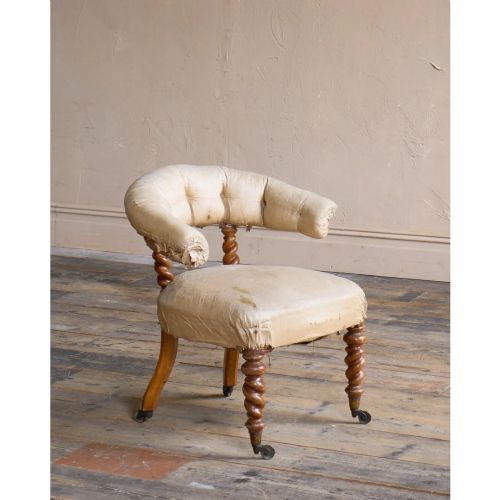
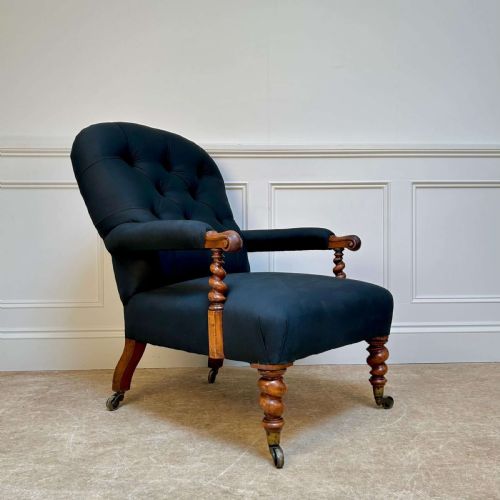
A buttoned desk chair combines practical seating for a workspace with the traditional upholstery methods of the nineteenth century. Buyers searching for a buttoned desk chair encounter sturdy timber frames paired with button-back leather or fabric padding.
The selections span the Victorian, Edwardian, and Regency periods, featuring revolving mechanisms, fixed frames, and library armchairs. Mahogany, oak, and walnut form the structural basis of these seats, often accented with brass details.
Armchairs and desk armchairs dominate the available forms, ranging from swivel office chairs to static library seats. These pieces serve both modern home offices and traditional reading rooms.
Materials and construction methods
Cabinetmakers constructed these frames using dense hardwoods such as mahogany, walnut, oak, and rosewood. These timbers provided the structural strength required for heavy daily use in offices and libraries.
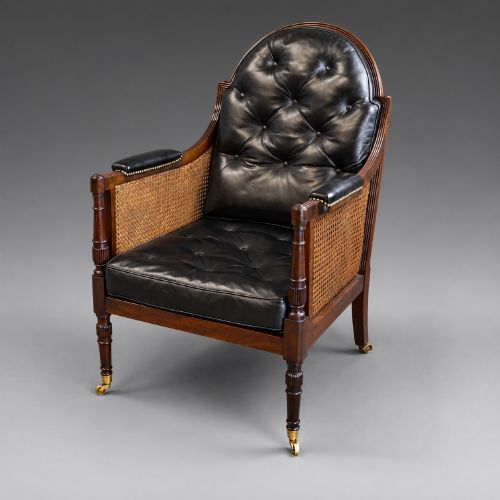
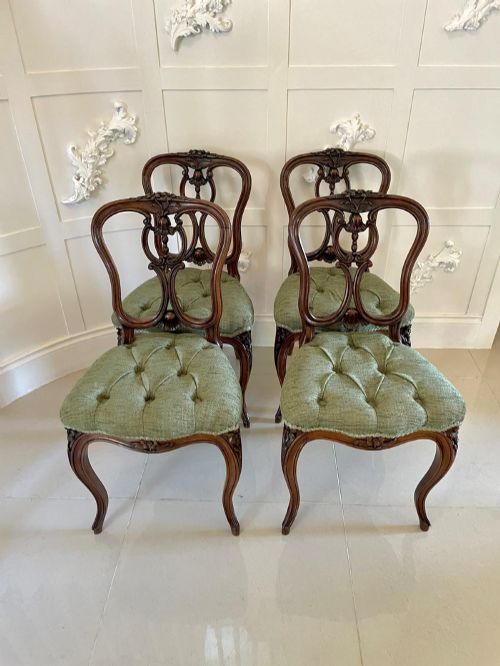
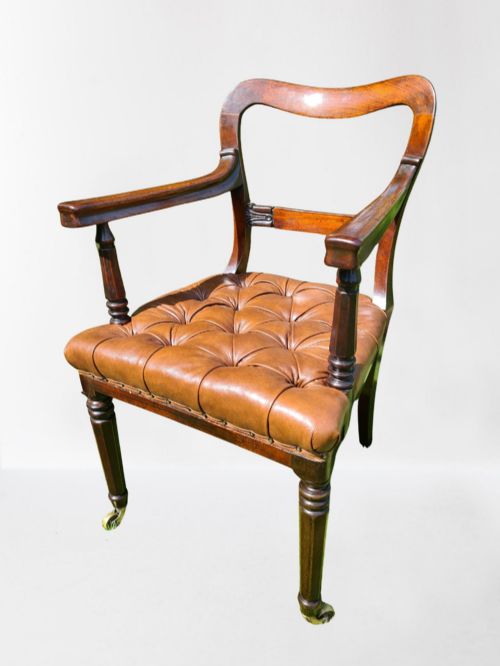
Upholsterers applied leather, velvet, or fabric over internal padding, securing the material with deep buttoning techniques. Brass elements, including castors and decorative nailing, finished the hardware components.
Buttoned Desk Chair Retail Price Guide 2026
Typical asking prices for buttoned desk chair among the pieces listed under this phrase on Sellingantiques today, from the lower quarter to the upper quarter. They describe what is for sale here now, not the wider market.
Listings feature timber frames in mahogany, oak, walnut, and rosewood paired with leather, velvet, and fabric upholstery across the nineteenth and early twentieth centuries.
Distinguishing quality across examples
The refinement of the timber carving and the symmetry of the buttoning distinguish finer examples from standard workshop production. Superior pieces display carefully selected wood grain and well-proportioned arm supports.
The complexity of the mechanism, such as a smooth revolving swivel action, separates simple side seating from sophisticated desk chairs designed for extended writing tasks.
C. Hindley & Sons
The Buttoned Desk Chair Glossary
- Buttoning
- A traditional upholstery technique where upholstery is pulled tight and secured with recessed buttons to create a padded, diamond-patterned surface. This method provides both structural tension and distinctive visual texture.
- Revolving
- A mechanical feature allowing the seat to rotate around a central vertical axis. It appeared frequently on desk and office chairs from the nineteenth century onward.
- Bergère
- An enclosed armchair with stuffed upholstery and cane or wooden sides. The style originates in France and offers a lighter profile than solid timber library chairs.
- Captain's chair
- A sturdy timber armchair with a rounded back rail supported by spindles, often adapted with leather upholstery for office use.
- Library armchair
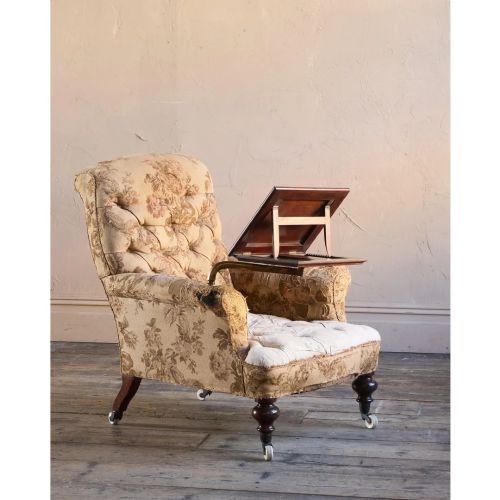
- A generous, heavily upholstered seat designed for comfort during extended periods of reading. These chairs frequently feature wide wooden arms and substantial frames.
Buttoned Desk Chair: Frequently Asked Questions
How do I identify a Victorian desk chair?
Victorian desk chairs typically feature dark hardwoods like mahogany or oak combined with turned legs and leather upholstery. They often incorporate swivel mechanisms or stationary library designs common to nineteenth-century studies.
Look for hand-carved frame details and traditional joinery methods that distinguish nineteenth-century production from later revival pieces.
Are these chairs comfortable for daily work?
Many nineteenth-century desk chairs were engineered specifically for long hours of reading and writing. Generous padding and ergonomic curved backrests provide substantial physical support.
Revolving variants allow for easy movement around a modern desk space while maintaining a traditional aesthetic.
What is the difference between a library chair and a desk chair?
Library chairs generally prioritize deep upholstery and fixed frames for relaxed reading. Desk chairs often incorporate swivel actions and more upright postures suited to writing surfaces.
Overlaps occur frequently, as many nineteenth-century examples served both library and office functions interchangeably.
How should I care for antique leather upholstery?
Antique leather requires gentle cleaning and occasional conditioning to maintain its flexibility and prevent cracking. Avoid placing leather chairs in direct sunlight or near strong heat sources.
Professional conservation preserves the original patina and structural integrity of buttoned surfaces over decades of use.