

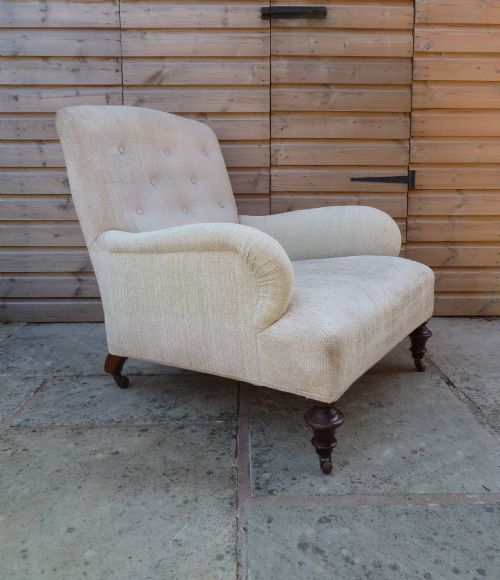
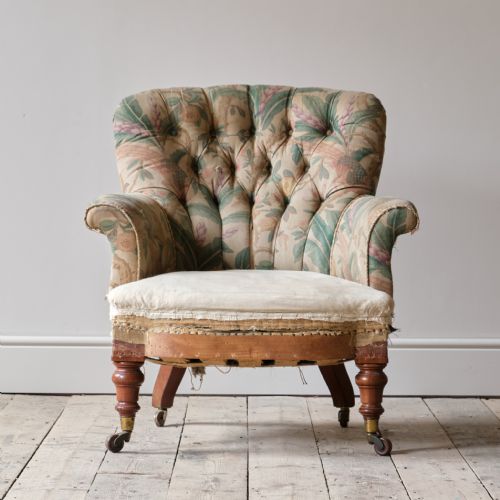
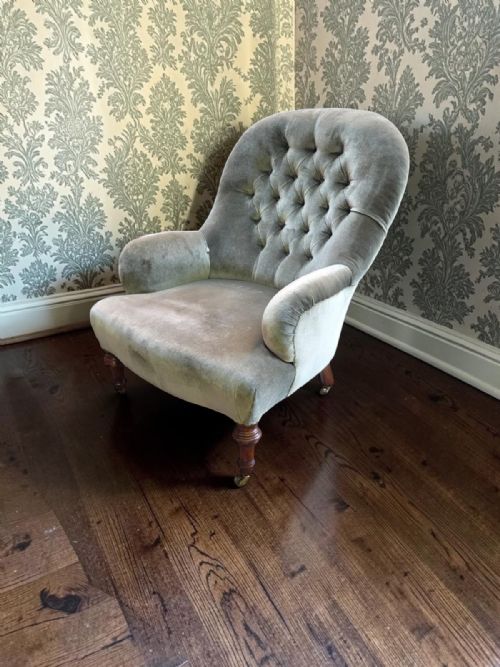
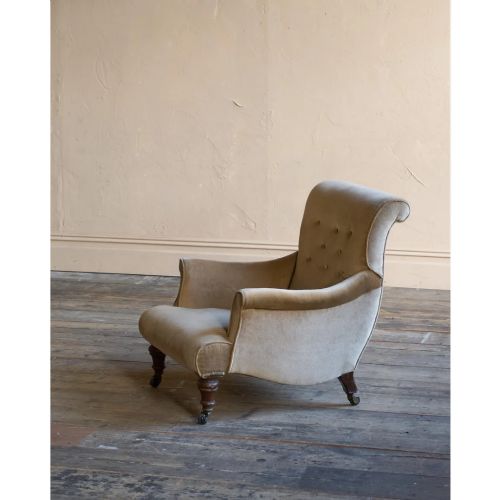
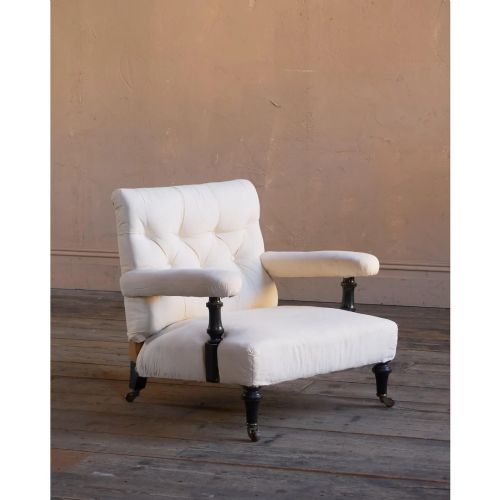
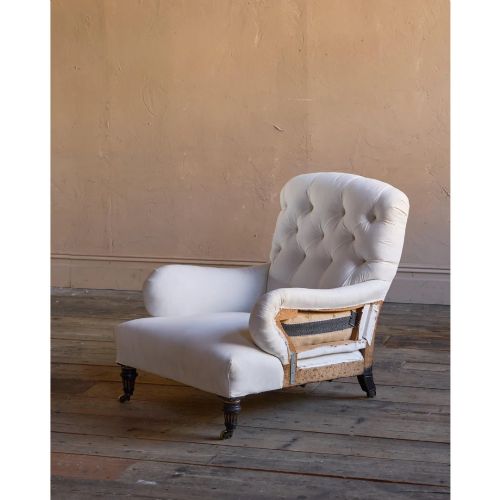
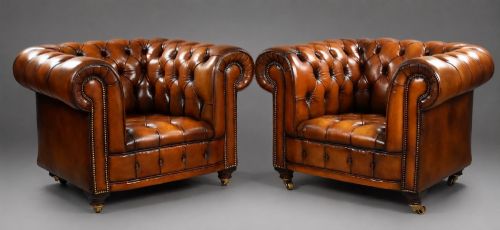
Buttoned Back Club Chair
A buttoned back club chair offers deep comfort and traditional British presence, built for long evenings with leather upholstery and supportive sprung seats.
Buttoned Back Club Chair
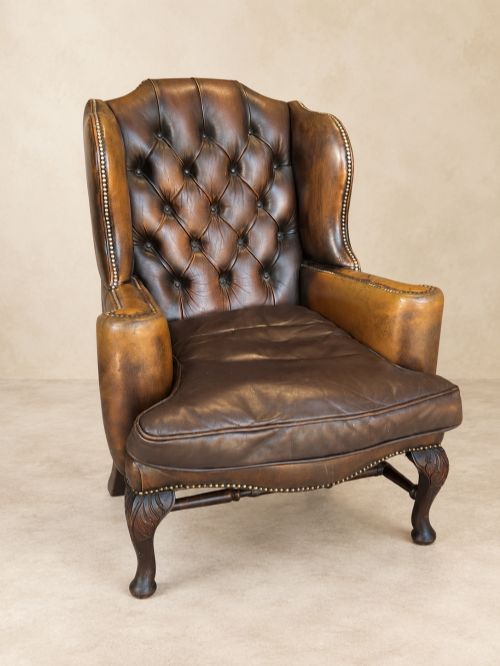
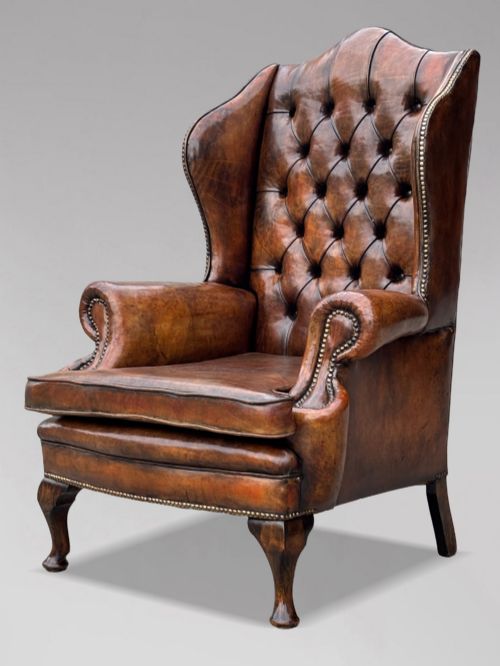
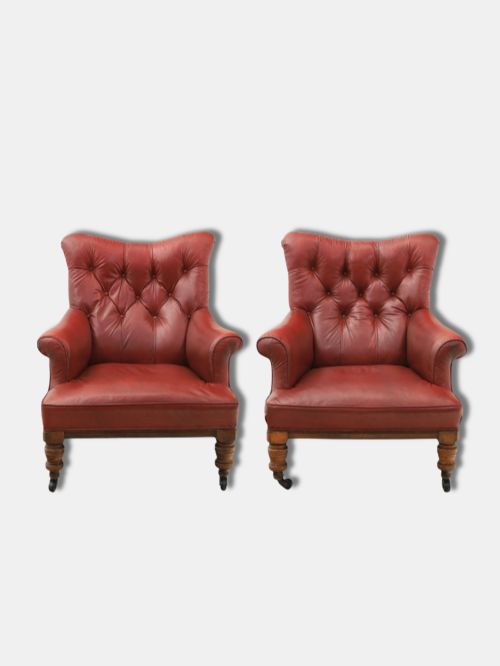
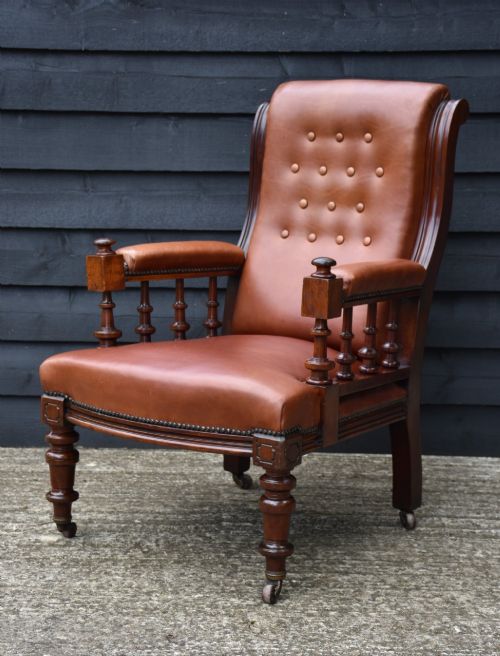
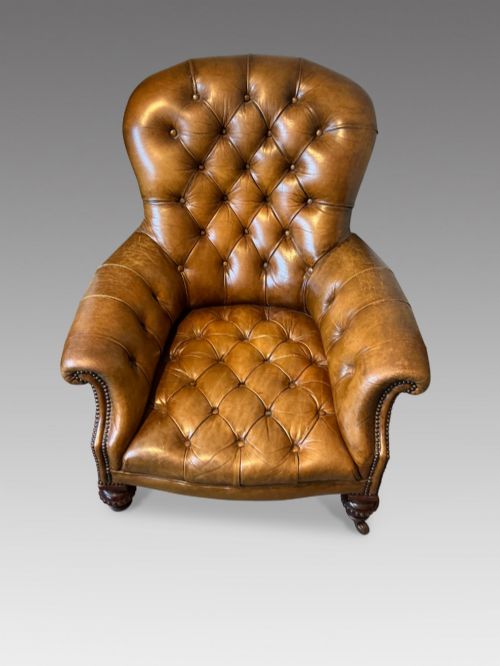
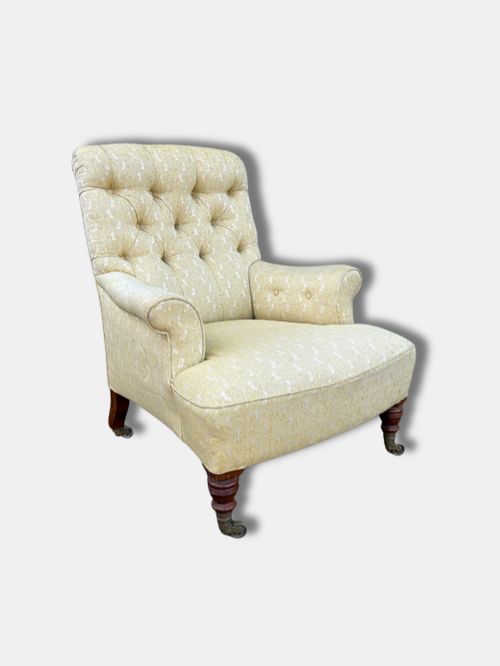
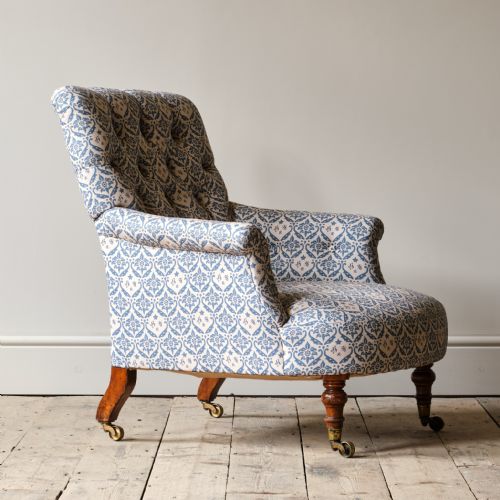
A buttoned back club chair is a low, deep-seated armchair designed for relaxation, appearing here across nineteenth-century and early twentieth-century periods. The form draws heavily on Victorian library and Chesterfield traditions, incorporating substantial padding and characteristic buttoning across the backrest.
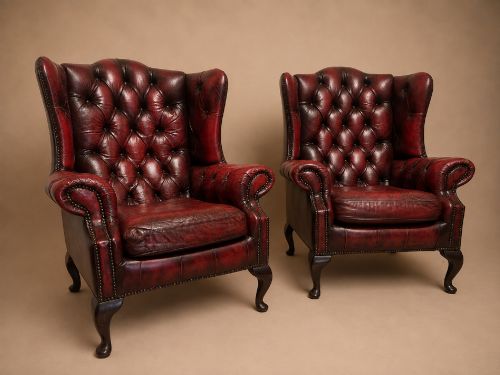
Most examples on this page are upholstered in brown, tan, or oxblood leather, often paired with mahogany, oak, or walnut framing. Pieces emerge from English country house workshops and French cabinet makers alike, presenting sturdy proportions intended for everyday sitting.
Materials and construction
Makers built the underlying frames using dense hardwoods like mahogany, oak, walnut, and rosewood to withstand heavy domestic use. Joinery relied on traditional tenons and dowels, ensuring structural rigidity beneath the upholstery.
Upholstery involved hand-tied coil springs, horsehair stuffing, and durable top layers of leather or fabric secured with brass tacks. Deep buttoning was pulled tight by hand to keep internal fillings evenly distributed over time.
Listings feature nineteenth-century and early twentieth-century examples incorporating materials such as leather, mahogany, walnut, and brass.
Markers of quality
Superior execution shows in the weight of the timber frame and the spring tension beneath the seat, where skilled hand-tying prevents sagging. Lesser examples rely on lighter woods and simplified internal webbing that wears out quickly.
The grade of leather dictates longevity, with thick, vegetable-tanned hides developing a rich patina rather than cracking. Finer workshop attribution, such as work from established London makers, elevates a piece through precise carving and balanced proportions.
Howard and Sons·Holland and Sons·Gillows·Mellier and Co
The Buttoned Back Club Chair Glossary
- Buttoning
- The technique of indenting upholstery with tufted buttons to secure internal stuffing and create a padded grid. This method keeps horsehair or wool fillings from shifting during daily use.
- Library armchair
- A sturdy, upholstered seating form historically placed in studies or reading rooms for prolonged comfort. These pieces usually feature substantial armrests and supportive back angles.
- Chesterfield
- A traditional upholstered style characterised by arms and back of the same height, featuring deep button tufting. The design dates back to British gentry seating of the eighteenth and nineteenth centuries.
- Bergere
- An enclosed wooden-framed armchair with woven cane panels on the sides or back. It provides a lighter appearance compared to fully upholstered club chairs.
- Patina
- The surface sheen and soft wear developed on leather and wood through age and handling. Collectors value a deep, even patina as proof of genuine history.
Buttoned Back Club Chair: Frequently Asked Questions
How do I clean leather upholstery?
Wipe surfaces gently with a damp cloth to remove dust, avoiding harsh chemical detergents that dry the hide. Apply a suitable leather balm periodically to maintain suppleness and prevent cracking.
Keep antique chairs away from direct sunlight and heat sources to preserve the original finish and prevent the leather from shrinking or hardening over decades.
What defines a club chair?
A club chair is a comfortable, deep-seated armchair with low back support and padded armrests designed for relaxed sitting. The style originated in French and British smoking rooms and libraries during the nineteenth century.
These chairs prioritize ergonomic comfort through generous proportions, thick cushioning, and sturdy wooden frames hidden beneath upholstered leather or fabric.
How do I date a Victorian armchair?
Examine the framing timber, joinery methods, and upholstery tack types beneath the seat or along the base. Victorian pieces frequently utilise mahogany or walnut frames with hand-carved details specific to mid-nineteenth-century revival styles.
Internal padding materials also offer clues, as early pieces rely on horsehair and coil springs before modern foam materials were introduced in later decades.
Are these chairs suitable for daily use?
These robust armchairs are built with heavy hardwood frames and resilient sprung interiors designed for sustained seating. Their traditional construction handles regular domestic wear well when properly maintained.
Checking the internal webbing and spring tension ensures the seat remains supportive and comfortable for everyday reading or living room placement.