

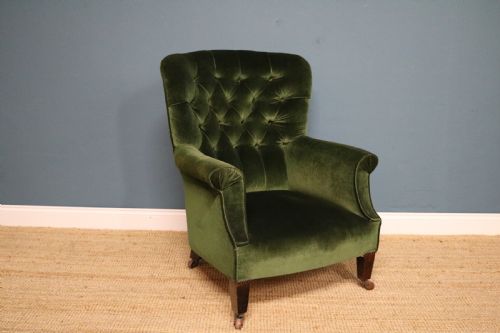
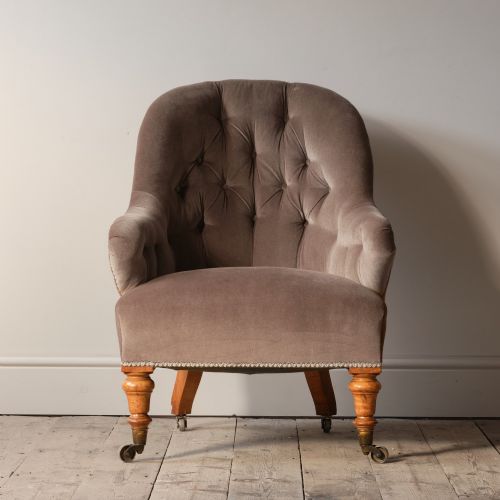
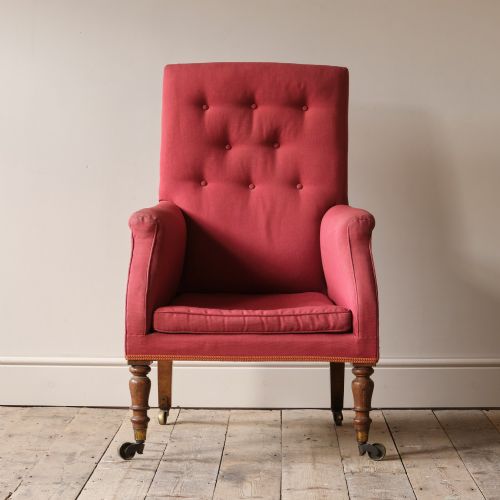
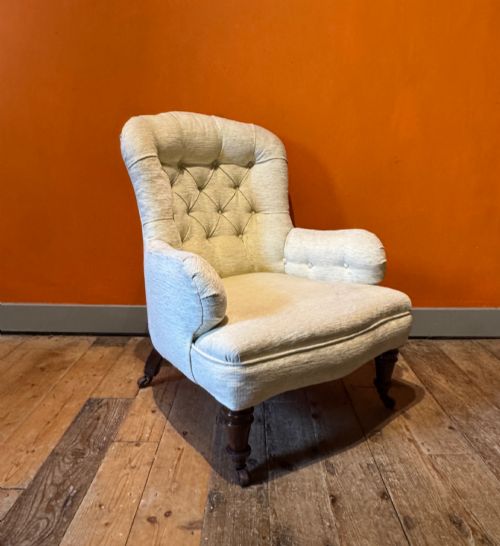
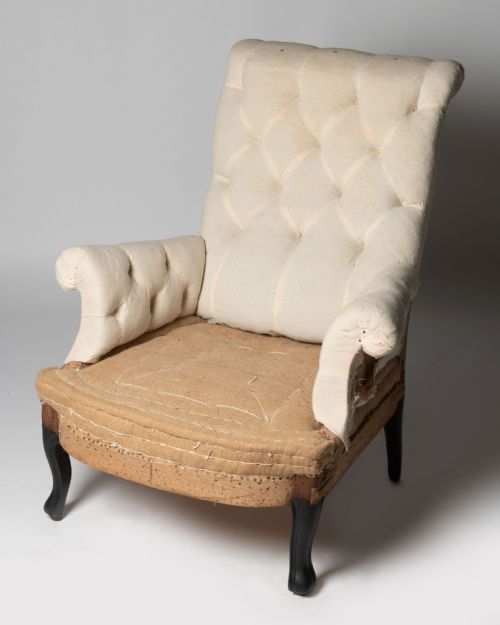
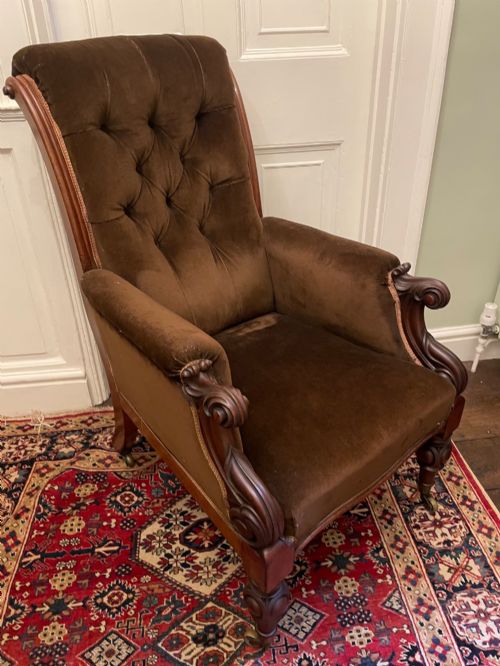
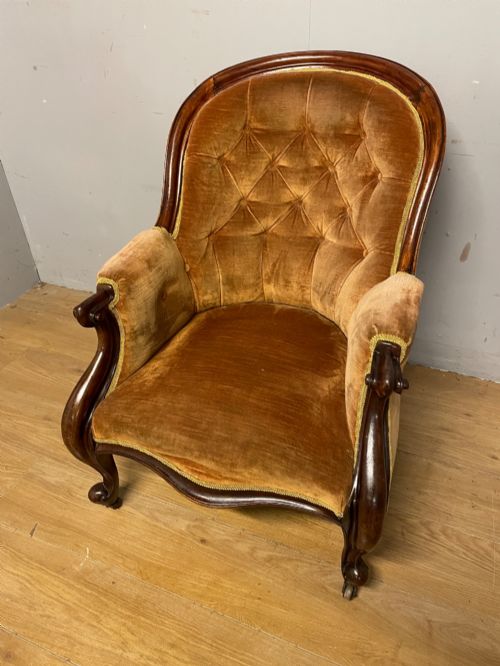
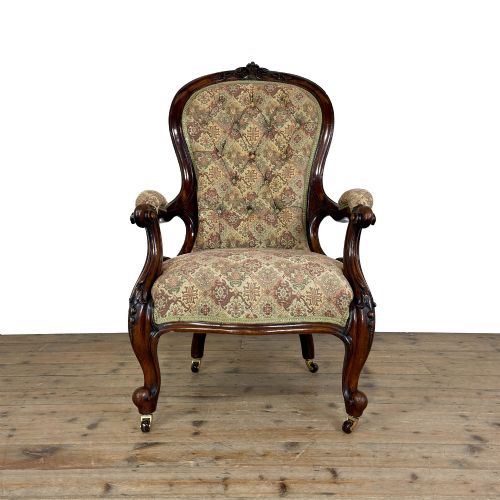
Button Upholstered Chair
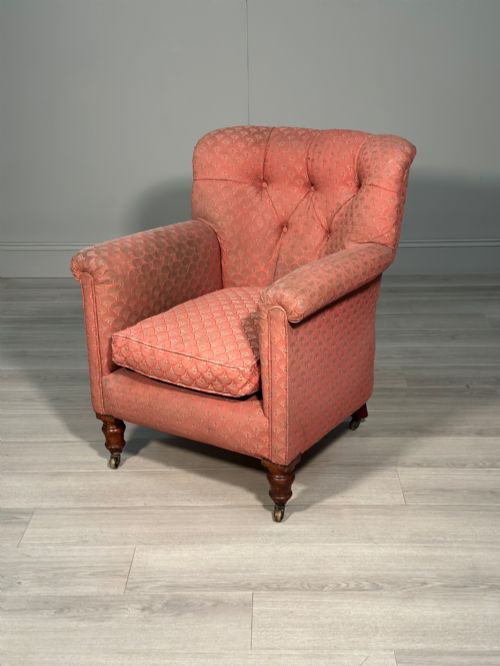
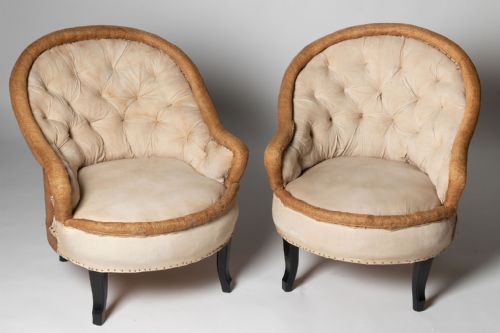
A button upholstered chair brings deep tufted comfort and nineteenth-century elegance to a room.
Button Upholstered Chair
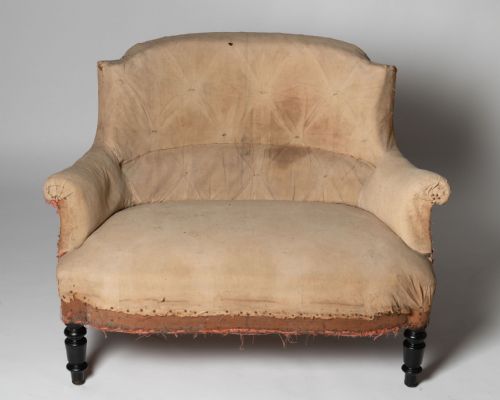
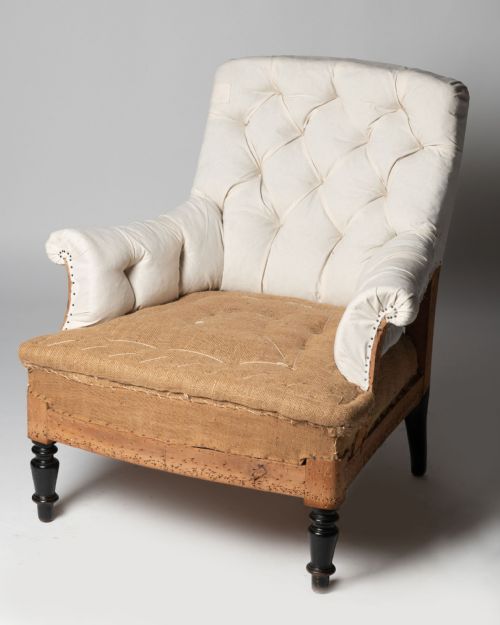
A button upholstered chair is a seating form defined by deep tufting secured with buttons through the fabric and stuffing. The evidence shows these pieces surface primarily across nineteenth-century styles such as Victorian, Regency, and Edwardian designs.
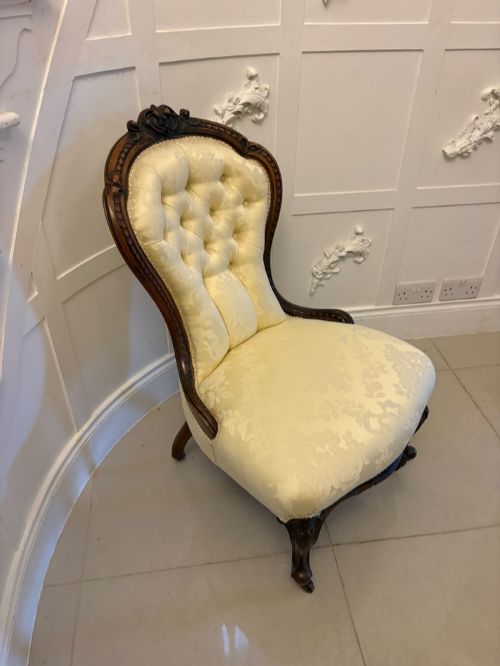
Buyers meet various forms ranging from library armchairs and nursing chairs to tub chairs and chaise longues. Most examples rely on mahogany, walnut, or rosewood frames paired with traditional coverings like leather, velvet, and fabric.
Originating largely from English and French workshops, these seats serve as both functional furniture and focal points. The selection spans compact bedroom chairs to substantial gentleman's armchairs.
Materials and Construction
Makers constructed the structural frames from dense hardwoods like mahogany, walnut, oak, and rosewood, often incorporating carved details or brass hardware. Iron frames also appear in specific nineteenth-century designs.
Upholstery techniques combined sprung seat bases with layers of stuffing secured by twine and finished with tight fabric, leather, or velvet pulled into position by the characteristic buttons.
Button Upholstered Chair Retail Price Guide 2026
Typical asking prices for button upholstered chair among the pieces listed under this phrase on Sellingantiques today, from the lower quarter to the upper quarter. They describe what is for sale here now, not the wider market.
Period styles span Victorian, Regency, Edwardian, and Napoleon III designs.
Assessing Quality and Execution
Quality rests in the rigidity of the hardwood frame and the crispness of any carved ornamentation on walnut or mahogany. Superior examples maintain firm, supportive buttoning that retains symmetrical tension across the entire backrest.
The choice of covering material and the precision of the pleating dictate the overall finish. Pieces bearing maker attributions or patent mechanisms demonstrate higher craftsmanship within the period.
Howard And Sons·Gillows
The Button Upholstered Chair Glossary
- Button back
- A style of upholstery where buttons are pulled deep into the padding to create a geometric tufted pattern. This technique secures the internal stuffing while providing firm lumbar support.
- Nursing chair
- A low-seated Victorian chair originally designed for feeding infants or personal grooming. These items typically feature padded backs and compact proportions.
- Library armchair
- A sturdy, heavily upholstered seat intended for prolonged reading and study. They frequently employ leather or heavy fabric coverings over mahogany or walnut frames.
- Chaise longue
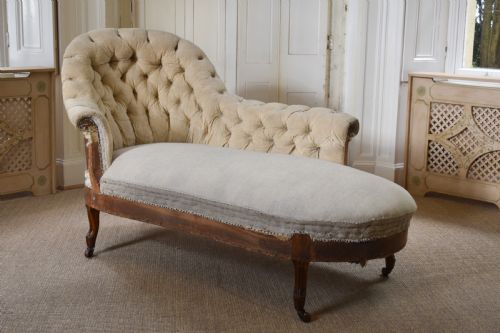
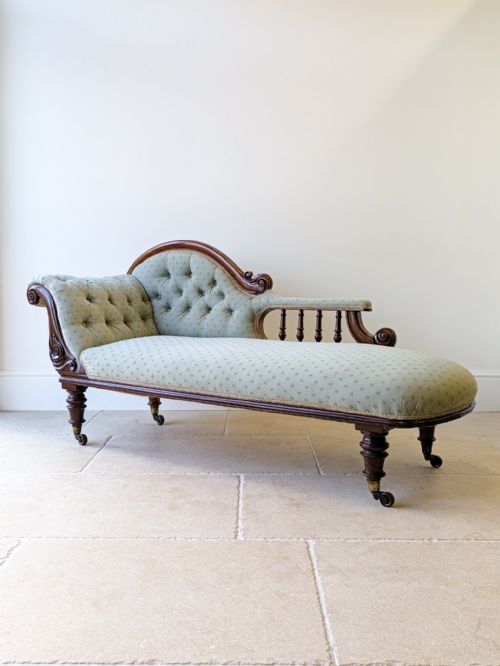
- An elongated upholstered seat intended for reclining, combining the backrest of a chair with the footrest of a sofa. French and Victorian variations appear frequently.
- Tub chair
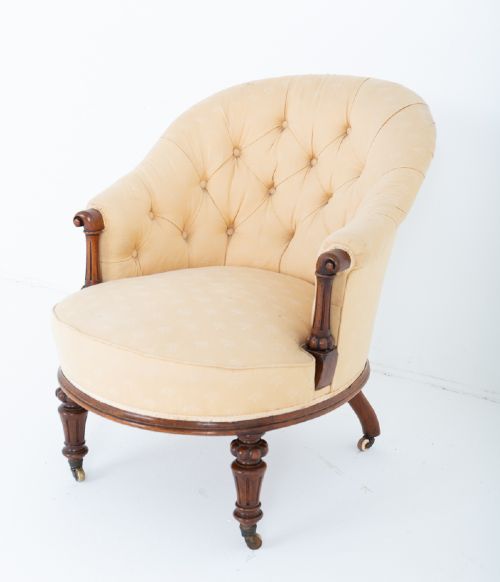
- A curved-back armchair where the arms and back form a single continuous enclosed sweep. This form often receives deep button upholstery for enhanced comfort.
Button Upholstered Chair: Frequently Asked Questions
Where should I place a button upholstered chair?
These seats suit studies, drawing rooms, and bedrooms where their distinct tufted profile adds period character.
Pair a compact nursing chair with a low table or position a library armchair beside a bookshelf for traditional balance.
How do I identify a Victorian button upholstered chair?
Look for dense timber frames made from mahogany or walnut combined with deep buttoning and sprung padding.
Victorian examples often display turned wooden legs, ceramic castors, or carved scrolling arm supports.
Were these chairs used for dining?
While most buttoned pieces are armchairs or lounge seating, specific side chairs and dining chairs from the period utilise the technique.
Dining variants offer upright support while maintaining the decorative tufted backrest seen in larger library models.
What is the difference between a Regency and a Victorian chair?
Regency pieces often draw on classical revival motifs with rosewood or solid mahogany structures dating from the early nineteenth century.
Victorian items tend to feature heavier proportions, darker woods, and more elaborate carved frames with sprung foundations.