

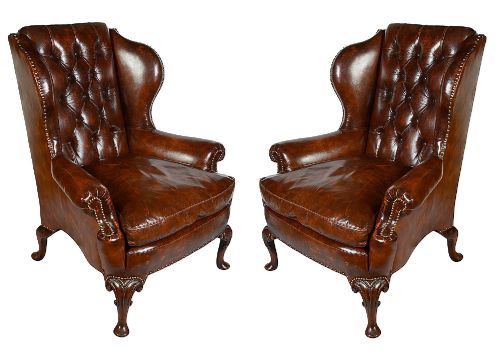
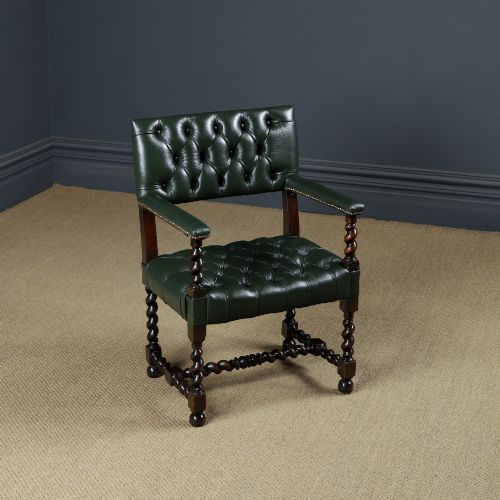
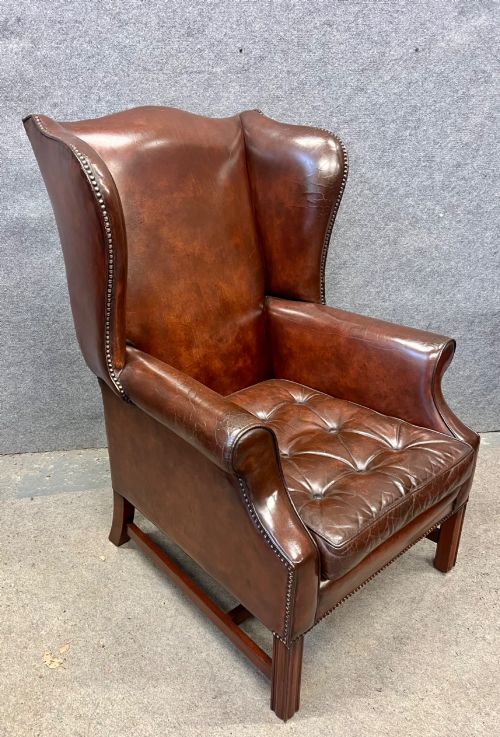
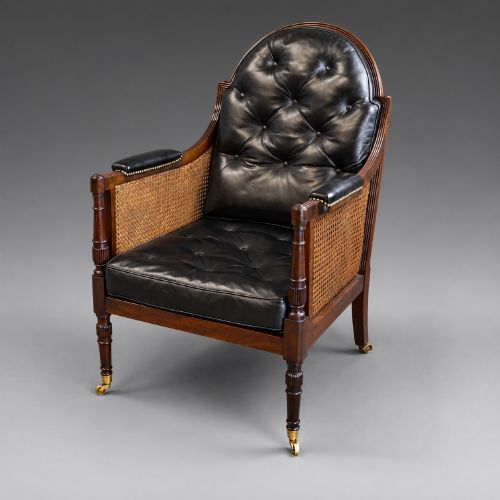



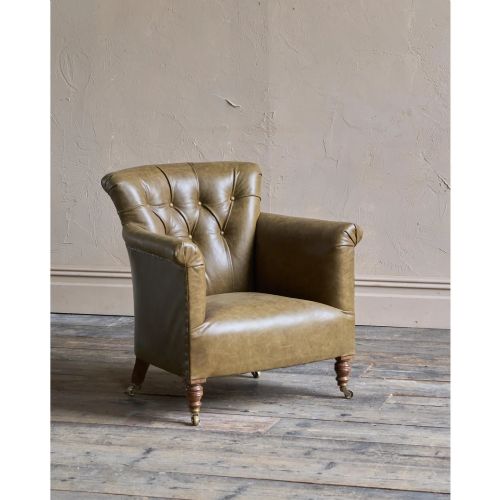
Button Tufted Leather Armchair
A button tufted leather armchair brings tactile warmth and deep sprung comfort to a study, library or drawing room.
Button Tufted Leather Armchair
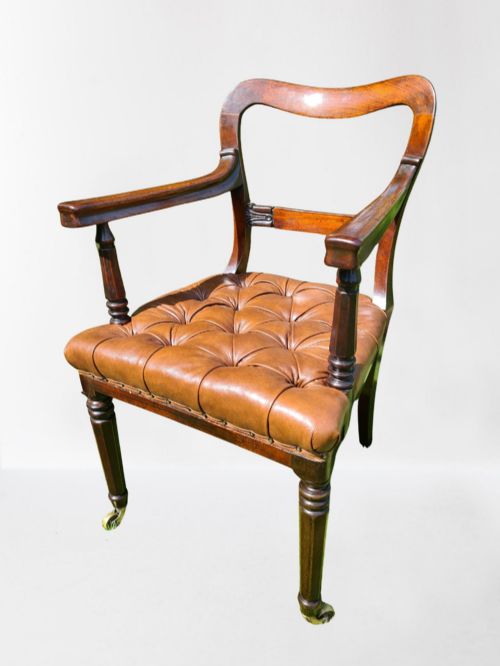
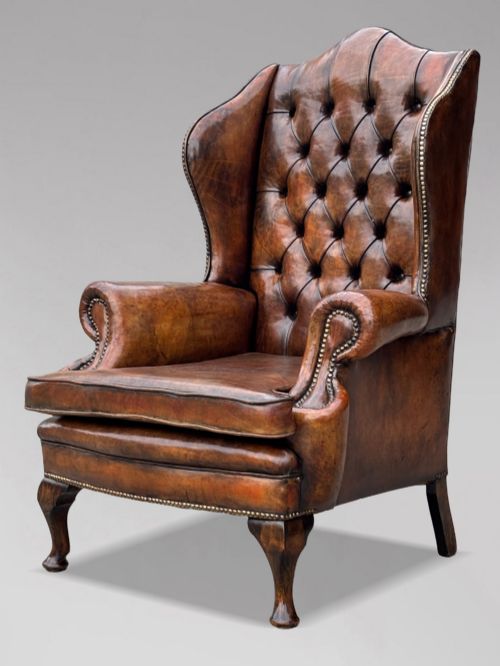
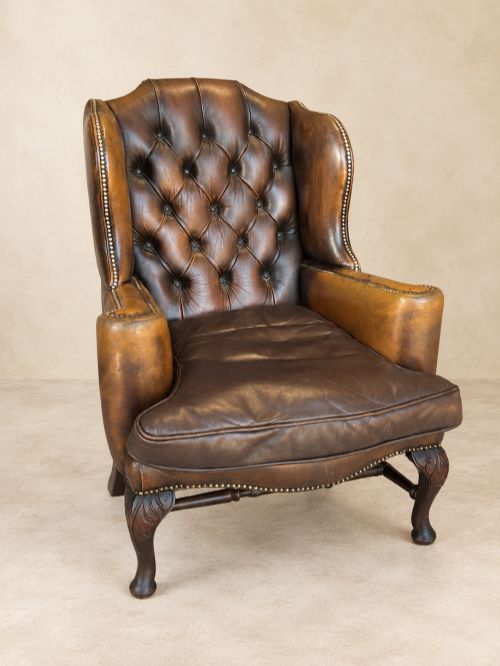
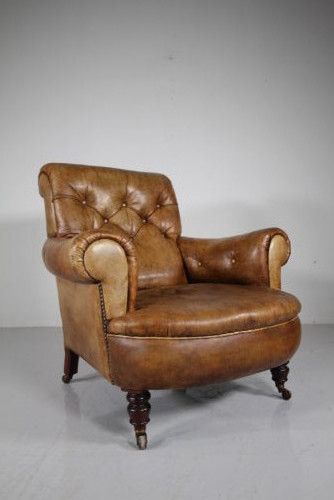
A button tufted leather armchair stands as a traditional seating form designed for long periods of reading or conversation, taking shape most often as a Victorian library chair, a Chesterfield club armchair or a wingback model. These examples emerge primarily from the nineteenth and early twentieth centuries, constructed from robust woods like mahogany, oak and rosewood alongside supple hides.
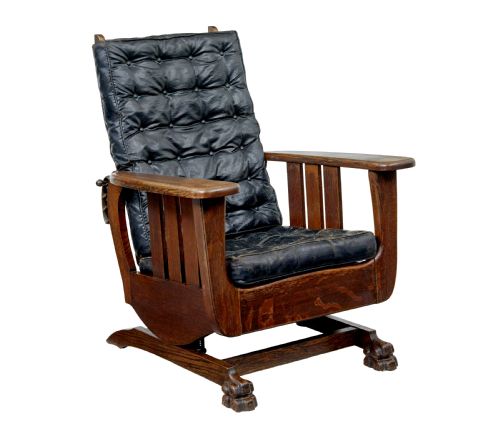
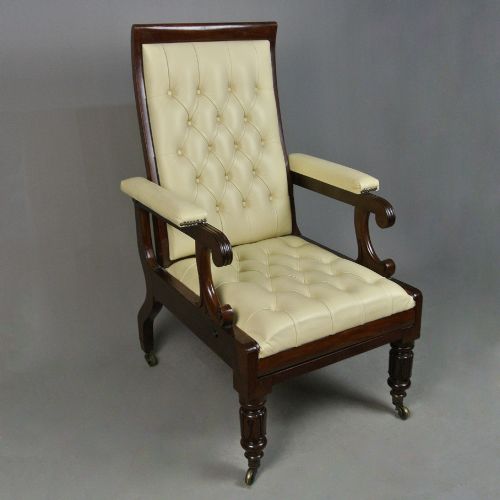
The version most commonly met on this page is the nineteenth century Victorian library or club armchair, featuring deep buttoning and substantial padded arms. Alongside these, buyers encounter Edwardian variants, occasional rocking chairs, and desk chairs designed for study use.
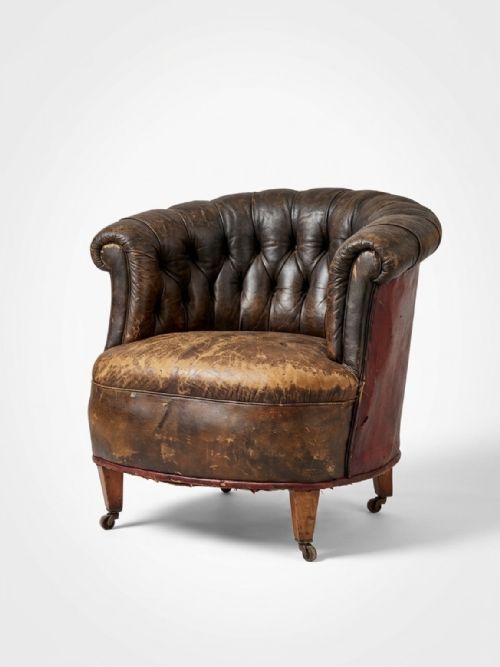
Origins span English country houses and town libraries, with occasional continental pieces appearing from Sweden. Forms range from compact nursing chairs to large scale Chesterfield club seats built for low, relaxed lounging.
How they were made
Makers built the structural frames of these armchairs using dense hardwoods such as mahogany, oak, walnut and rosewood, sometimes incorporating brass castors, inlay or cane panels. Frames needed substantial joinery to support the weight of heavy upholstery and active daily use.
Upholsterers shaped the seating using horsehair and coil springs before covering the frame in leather or rexine. They secured the hide with individual metal tacks and pulled the surface into tight indentations using twine tied through to the interior stuffing, creating the signature button tufting.
Button Tufted Leather Armchair Retail Price Guide 2026
Typical asking prices for button tufted leather armchair among the pieces listed under this phrase on Sellingantiques today, from the lower quarter to the upper quarter. They describe what is for sale here now, not the wider market.
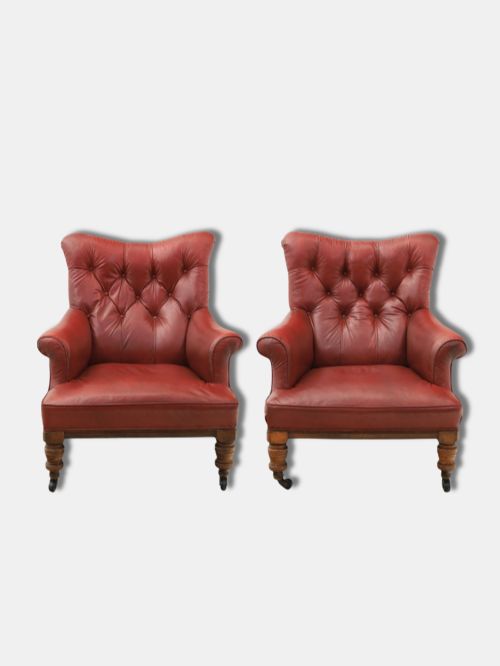
Several listings include matched his and hers Victorian armchairs designed for synchronized fireside lounging.
What varies in quality
Quality rests upon the integrity of the underlying timber frame and the depth of the cabinetmaker's carving or joinery. Pieces featuring solid mahogany or rosewood with refined hand-turned legs or brass inlay sit at the higher end of the scale.
The character and condition of the leather dictate much of the appeal, where a naturally patinated hide with rich tonal variation surpasses uniform modern replacements. The precision of the button tufting and the resilience of the internal springing further separate standard commercial output from finer workshop productions.
Howard and Sons·Daws Patent
The Button Tufted Leather Armchair Glossary
- Bergere
- An upholstered armchair with enclosed wooden sides, often featuring cane panels. This French inspired form appears frequently in nineteenth century English seating.
- Chesterfield
- A deep buttoned seating style characterised by arms and back of the same height. These club chairs and sofas utilise durable leather across low, generous proportions.
- Rexine
- A branded artificial leather fabric made from cloth coated with nitrocellulose. It offers a washable alternative to natural hide.
- Tufting
- The technique of pulling twine or cord through upholstery stuffing at regular intervals to create recessed points secured by buttons. This keeps internal padding evenly distributed.
- Wingback
- An armchair featuring protective side panels attached to the arms or back to block draughts. These tall seats were traditionally placed near firesides.
Button Tufted Leather Armchair: Frequently Asked Questions
What is a button tufted leather armchair?
A button tufted leather armchair is a traditional upholstered seat where the leather hide is pulled into indentations and secured with buttons. This construction method keeps the internal padding stable while creating a distinct diamond patterned surface.
These chairs were traditionally made for libraries, studies and drawing rooms as heavy, comfortable seating designed to last for generations.
How do I date a leather armchair?
Dating relies on examining the timber frame, turning styles, and construction methods underneath the upholstery. Victorian pieces often display heavier mahogany or oak frames with hand turned legs, while Edwardian examples can be lighter in scale.
Secondary clues include the type of castors, the cut of the wood, and any maker stamps or patent marks stamped into the frame or brass fittings.
Are these chairs comfortable for daily use?
Most antique leather armchairs offer deep cushioning and supportive coil spring suspension designed for extended periods of sitting. Their generous proportions make them well suited as reading or lounge chairs in modern living spaces.
Seat heights and depths vary considerably between nineteenth century library chairs and compact nursing chairs, so checking specific dimensions ensures a proper fit for your room.
How should I care for antique leather?
Antique leather requires occasional treatment with specialist balms or waxes to keep the hide supple and prevent cracking. Keeping the leather away from direct sunlight and heat sources preserves both the natural colour and the historical patina.
Gentle dusting with a soft cloth removes everyday particles without disturbing the vintage surface or wearing down the button stitching.