


Button Back Chaise Longue
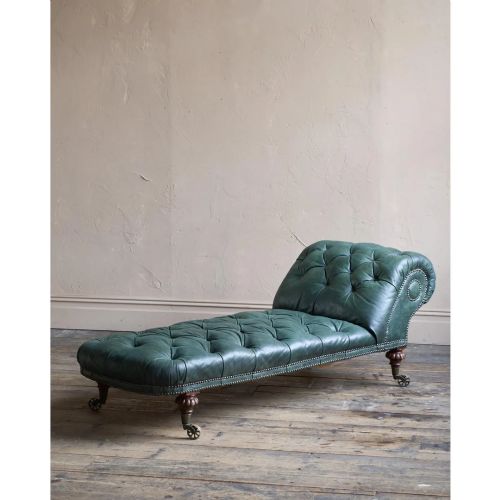
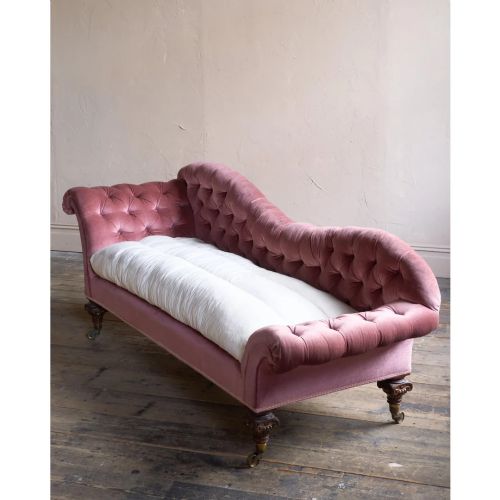
A button back chaise longue is a reclining seat designed for daytime resting, combining firm support with deep tufted upholstery.
Button Back Chaise Longue
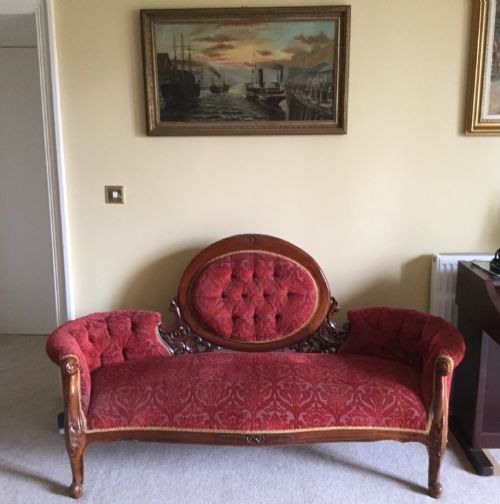
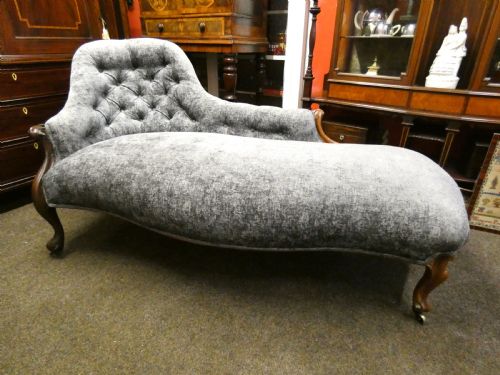
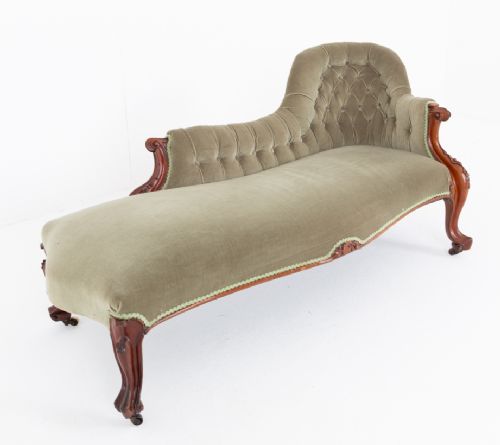
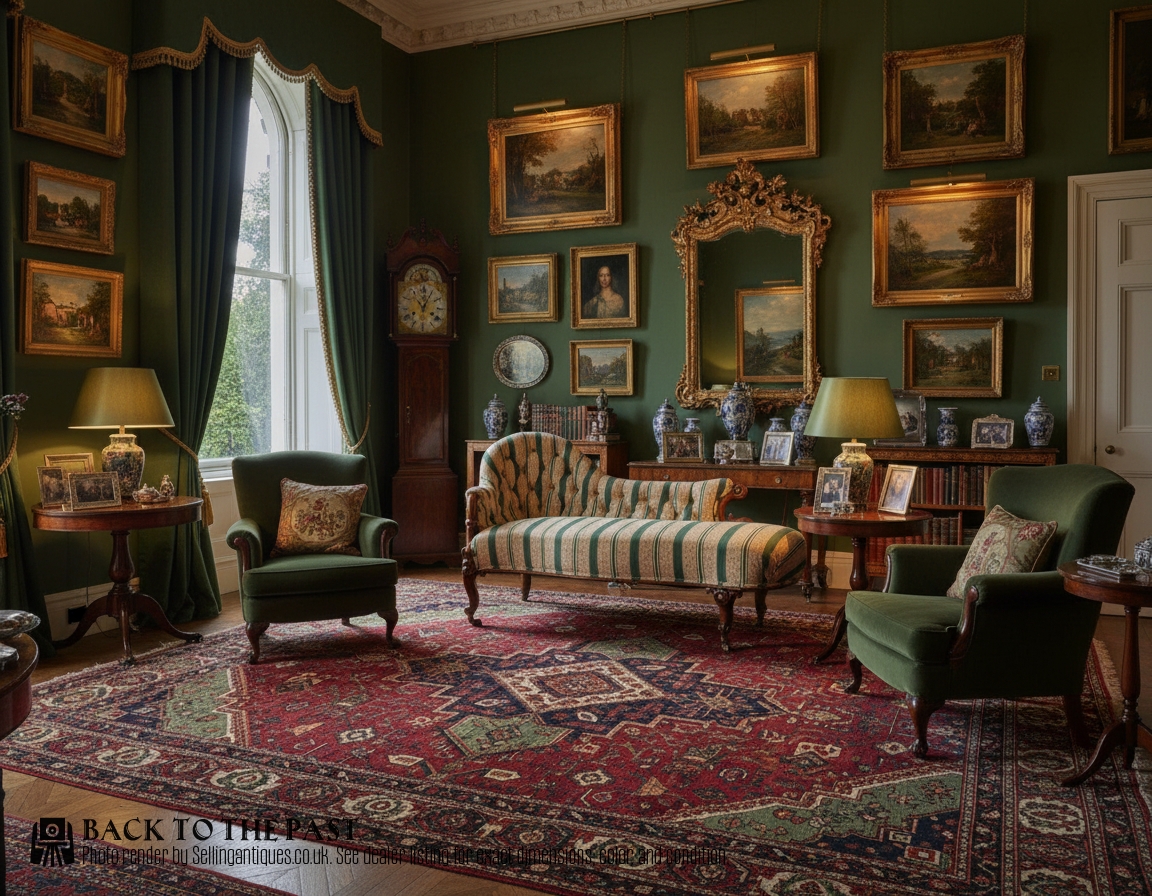
When you search for a button back chaise longue, you encounter nineteenth century daybeds and scroll back sofas designed for horizontal repose. The Victorian examples dominate, appearing in mahogany, walnut, and rosewood with characteristic deep tufting on the backrest. These seating forms range from double ended sofas to single scroll daybeds intended for the parlour or drawing room.
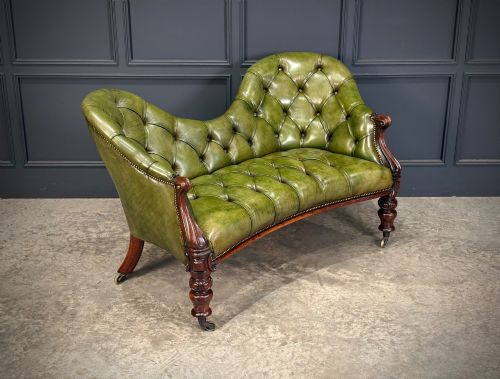
The evidence shows forms spanning the Regency period through to the early twentieth century, with styles including William IV and Victorian Rococo Revival. You meet pieces upholstered in leather, velvet, and fabric, often featuring carved wooden show frames and turned or column legs. Miniature versions and conversation seats also appear alongside standard daybeds.
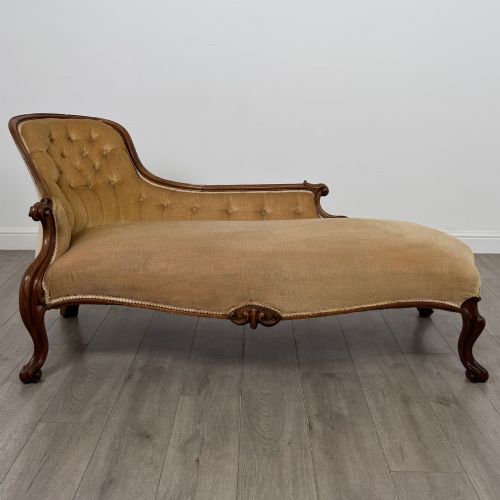
The primary forms recorded are single ended chaise longues with a raised scroll back and double ended sofas allowing reclining from either direction. Walnut and rosewood show frames provide the structural support for deep buttoning, while mahogany examples frequently display carved details. These items survive from nineteenth century workshops and established makers.
How they were made
Timbers such as mahogany, walnut, and rosewood form the structural frames, shaped into scroll backs and supported by wood, brass, or gilt decoration. Show wood frames expose the polished grain around the upholstered sections, while ebonised finishes appear on specific miniature models.
Upholstery relies on fabric, velvet, leather, and brocade, secured with deep buttoning techniques across sprung or webbed bases. Craftsmen applied tufting by pulling twine through the padding to create the characteristic indented pattern seen on Victorian and Regency daybeds.
Listings feature walnut, mahogany, and rosewood frames alongside brass details and ebonised wood on smaller formats.
What varies in quality
The refinement of the timber carving and the execution of the wood framing dictate the initial tier of a piece. Finer examples display intricate scrollwork and substantial show wood, whereas simpler frames rely on plain mahogany or walnut structures.
The density and depth of the button upholstery determine the tactile standard of the daybed. Superior pieces maintain tight tufting and consistent pleating across velvet or leather surfaces, supported by robust internal springing.
Holland and Sons·Miles and Edwards·Gillows·Howard and Sons
The Button Back Chaise Longue Glossary
- Show wood
- Exposed polished timber framing that defines the visible outline of the upholstered seating. This contrasts with fully upholstered pieces where no wood is seen.
- Scroll back
- A sweeping, curved wooden or upholstered backrest that rolls outward at the end of the daybed. This silhouette is typical of nineteenth century chaise longues.
- Double ended
- A sofa or chaise longue with raised backrests at both ends, allowing a person to recline facing either direction. These pieces often feature symmetric wooden frames.
- Buttoning
- A traditional upholstery technique where twine is pulled through padding and secured with buttons to create a diamond pattern. This method keeps the internal stuffing firmly in place.
Button Back Chaise Longue: Frequently Asked Questions
How were chaise longues used?
These pieces served as daytime resting places for reading or conversing in nineteenth century drawing rooms and parlours. Ladies utilised them to recline without retiring to a bedroom.
They occupied prominent positions in formal rooms rather than private bedchambers, often paired with matching salon furniture.
How do I date a chaise longue?
Dating relies on timber choices, leg styles, and framing characteristics recorded across the nineteenth century. Regency examples show different proportions compared to later Victorian Rococo Revival pieces.
Mahogany frames and Saber legs often point to earlier periods, while walnut and rosewood show wood frequently indicate mid-Victorian production.
Are these seats comfortable for daily use?
The underlying sprung or webbed bases provide firm support suited to upright sitting and semi-reclined resting. Deep buttoning creates a structured surface rather than a soft cushion.
Modern comfort depends on the condition of the internal padding and springing installed during past or recent upholstery work.