





Bust of a Woman
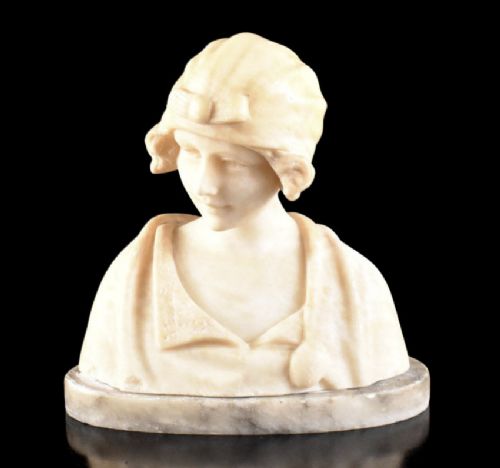
A bust of a woman captures character and classical form, offering a sculptural presence that anchors any mantelpiece or console.
Bust of a Woman
A bust of a woman represents the head, neck and upper shoulders of a female subject, rendered in three dimensions. Collectors encounter these portrait sculptures in various scales, from cabinet-sized pieces to imposing library ornaments.
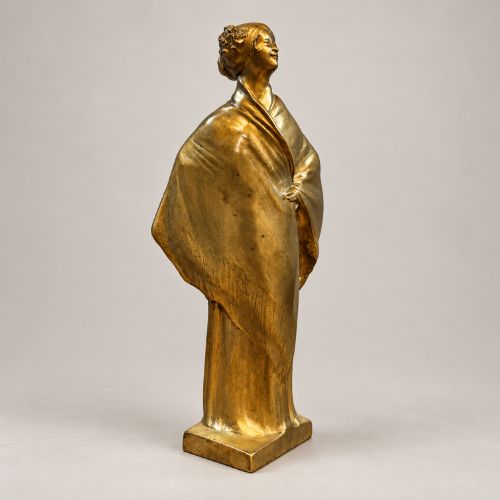
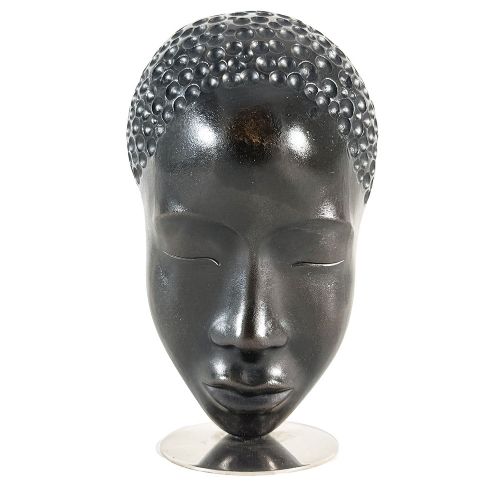
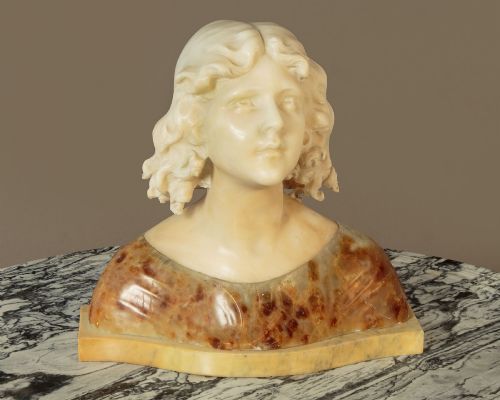
The pieces appearing on this page span the nineteenth and twentieth centuries, encompassing nineteenth century examples alongside works from the Edwardian era and the nineteen thirties. Sculptural interpretations range from classical and neoclassical subjects to distinct art nouveau and art deco stylings.
Makers utilised diverse sculptural forms, translating female likenesses into round media that capture distinct expressions, from medieval figures to veiled Italian ladies.
Materials and methods
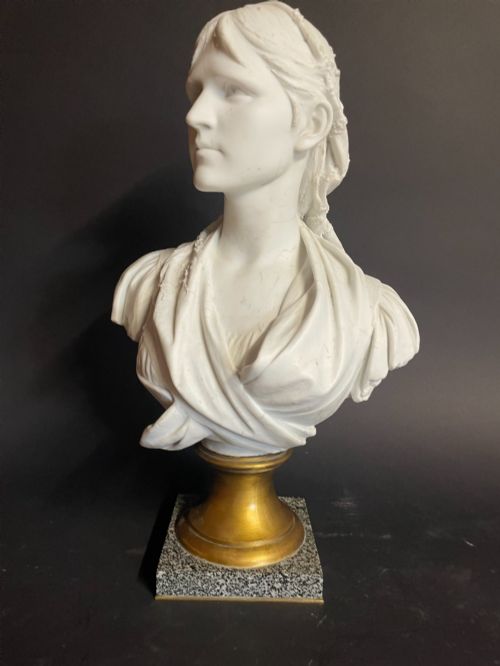
Carved pieces rely on traditional subtractive methods, utilising fine-grained materials such as white marble, translucent alabaster, pear wood and other hardwoods. Artisans shaped these media by hand, employing chisels and rasps to achieve subtle contours in drapery and hair.
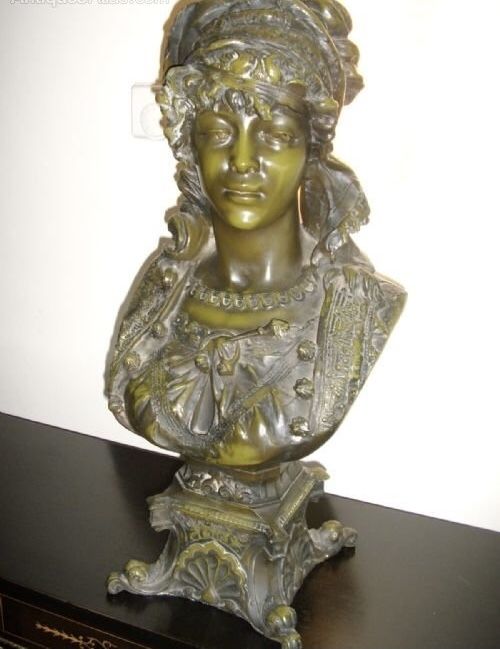
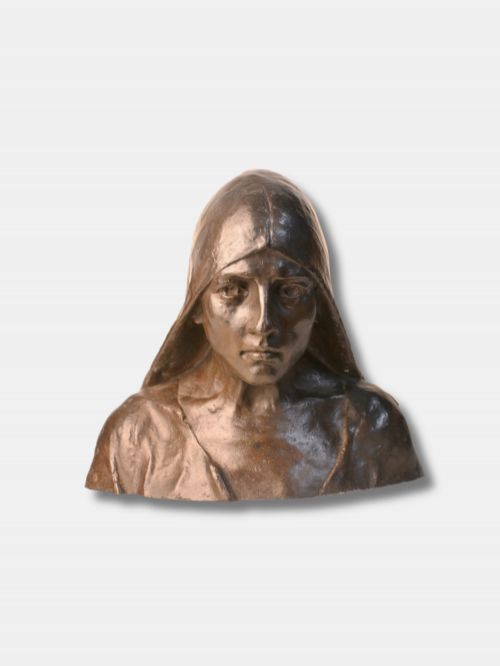
Cast sculptures utilise foundry techniques involving bronze, patinated bronze, bronzed terracotta, cast iron and plaster. Metal works typically start as modelled clay before passing through a casting process, while terracotta pieces are fired and occasionally painted afterwards.
Bust of a Woman Retail Price Guide 2026
Typical asking prices for bust of a woman among the pieces listed under this phrase on Sellingantiques today, from the lower quarter to the upper quarter. They describe what is for sale here now, not the wider market.
Listings combine nineteenth-century neoclassical marbles with twentieth-century art deco bronzes, showing a wide range of sculptural portraits.
Assessing quality and execution
Superior execution reveals itself in the handling of anatomical details, particularly the transition of the collarbone, the fall of hair and the expression in the eyes. Finer carvings and casts display sharp undercut details rather than soft, generalised surfaces.
Material selection dictates the initial tier of a piece, with fine Carrara marble or heavy patinated bronze sitting apart from plaster or cast iron alternatives. The presence of a clear signature or attribution to a known foundry or sculptor elevates the standing of an individual work.
Hagenauer·Emile Jespers·Boudewijn Tuerlinckx·Georges Van Der Straeten·E. Laurent·Henri Plé
The Bust of a Woman Glossary
- Alabaster
- A soft mineral stone, often white or lightly tinted, prized for its translucent quality that mimics human skin when carved thinly.
- Patinated bronze
- Bronze that has been treated with chemical solutions to produce a specific surface coloration, ranging from deep brown to green.
- Neoclassical
- A style drawing inspiration from the classical art and culture of ancient Greece and Rome, favouring restraint and proportion.
- Art Nouveau
- A decorative style characterised by flowing, organic lines and floral motifs, prevalent around the turn of the twentieth century.
- Terracotta
- Baked red clay used for sculptural modelling, left plain or treated with a surface finish.
Bust of a Woman: Frequently Asked Questions
What materials are most common for a bust of a woman?
The listings demonstrate a strong presence of carved marble and alabaster, alongside cast bronze and terracotta. Metal works frequently feature patinated finishes, while wooden and plaster examples appear in domestic nineteenth and twentieth-century contexts.
Heavier stones and cast metals represent the primary durable media, whereas plaster and painted surfaces require more careful placement away from high-traffic areas.
How do I distinguish between marble and alabaster?
Marble is a hard, crystalline metamorphic rock that resists scratching and carries a cool, solid weight. Alabaster is a softer gypsum stone that transmits light more readily and can be marked with a fingernail or metal point with greater ease.
Examining the translucency under a strong light often helps clarify the stone type.
Where should I display a sculptural bust?
These pieces suit placement on sturdy console tables, desks, mantelpieces or dedicated pedestals where lighting can catch the facial contours and drapery. Stable surfaces prevent accidental tipping, particularly with heavier stone and metal works.
Positioning them away from direct heat sources protects wooden and painted plaster variants from drying out or cracking.
Are these sculptures signed by the artist?
Several pieces bear signatures, foundry marks or incised names on the reverse or base, linking them to known makers and European workshops. Unsigned works remain common, reflecting anonymous studio production or the loss of detachable socles and bases.
A signature aids attribution but unsigned pieces still rely on the quality of the carving or casting for their appeal.