

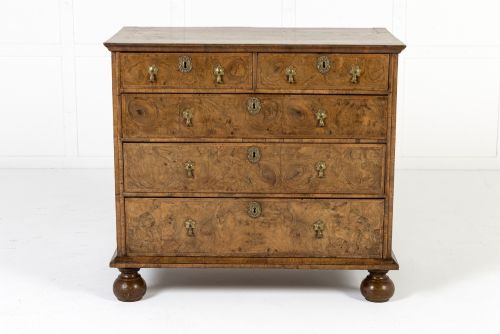
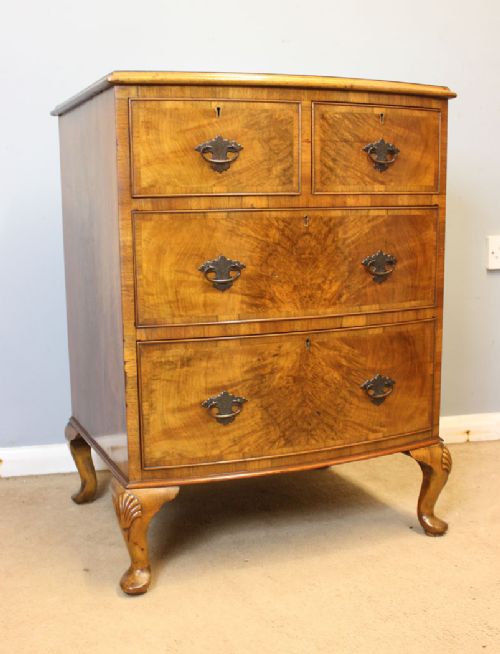
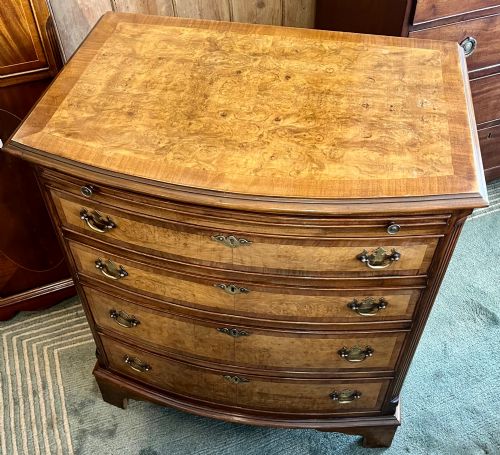
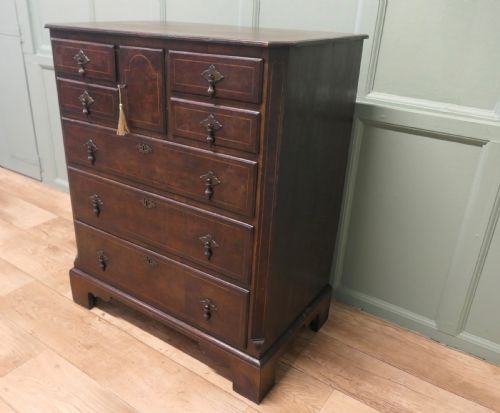
Burr Wood Storage Chest
A burr wood storage chest brings complex grain patterns into a room, offering practical storage through timber chosen for its wild figure.
Burr Wood Storage Chest
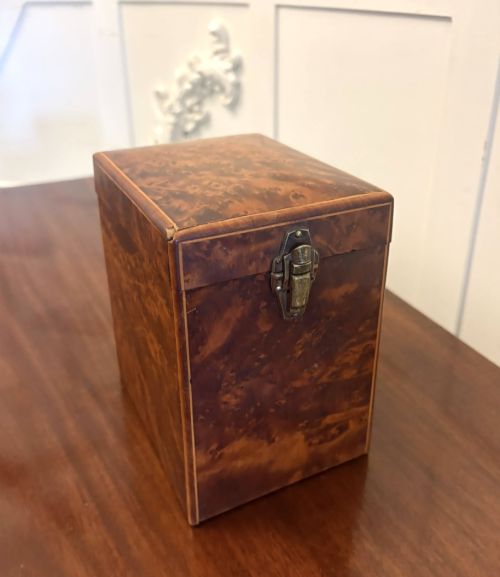
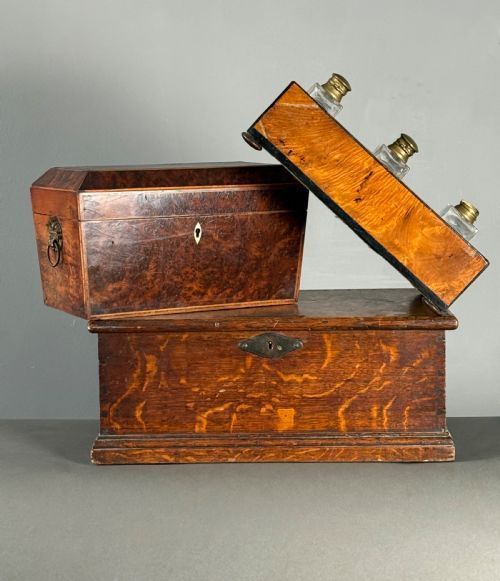
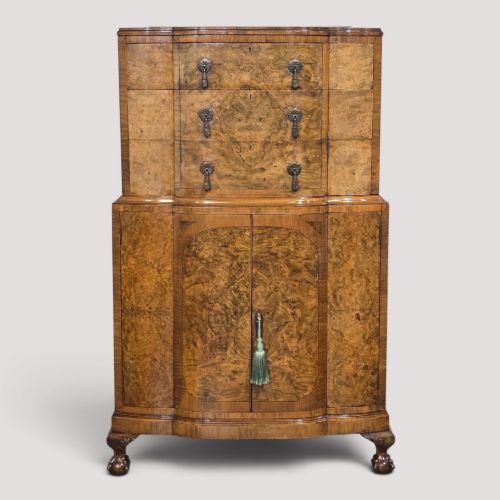
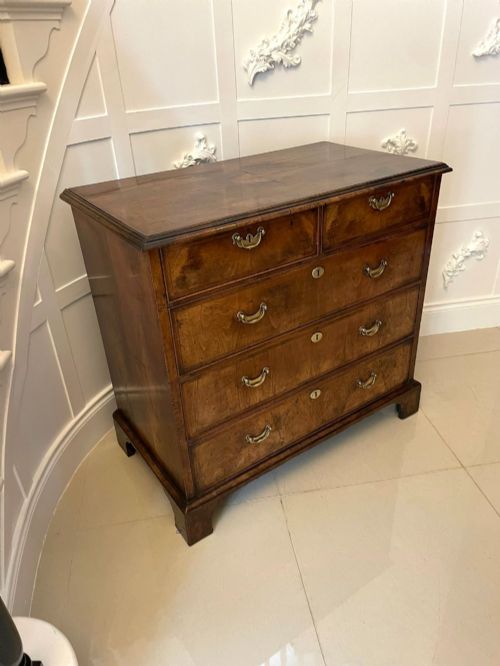
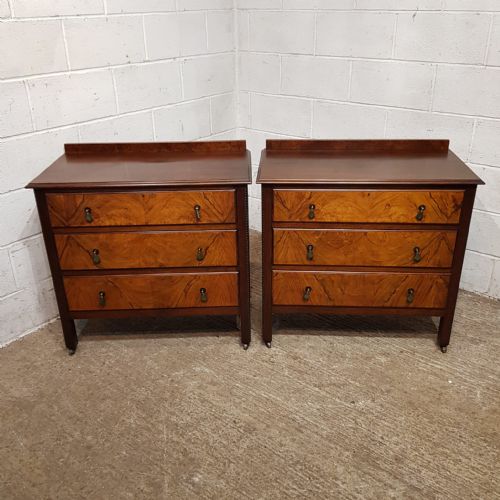
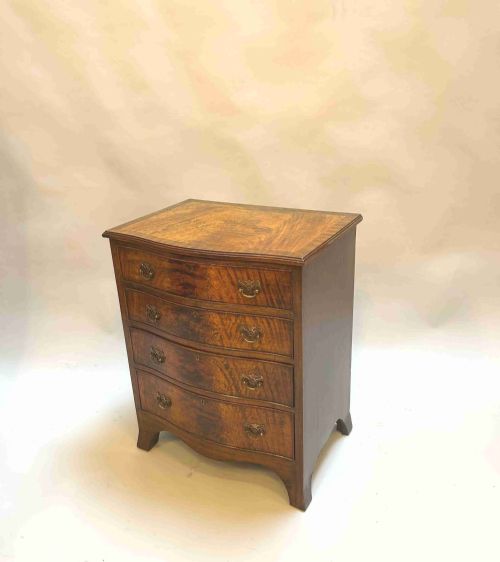
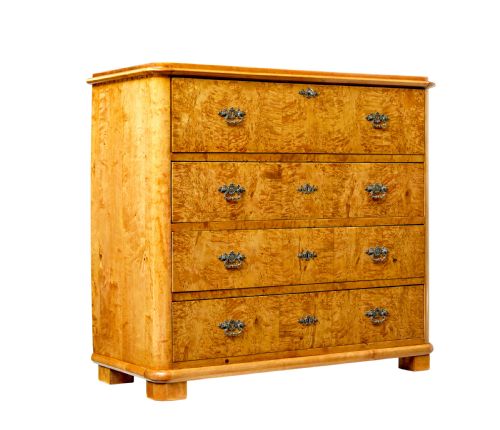
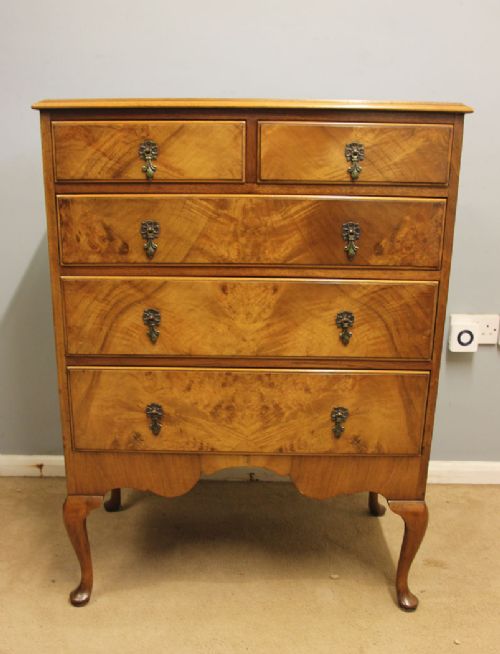
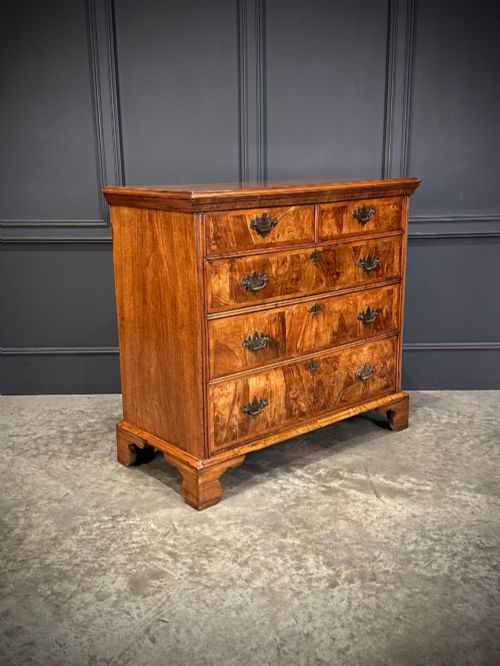
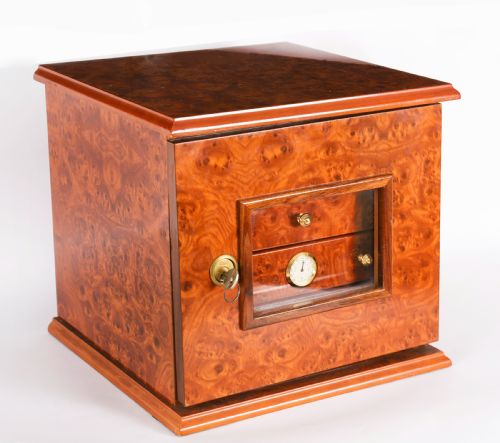
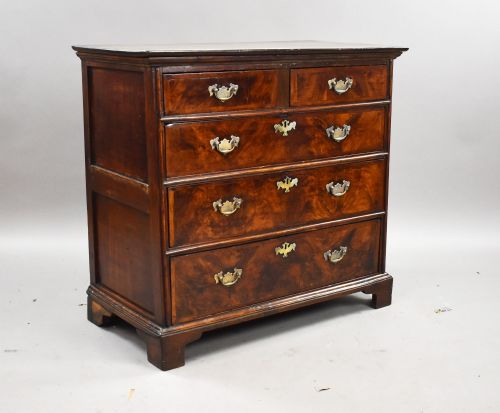
The version most commonly met on this page is the chest of drawers in walnut, alongside smaller decorative boxes and tea caddies shaped in burr yew or elm. Makers from the eighteenth century onwards utilised these wild growths to create focal points within domestic interiors.
How they were made
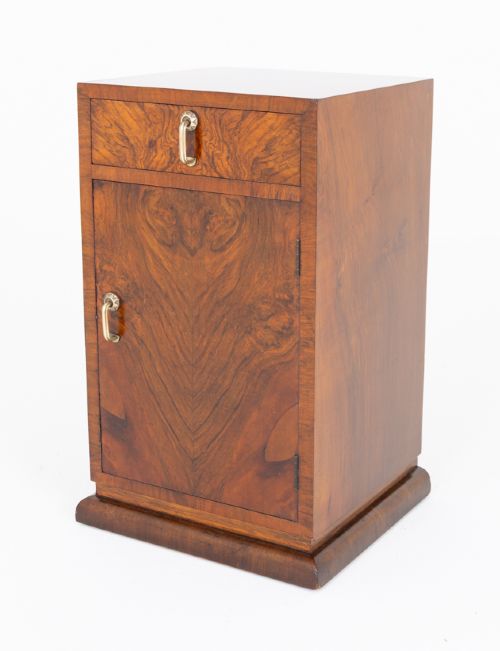
Cabinetmakers applied thin veneers of burr walnut, burr birch, or burr ash over solid secondary timbers like oak and pine. This technique allowed workshops to display intricate knot patterns across wide drawer fronts and tabletops without warping.
Brass handles, escutcheons, and occasional mother of pearl or bone details provided functional contrast to the dark, swirling grain. French polishing or wax finishes built up a deep lustre over the figured surfaces.
Burr Wood Storage Chest Retail Price Guide 2026
Typical asking prices for burr wood storage chest among the pieces listed under this phrase on Sellingantiques today, from the lower quarter to the upper quarter. They describe what is for sale here now, not the wider market.
Some nineteenth-century tea caddies were built with tiny secret compartments specifically to hide expensive sugar rations from family members.
What varies in quality
The density and continuity of the burr figure across the primary surfaces dictate visual impact. Superior examples display balanced, highly knotty grain patterns that match symmetrically from one drawer to the next.
Construction methods determine structural longevity, separating robust carcases with tight dovetails from lighter pieces. The quality of the underlying timber and the crispness of applied mouldings separate standard production from exceptional cabinet work.
S. Mordan & Co
The Burr Wood Storage Chest Glossary
- Burr wood
- A growth on a tree where grain has grown in a deformed manner, resulting in swirling patterns and knots. It is sliced into thin veneers for decorative furniture surfaces.
- Tea caddy
- A small box designed to store loose tea leaves, often fitted with internal compartments and locking lids. These containers frequently utilise burr yew or satinwood.
- Commode
- A decorative chest of drawers or cabinet originating in France, typically standing on relatively tall legs. Examples on this page feature marble tops or bombe shaping.
- Tallboy
- A tall chest of drawers, often constructed as a double chest with one smaller chest stacked on top of a larger base. They maximise vertical storage capacity while displaying figured veneers.
- Wellington chest
- A tall, narrow chest of drawers secured by a locking hinged side pilaster bar. This mechanism fastens all drawers simultaneously.
Burr Wood Storage Chest: Frequently Asked Questions
What is burr wood?
Burr wood comes from a tree tree-growth where the grain grew in a distorted, swirling pattern filled with numerous small knots. Cabinetmakers slice this timber into thin veneers to cover furniture surfaces.
This growth creates dramatic visual movement that straight-grained timber lacks. It appears frequently on drawer fronts and tea caddies.
How do I clean a burr wood chest?
Dust the timber regularly with a soft, dry cloth to prevent dirt accumulation in the grain crevices. Avoid chemical sprays and excessive moisture.
Apply a traditional beeswax occasionally to nourish the wood and maintain its natural lustre. Buff gently after application.
Where were these chests placed?
Larger drawer chests and commodes served bedrooms and formal living spaces for clothing and linen storage. Smaller boxes and tea caddies sat on side tables in reception rooms.
Bedside cabinets and cellarettes provided functional containment within private chambers and dining areas.
How do I date a walnut chest?
Examine the construction methods of the drawer linings and carcase joints to establish the period. Hand-cut dovetails and solid timber backs generally indicate eighteenth or nineteenth-century origins.
Stiles, rails, and handle hardware styles shift from Georgian proportions through Victorian and Edwardian revivals.