

Burr Wood Hall Table
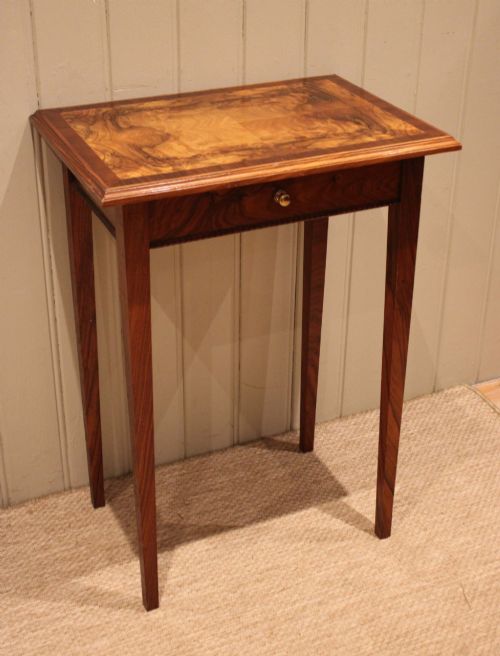
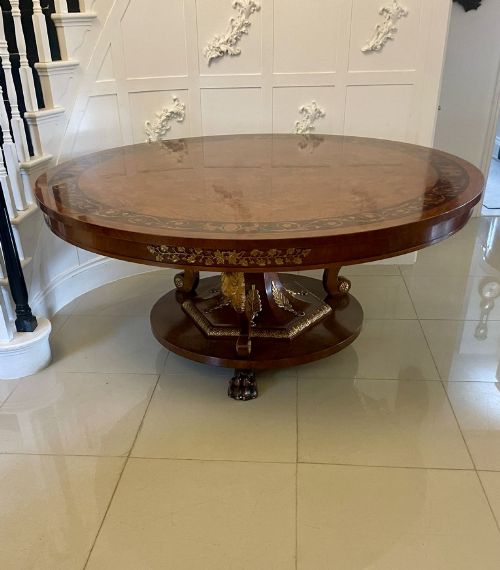
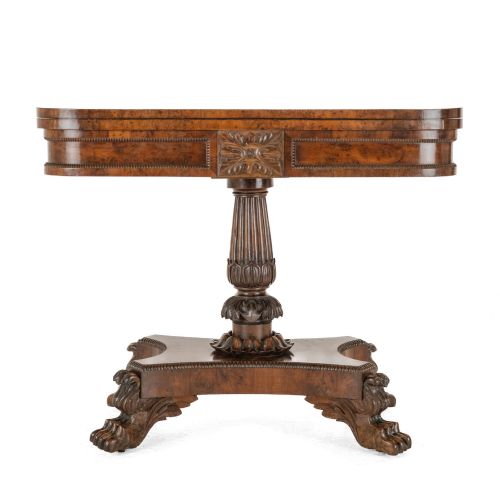
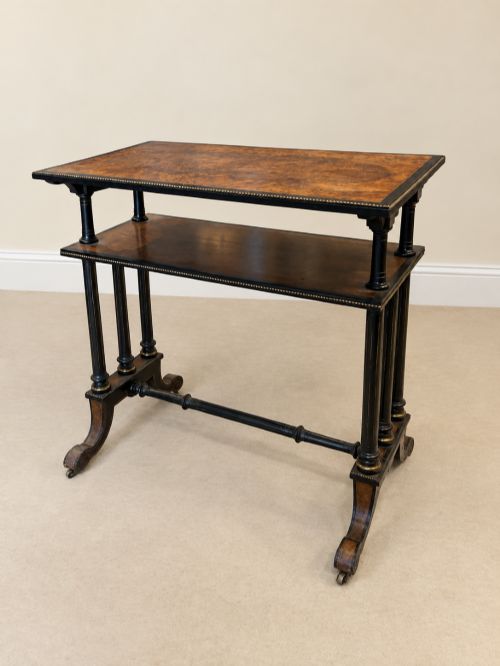
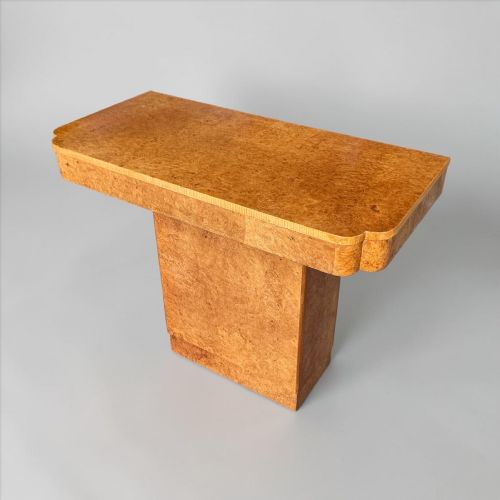
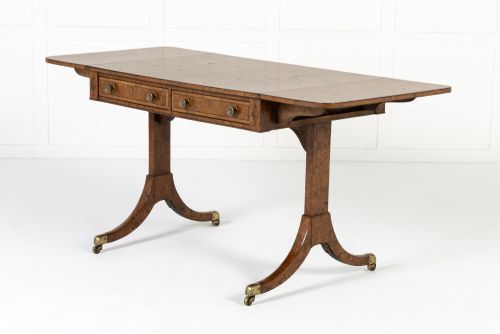
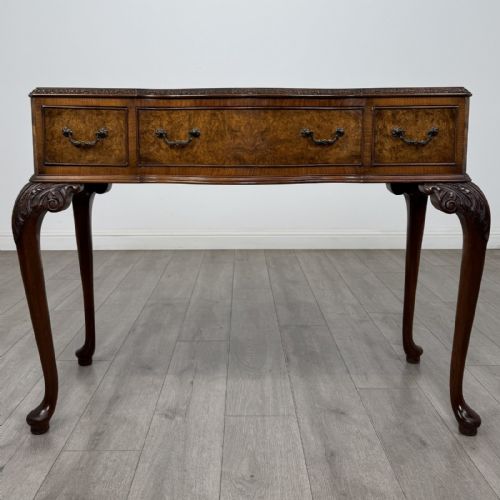
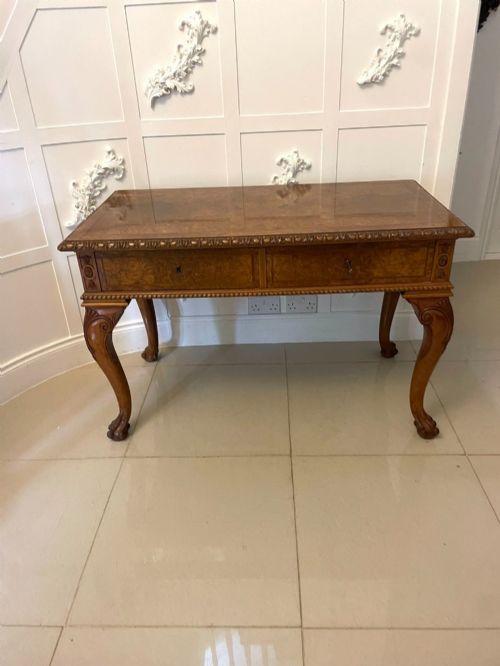
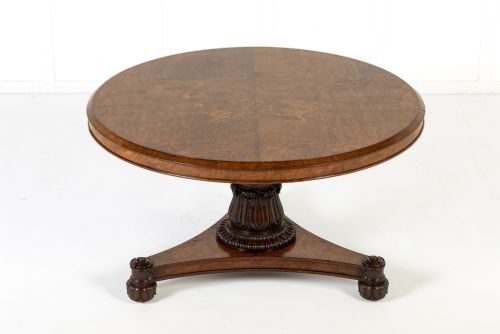
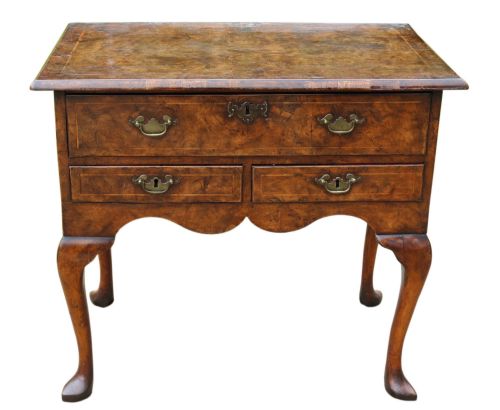
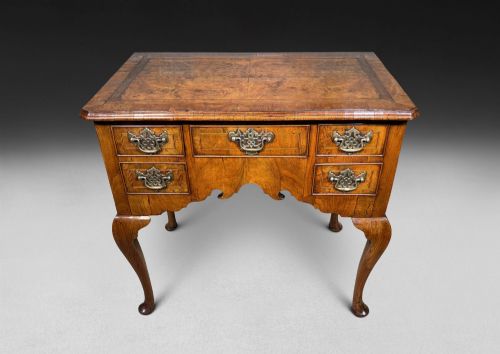
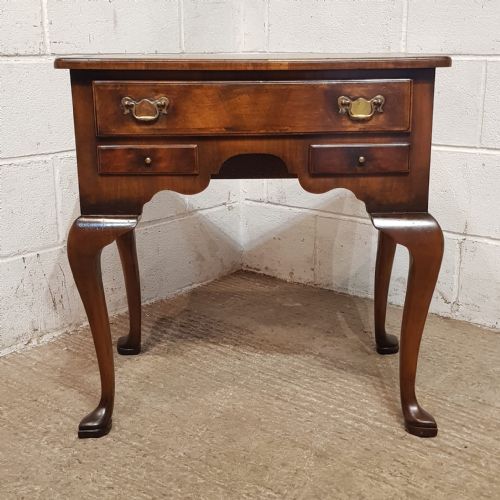
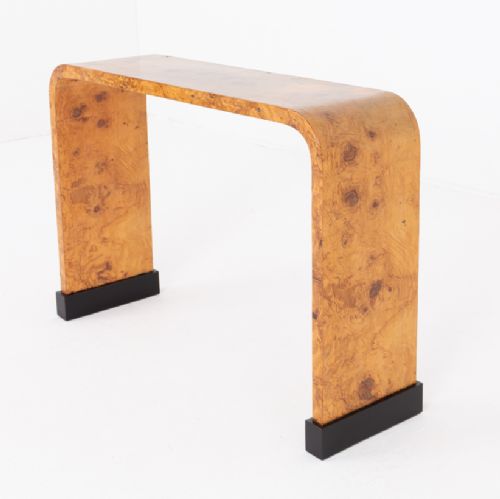
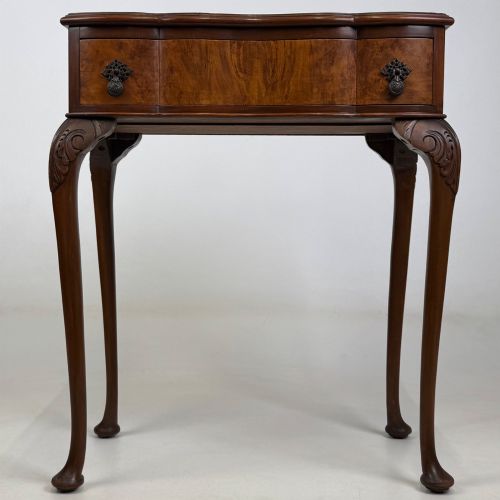
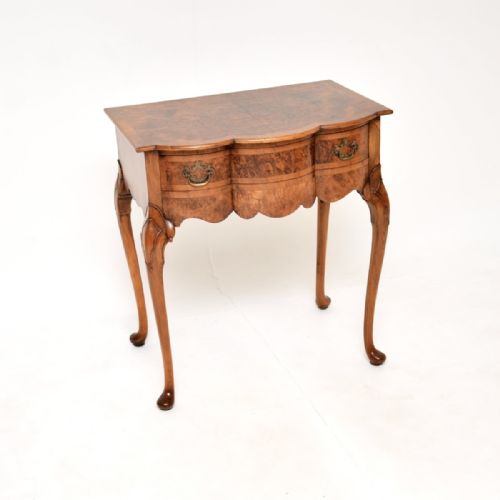
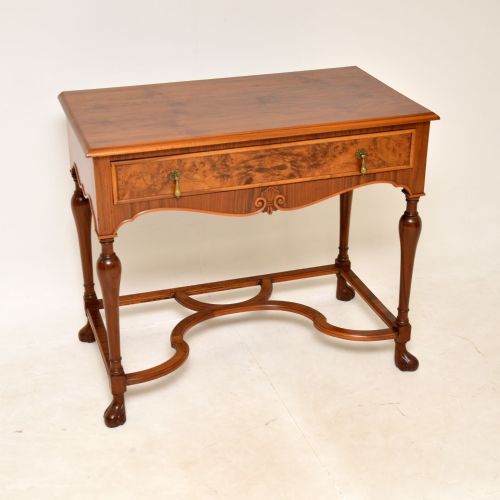
A burr wood hall table brings intense grain patterns into an entrance, and the pieces collected here span console, side, and lowboy forms.
Burr Wood Hall Table
When you search for a burr wood hall table, you encounter a selection of entrance and side furniture built around distinct timber surfaces. The forms range from George II style lowboys to Victorian console tables and Art Deco serving pieces.
You are most likely to meet walnut and burr walnut examples on this page, alongside occasional pieces in burr birch, burr elm, burr oak, and Hungarian ash. These tables serve narrow hallways, reception rooms, and landings where grain pattern adds immediate visual weight.
How they were made
Cabinet makers utilised fine veneers of burr timber laid over secondary woods, matching the swirling knots and growths across table tops. Solid walnut, oak, and other timbers formed the structural frames, legs, and stretchers.
Brass fittings appear on drawers and mounts, while marquetry inlay occasionally decorates the surfaces of Victorian and Edwardian examples. Construction methods shift from eighteenth-century lowboy joinery to nineteenth-century pedestal bases and twentieth-century console frames.
Burr Wood Hall Table Retail Price Guide 2026
Typical asking prices for burr wood hall table among the pieces listed under this phrase on Sellingantiques today, from the lower quarter to the upper quarter. They describe what is for sale here now, not the wider market.
One adventurous nineteenth-century table arrived carved from alder root, proving that forest stumps make surprisingly elegant parlour company.
What varies in quality
The density and movement of the burr figuring dictate the visual impact of the top surface, where tightly clustered burls command greater presence than sparse grain. Expert matching of veneer leaves across a centre or console top shows intentional design.
The integrity of the underlying timber frame and the crispness of carved details on cabriole legs or stretcher bases distinguish standard utility from finer workshop output.
Fortnum and Mason·Epstein and Co
The Burr Wood Hall Table Glossary
- Burr wood
- Timber taken from a tree's growth deformity or burl, producing swirling, intricate grain patterns prized in cabinet making. It requires careful veneering to stabilise the decorative surface.
- Lowboy
- A small eighteenth-century table with one or more drawers and long legs, frequently used as a dressing or side table. George II and later revival versions often feature burr walnut or elm.
- Console table
- A table designed to stand against a wall, sometimes supported by front legs or brackets. Many nineteenth and twentieth-century examples function as hall or serving tables.
- Stretcher table
- A table featuring horizontal rails connecting the legs near the base for added stability. These appear in Victorian and earlier vernacular designs.
- Marquetry
- The art of applying pieces of veneer to a structure to form decorative patterns and pictures. It surfaces on select Victorian writing and card tables.
Burr Wood Hall Table: Frequently Asked Questions
What is a burr wood hall table?
It is an entrance or passage table constructed using burr timber veneers, displaying knotty, swirling grain patterns. The selection includes console, side, and lowboy forms.
These pieces provide a decorative surface in hallways and reception spaces while offering functional drawer storage or display areas.
How do I date a burr wood hall table?
Dating relies on structural characteristics, leg styles, and cabinet-making techniques associated with periods like the eighteenth century, Victorian era, or Art Deco movement.
Changes in silhouette, from cabriole legs on lowboys to pedestal bases and straight console legs, indicate the era of manufacture.
Where should I place a hall table?
These tables suit narrow entranceways, hallways, and landings where their shallow depth permits passage while holding lamps or small items.
Freestanding centre tables and larger console designs also function in spacious reception rooms against feature walls.
What woods are used besides walnut?
The listings feature alternative burr timbers including birch, elm, oak, and Hungarian ash, alongside solid oak and walnut structures.
Brass hardware and marquetry inlay frequently accompany these woods on Victorian and Edwardian pieces.