

Burr Wood Chest of Drawers
A burr wood chest of drawers brings intricate swirling grain patterns and deep patination to a room, offering both practical storage and striking visual texture.
Burr Wood Chest of Drawers
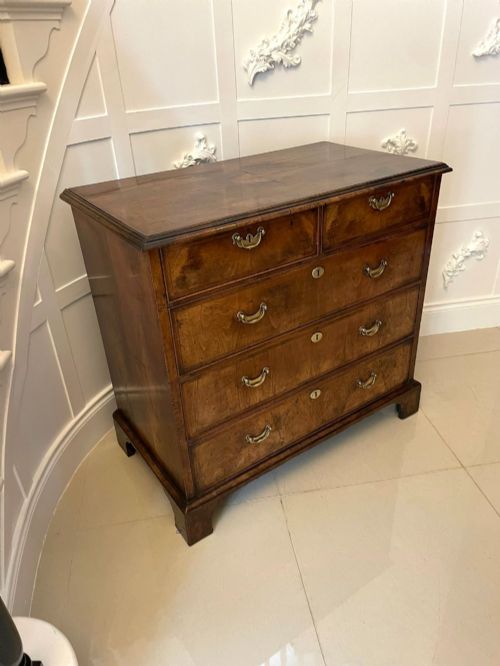
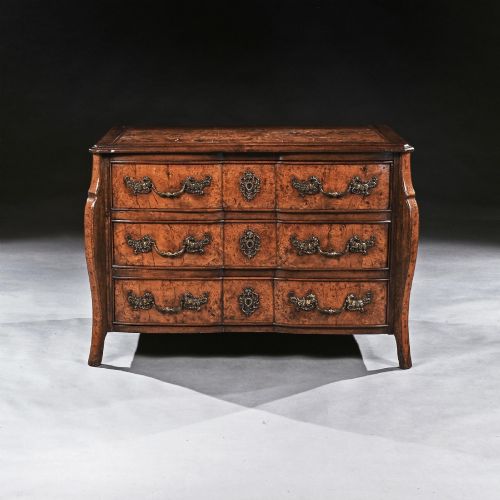
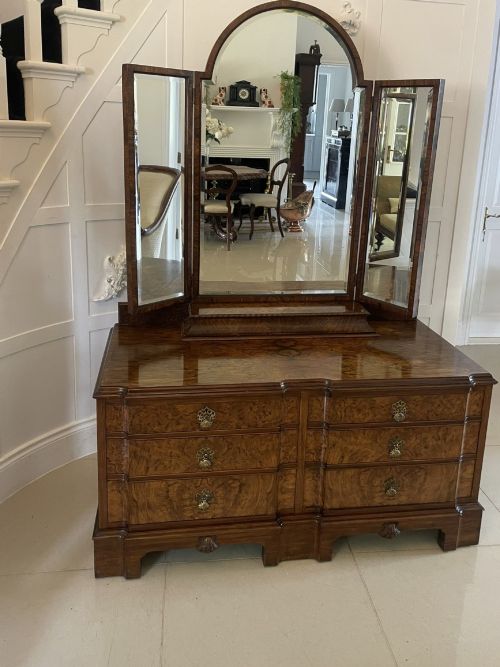
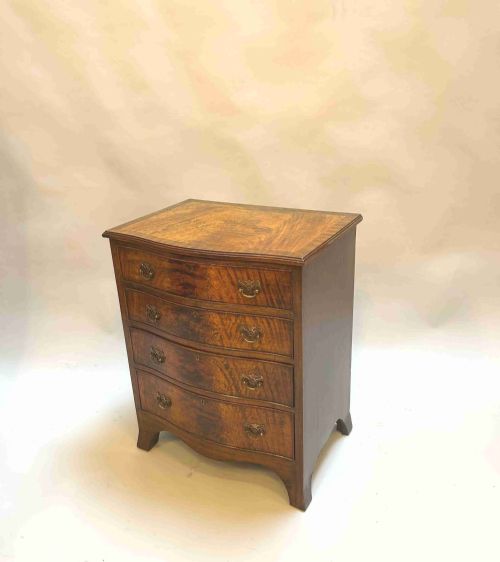
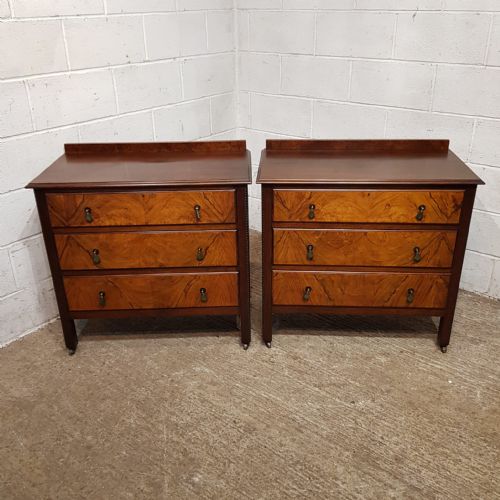
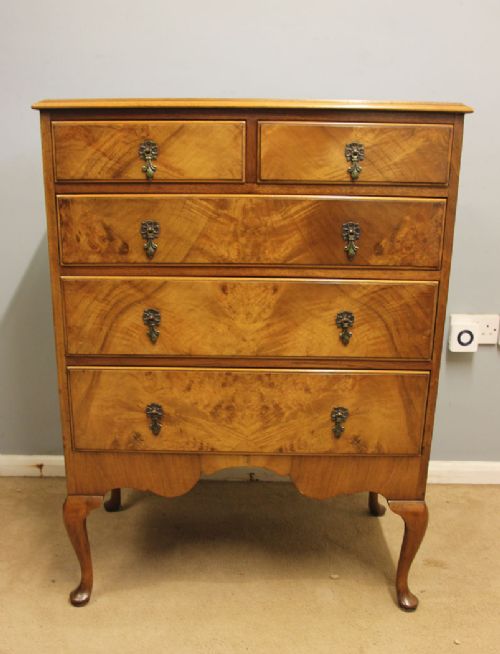
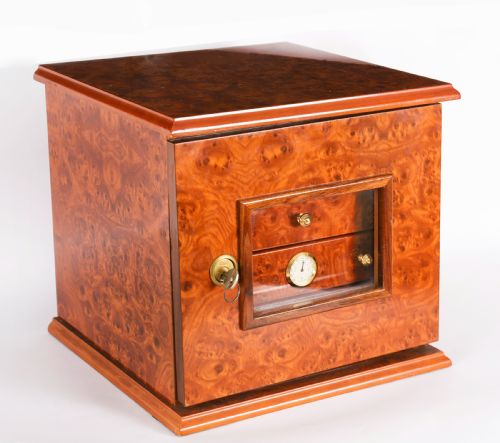
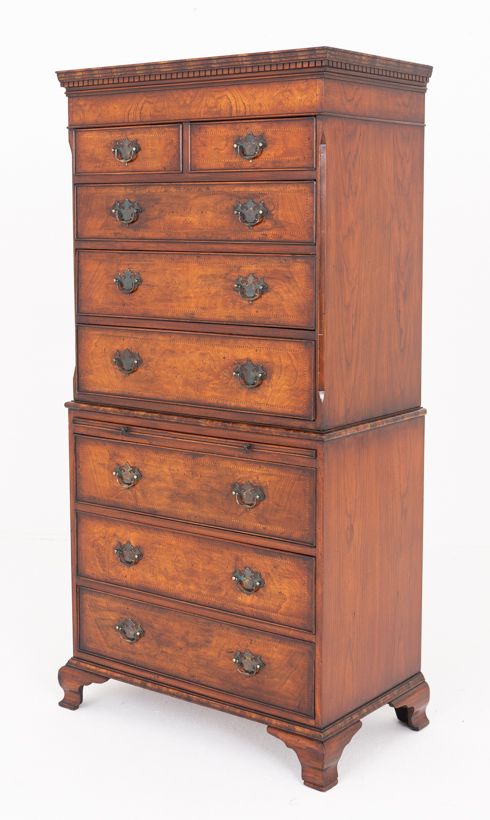
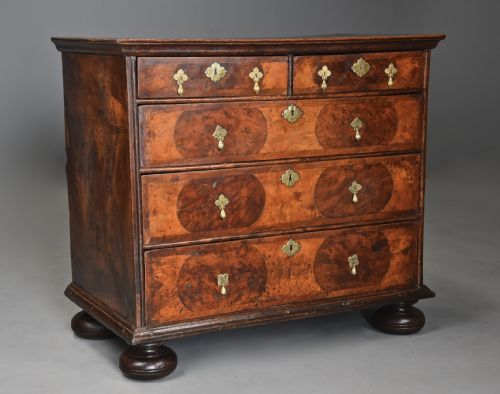
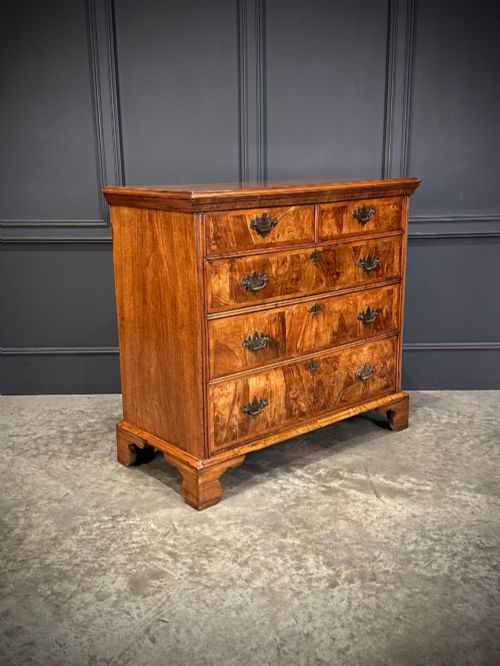
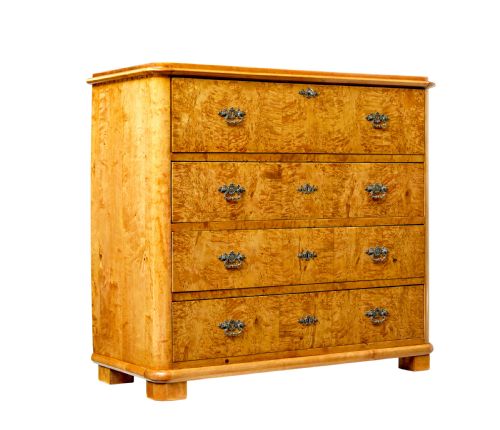
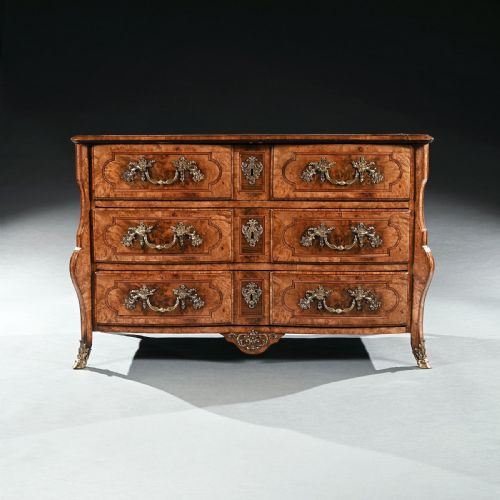
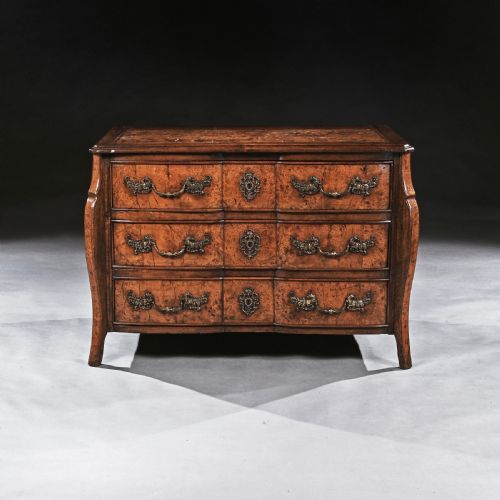
A burr wood chest of drawers showcases the remarkable, knotted growth patterns of timber harvested from the burls of trees. Examples span from the seventeenth century through to the twentieth century, encompassing Georgian, Victorian, and revival styles.
Most entries follow traditional British and continental forms, ranging from full-scale Georgian and Victorian bedroom pieces to compact miniature furniture, dressing tables, and commodes. Walnut and burr walnut dominate the selection, accompanied by elm, ash, birch, maple, and yew.
How they were made
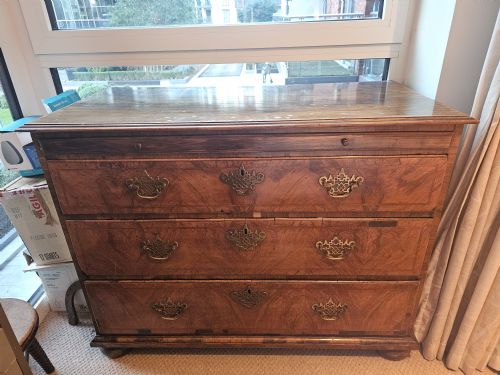
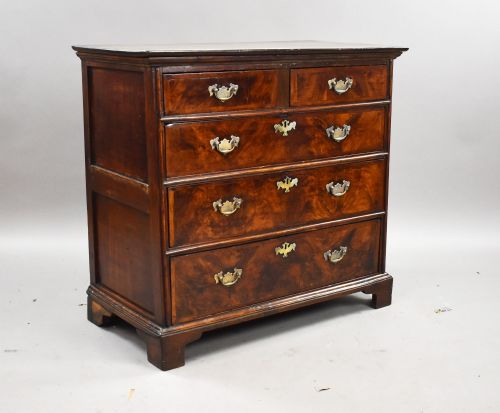
Cabinet makers sliced the irregular, highly figured growths of burr timber into thin veneers, laying them meticulously over solid secondary woods like oak or pine to create symmetrical patterns on drawer fronts. Brass handles, keyplates, and sometimes sliding top panels or boxwood stringing complete the construction.
French polishing or traditional wax finishes were applied to seal the timber and accentuate the natural depth and movement within the grain. Surfaces developed rich patinas over decades of handling and exposure to light.
Trees occasionally produced burls as a reaction to stress, creating the wild, swirling patterns that cabinet makers spent centuries taming into symmetrical drawer fronts.
What varies in quality
Quality rests upon the density and symmetry of the grain matching across the drawer fronts, alongside the crispness of the cabinet proportions and the integrity of the original timber surfaces. Pieces retaining an untouched patina and precise execution by skilled hands command greater appreciation.
The sophistication of the internal construction, the finesse of the secondary timbers used in the drawer linings, and the restraint shown in any restoration work distinguish standard workshop output from exceptional examples.
Thomas Hache of Grenoble
The Burr Wood Chest of Drawers Glossary
- Burr wood
- Timber taken from a tree's growth warts or burls, producing wild, swirling grain patterns. This highly decorative material is typically sliced into veneer for furniture fronts.
- Patina
- The surface sheen and softening of colour developed by wood over years of ageing and handling. It indicates genuine age and use.
- Commode
- A low chest of drawers, often continental in origin and frequently featuring a marble top or elaborate proportions. The term covers various decorative storage units from the eighteenth and nineteenth centuries.
- Stringing
- Thin inlay lines of a contrasting wood, such as boxwood, embedded into the surface to create geometric borders. It highlights the structural outlines of the drawers.
- Secretaire chest
- A chest of drawers featuring a fitted top drawer that drops down to reveal a writing surface and small pigeonholes. It combines desk functionality with standard drawer storage.
Burr Wood Chest of Drawers: Frequently Asked Questions
Where should I place a burr wood chest?
These chests suit living rooms, hallways, or bedrooms where their decorative grain can serve as a focal point. They pair effectively with both traditional and contemporary interiors.
Keep them away from direct sunlight and heat sources to prevent the burr veneers from drying out or splitting.
How do I care for burr walnut?
Maintain the timber by dusting regularly with a soft, dry cloth and occasionally applying a traditional beeswax to nourish the finish. Avoid silicone-based sprays and excessive moisture.
Stable room humidity prevents the timber and underlying veneers from expanding or contracting.
What is an apprentice piece chest?
Apprentice pieces are miniature versions of furniture created by trainees to demonstrate their mastery of cabinet making skills to a guild. They feature the same meticulous construction and burr veneers as full-sized items.
Collectors prize them for their fine scale and the high level of detail required in their creation.