

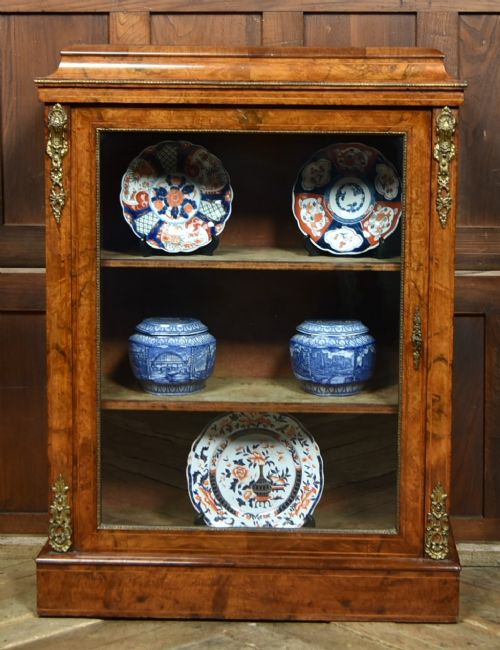
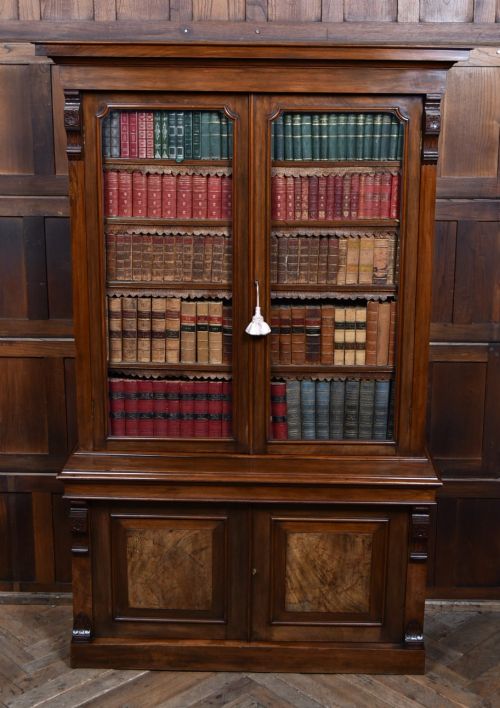
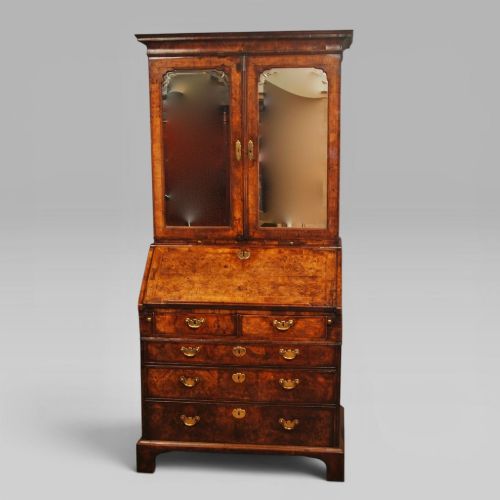
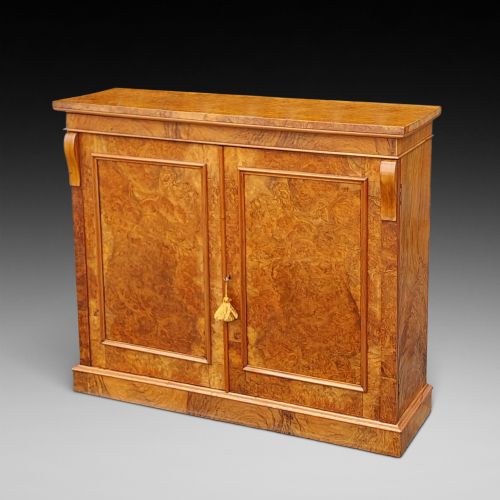
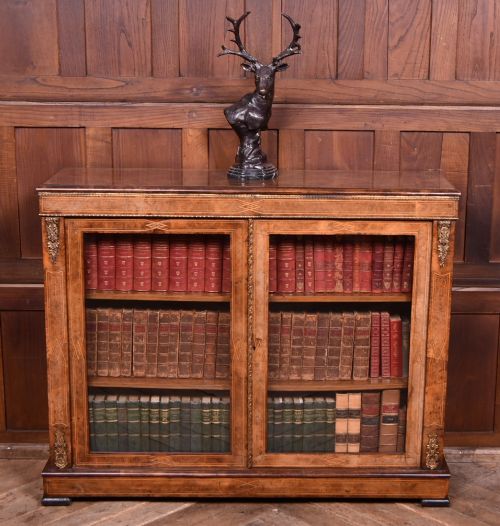
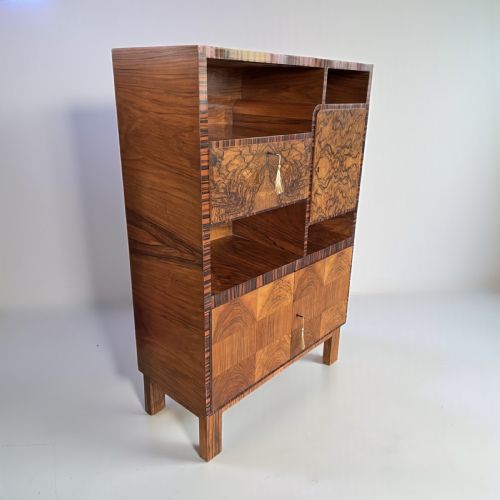

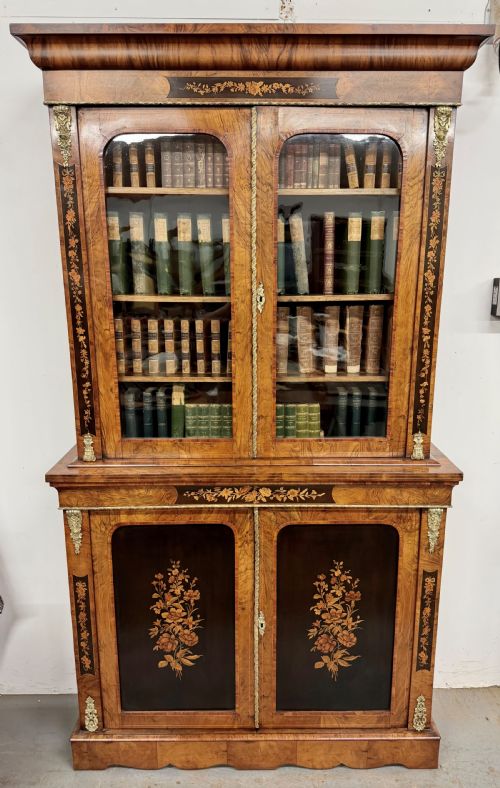


Burr Wood Bookcase
Burr wood bookcases bring rich, swirling grain and deep warmth to a room, offering practical shelving disguised as fine furniture.
Burr Wood Bookcase
A burr wood bookcase is a piece of storage furniture characterised by the swirling, knotty grain of the timber used for its visible surfaces. These pieces range from tall breakfront designs and bureau bookcases to low open shelving and glazed display cabinets.
The selections available here span multiple centuries and design movements, drawing heavily on Victorian craft alongside 18th-century forms and Art Deco styling. Walnut remains the dominant timber, accompanied by occasional variations in elm, maple, and yew.
Victorian examples frequently pair burr walnut with marquetry inlay and glass doors, while 1930s pieces lean towards clean architectural lines. Whether seeking a small open bookcase or a larger bureau cabinet, the emphasis rests squarely on the decorative impact of the veneer.
Materials and Technique
Cabinet makers achieved the striking patterned surfaces of a burr wood bookcase by applying thin veneers of highly figured timber over a stable secondary wood. Burr growths, harvested from tree knots and roots, yielded complex, chaotic grain patterns that required immense skill to slice and lay evenly.
Construction frequently incorporated solid walnut or secondary framing timbers to support the delicate face veneers, often enhanced with crossbanding, stringing, and marquetry inlay. Ormolu mounts, brass hardware, and mirrored glass frequently completed the finer glazed and cabinet-style pieces.
Burr Wood Bookcase Retail Price Guide 2026
Typical asking prices for burr wood bookcase among the pieces listed under this phrase on Sellingantiques today, from the lower quarter to the upper quarter. They describe what is for sale here now, not the wider market.
Listings feature burr walnut, burr elm, and burr maple alongside ormolu mounts and glass.
Judging Quality
Quality in these pieces is dictated by the selection and matching of the veneer. The finest examples display symmetrical, richly figured grain patterns that flow seamlessly across doors and drawers, demonstrating the maker's care in choosing the timber.
Structural integrity and the subtlety of secondary details further divide standard work from the exceptional. Crisp marquetry inlay, well-fitted glass doors, and substantial brass or ormolu mounts signal a higher grade of craftsmanship.
Epstein·S Jamar
The Burr Wood Bookcase Glossary
- Burr Wood
- Timber taken from a tree growth or knot where the grain has grown in a deformed, swirling pattern. This produces highly decorative veneer surfaces prized for furniture.
- Veneer
- A thin slice of figured wood applied to a stable core or secondary timber. This technique allowed makers to display expensive decorative grain efficiently.
- Breakfront
- A cabinet design where the central section projects forward from the flanking wings. This configuration adds architectural depth to large bookcases.
- Marquetry
- Decorative patterns formed by fitting contrasting pieces of veneer into a background sheet. It is frequently seen on Victorian and Dutch furniture.
- Crossbanding
- A border of veneer laid with the grain running perpendicular to the main panel. This frames the central burr timber and defines the edges.
Burr Wood Bookcase: Frequently Asked Questions
What is a burr wood bookcase?
A burr wood bookcase is a storage piece faced with finely figured timber derived from tree burls or knots. The distinct swirling grain makes the furniture function as both a practical shelf and a decorative centrepiece.
These pieces appear across various historical periods, shifting from 18th-century bureau formats to Victorian glazed cabinets and 1930s minimalist designs.
How do I date a bookcase?
Dating relies on observing the overall architectural style, construction methods, and secondary woods used in the carcase. Victorian pieces often feature heavy glass doors and marquetry, while Art Deco examples lean towards streamlined geometric forms.
Hardware styles and the thickness of the timber veneers also offer reliable clues to a piece's era of manufacture.
Where should I place it?
These bookcases suit studies, drawing rooms, or living spaces where the rich grain can be appreciated up close. Keep them away from direct sunlight and sudden temperature changes to protect the delicate veneer.
Allow enough clearance around breakfront or cabinet doors so they open freely without striking adjacent walls.
Are these pieces solid wood?
Most burr wood bookcases utilise veneers applied over a stable secondary carcase wood rather than being solid burr timber. This technique was necessary because burr growths are unstable and cannot be harvested in large planks.
Using veneer allowed makers to showcase the most dramatic grain patterns without warping the structure of the cabinet.