

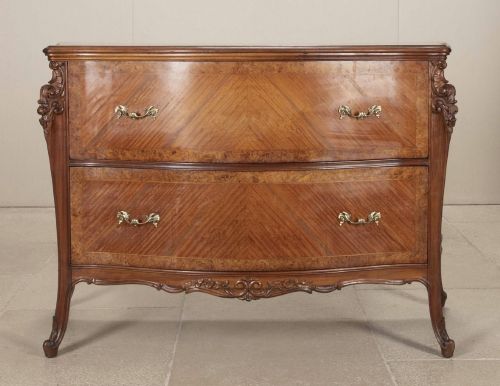
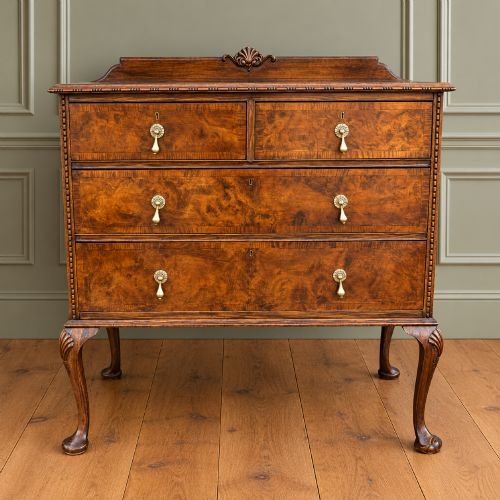


Burr Walnut Style Commode
A burr walnut style commode brings rich grain and figured warmth to a room, offering practical storage disguised as fine decorative furniture.
Burr Walnut Style Commode
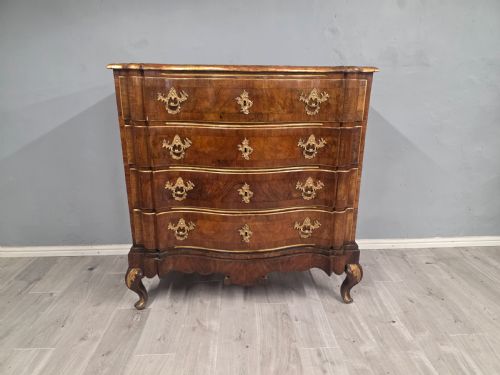
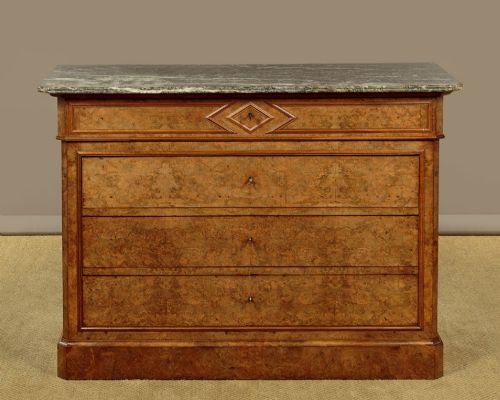
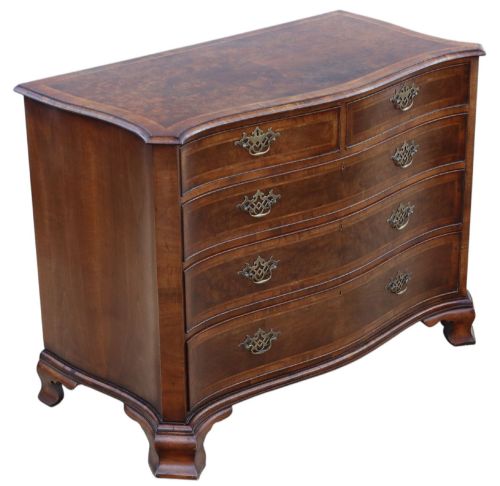
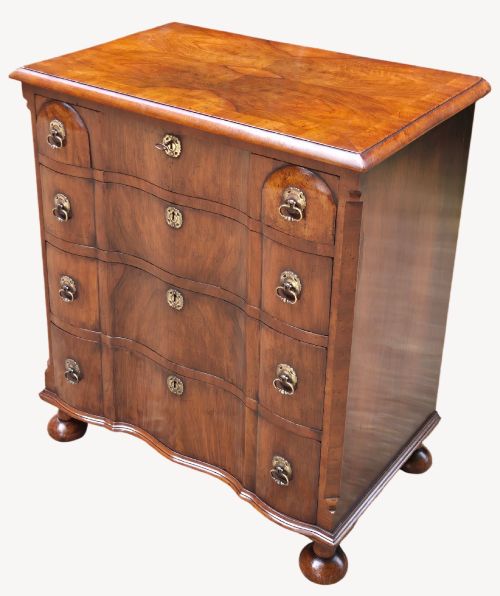
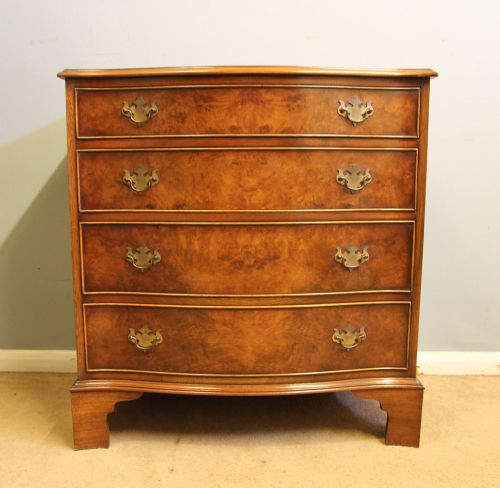
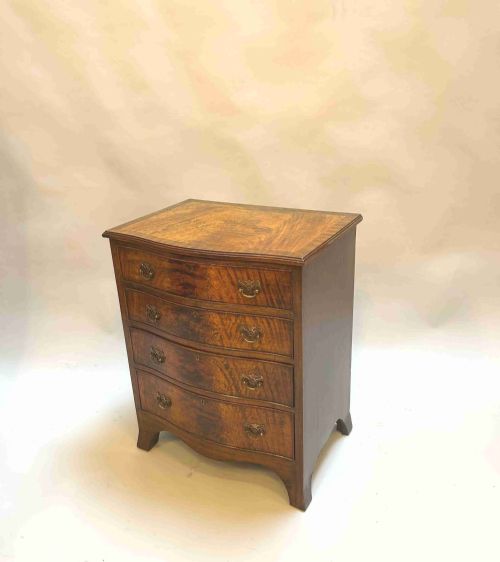
A burr walnut style commode is essentially a chest of drawers or small cabinet finished with decorative timber veneers, often drawing on 18th-century design traditions. When you search for this phrase, you meet pieces ranging from serpentine fronts to marble-topped continental examples.
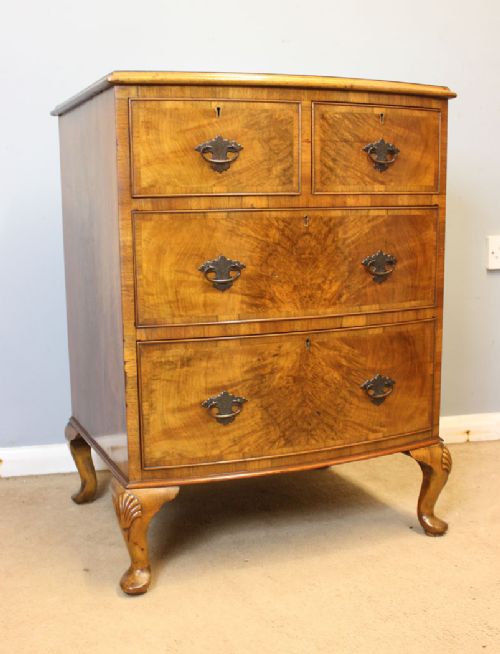
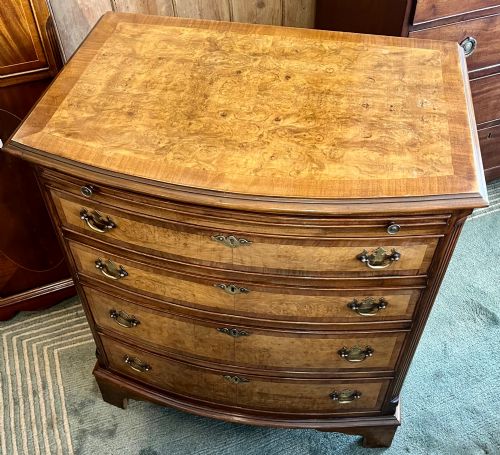
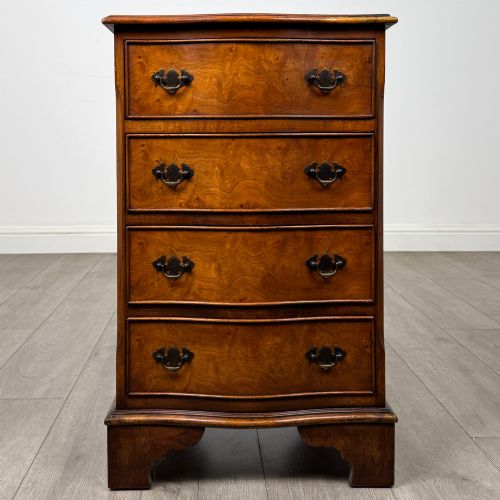
The selections span several periods, with 1920 and 1930 revivals appearing alongside Victorian and 19th-century interpretations. Forms include bow-fronted chests, miniature furniture, side cabinets, and bombé shapes.
Makers and retailers such as Maple & Co and Epstein contributed to these designs, working within Georgian, Queen Anne, and Louis XV revival styles. Buyers often encounter pieces utilising brass handles and ormolu mounts alongside the timber carcases.
Materials and construction
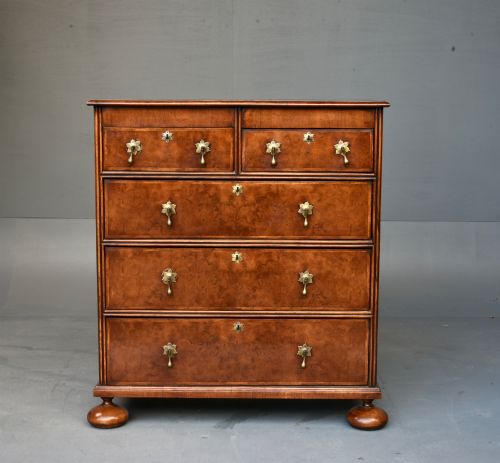
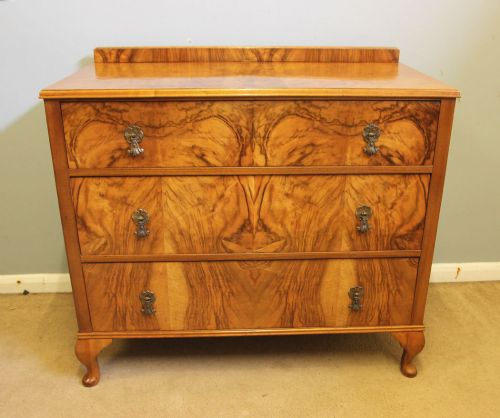
Cabinet makers utilised burr walnut and walnut veneers applied over solid secondary woods like oak, creating rich, swirling patterns across the drawer fronts and top surfaces. Crossbanding and inlay work frequently border these figured sections to frame the grain.
Many examples incorporate marble tops, brass handles, and ormolu mounts, particularly on pieces influenced by French commode designs. Structural forms range from straight-fronted chests to complex serpentine and bombé shapes requiring precise shaping of the timber carcase.
Burr Walnut Style Commode Retail Price Guide 2026
Typical asking prices for burr walnut style commode among the pieces listed under this phrase on Sellingantiques today, from the lower quarter to the upper quarter. They describe what is for sale here now, not the wider market.
Among the full-sized sideboards and chests, a tiny 20cm high miniature George II style chest proves that grand cabinet work comes in pocket dimensions.
What separates the tiers
The visual impact of a burr walnut style commode rests largely on the selection and matching of the timber veneer. Finer examples display symmetrical grain patterns across multiple drawers, while simpler versions rely on plainer walnut surfaces.
Construction methods and secondary details also divide the range. Heavy ormolu mounts, fitted marble tops, and refined brass hardware distinguish the more ambitious cabinet work from standard production pieces.
Maple and Co·Epstein
The Burr Walnut Style Commode Glossary
- Burr walnut
- A veneer taken from the wart-like growth on a walnut tree, prized for its complex, swirling grain patterns. This material forms the primary decorative surface on many revival commodes.
- Serpentine front
- A furniture front curved with a convex centre flanked by concave wings. This shape adds movement and complexity to the cabinet design.
- Commode
- A low chest of drawers or cabinet, often associated with French styles and decorative mounts. The term covers various small storage pieces found in domestic interiors.
- Crossbanding
- A narrow strip of veneer laid around the border of a panel so that the grain runs at right angles to the main centre. It creates a neat, framed appearance on drawer fronts.
- Ormolu
- Gilded bronze mounts applied to furniture for decoration, commonly seen on French-influenced commodes. These metal additions complement the dark tones of the walnut timber.
Burr Walnut Style Commode: Frequently Asked Questions
What periods do these commodes come from?
The listings span 17th-century origins up through 18th-century pieces, Victorian examples, and 20th-century revival pieces from the 1920s and 1930s.
Many items date to the early decades of the twentieth century when Georgian and Queen Anne revival styles proved particularly popular with cabinet makers.
How do I identify a revival piece?
Revival pieces often date from the Edwardian period or the 1920s and 1930s, utilising older styles like Queen Anne or Georgian design.
Examination of the interior construction, secondary timbers, and hardware usually helps distinguish a 20th-century interpretation from an earlier original.
Where were marble-topped commodes used?
Marble-topped versions frequently reflect French taste, drawing on Louis XV revival and continental commode traditions from the 19th century onwards.
These pieces served in principal rooms as decorative side cabinets or bedside storage, combining stone surfaces with figured timber carcases.
What is the difference between a chest and a commode?
While both terms describe drawer storage, commode often implies a more decorative French-influenced cabinet with shaped fronts, ormolu, or marble.
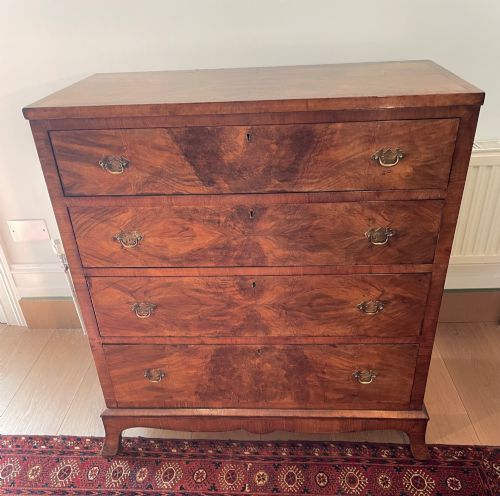
Standard chests of drawers generally follow British proportions, ranging from small bow-front designs to tall five-drawer upright versions.