

Burr Walnut Center Table
A burr walnut centre table brings remarkable grain patterns and rich warmth to the middle of a room, making it both a practical surface and a striking focal point.
Burr Walnut Center Table
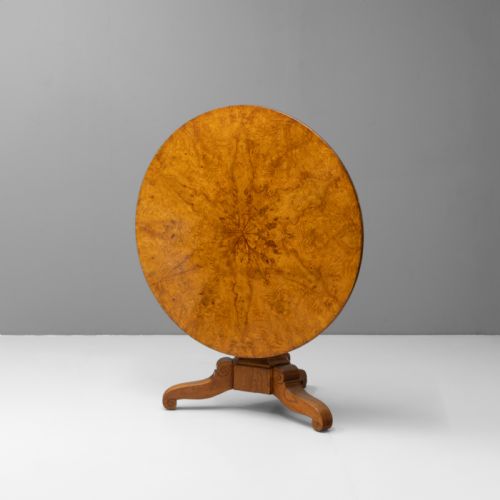
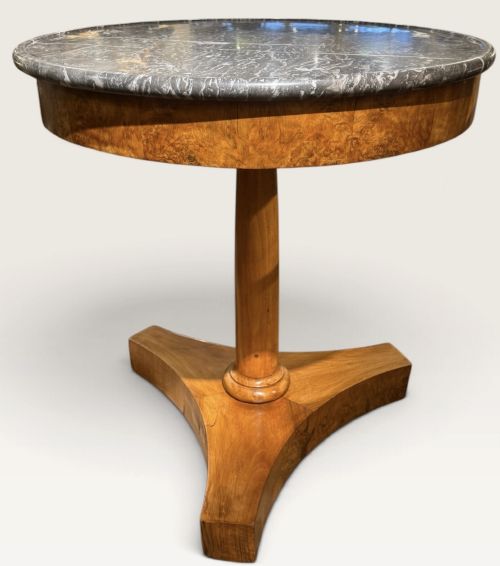
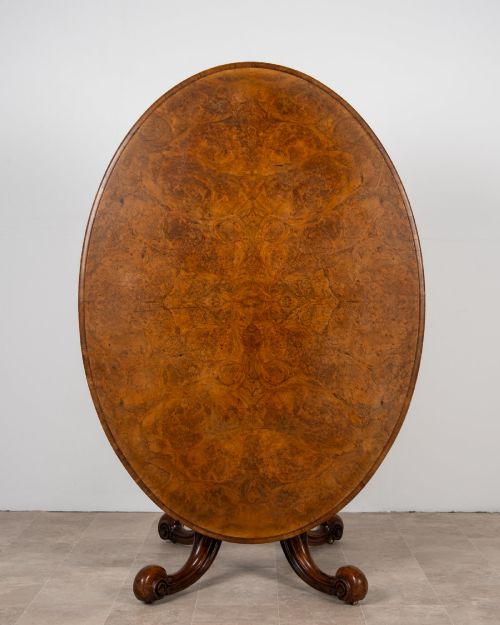
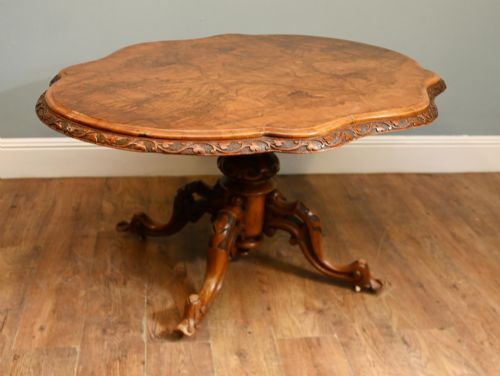
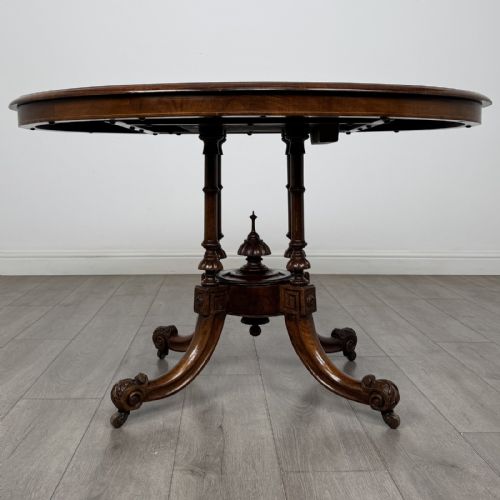
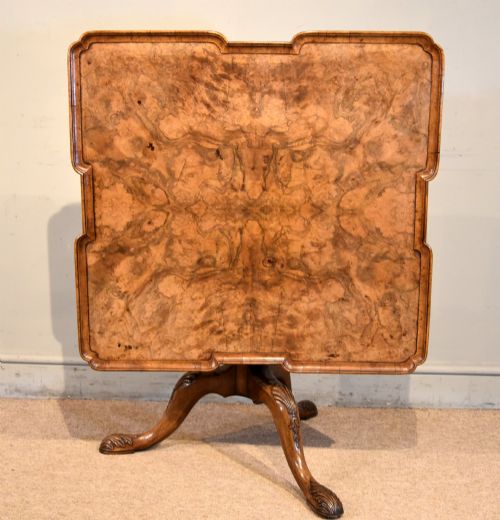
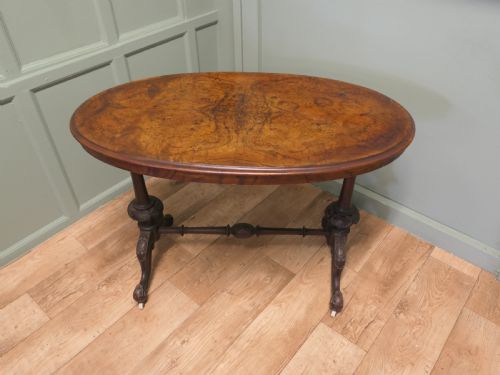
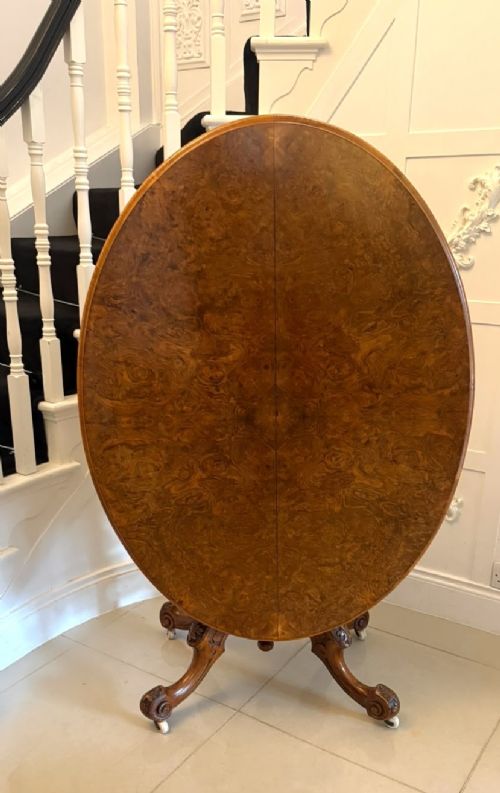
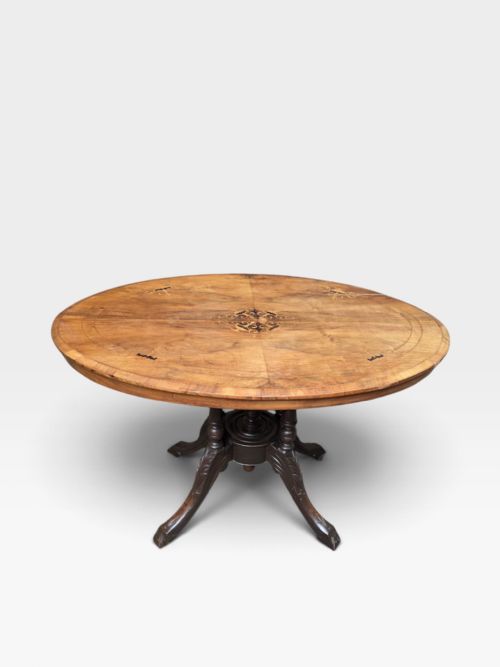
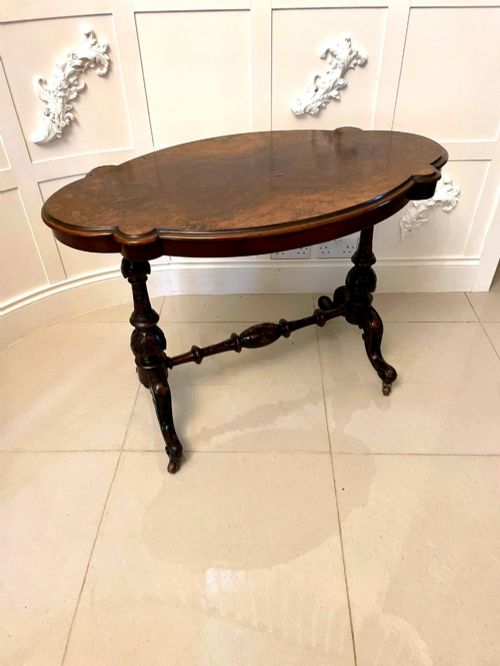
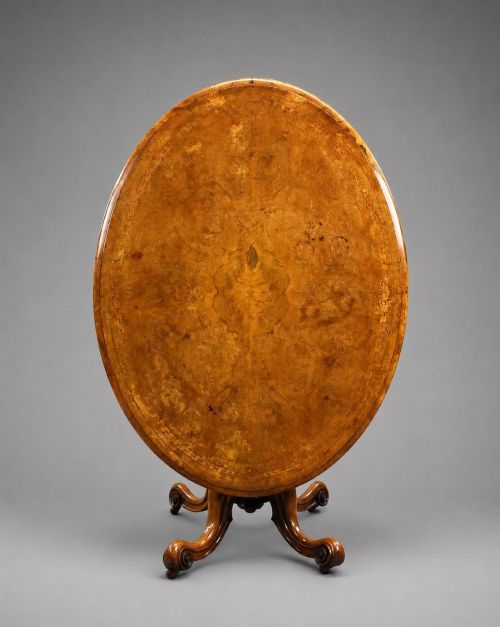
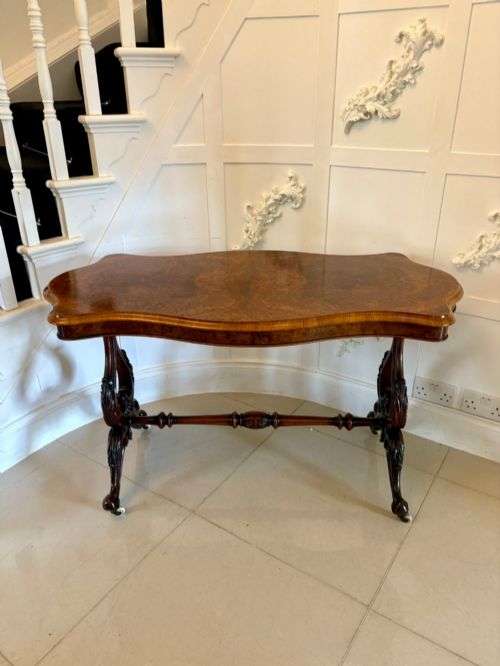
A burr walnut centre table is a freestanding piece designed to be viewed from all sides, appearing most frequently in Victorian forms such as oval loo tables, tilt-top breakfast tables, and shaped occasional tables. These tables originated to occupy the middle of grand reception rooms, libraries, and drawing rooms where ordinary side furniture would fail to command the space.
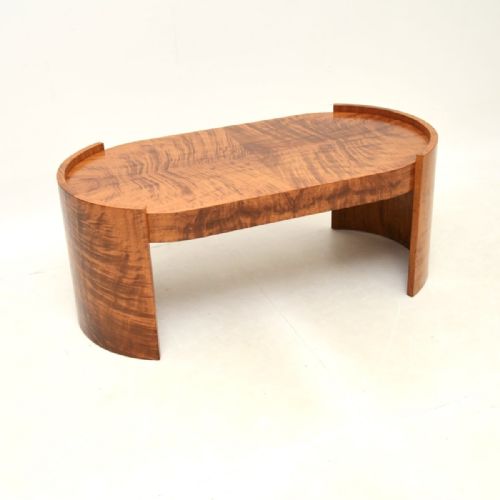
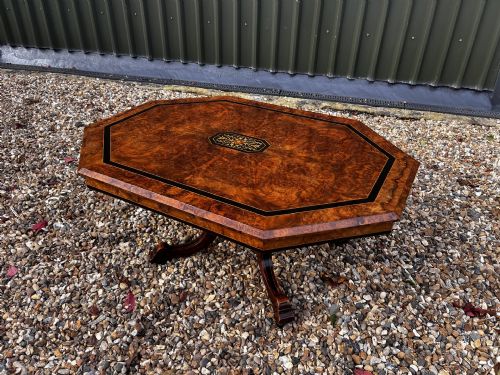
The selection on this page spans the nineteenth century through the early twentieth century, showing periods like the eighteen-fifties and eighteen-sixties alongside later revivals. Alongside traditional multi-purpose formats, one encounters occasional tables, coffee tables adapted from earlier forms, and specialised pieces incorporating chess boards or secret drawers.
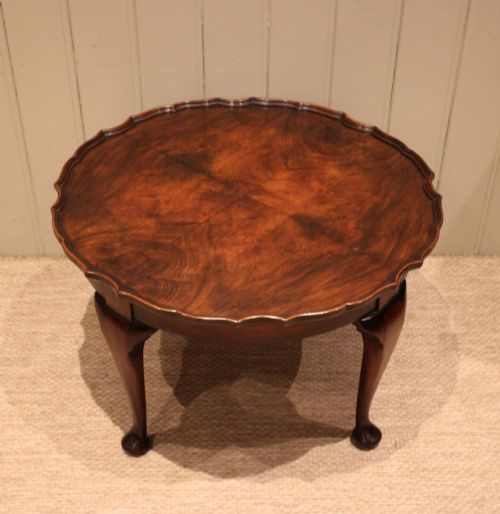
Makers and retailers of the era utilised diverse stylistic influences, ranging from French Revival curves and Queen Anne Revival motifs to Carolean and Regency lines. Whether formed as a large oval dining table seating six or a compact lamp table, each piece displays the distinctive figured timber that defines the category.
Materials and construction methods
Cabinet makers constructed these tables using a sturdy softwood or hardwood carcass overlaid with prized walnut veneer, specifically selecting burr walnut slices for their swirling, knotty grain patterns. This decorative veneer required careful hand-laying across tabletops and pedestal bases to create balanced symmetrical patterns.
Secondary materials such as boxwood inlay, brass fittings, and ormolu mounts enhanced the visual weight of the tables, while leather inserts appeared on specific library and writing formats. Carved solid walnut formed the structural pedestals, quadrapod legs, and moulded edges that supported the heavy veneered tops.
Burr Walnut Center Table Retail Price Guide 2026
Typical asking prices for burr walnut center table among the pieces listed under this phrase on Sellingantiques today, from the lower quarter to the upper quarter. They describe what is for sale here now, not the wider market.
Certain Victorian tables hide secret drawers beneath the top, originally designed for storing clandestine notes or winnings from card games.
Distinctions in craftsmanship and design
Quality in a burr walnut centre table rests primarily on the choice and matching of the veneer figures across the main surface, where superior examples exhibit complex, unbroken burr patterns. The depth of hand-carving on the pedestals and legs further separates standard production from exceptional workshop output.
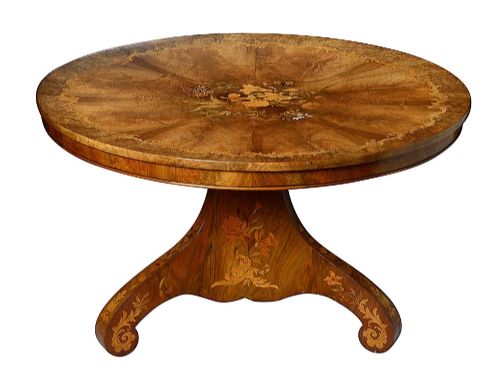
Construction details such as the integration of tilt-top mechanisms, secret drawers, and complex marquetry inlay reveal the skill invested by the cabinet maker. Pieces bearing documented workshop attributions or sophisticated ormolu mounts demonstrate a higher tier of period execution.
Gillows·Edward Holmes Baldock·Edward And Roberts
The Burr Walnut Center Table Glossary
- Burr walnut
- A wood veneer taken from the growth knots or burls of the walnut tree, prized for its intricate, swirling grain patterns. It provides the primary decorative surface on Victorian tables.
- Loo table
- A large round or oval table popular in the nineteenth century, featuring a tilt-top mechanism so it could be stored against a wall when not in use for the card game loo.
- Marquetry
- The art of applying pieces of veneer to a structure to form decorative patterns and pictures. Craftsmen used woods like boxwood to create contrasting details on tabletops.
- Ormolu
- Gilded bronze mounts applied to furniture for decorative enrichment. This French technique added metallic contrast to dark walnut surfaces.
- Quadrapod base
- A heavy central pedestal supported by four carved feet or legs. This configuration provided necessary stability for large, heavy table tops.
Burr Walnut Center Table: Frequently Asked Questions
What is a burr walnut centre table used for today?
These tables function brilliantly as central display surfaces in large hallways or drawing rooms, or as generously proportioned coffee tables in spacious living areas.
Their freestanding design allows them to anchor a room layout while providing a durable surface for lamps, books, and decorative objects.
Can I use a tilt-top table normally?
The tilt-top mechanism was originally designed to save floor space by allowing the heavy table top to lock vertically against the pedestal when not in use.
In daily modern living, these tables remain stable and secure in the horizontal position while retaining their historical folding function.
How do I care for antique walnut furniture?
Keep walnut tables away from direct heat sources and strong sunlight to prevent the delicate veneers from drying out or fading over time.
Routine dusting with a soft, dry cloth and occasional application of appropriate furniture wax helps preserve the polished timber surface.