


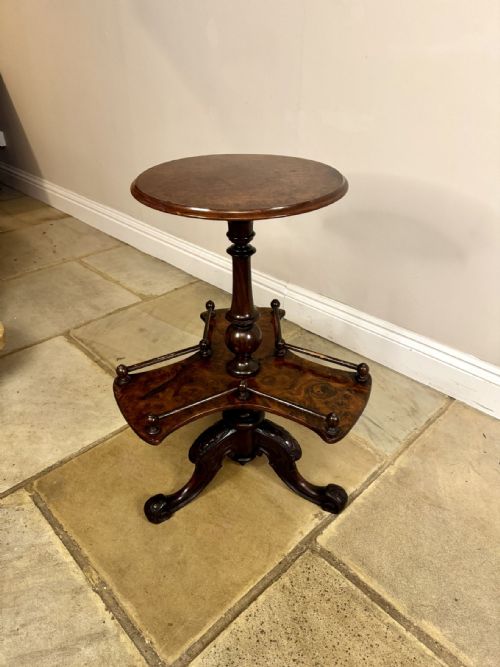


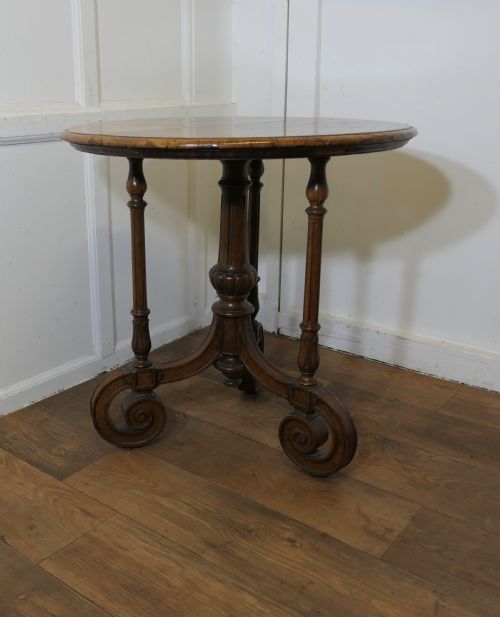

Burr Walnut Candle Stand
A burr walnut candle stand brings rich, swirling grain and compact tripod support into a room, offering a functional surface that also acts as a point of visual warmth.
Burr Walnut Candle Stand
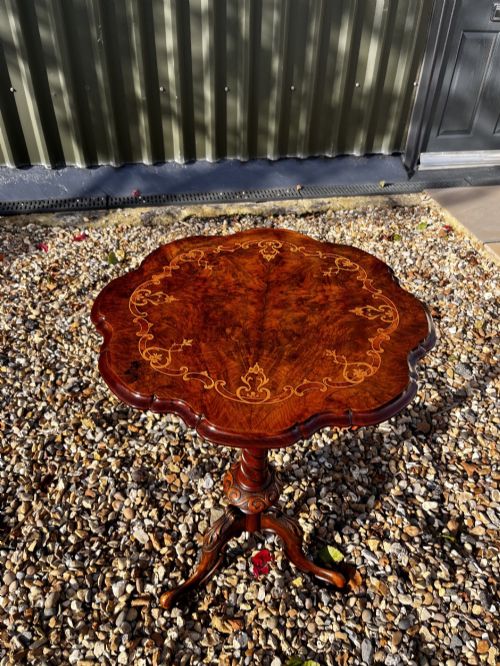
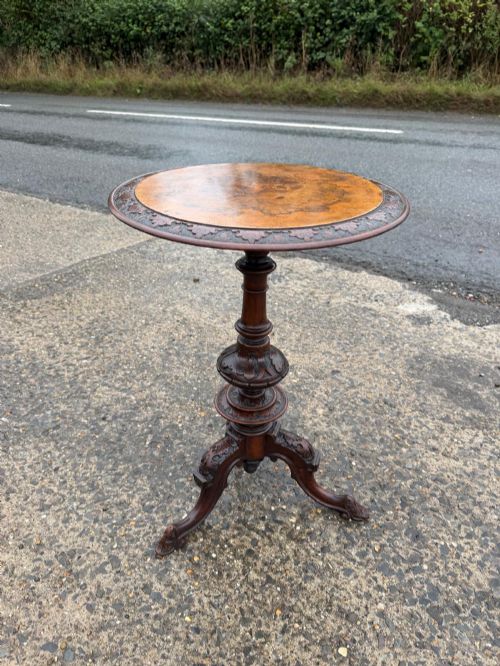
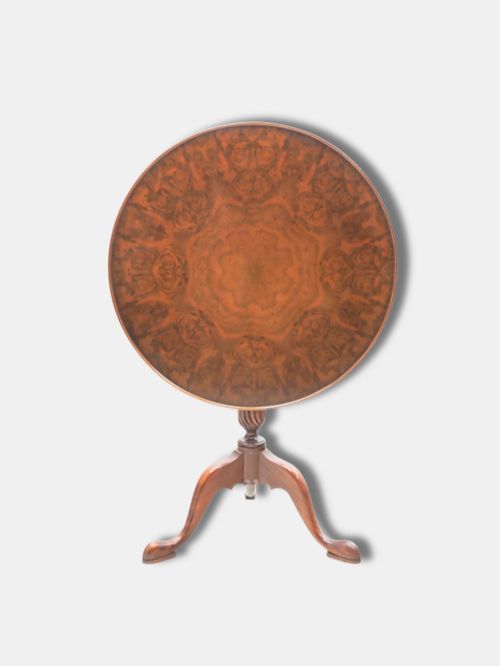
A burr walnut candle stand typically takes the form of a small occasional table, lamp table, or wine table designed to hold light or small objects beside a seat. These pieces frequently feature circular or shaped timber tops raised on slender tripod legs.
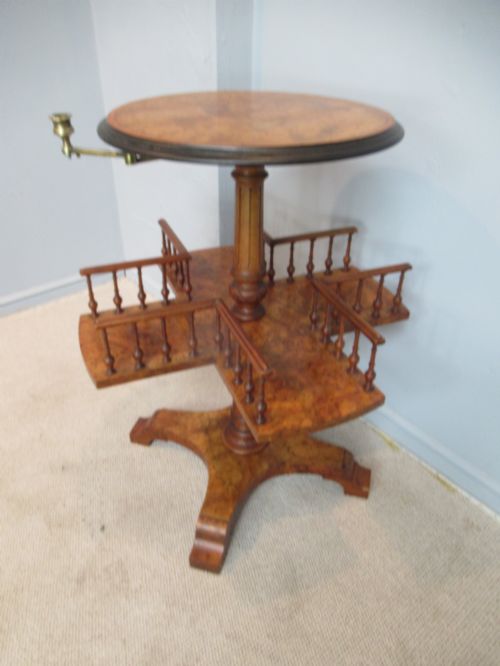
The selections encountered here span the Victorian era, including pieces from the mid to late nineteenth century, alongside later Georgian revival pieces from the early twentieth century. Alongside standard tables, the selection includes related forms such as music stands and revolving bookstands sharing the same timber vocabulary.
Makers utilised decorative wood veneers to give these stands their characteristic appearance, often pairing the central patterned surface with contrasting timber details. Originating largely from British workshops of the nineteenth century, they reflect period domestic habits centred on portable lighting and social display.
How they were made
Cabinet makers constructed these stands using solid foundational timbers such as mahogany or plain walnut, onto which they applied finely figured burr walnut veneer. This veneer layer exploits the knotty growths of the walnut tree to create intricate, swirling patterns across the tabletop surface.
Many examples incorporate decorative flourishes including boxwood stringing and wood inlay to frame the central burr panels. Turned pedestals branch into tripod legs, providing stable support for the elevated tabletop while maintaining a light overall profile.
Burr Walnut Candle Stand Retail Price Guide 2026
Typical asking prices for burr walnut candle stand among the pieces listed under this phrase on Sellingantiques today, from the lower quarter to the upper quarter. They describe what is for sale here now, not the wider market.
The listings here demonstrate a concentration of Victorian walnut furniture, spanning the nineteenth century alongside early twentieth-century revival pieces.
What varies in quality
The visual strength of the burr walnut veneer dictates much of the distinction across these stands, with tighter and more symmetrical grain patterns drawing greater interest. The skill of the original execution shows in how seamlessly the veneer wraps the edges and meets any inlaid borders.
Structural integrity in the tripod base and turning of the central column also separates standard workshop output from finer examples. Subtle details such as crispness in the boxwood inlay and the retention of a warm, polished surface finish indicate superior initial manufacture.
The Burr Walnut Candle Stand Glossary
- Burr walnut
- A figured veneer sliced from walnut tree growths or burls, prized for its dense, swirling grain patterns. It creates a highly decorative surface on table tops.
- Tripod table
- A small freestanding table supported by three legs radiating from a central pillar. This design ensures stability on uneven floors.
- Boxwood
- A dense, pale yellow wood frequently utilised for fine stringing and inlay work. It provides sharp contrast against darker timbers like walnut.
- Inlay
- A technique where pieces of contrasting wood or other materials are inserted into recessed portions of a base surface to form decorative patterns.
Burr Walnut Candle Stand: Frequently Asked Questions
What is a burr walnut candle stand?
A burr walnut candle stand is a small occasional table featuring a decorative veneered top supported by a central pillar and tripod legs.
Originally intended to hold lighting devices, these pieces now serve as versatile accent tables in sitting rooms and hallways.
How do I date these stands?
Dating relies on examining construction methods, timber choices, and stylistic markers associated with nineteenth-century cabinet making.
Victorian examples often display rich patination and specific turning styles on the central column that differ from later revival pieces.
Where should I place one?
These compact stands suit small spaces beside armchairs, sofas, or in corners where a full-sized table would prove too intrusive.
Their decorative tops also make them suitable for displaying small objects or a reading lamp.
What is burr walnut?
Burr walnut is taken from the abnormal growth growths on a walnut tree, yielding timber filled with chaotic, beautiful grain knots.
Cabinet makers slice this wood into thin veneers to cover flat surfaces like table tops.