



Burr Maple Frame
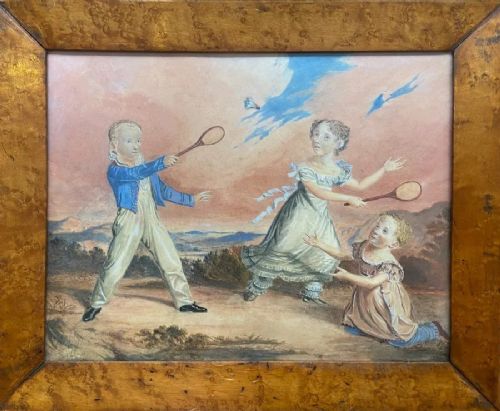
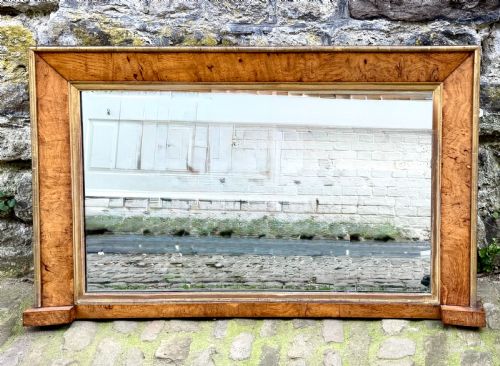
A burr maple frame brings warmth and deep, swirling grain patterns to mirrors, needleworks and watercolours across several periods.
Burr Maple Frame
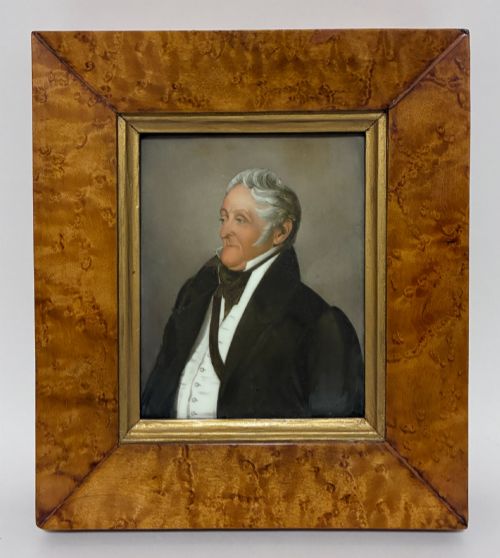
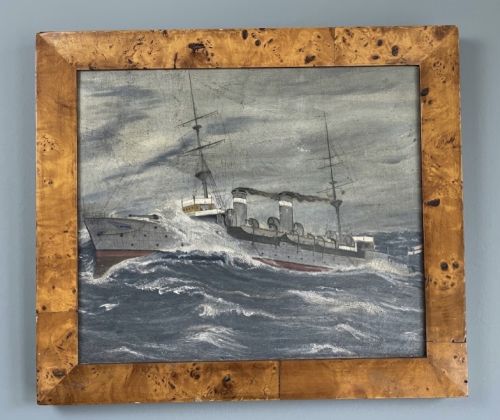
When you search for a burr maple frame, you find decorative objects and pictures housed in highly figured timber housings. These enclosures range from wall mirrors and overmantel mirrors to needleworks, watercolours and oil paintings.
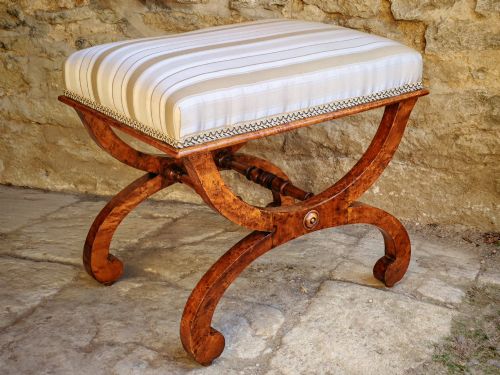
The versions you meet most frequently on this page date from the Georgian, Regency and Victorian eras. Alongside traditional frames, the evidence includes occasional items such as stools and beds constructed from the same timber.
Makers and framers utilised the distinctive burl growths of the maple tree to create borders with rich optical movement. Such housings elevate flat works of art by adding texture and natural pattern to the perimeter.
How they were made
Craftsmen sliced thin veneers from burr maple burls and laid them over a stable secondary wood base. This technique maximised the visual impact of the swirling knot formations.
Makers finished these timber surrounds with transparent varnishes or polishes to protect the fragile veneer and deepen the amber tones of the grain. Glazing, paper backs and canvas supports frequently accompany the framed works.
Burr Maple Frame Retail Price Guide 2026
Typical asking prices for burr maple frame among the pieces listed under this phrase on Sellingantiques today, from the lower quarter to the upper quarter. They describe what is for sale here now, not the wider market.
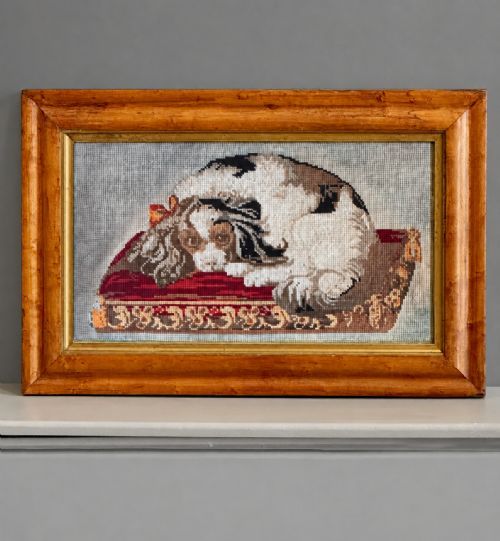
A King Charles spaniel immortalised in Berlin work needlework rests inside its original burr maple enclosure.
What varies in quality
The density and symmetry of the burr figure dictate the visual strength of the piece. Master makers selected burls with tight, unbroken patterns that wrap smoothly around the corners of the housing.
Condition of the polished surface and the integrity of the underlying wood determine the desirability of each item. Examples retain their original warmth and depth when the protective finish ages evenly.
Samuel Dixon·Henry Travis·J Mitan·G Morland·Josiah Gilbert
The Burr Maple Frame Glossary
- Burr maple
- A wood derived from maple tree growths containing knotty burl clusters that produce intricate, swirling grain patterns.
- Stipple engraving
- A printmaking technique using dots rather than lines to render tone, seen in botanical and portrait plates.
- Needlework
- Stitched textile art created using wool or thread on canvas, often preserved behind glass.
- Overmantel mirror
- A large wall glass designed specifically to hang above a fireplace mantel.
- Panel
- A flat piece of wood or other rigid material used as a primary support for oil paintings.
Burr Maple Frame: Frequently Asked Questions
What periods do these frames come from?
The pieces span the Georgian, Regency and Victorian eras, extending into the early twentieth century including the Art Deco period.
Craftsmen utilised burr maple across these centuries for wall art, mirrors and functional furniture.
How do I care for burr maple wood?
Keep wooden surfaces away from direct sunlight and excessive moisture to protect the thin veneer layers.
Dust gently with a soft dry cloth and avoid harsh chemical polishes that damage antique finishes.
Are all these items wall mirrors?
The selection includes various forms such as needlework pictures, watercolours, stipple engravings and portrait miniatures.
You also encounter occasional furniture pieces like stools and beds constructed from maple.
What materials accompany the frames?
Artworks feature paper, canvas, wool and glass components housed within the wooden borders.
Paintings utilise oil and watercolour mediums alongside hand-coloured prints and botanical stipple engravings.