



Burr Elm Drawers
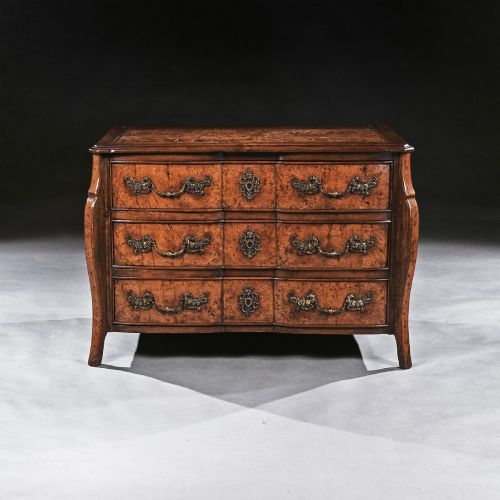
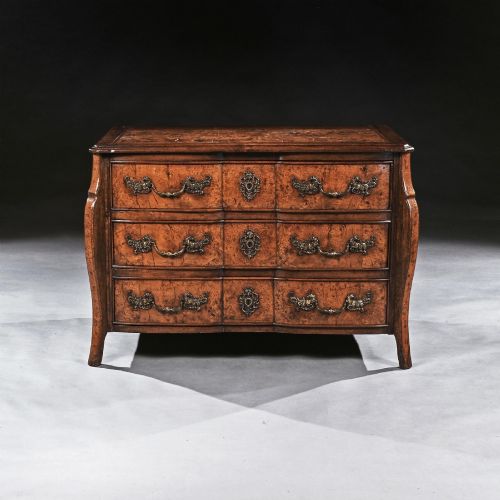
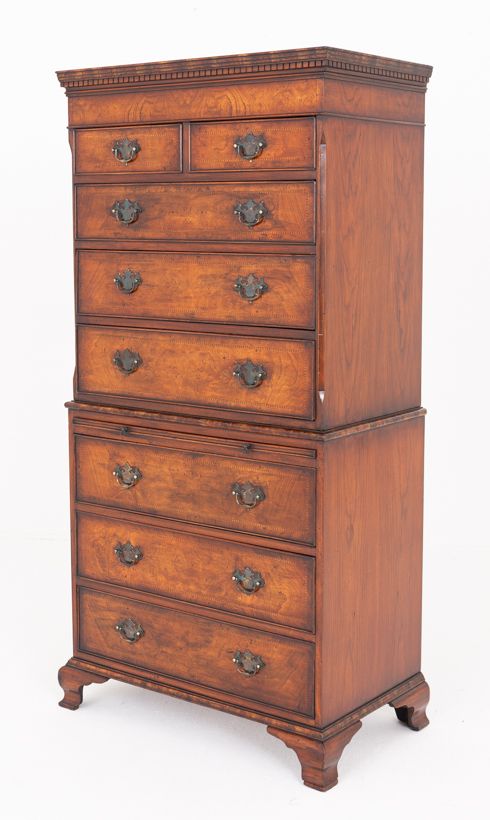
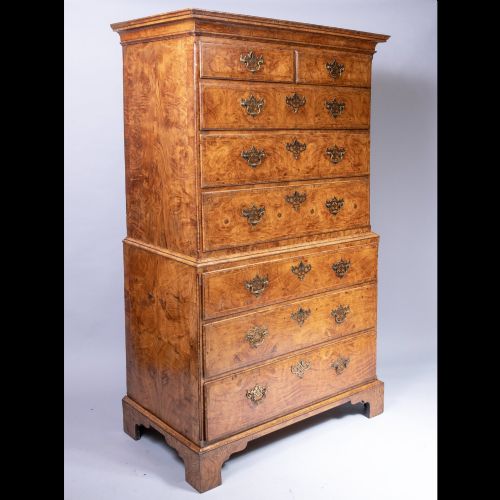
Burr elm drawers bring astonishing natural timber figure into a room, offering warm honey tones and wild, swirling grain patterns across classic storage furniture.
Burr Elm Drawers
The chests of drawers on this page range from compact Georgian bowfronts to French provincial commodes and marble-topped cabinets. Oak, mahogany, and walnut occasionally appear alongside the elm, while brass handles and leather writing surfaces complete the forms.
What varies in quality
Quality rests principally on the density and visual impact of the burr figure across the primary surfaces. Superior examples display uninterrupted swirling patterns that match symmetrically across multiple drawers, while lesser pieces show sparse or broken figuring.
The crispness of the cabinetmaking and the preservation of original brass handles or marble slabs further distinguish the better pieces. Construction integrity, such as smooth drawer runners and tight dovetail joints, separates everyday utilitarian storage from exceptional cabinetwork.
Burr Elm Drawers Retail Price Guide 2026
Typical asking prices for burr elm drawers among the pieces listed under this phrase on Sellingantiques today, from the lower quarter to the upper quarter. They describe what is for sale here now, not the wider market.
Listings span the eighteenth, nineteenth, and twentieth centuries, incorporating materials such as brass, marble, bronze, and leather alongside elm.
The Burr Elm Drawers Glossary
- Burr elm
- Wood taken from a tree growth or excrescence where the grain has grown in a deformed, swirling manner. This timber yields highly decorative veneer prized by cabinetmakers for drawer fronts and tabletops.
- Commode
- A low chest of drawers or cabinet, often French or continental in origin, frequently featuring decorative mounts or marble tops in the listings here.
- Tallboy
- A tall chest of drawers standing upon another chest or a stand, combining substantial storage capacity with a slender vertical footprint.
- Davenport desk
- A small compact writing desk with a sloping leather-inset top and drawers opening to the side, seen in nineteenth-century examples.
- Mazarin commode
- An elaborate eighteenth-century cabinet or desk form, usually featuring central cupboards flanked by banks of smaller drawers.
Burr Elm Drawers: Frequently Asked Questions
How do I care for burr elm furniture?
Keep these pieces away from direct sunlight and sudden temperature changes to protect the delicate veneer and underlying timber.
Apply a traditional beeswax polish occasionally to nourish the wood and maintain a gentle, protective sheen without building up heavy residues.
Where were these pieces made?
The pieces span British workshops as well as French, Dutch, and Scandinavian regional centres of cabinetmaking.
Different countries developed distinct proportions and secondary woods, from English oak carcases to continental marble-topped commodes.
How do I date a burr elm chest?
Examine the construction methods of the drawer linings, backboards, and dovetails to understand the period of manufacture.
Eighty-century pieces typically show hand-cut joinery and native oak timbers, whereas later nineteenth-century pieces introduce different secondary woods and hardware.
Are these drawers suitable for daily use?
Most chests and commodes retain their structural robustness and serve reliably for storage in modern bedrooms or living spaces.
Care should be taken with antique drawer runners and delicate veneered surfaces to ensure they endure decades of continued handling.