

Bureau Partner Desk
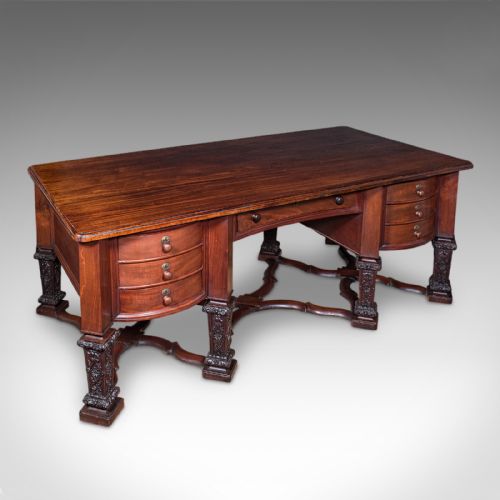
A bureau partner desk offers double-sided workspace and extensive drawer storage, designed for two people to work opposite one another in grand interiors.
Bureau Partner Desk
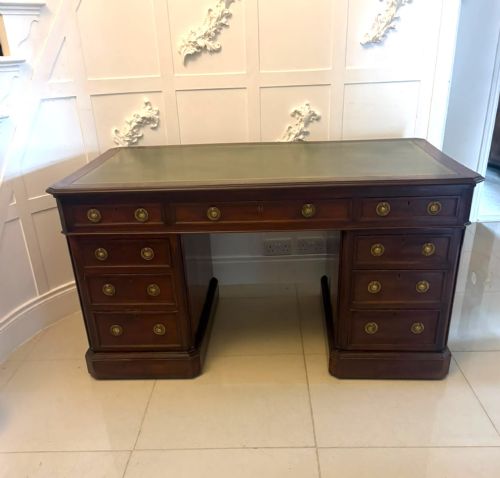
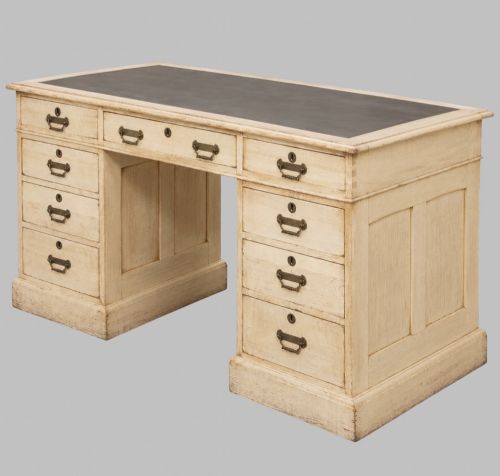
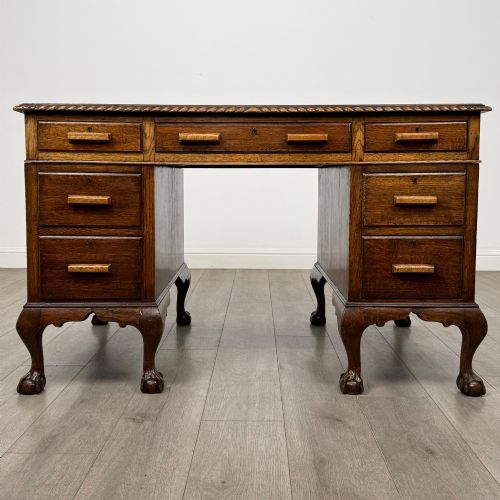
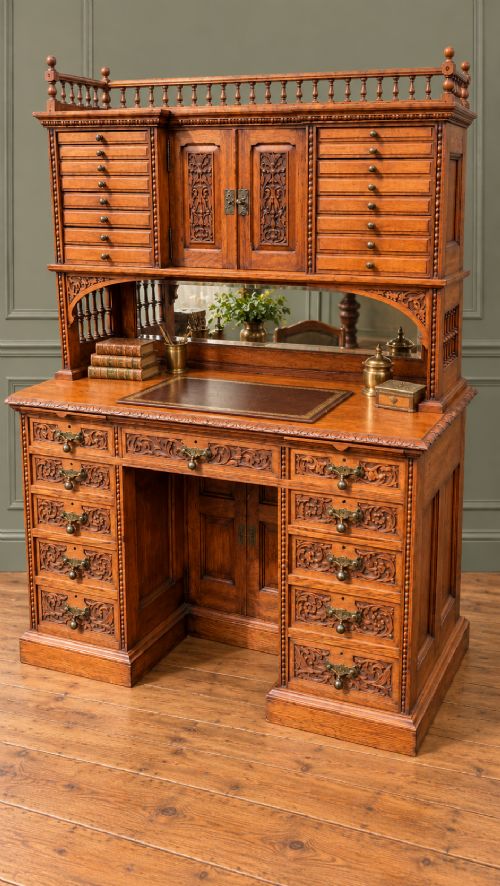
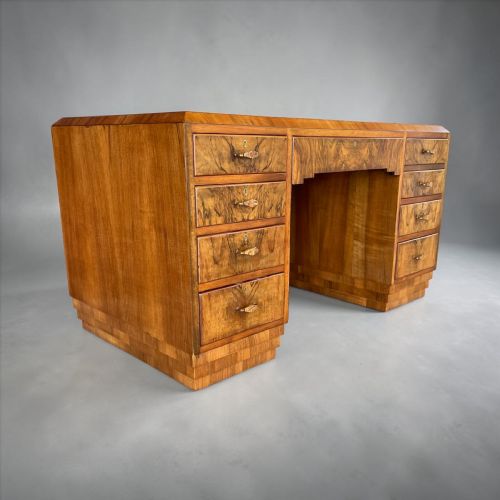
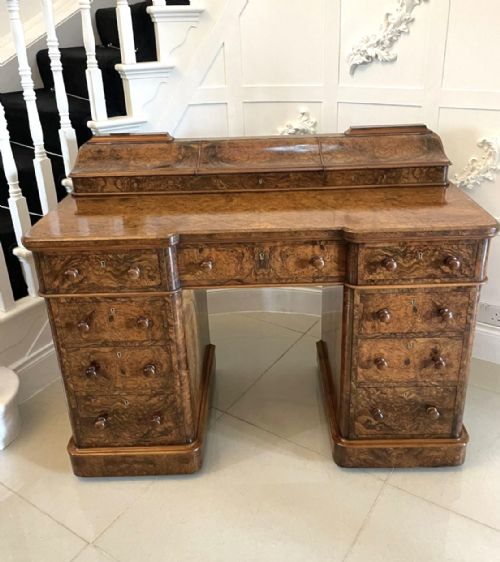
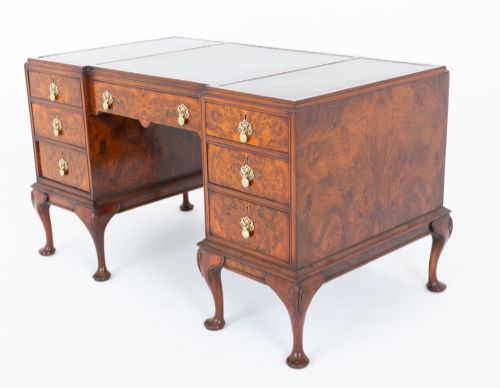
A bureau partner desk is a substantial freestanding writing table designed with drawers and cupboards on both opposing sides, allowing two individuals to work face-to-face. These pieces frequently appear in periods such as the Georgian, Victorian, and Edwardian eras, constructed from timbers like mahogany, oak, and walnut.
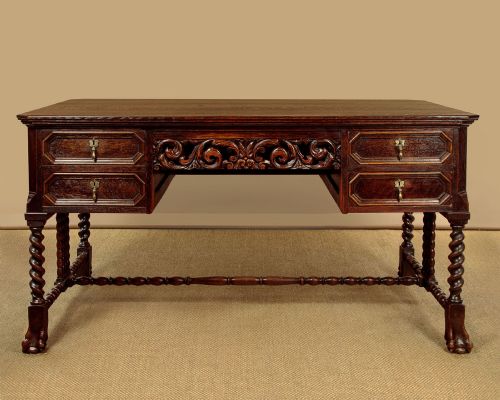
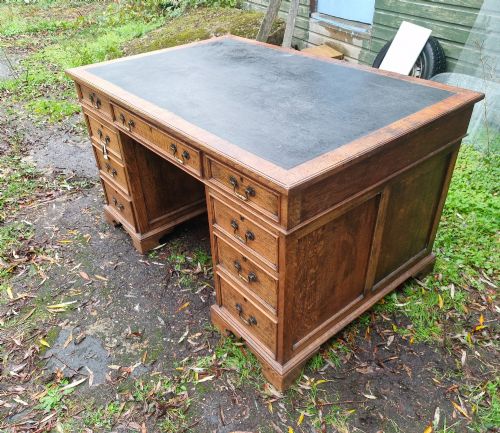
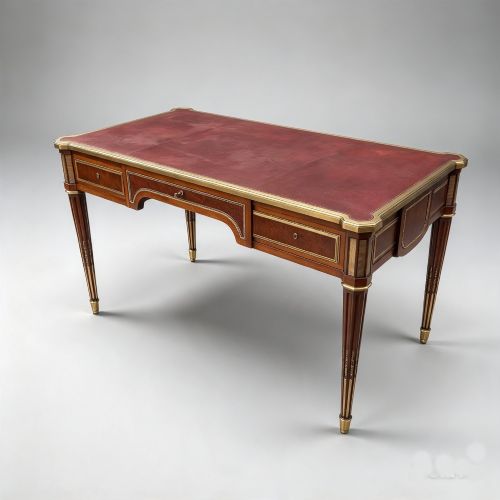
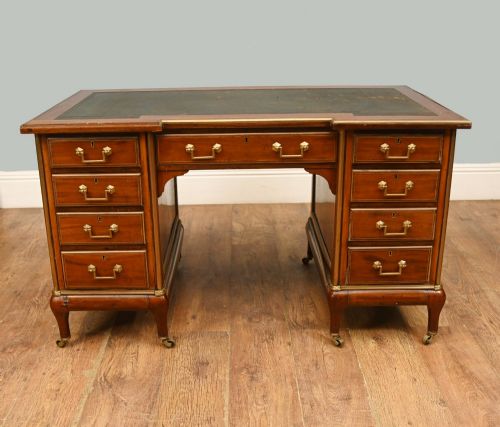
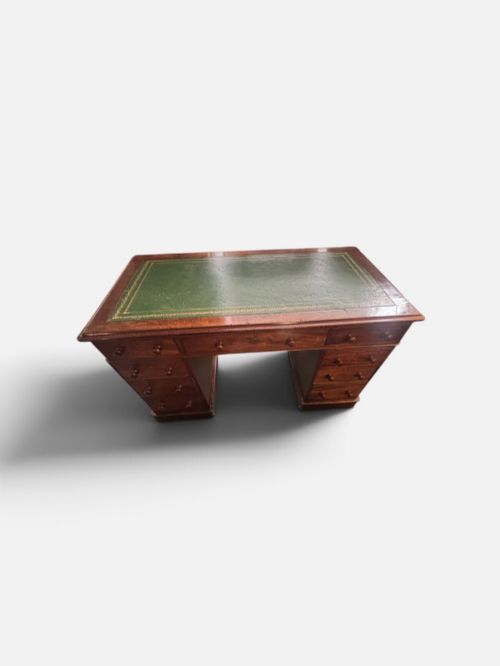
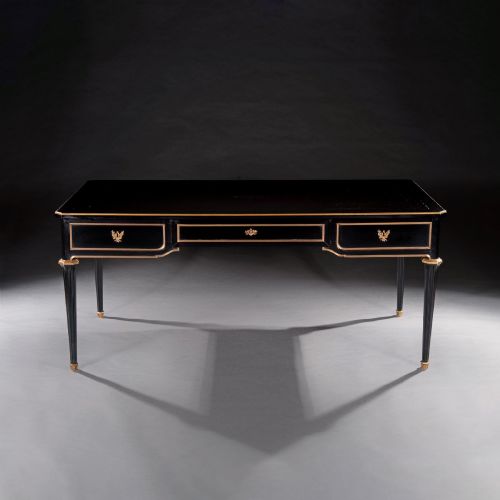
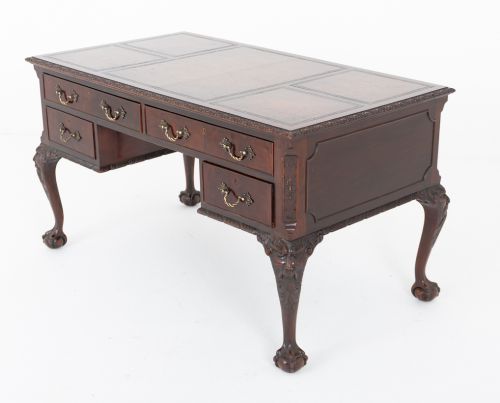
The versions most common on this page are pedestal desks and bureau plats originating from the nineteenth and early twentieth centuries. Many incorporate leather writing surfaces, brass hardware, and revival styles including Chippendale and Louis XV.
How they were made
Cabinet makers utilised dense hardwoods such as mahogany, oak, and walnut for the primary structure and drawer construction, often employing veneers of kingwood or satinwood for decorative surfaces. Joinery relied on traditional techniques like dovetailing for drawers and mortise and tenon joints for the structural carcase.
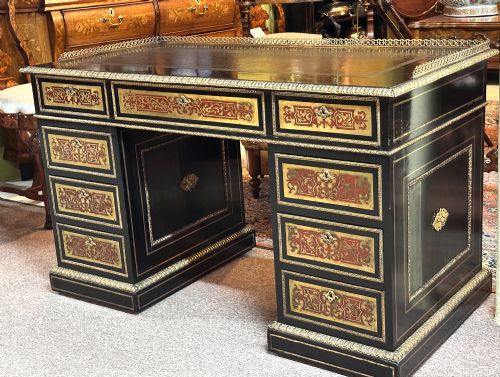
Metal ornamentation included cast brass handles, escutcheons, and ormolu mounts, whilst writing surfaces were typically inset with tooled leather. Ebonised wood and intricate boulle work also appear on continental pieces from the nineteenth century.
Bureau Partner Desk Retail Price Guide 2026
Typical asking prices for bureau partner desk among the pieces listed under this phrase on Sellingantiques today, from the lower quarter to the upper quarter. They describe what is for sale here now, not the wider market.
Some nineteenth-century partners kept secret compartments locked so their opposing colleagues could not peek at confidential correspondence.
What varies in quality
The standard of timber selection and secondary wood usage distinguishes finer examples from simpler workshop output. Desks featuring finely figured mahogany, burr walnut, or carefully matched satinwood veneers indicate higher craftsmanship.
The integration of secondary details such as original ormolu mounts, hand-tooled leather writing surfaces, and well-executed carving or inlay elevates the standing of a piece. Construction integrity, including the condition of internal drawer linings and the presence of original brass hardware, marks the difference in grade.
Maple and Co.·Étienne Kohlmann
The Bureau Partner Desk Glossary
- Partner desk
- A large freestanding desk with drawers and pedestals accessible from both opposing sides, built for two users.
- Bureau plat
- A French freestanding writing table, typically featuring a rectangular top and multiple drawers.
- Ormolu
- Gilt-bronze mounts applied as decorative ornamentation to the corners, legs, and aprons of furniture.
- Pedestal desk
- A heavy writing table supported by two upright banks of drawers rather than conventional legs.
- Kneehole desk
- A writing table featuring a central recess for the user's legs, flanked by pedestals of drawers.
Bureau Partner Desk: Frequently Asked Questions
What is a partner desk?
A partner desk is a large freestanding writing table constructed with drawers, cupboards, or pigeonholes on both opposing sides. This configuration allows two people to sit opposite each other and work independently at the same piece of furniture.
Originally designed for partners in legal, banking, or government practices, these desks require ample floor space because they are finished on all four sides. They serve as commanding centrepieces in libraries and studies.
How do I style a partner desk?
Because partner desks are freestanding and finished on all sides, they work best positioned in the middle of a room rather than pushed against a wall. This placement highlights the dual-sided drawers and pedestals.
Pair the desk with matching leather swivel chairs and ensure adequate clearance around the perimeter. Keeping the surface uncluttered allows the timber grain and leather insert to remain the focal point of the room.
What woods were used for partner desks?
Cabinet makers predominantly used dense, durable hardwoods such as mahogany, oak, and walnut for the structural framework and drawer carcasses. These timbers provided the necessary strength for heavy double-sided pedestals.
Decorative variations frequently incorporate veneers of satinwood, kingwood, or burr walnut, sometimes enhanced with ebonised wood or intricate marquetry. Ormolu mounts and brass hardware are common secondary materials on continental and revival pieces.
How do I distinguish Victorian from Georgian desks?
Georgian desks, dating from the eighteenth and early nineteenth centuries, generally exhibit restrained classical proportions, solid mahogany construction, and subtle bracket or plinth feet. Their carving tends to draw inspiration from Chippendale designs with disciplined execution.
Victorian examples from the mid-to-late nineteenth century often display heavier proportions, bolder mouldings, and a wider variety of revival styles including Louis XV and Gothic influences. They frequently utilise factory-cast brass hardware and machine-tooled leather inserts alongside rich timber veneers.