

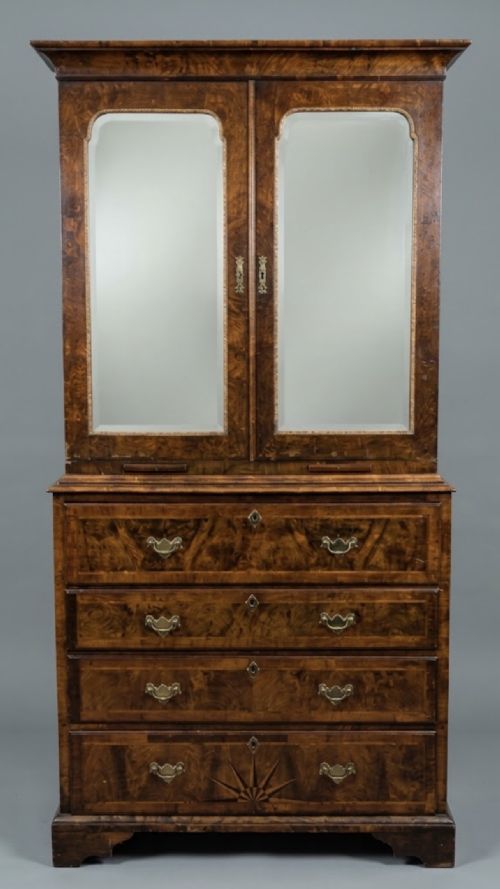
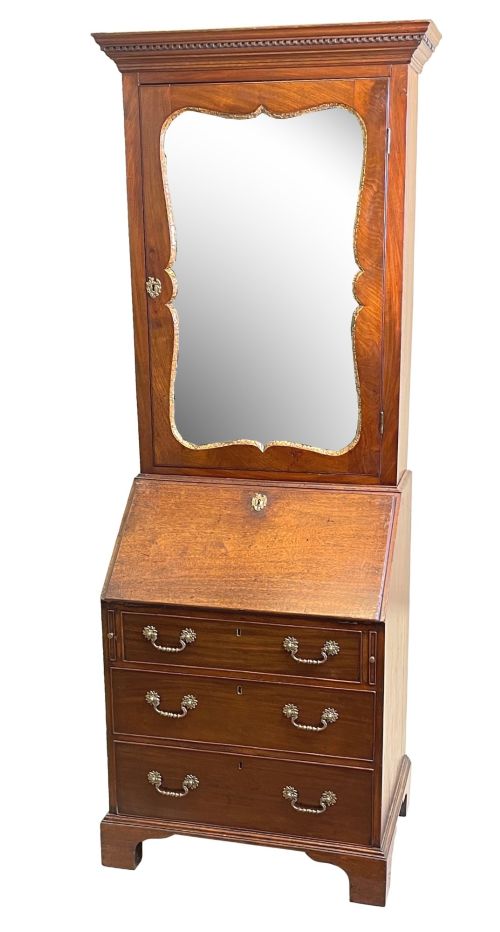
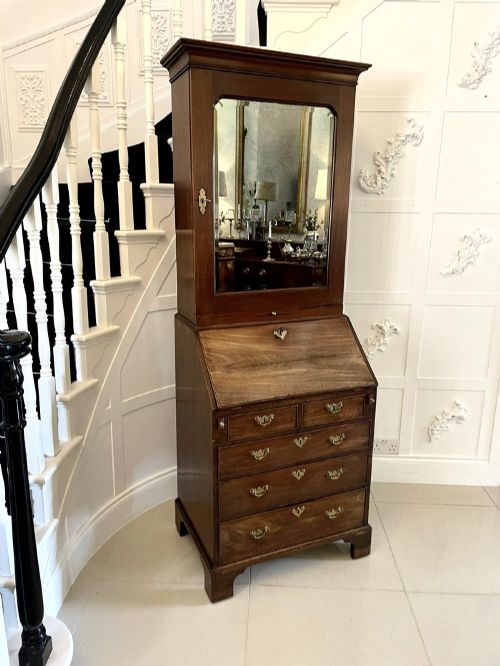
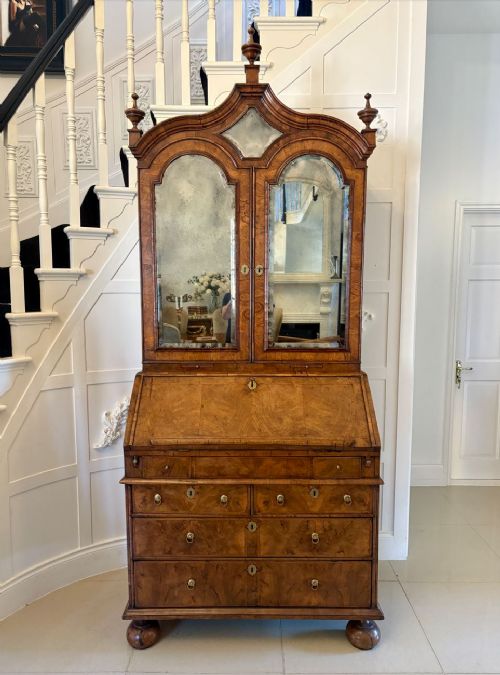
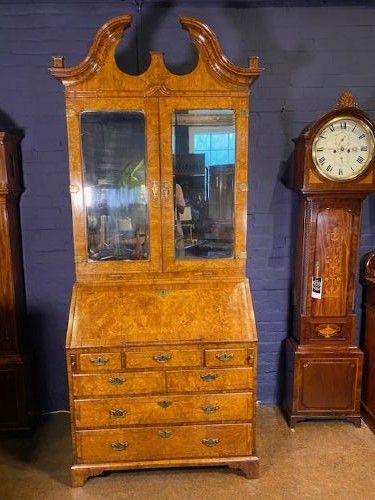
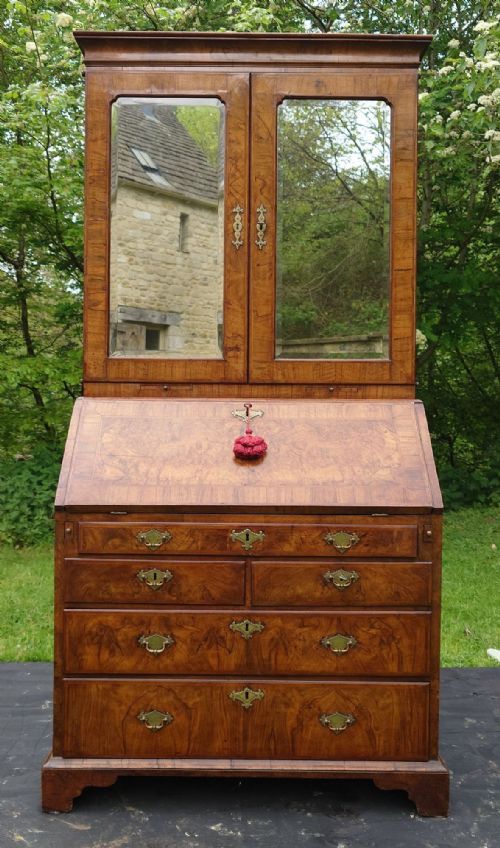
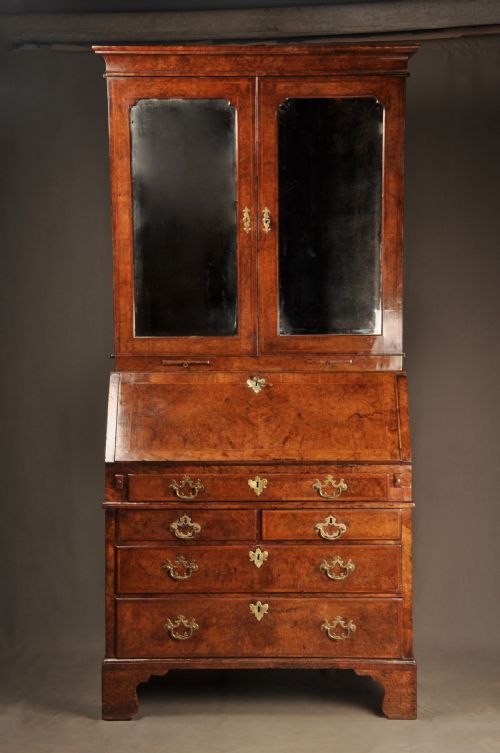
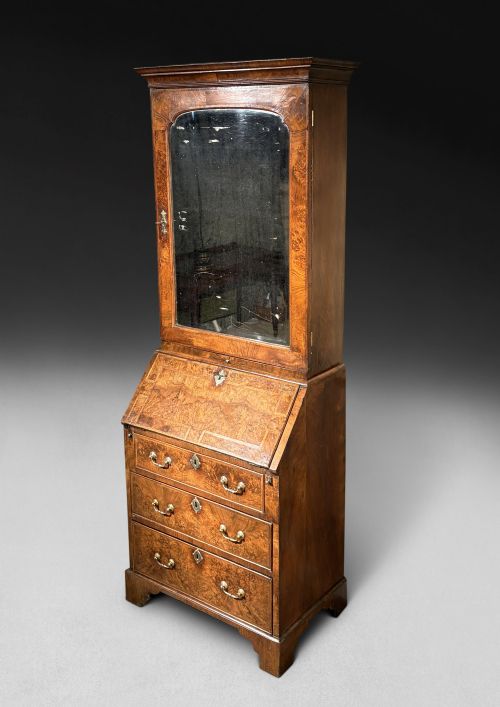


Bureau Bookcase with Mirror
A bureau bookcase with mirror combines a fitted writing desk with an enclosed shelving cabinet, offering a grand statement piece for storing books and managing correspondence.
Bureau Bookcase with Mirror
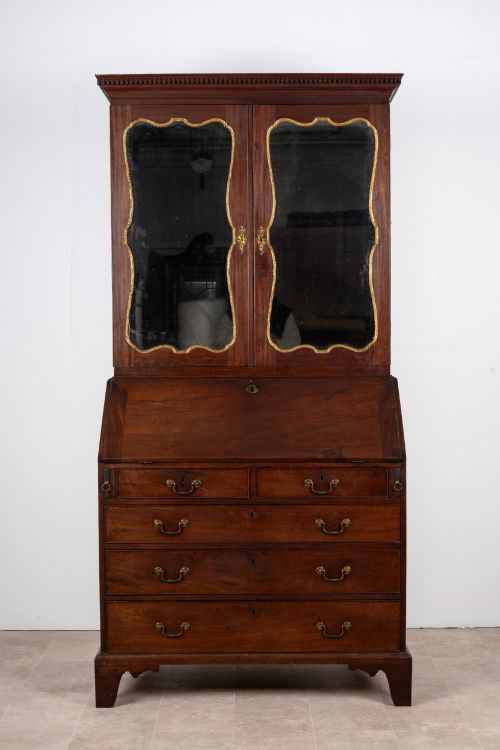
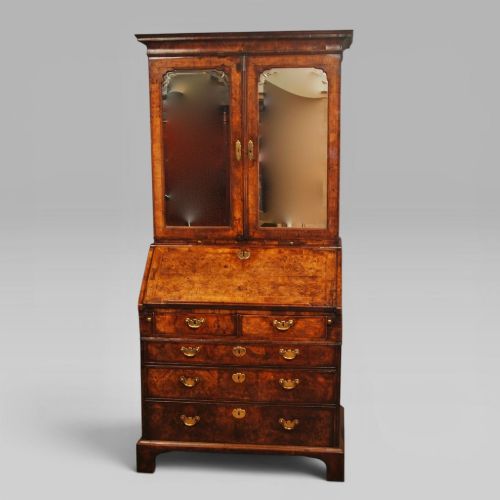
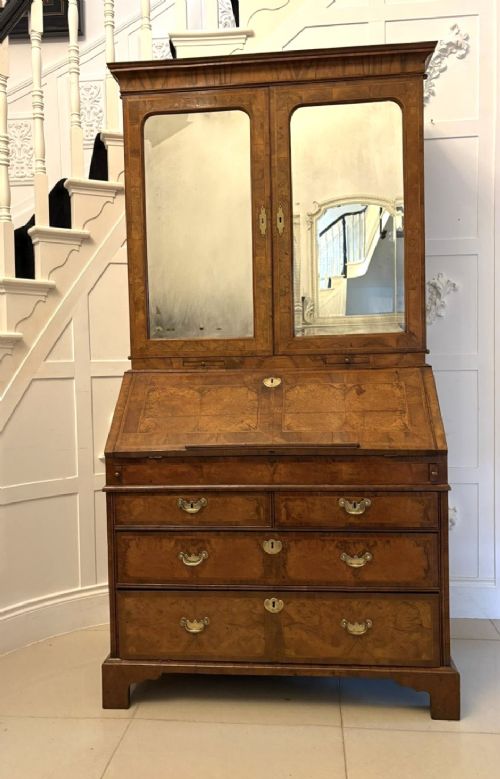
When you search for a bureau bookcase with mirror, you encounter imposing two-part furniture pieces designed to display literature behind glass while concealing private papers behind a sloping fall-front desk. The bureau bookcase with mirror forms a grand architectural presence in a room, combining practical storage with refined display space.
The versions most commonly met on this page date from the eighteenth century, spanning periods from William and Mary through Queen Anne, George I, and George III. These pieces predominantly utilise walnut, burr walnut, mahogany, and rosewood, often featuring mirrored door panels within styles that range from English Georgian to Venetian Rococo.
How they were made
Cabinet makers constructed these pieces using dense timbers such as walnut, burr walnut, and Cuban mahogany, often laid as veneers over sturdy oak carcases to create striking figured grain patterns. The upper cabinet doors incorporated bevelled mirror glass, which required specialist silvering and glass-cutting techniques common to the period.
Joinery methods included dovetailed drawer construction and framed panel doors, paired with cast brass hardware such as escutcheons and drop handles. Fall-front desks relied on internal pigeonholes, small drawers, and secret compartments assembled with precise woodworking joints.
Bureau Bookcase with Mirror Retail Price Guide 2026
Typical asking prices for bureau bookcase with mirror among the pieces listed under this phrase on Sellingantiques today, from the lower quarter to the upper quarter. They describe what is for sale here now, not the wider market.
Makers hid secret spring-loaded drawers behind dummy pigeonholes, trusting that future letter-writers would enjoy a game of hide-and-seek with their own stationery.
What varies in quality
The distinction between tiers often lies in the selection of timber veneers, where highly figured burr walnut or select Cuban mahogany demonstrates superior visual depth. Finer examples exhibit meticulous matching of grain across the fall-front and cabinet doors, maintaining a continuous pattern.
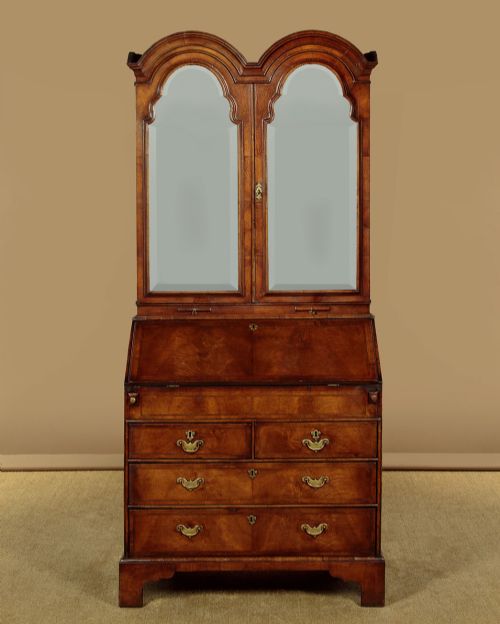
Proportion and architectural detailing also dictate the standing of a piece, with double dome tops and original mirrored glass panels representing higher craftsmanship. The intricacy of the internal fittings, including shaped pigeonholes and well-executed secondary drawers, separates standard cabinet work from exceptional production.
The Bureau Bookcase with Mirror Glossary
- Fall-front
- A sloping writing flap that hinges downwards to create a flat surface for correspondence. It conceals an interior arrangement of small drawers and pigeonholes when closed.
- Burr walnut
- A highly prized timber obtained from walnut tree growths, featuring swirling, knotted grain patterns. Cabinet makers utilised these veneers on primary display surfaces for decorative effect.
- Double dome
- An upper cabinet roof configuration featuring two arched or domed crestings side by side. This architectural shape appeared on grander eighteenth-century bookcases.
- Escutcheon
- A protective brass plate fitted around a keyhole to prevent the surrounding wood from wearing. These hardware elements often match the style and period of the furniture.
- Venetian Rococo
- A decorative style characterised by asymmetrical carved details, flowing curves, and ornate ornamentation. Pieces from this origin show continental stylistic influences distinct from English designs.
Bureau Bookcase with Mirror: Frequently Asked Questions
What is a bureau bookcase with mirror?
A bureau bookcase with mirror is a tall, two-section piece of furniture featuring a sloping desk compartment below a glazed shelving cabinet. The upper doors incorporate glass panels, often bevelled, to display books while protecting them from dust.
These pieces combine a writing desk and a bookcase into a single unit, serving as both a practical workspace and a display cabinet. They emerged during the late seventeenth and eighteenth centuries in walnut and mahogany.
How were they used historically?
Owners used the upper cabinet to store library collections and prized volumes behind locked glass doors. The fold-down desk flap provided a private surface for writing letters, managing accounts, and keeping ledgers.
Secret compartments inside the desk allowed individuals to secure sensitive papers, money, or valuables. The combination of display and concealment suited the domestic routines of wealthy households.
How do I fit one into a modern room?
Due to their height and substantial presence, these pieces require adequate wall space and stable placement away from direct heat sources. Placing them in studies, drawing rooms, or large living areas allows the timber and mirrored doors to reflect light.
Because they combine storage, display, and a desk, they function well as focal points in rooms with high ceilings. Ensuring proper clearance for the drop-front desk is essential for daily use.
How do I distinguish eighteenth-century styles?
Early examples from the William and Mary or Queen Anne periods often feature rich walnut veneers, simpler lines, and sometimes double dome tops. The transition into George I and George III brings increasingly refined cabinet work and the introduction of Cuban mahogany.
Regional variations, such as Venetian Rococo pieces, introduce more dramatic carved ornamentation and continental silhouettes compared to restrained English Georgian designs.