




Brown Wool Tribal Bag
A brown wool tribal bag brings nomadic craftsmanship into a room, fashioned by weavers across Persia, Central Asia and the Trans-Caspian steppes.
Brown Wool Tribal Bag
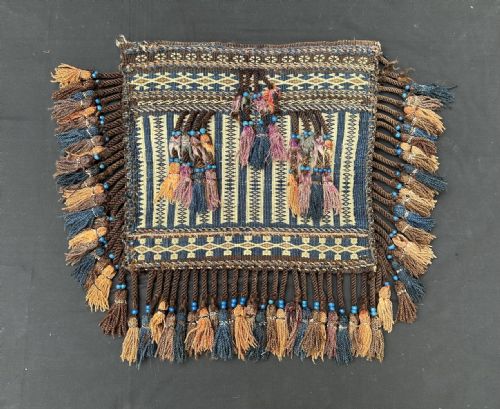
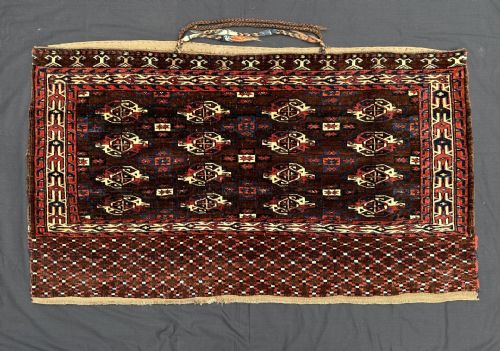
A brown wool tribal bag encompasses utilitarian weavings such as torbas, mafrash faces, storage sacks, and saddle bags produced by nomadic and tribal groups. These items served practical purposes in camp life, from storing household possessions to carrying wheat or tent poles.
The pieces on this page are dominated by Yomut and other Turkmen tribals, alongside Baluch, Bakhtiari-Lor, and Shahsavan groups from Persia and Central Asia. They date from the late nineteenth century into the early twentieth century.
Buyers will encounter specific forms like the small pushti face, the long chuval, and the specialised igsalyk spindle bag or uk ok bash tent-pole bag. Each format displays distinct tribal patterns, such as the kepse gul, aishk gul, or banded flatweave designs.
Materials and construction
The construction relies heavily on hand-spun wool dyed with natural colours, often combined with goat hair and cotton for structural durability. Some examples incorporate dyed yarn and leather reinforcement, whilst glass beads appear on specific pieces for ornamentation.
Weavers utilised traditional techniques including flatweave and weft work to create dense, durable surfaces capable of withstanding nomadic daily use. The application of natural dyes yields varied brown tones that form the visual foundation of these tribal textiles.
Keep an eye out for the occasional spindle bag designed to hold stray wool whilst spinning on the move.
Distinctions in quality
Quality rests upon the crispness of the tribal design, such as the definition of a gul motif or the rhythm of a banded flatweave. Stronger pieces display tight, even knotting and well-preserved structural integrity, including surviving original backs.
The nuance of the natural dyes and the fidelity of the regional weaving traditions elevate certain examples above others. Completeness, such as retaining an original back or forming part of a matching pair, distinguishes the finer items.
The Brown Wool Tribal Bag Glossary
- Torba
- A small Turkmen storage bag traditionally hung in a tent. These pieces often feature prominent primary guls and detailed borders.
- Mafrash
- A rectangular storage bag or panel used for bedding and household goods by nomadic tribes. They frequently display bold banded flatweave patterns.
- Gul
- A medallion or repeating primary motif used in Turkmen and other Central Asian rug designs. Each tribal group utilises distinctive gul shapes to signify heritage.
- Chuval
- A large Turkmen storage bag used for household possessions within the tent. They are typically wider than they are tall and showcase multiple rows of guls.
- Flatweave
- A textile constructed without knotted piles by interweaving warp and weft threads. This technique produces a smooth, durable fabric often seen in tribal storage sacks.
Brown Wool Tribal Bag: Frequently Asked Questions
How were these bags used?
Tribal groups utilised these pieces inside tents for storing provisions, clothing, blankets, and personal items. Larger sacks transported goods during seasonal migrations.
Smaller formats held specific items like spindle equipment or tent poles, functioning as essential portable storage for nomadic life.
How do I hang a bag on the wall?
Mounting a textile requires supporting the weight evenly across the top edge rather than piercing the fabric with nails. A conservation-grade velcro strip or a custom sleeve stitched to the reverse distributes the load safely.
Consult a professional framer if the piece includes stiff leather elements or fragile goat hair edges that need extra support.
How do I tell Yomut and Baluch pieces apart?
Yomut weavings from Turkmenistan often feature crisp guls like the kepse or aishk design in rich brown and red wool palettes. They frequently take the form of structured torbas or chuvals.
Baluch pieces originating from the borderlands of Persia and Afghanistan tend to incorporate darker tones, camel hair, and dense geometric repeat patterns such as the Herati design.
Are original backs important?
An original back preserves the complete historical utility of the bag, showing how the piece was constructed for daily camp life. Surviving backs add context regarding the original weaving dimensions and stitching methods.
Many surviving pieces consist solely of the decorative face because the utilitarian backing wore out or was removed over time.