


Brown Wooden Tavern Table
A brown wooden tavern table brings centuries of sturdy utility and rich grain into a room, offering an anchor of historic character.
Brown Wooden Tavern Table
A brown wooden tavern table is a robust domestic or public house surface designed for communal gathering, dining, and daily use. When you search for this phrase, you encounter heavy timbers, stretcher bases, and thick plank tops shaped by centuries of traditional joinery.
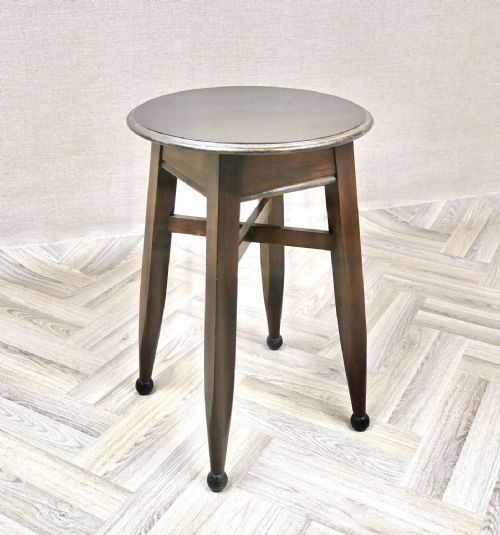
The pieces listed on this page span the eighteenth and nineteenth centuries, alongside Edwardian and 1930s interpretations. Oak, ash, walnut, sycamore, and pine form the main body of these utilitarian forms.
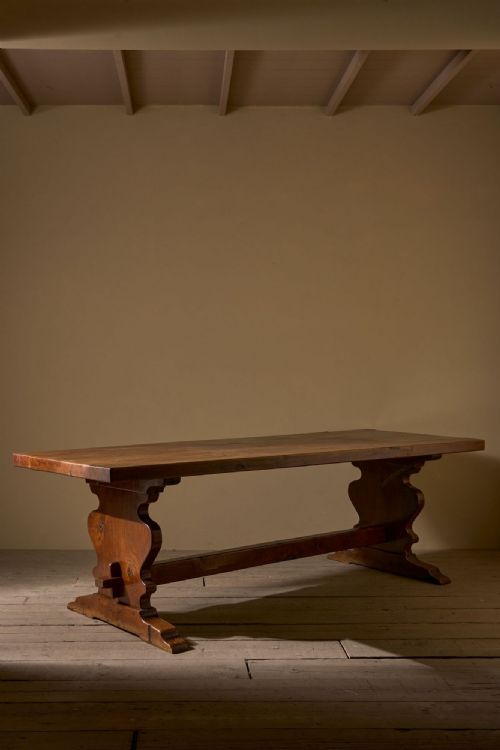
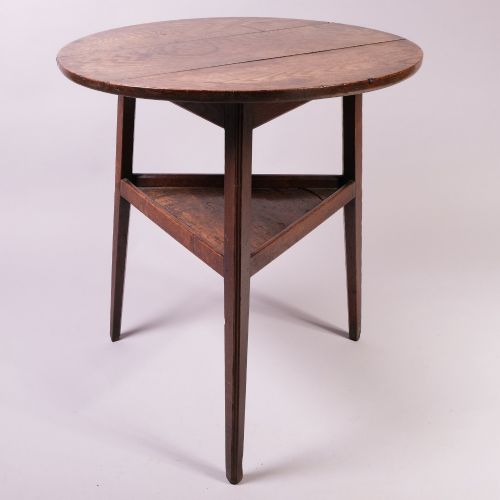
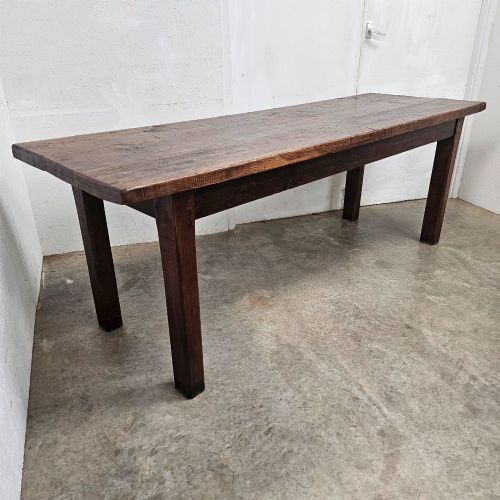
You are most likely to meet nineteenth-century oak examples featuring trestle ends or thick cleated tops. Alongside these standard tavern forms, the selection encompasses related vernacular pieces such as cricket tables and refectory dining tables.
How they were made
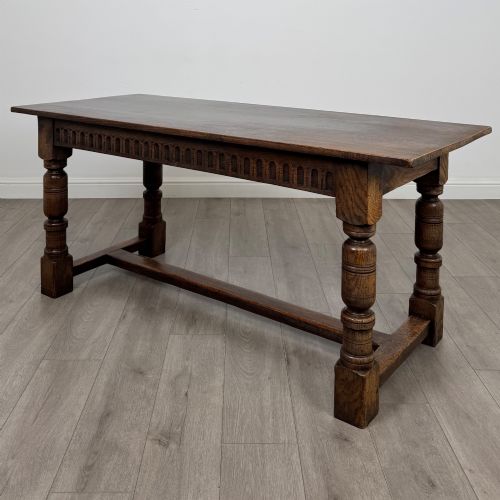
Carpenters constructed these tables using solid native hardwoods like oak, ash, and elm, joined with pegged mortise and tenon construction. Thick timber planks formed the tops, held flat by sturdy wooden cleats.
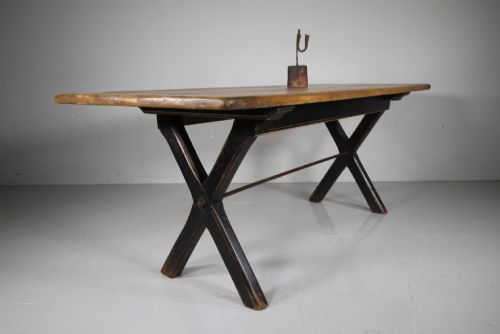
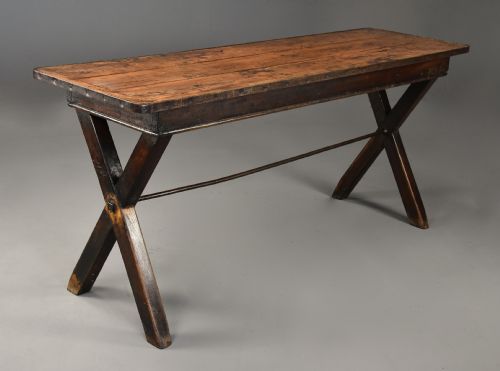
Undercarriages rely on structural stretchers, trestle supports, or X-frames to stabilize heavy tops against decades of rigorous use. Selected surfaces exhibit painted finishes or rely entirely on the natural grain and historic patina of the timber.
Formats range from compact cricket tables and coffee tables to nine-foot refectory tables and trestle-ended pub surfaces.
What varies in quality
Quality rests in the integrity of the timber selection and the honesty of the construction. Solid planks with substantial thickness and pleasing natural grain outperform lighter, altered, or overly restored surfaces.
The depth of the surface patina and the tightness of the original joints distinguish a superior survivor from a lesser piece. Original construction details, such as pegged joints and untouched underside framing, dictate the historical standing of each table.
The Brown Wooden Tavern Table Glossary
- Patina
- The surface sheen and colour developed by wood through age, handling, and wax application. It deepens over generations of use.
- Cleat
- A piece of wood fastened across the ends of a table top to prevent warping and keep the planks stable.
- Trestle
- A structural support consisting of a horizontal beam fixed to two splayed vertical feet. This design allows maximum leg room.
- Cricket table
- A small three-legged occasional table, historically used on uneven flagstone floors. The three legs ensure it remains stable without wobbling.
- Refectory table
- A long, narrow dining table originally built for monastic dining halls. These pieces feature substantial length and supportive stretcher frames.
Brown Wooden Tavern Table: Frequently Asked Questions
How do I clean a wooden tavern table?
Dust the surface regularly with a soft, dry cloth to remove grit. Apply a traditional beeswax periodically to nourish the historic timber.
Avoid using harsh chemical sprays or excess water, which can damage the aged finish. Gentle care preserves the underlying patina and grain.
Can I use a tavern table for daily dining?
These tables were built for heavy daily use in homes and public houses, making them well-suited for modern dining. Their sturdy construction handles meals and gatherings with ease.
Use coasters and placemats to protect the historic wood from heat rings and moisture. Embracing minor marks allows the table to continue accumulating character.
How can I tell an 18th-century table from a 19th-century one?
Eighteenth-century examples often display wider single-board tops and hand- cleft timber marks. Joinery techniques like handmade pegs and deeper tool impressions point to earlier craftsmanship.
Nineteenth-century pieces frequently utilise more uniform milling while retaining traditional forms. Comparing the underside construction and timber movement helps clarify the age.
What is the difference between a tavern table and a refectory table?
Tavern tables tend to be more compact, designed for individual groups in public houses or smaller domestic spaces. They frequently feature simple four-legged or trestle frames.
Refectory tables are typically longer and narrower, designed to seat many people along a hall. Both share heavy timber construction and stretcher supports.