



Brown Wooden Tall Stool
These brown wooden tall stool examples bring genuine utilitarian character to a room, offering practical elevation combined with honest period craftsmanship.
Brown Wooden Tall Stool
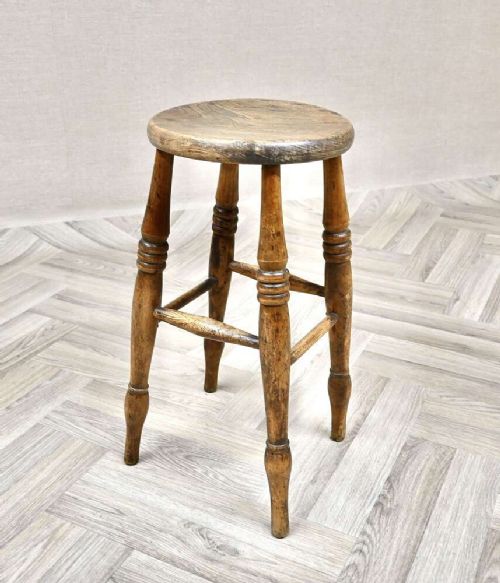
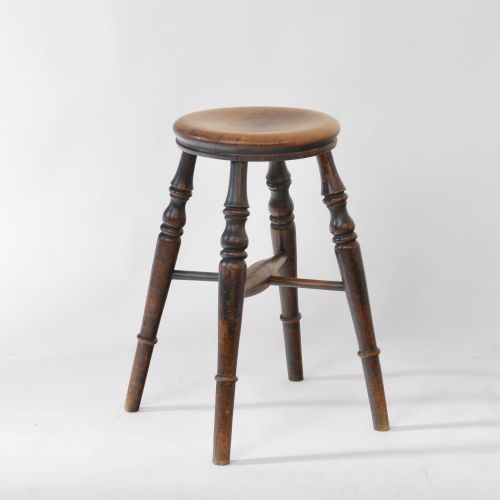
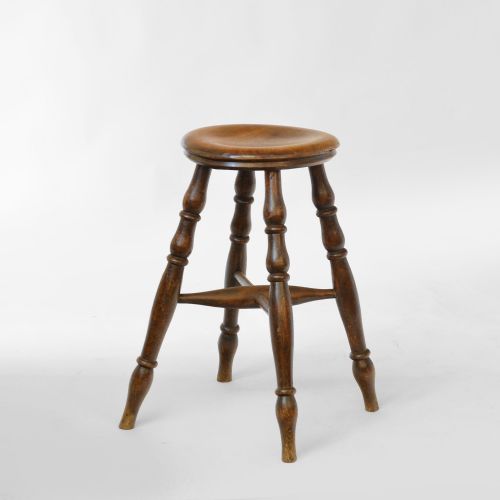
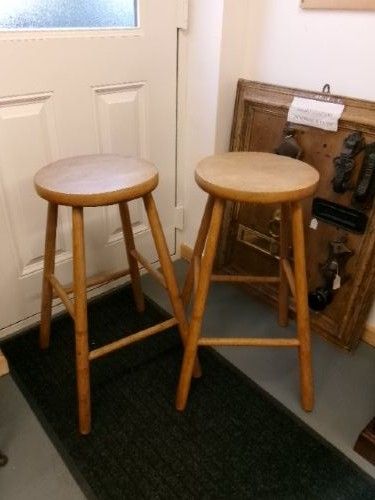
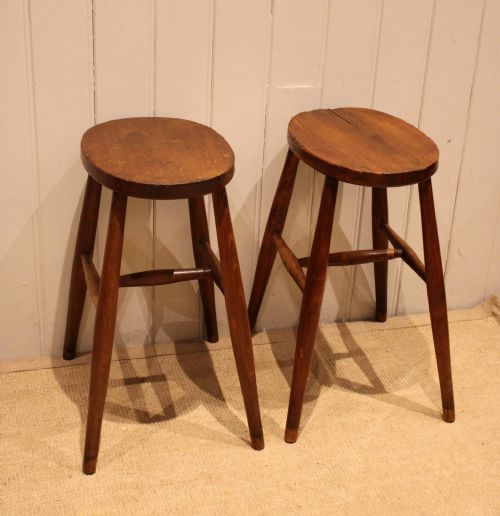
A brown wooden tall stool is a practical item designed for elevated seating at pubs, taverns, desks or counters. The selection here ranges from nineteenth century clerk's stools to rustic farmhouse seating.
Most pieces date from the nineteenth century, with examples spanning from the Georgian era through to the mid-twentieth century. Forms vary from simple pub stools to robust library ladders and desk chairs.
Buyers will most frequently encounter nineteenth century tavern and clerk's stools featuring wooden seats and turned supports. These pieces reflect vernacular English country styles rather than formal court furniture.
How they were made
Maker construction relies heavily on native timbers such as elm, beech, oak and sycamore, often combined within a single piece. Seats are frequently turned or shaped from thick slabs of elm.
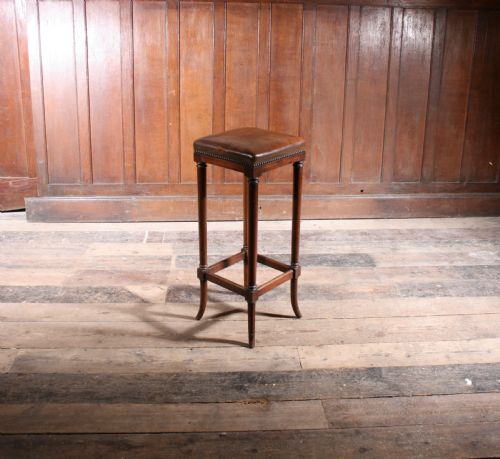
Turned beech and hardwood components form the legs and stretchers, joined using traditional methods to ensure stability under heavy daily use. Leather and mahogany also appear in specific examples from the collection.
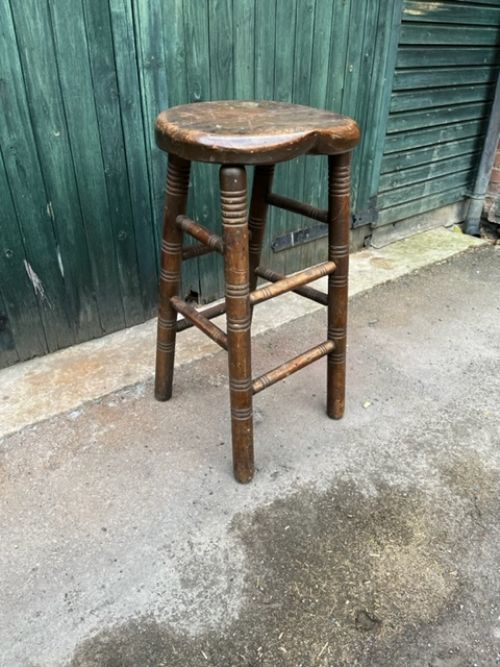
Pub stools survived decades of spilled ale and restless feet to become sought-after rustic seating.
What varies in quality
Quality in a brown wooden tall stool depends upon the character of the timber and the integrity of the joints. Finer examples show thoughtful turning on the legs and pleasing patination on the wooden seat.
Simpler utility items remain sturdy and functional, while pieces with George III origins or select mahogany construction display greater refinement in proportion and detail.
The Brown Wooden Tall Stool Glossary
- Elm
- A tough, interlocking timber frequently utilised for stool seats because it resists splitting under heavy weight. Its distinct grain adds texture to the surface.
- Sycamore
- A dense, light-coloured wood traditionally chosen by makers for kitchen and tavern seating. It takes a smooth finish through sustained daily use.
- Stretcher
- A horizontal wooden brace connecting the legs of a stool to provide structural rigidity. These rails often double as footrests.
- Patina
- The deep surface sheen developed on wood through decades of handling and polishing. It marks the age and history of a piece.
- Vernacular
- Everyday objects built by local tradesmen for practical purposes rather than following strict academic design rules.
Brown Wooden Tall Stool: Frequently Asked Questions
What is a clerk's stool?
A clerk's stool is a tall seating form designed for high desks in offices or counting houses during the nineteenth century. These pieces usually feature a compact wooden top and sturdy turned legs.
They allowed writers and clerks to work comfortably at standing desks while maintaining stability throughout the working day.
How do I use a tall stool today?
These tall stools fit naturally beside kitchen islands, breakfast bars or high work tables in contemporary homes. Their historic character brings warmth and utility to modern spaces.
Ensure you check the height of your counter against the seat height of the stool before placing them together.
Are these stools comfortable?
Many nineteenth century tavern and pub stools feature dished or saddled wooden seats shaped to fit the body. While they lack upholstery, this traditional shaping provides surprisingly solid support.
Foot stretchers positioned between the legs also give users a place to rest their feet while seated at height.
How do I identify a nineteenth century piece?
Nineteenth century brown wooden tall stools reveal their age through hand-turned components, pegged joints and timber shrinkage. The presence of native woods like elm and sycamore points to traditional workshop production.
Examine the underside of the seat and the wear patterns around the foot rails to understand how the object was constructed and used.