
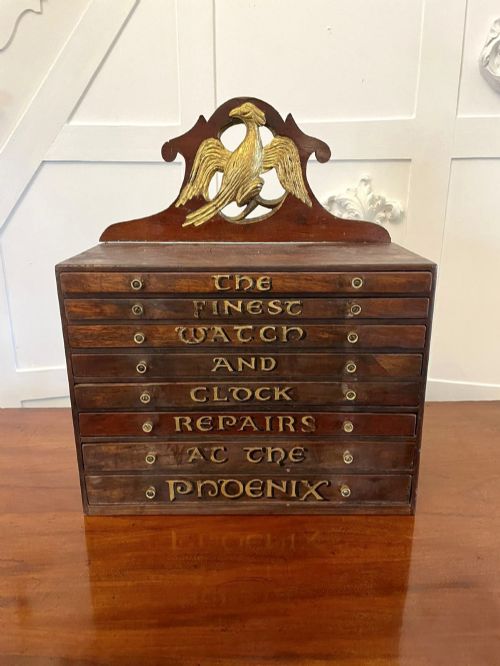
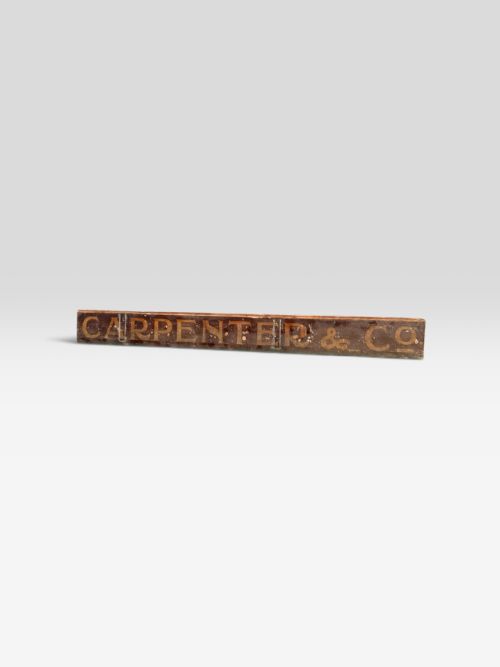
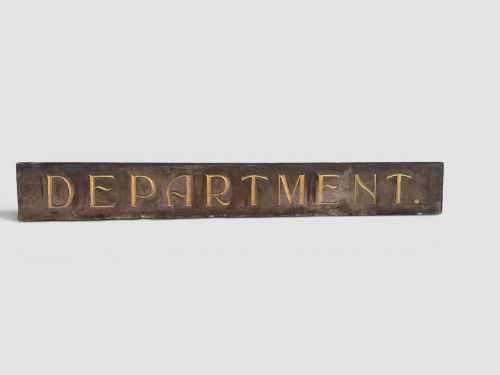





Brown Wooden Sign
A brown wooden sign carries the plain utility of trade and public life, bringing substance and history directly onto a wall.
Brown Wooden Sign
When you search for a brown wooden sign, you encounter utilitarian items created for commerce, transport, and public information rather than polite drawing-room decoration. These pieces originate across the nineteenth and twentieth centuries, spanning periods from Georgian craftsmanship through Victorian and Edwardian commercial output into mid-century design.
The versions most likely to meet you on this page include trade signs, signage, shop display models, and painted boards that once served businesses, department stores, and railways. Many utilise durable timbers configured simply for public legibility, carrying the honest marks of daily use in trade.
Beyond straightforward lettering, the category extends to specialised advertising pieces and display cabinets that were lettered or sign-written to promote household brands like chocolate, soap, or tobacco. They bridge the gap between functional woodwork and social history, offering a tangible record of past commerce.
How they were made
Makers constructed these items using robust timbers suited to public display, primarily relying on mahogany, oak, pine, and boxwood depending on whether the object was an architectural trade board or a countertop display. These woods provided a stable foundation for carved elements, applied lettering, and protective surface treatments.
Surfaces were frequently finished with traditional paint layers or left as bare timber showing natural grain, often paired with hand-applied sign-writing in contrasting pigments to ensure clear legibility from a distance. Brass and iron fixings, hinges, or brackets were commonly integrated for hanging and structural stability.
Listings feature items constructed from mahogany, oak, pine, and boxwood, alongside painted surfaces and metal hardware.
What varies in quality
Quality in a brown wooden sign rests upon the clarity of its original lettering, the crispness of any carved detail, and the integrity of the timber substrate. Pieces produced with deeply carved motifs or professional sign-writing hold a distinct visual advantage over simpler, hastily executed utilitarian boards.
The survival of original surface finishes, such as early paint layers and authentic patination accrued through decades of exposure, separates standard commercial items from those possessing superior aesthetic character. The balance between structural wear from active service and the preservation of legible details defines the standing of each piece.
The Brown Wooden Sign Glossary
- Sign-writing
- The traditional craft of painting lettering and graphics by hand onto a board or surface. It requires steady brushwork and an understanding of proportion to ensure readability.
- Trade sign
- A board, carved figure, or symbol hung outside a commercial establishment to advertise the proprietor's trade. These objects formed the visual language of the nineteenth-century streetscape.
- Patina
- The surface sheen and mellowing developed by wood, paint, and metal over decades of handling and exposure. It acts as a visual indicator of age and genuine use.
- Pine
- A softwood commonly utilised for large commercial signs, panels, and furniture due to its availability and ease of carving or painting. It provides a pale, receptive base for sign-writers.
Brown Wooden Sign: Frequently Asked Questions
What is a brown wooden sign?
A brown wooden sign is a functional piece of commercial or public artifacture constructed from timber and finished with paint, carved details, or hand-lettered text to convey information or advertise a business.
These items range from large department store boards and railway plaques to pharmacy signs and advertising displays made during the nineteenth and early twentieth centuries.
How were trade signs used?
Trade signs were mounted on exterior walls, hung above shopfronts, or placed on counters to inform the public of services, guide travellers, or promote specific commercial goods.
They served as the primary visual markers for businesses before modern illuminated branding, enduring daily exposure to the elements inside shops and along busy streets.
How do I date an antique sign?
Dating relies on examining the underlying timber species, the formulation of early paint layers, the style of the hand-lettered typography, and the presence of period fixings like brass or iron.
Matching the construction techniques and decorative styles - such as Victorian commercial lettering or Edwardian framing - helps place the piece within its historical manufacturing era.
How do I hang a heavy wooden sign?
Hanging requires locating appropriate wall studs or using heavy-duty masonry fixings that can support the considerable weight of solid timber panels and iron brackets.
Ensuring the original hanging loops or added support battens are structurally sound protects both the wall and the fragile historic fabric of the sign itself.