

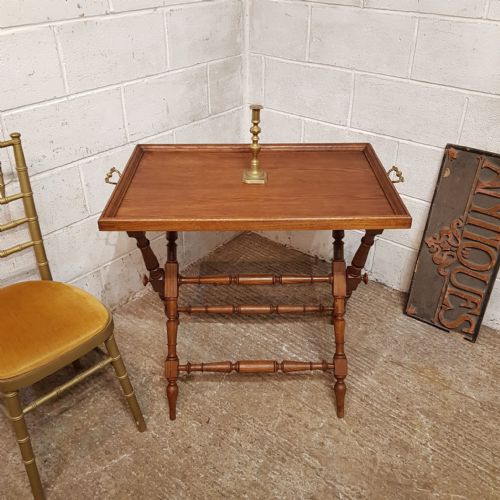


Brown Wooden Serving Stand
A brown wooden serving stand brings folding utility and polished grain together, offering a portable surface suited to both traditional dining rooms and modern living spaces.
Brown Wooden Serving Stand
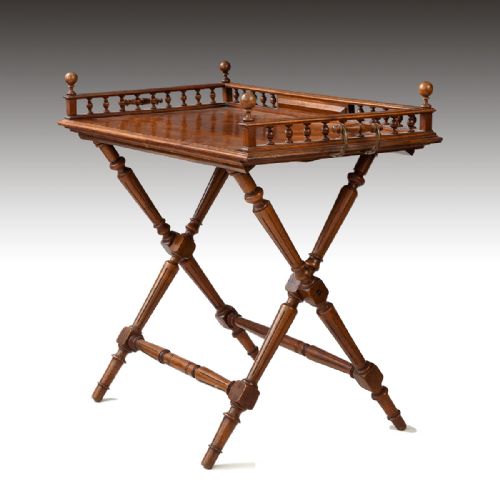
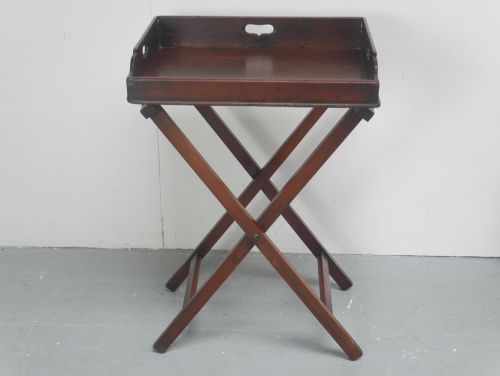
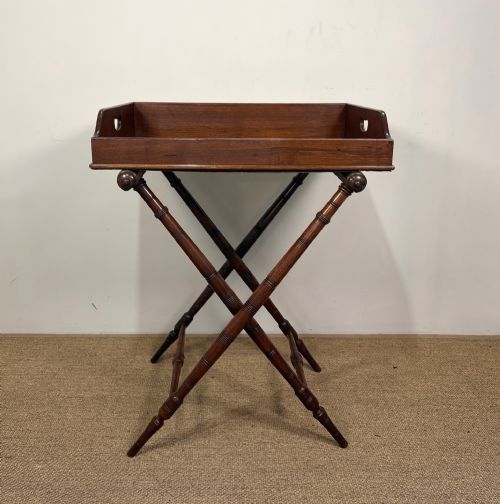
The form typically splits between removable trays resting on folding X-frames and tiered freestanding structures like dumb waiters. These pieces originate across the 18th, 19th and early 20th centuries, reflecting changing domestic habits in British households.
Materials and construction
Cabinet makers utilised dense hardwoods including mahogany, oak and walnut for both structural stands and removable trays, often applying satinwood veneers or marquetry detailing for decorative contrast.
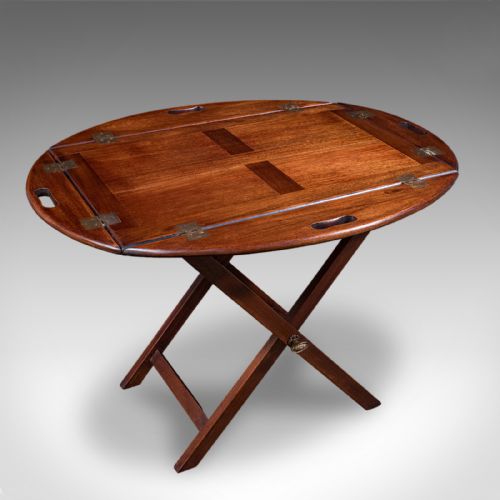
Folding mechanisms rely on hinged or X-frame wooden supports, occasionally reinforced with brass fittings and canvas webbing to ensure stability when bearing heavy silver or ceramic serving vessels.
One listed oak tray carries direct provenance from Bäckaskog Castle, proving that even humble serving stands occasionally rub shoulders with royalty.
Judging quality and construction
Quality rests on the selection of timber grain and the integrity of the original joints rather than mere decorative carving. Finer pieces display well-figured mahogany or walnut veneers matched symmetrically across the tray surface.
The retention of the original matching stand distinguishes better examples from married pieces assembled at a later date. Solid brass hinges, clean dovetail joints in the tray corners and sturdy folding frames mark superior workshop production.
The Brown Wooden Serving Stand Glossary
- Butler tray
- A shallow wooden tray with hinged sides that lift to contain items, designed to be lifted off its folding stand for serving. These trays frequently feature shaped cut-out carrying handles.
- Dumb waiter
- A tiered freestanding stand with multiple rotating or fixed circular shelves, traditionally placed beside a dining table to hold dishes without servant assistance. They appear in mahogany and oak across the 18th and 19th centuries.
- X-frame
- A folding support structure formed of two intersecting wooden legs pivoted scissors-style, allowing the stand to collapse flat when not in use. This clever design underpins most portable tray tables.
- Marquetry
- The art of applying decorative pieces of veneer to a wooden structure to form intricate picture designs or geometric patterns. Edwardian tray tops often showcase this painstaking decorative technique in contrasting satinwood.
- Drop-flap
- A hinged section of a tray or table top that lowers or raises on brackets, altering the surface area. It provides versatility in compact dining environments.
Brown Wooden Serving Stand: Frequently Asked Questions
How were butler trays used?
Butler trays served as portable surfaces for carrying food and drink from the kitchen to the dining room or drawing room. Once positioned on their folding stands, they functioned as temporary side tables during meals.
Servants lifted the tray directly off the frame to clear plates or replenish courses without disturbing guests. This dual functionality made them essential items in large period households.
What is a dumb waiter?
A dumb waiter is a multi-tiered freestanding stand used to hold dishes, glassware and cutlery within arm's reach of the dining table. It allowed diners to help themselves during less formal meals.
Unlike folding tray tables, these heavier tiered stands remained in the dining room permanently. They often feature graduating circular shelves constructed from mahogany or oak.
How do I date an antique serving stand?
Dating relies on examining the timber species, construction joints and overall hardware style. Georgian and 18th century examples typically display dense mahogany with hand-cut joinery.
Victorian and Edwardian pieces introduce wider timber selections like walnut and oak, occasionally featuring machine-cut screws or brass hinges. Comparing the wear on the tray base to the stand helps confirm if the components belong together.
Are tray stands sturdy enough for daily use?
Most antique folding stands remain surprisingly robust, provided the hinges and canvas webbing are sound. Solid hardwood frames distribute weight evenly across the X-frame structure.
Care should be taken not to overload fragile antique walnut or veneered trays with excessive weight. Regular tightening of any loose screws helps maintain their structural stability for modern living.