





Brown Wooden Knife Box
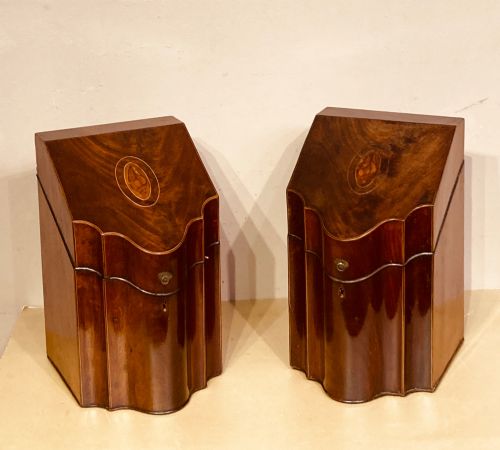
These brown wooden knife box examples span the Georgian and Victorian periods, offering solid mahogany and pine storage with brass fittings.
Brown Wooden Knife Box
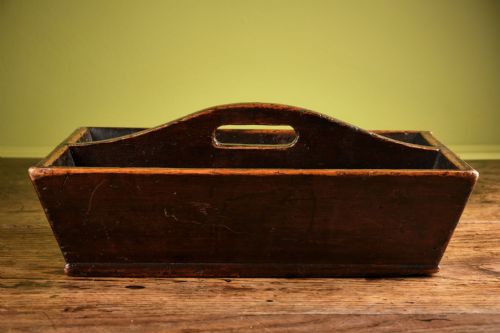
When searching for a brown wooden knife box, buyers encounter items intended for table cutlery storage, spanning Georgian and Victorian periods. The selection includes serpentine fronts, lidded urns, and country trays.
Most pieces on this page originate from the 18th century and George III eras, constructed primarily from mahogany with occasional oak or pine variants. These items served dining rooms by keeping steel blades dry and organised.
Forms range from upright slanted knife boxes to large classical cutlery urns and open Welsh country trays. Buyers frequently find serpentine profiles and inlaid wood details among these historical table accessories.
How they were made
Cabinet makers utilised solid mahogany, pine, and oak timbers, often embellishing surfaces with boxwood and satinwood stringing or decorative wood inlay. These woods were shaped into serpentine curves or turned into classical urn forms.
Metal components such as brass hinges, escutcheons, and carrying handles were fitted to secure the lids and assist movement. Interior partitions and slots were built to hold individual cutlery pieces upright.
Brown Wooden Knife Box Retail Price Guide 2026
Typical asking prices for brown wooden knife box among the pieces listed under this phrase on Sellingantiques today, from the lower quarter to the upper quarter. They describe what is for sale here now, not the wider market.
The inventory records pine, oak, and mahogany as the principal woods used across these eighteenth and nineteenth-century pieces.
What varies in quality
The choice of timber grain defines the visual depth of the piece, with figured mahogany and precise boxwood stringing marking out finer examples. Plain pine or oak items from country workshops offer utility rather than decorative complexity.
The complexity of the form dictates distinction, separating simple open trays from serpentine cabinets and symmetrical lidded urns. Original brass fittings and intact interior divisions elevate the finish of individual pieces.
The Brown Wooden Knife Box Glossary
- Serpentine
- A curved shape that bends inward in the centre and swells outward at the ends. This profile appears frequently on Georgian knife box fronts.
- Cutlery urn
- A classical vase-shaped vessel designed for storing tableware on the sideboard. These lidded items often sit in pairs.
- Stringing
- Thin lines of contrasting wood inlay used to edge panels and lids. Boxwood and satinwood provide pale lines against dark mahogany.
- Escutcheon
- A flat plate surrounding a keyhole to protect the surrounding wood. These brass fittings are standard on lockable storage boxes.
Brown Wooden Knife Box: Frequently Asked Questions
What is a brown wooden knife box used for?
These boxes stored dining cutlery on sideboards during the eighteenth and nineteenth centuries. The interior compartments kept steel knives separated and protected from damp air.
Today, they function as decorative tabletop storage for letters, stationery, or small household items.
How do I date a brown wooden knife box?
Dating relies on timber selection, construction methods, and hardware styles. Georgian examples typically feature figured mahogany and serpentine fronts with brass fittings.
Victorian pieces and country pine trays often display simpler joinery or regional Welsh construction characteristics.
Are knife boxes sold in pairs?
Several listings feature matching pairs, particularly among the classical cutlery urn forms. Sideboards of the Georgian period often displayed symmetrical items at either end.
Single boxes also appear frequently, reflecting how most domestic storage pieces survived independently.
What woods were used for knife boxes?
Mahogany is the predominant timber seen across these historical items. Cabinet makers also utilised pine, oak, and boxwood for contrasting inlay details.
Regional country pieces often utilised local timbers such as Welsh oak or pine rather than imported hardwoods.