
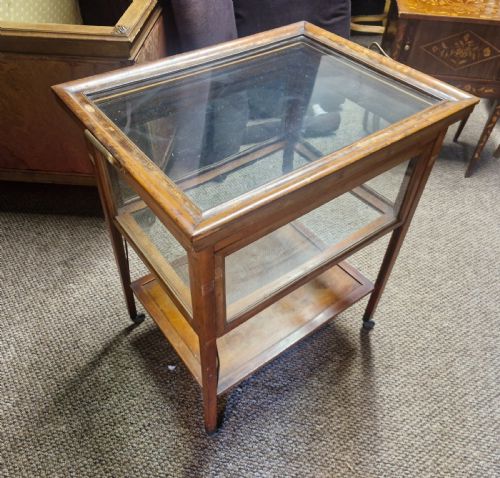


Brown Wooden Drinks Trolley
These brown wooden drinks trolley pieces offer practical charm and hospitality, moving easily between rooms to serve guests.
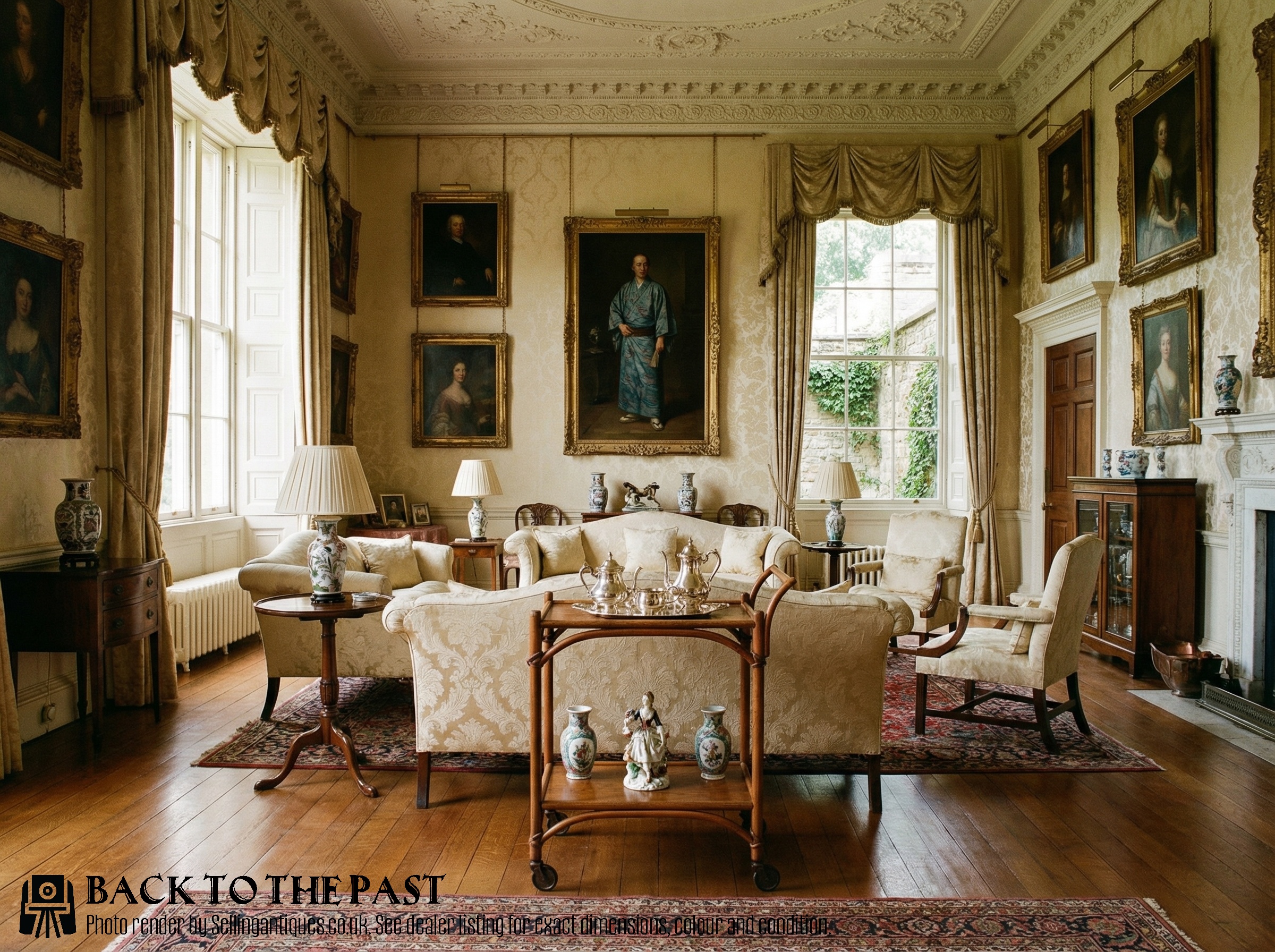
Brown Wooden Drinks Trolley
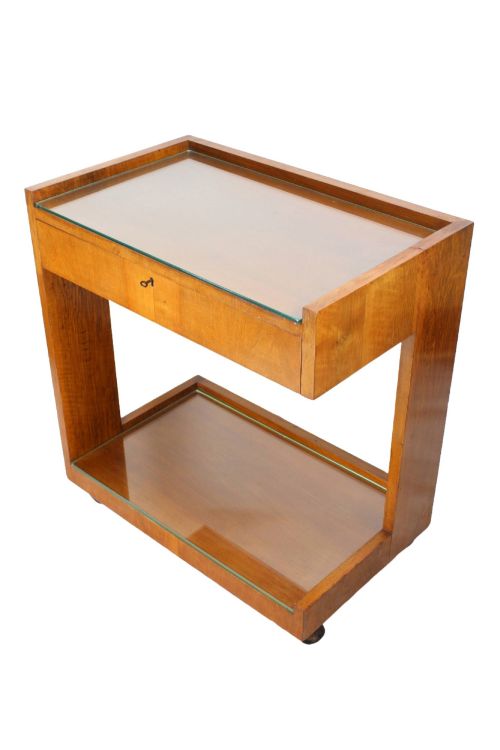
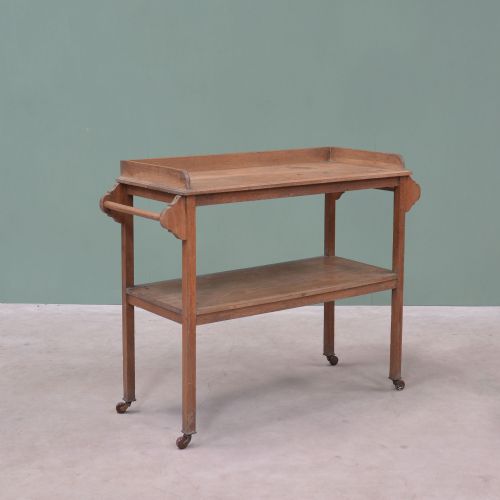
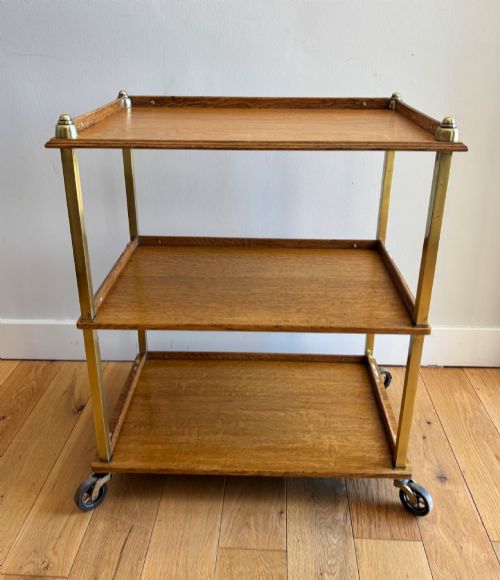
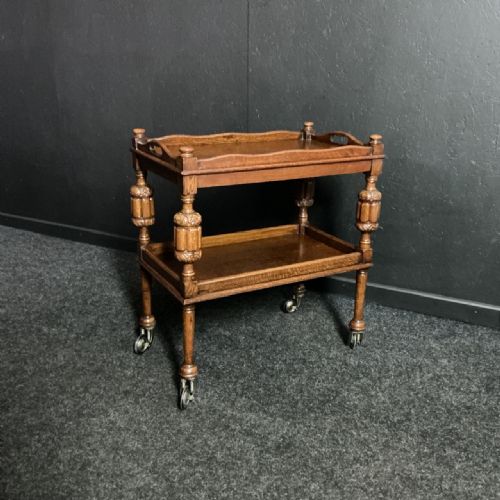
A brown wooden drinks trolley provides a movable surface for serving afternoon tea, cocktails, and food across various domestic settings. These items span periods from the Victorian era and Edwardian years through the 1920s, 1930s, and 1940s, alongside examples in Georgian and 19th-century styles.
The selections on this page most commonly take the form of tea trolleys, serving trolleys, and bar carts with two or three tiers. Many incorporate practical additions such as drop sides, removable trays, and wheels for transport.
Makers and origins stretch from English Art Deco and Mid-Century British workshops to Anglo-Indian carved hardwood and cane-bound beech designs by Lusty of Leicester. Buyers encounter everything from simple oak frameworks to walnut and mahogany pieces equipped for entertaining.
Materials and construction
Cabinet makers utilised timber frameworks of mahogany, walnut, oak, beech, and plywood, often enhanced by veneer and elaborate inlay work. Surfaces frequently feature glass panels, polished wood, or baize linings.
Metal and brass components appear in the structural hardware, castor wheels, and tray fittings that enable movement. Specialised construction techniques include drop-leaf mechanisms, folding tops, barley twist legs, and metamorphic folding actions.
The selection spans from 19th-century Victorian dumb waiters and Georgian buffets to 1930s Art Deco walnut bar carts.
Judging the range
Quality separates simple utility furniture from sophisticated examples through the selection of figured wood veneers and detailed carving. Pieces featuring complex mechanisms, such as metamorphic side tables or removable trays with secure fitment, sit at a higher tier.
The integrity of the timber joinery and the original hardware, including brass castors and handles, dictates the enduring utility of each trolley. Regional styles, such as intricate Indian carved hardwood or branded maker designs, elevate individual pieces above standard production.
Lusty of Leicester
The Brown Wooden Drinks Trolley Glossary
- Drop side
- A hinged leaf on the side of a trolley that folds down when not in use. This mechanism allows the surface area to expand quickly during tea service or cocktail hours.
- Removable tray
- A detachable top section of the trolley designed to lift off independently. It permits glasses and tea sets to be carried directly to a table without moving the entire cart.
- Etagere
- A set of open shelves or tiers used for displaying or serving items. In trolley form, these multi-level wooden structures maximise storage space in a compact footprint.
- Metamorphic
- Describing furniture designed to transform its shape or function through folding or pivoting parts. These pieces convert from a compact side table into an extended serving station.
- Barley twist
- A decorative turning technique applied to wooden table legs and supports, resembling a spiral rope. This ornamentation appears frequently on Edwardian and 1920s oak trolleys.
Brown Wooden Drinks Trolley: Frequently Asked Questions
How do I use a brown wooden drinks trolley today?
These pieces serve well as mobile cocktail bars, serving carts, or side tables in living and dining rooms. Their wheels allow them to move easily from the kitchen to guests during gatherings.
Fold-down leaves and removable trays offer flexible space for bottles, glassware, and snacks. When not hosting, they function effectively as static display tables for plants and books.
What is the difference between a tea trolley and a bar cart?
Tea trolleys typically date from the Edwardian period and the 1920s, featuring timber structures like oak or mahogany with drop sides and removable upper trays for afternoon tea.
Bar carts often align with Art Deco or Mid-Century designs, focusing specifically on beverage service with circular walnut frames or specialised bottle storage.
Are these trolleys sturdy enough for daily use?
Solid timber frames made from oak, mahogany, or walnut provide substantial structural strength for everyday handling. Original castor wheels allow the carts to roll smoothly across interior flooring.
Care should be taken with drop-leaf mechanisms and older veneer surfaces to ensure they remain stable under heavy loads of glassware or bottles.