


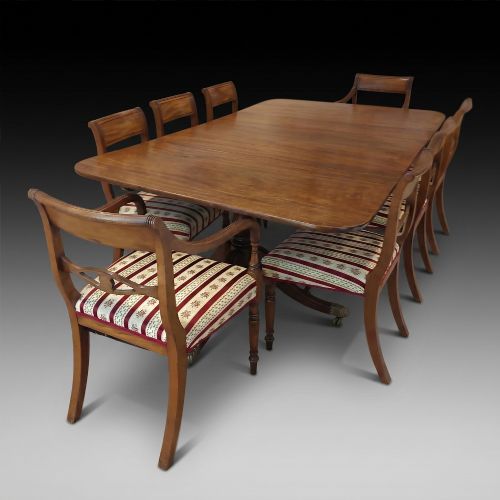


Brown Wooden Dining Suite
A brown wooden dining suite brings together a matched table and chairs, offering a complete and traditional setting for meals.
Brown Wooden Dining Suite
A brown wooden dining suite brings together a table and a set of chairs, often including carvers and slipper chairs designed for formal gatherings. Buyers searching this phrase will most commonly encounter sets made from mahogany, alongside occasional examples in pollard oak, walnut, and elm. These groupings span multiple eras, ranging from authentic Georgian and Regency pieces through to Victorian examples and later revivals from the early twentieth century.
The configurations vary considerably, from intimate sets of six chairs up to extensive collections comprising ten or more seats accompanied by a large dining table. Alongside traditional dining sets, the selection includes related seating arrangements such as inlaid settees designed to complement the main table. The predominant aesthetic draws heavily on classic British cabinet-making traditions, particularly Hepplewhite, Regency, and Victorian styles.
Materials and construction
These suites rely heavily on dense hardwoods such as mahogany and walnut, which provide the structural stability required for heavy dining tables and frequently used chairs. Cabinet-makers also utilised specialised timbers like pollard oak and elm for distinct grain patterns, occasionally incorporating marquetry inlay to add decorative contrast to the timber surfaces.
Seating components frequently feature structural additions such as brass hardware and various forms of upholstery, including leather and woven fabric coverings. The construction techniques reflect the prevailing style of each period, moving from hand-carved Georgian frames to later revival methods utilising established design templates.
Brown Wooden Dining Suite Retail Price Guide 2026
Typical asking prices for brown wooden dining suite among the pieces listed under this phrase on Sellingantiques today, from the lower quarter to the upper quarter. They describe what is for sale here now, not the wider market.
Gathering ten chairs around a single table ensures nobody ever has to sit on the stairs during family feasts.
Distinctions in quality
Quality in a brown wooden dining suite is determined by the selection of timber and the precision of the cabinet-making. Finer suites display superior grain alignment in the mahogany or pollard oak, along with crisp hand-carving on chair splats and table legs.
The integrity of the construction, particularly in large sets of chairs where all pieces must remain uniform and sturdy, separates standard production from exceptional examples. Furthermore, the originality of fitted brass hardware and the condition of integrated marquetry inlay influence the standing of a suite.
The Brown Wooden Dining Suite Glossary
- Carver
- An armchair with armrests, typically placed at the head of a dining table for the host. These are usually accompanied by smaller armless chairs known as slipper chairs.
- Marquetry Inlay
- Decorative patterns created by fitting contrasting pieces of veneer into the wooden surface of furniture. This technique is often seen on tabletops and cabinet fronts.
- Pollard Oak
- Timber taken from oak trees that have been pollarded, producing a heavily figured and mottled grain pattern. It was frequently utilised for decorative effect in nineteenth-century furniture.
- Hepplewhite Style
- A neoclassical furniture style inspired by the designer George Hepplewhite, characterised by slender tapered legs and shield-back chair designs. Pieces often feature delicate carved details in mahogany.
- Regency
- A period of British design spanning the early nineteenth century, noted for classical restraint and inspiration drawn from ancient Rome and Greece.
Brown Wooden Dining Suite: Frequently Asked Questions
What pieces comprise a dining suite?
A dining suite typically pairs a central dining table with a matching set of chairs. These sets often include a mix of standard side chairs and larger carvers for the ends of the table.
Larger configurations may comprise ten or more chairs to accommodate formal dining spaces. Additional matching items, such as settees, sometimes form part of these comprehensive groupings.
How do I care for wooden dining furniture?
Wooden dining surfaces require protection from excessive moisture and direct sunlight to prevent warping and fading. Regular dusting with a soft cloth helps maintain the finish of the timber.
Applying appropriate wax periodically nourishes hardwoods like mahogany and walnut. Upholstered elements on chairs need gentle vacuuming or specialist cleaning depending on the fabric.
How do I identify a Georgian dining set?
Georgian dining furniture dates from the eighteenth and early nineteenth centuries, displaying solid mahogany construction and restrained classical proportions. Chairs from this era often feature distinct backsplats and sturdy carved legs.
Stylistic influences from designers such as Hepplewhite frequently appear in the chair backs and leg framing. These sets reflect the hand-tooling methods typical of workshops from that period.
Are all chairs in a set identical?
Many historical dining sets include a combination of different chair types designed for specific seating positions. A typical arrangement pairs standard armless chairs with a smaller number of larger carvers featuring armrests.
Revival and later sets may present uniform seating across all pieces. Reviewing the specific breakdown of carvers and side chairs helps clarify the layout of the suite.