
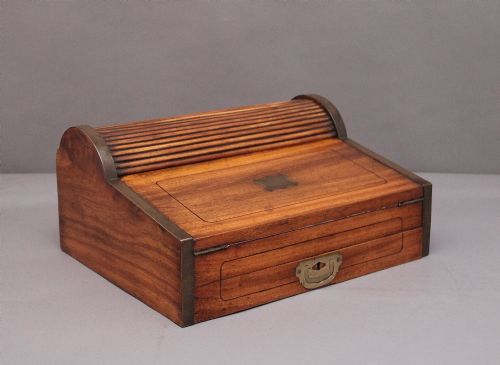
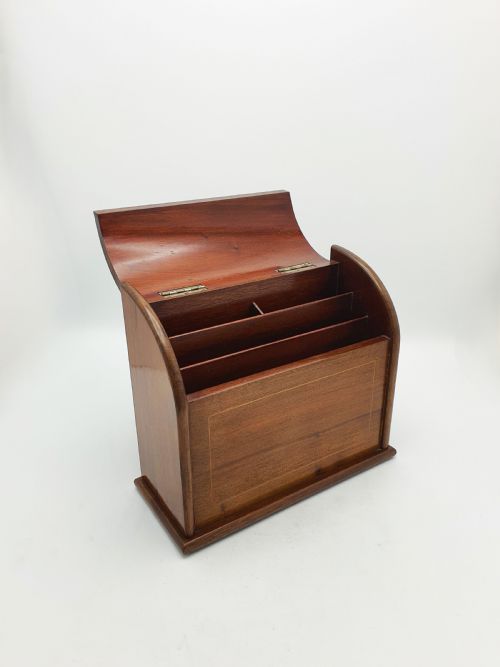
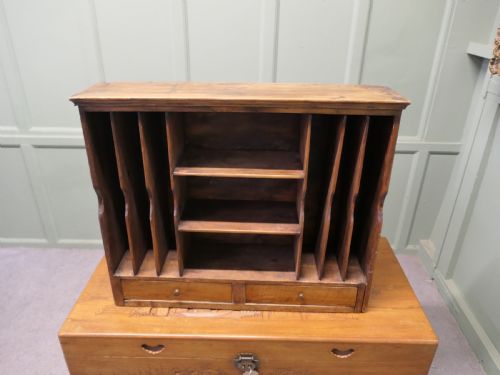


Brown Wooden Desk Tidy
These brown wooden desk tidy pieces organise your writing space with period character, offering functional compartments and inkwells carved from solid timbers.
Brown Wooden Desk Tidy
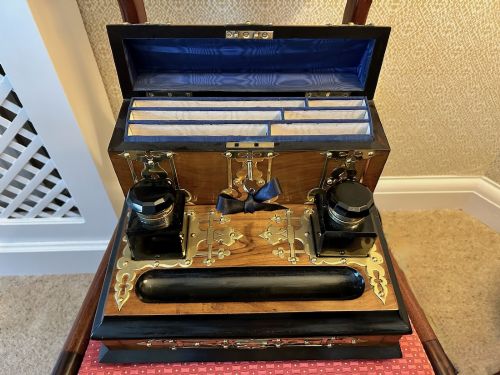
A brown wooden desk tidy groups together utilitarian and decorative desk accessories designed to hold stationery, letters, and writing implements. The selection spans Victorian, Edwardian, and Georgian periods, showcasing practical forms from earlier centuries.
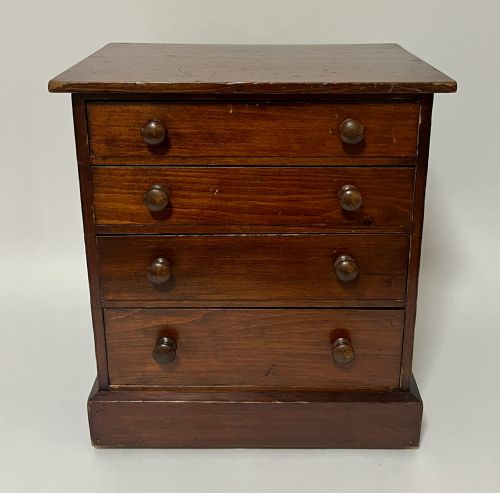
Most examples appear in oak, mahogany, and walnut, taking the shape of stationery boxes, inkstands, and letter racks. These items served busy households and offices, keeping daily correspondence neat before the era of digital communication.
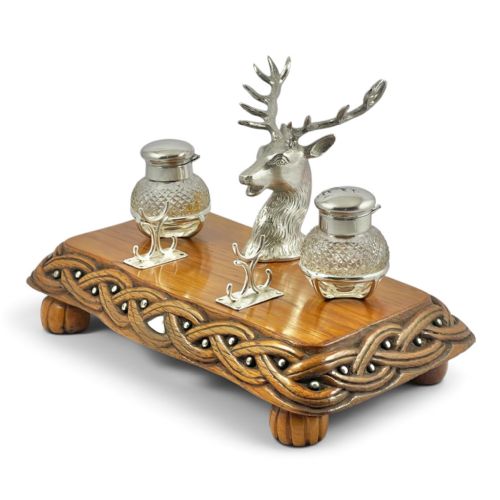
Buyers encounter carved Black Forest versions featuring animal figures alongside plain oak slant-lid boxes and inlaid mahogany cabinets. Each object reflects the prevailing taste of its decade, from Gothic revivals to Arts and Crafts simplicity.
Materials and construction
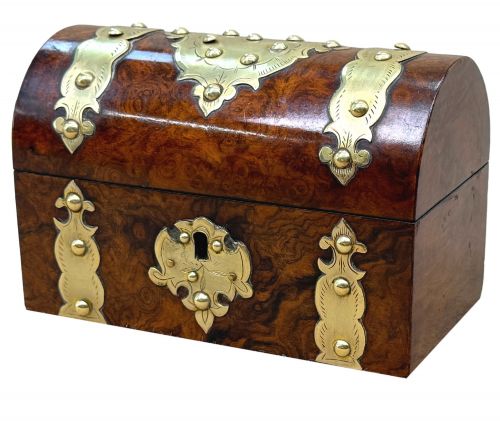
Cabinetmakers utilised dense timbers such as oak, mahogany, walnut, and coromandel, often housing them with brass hinges, locks, and glass inkwell inserts. Selected pieces display pokerwork decoration or intricate hand-carving characteristic of Swiss Black Forest workshops.
Joinery techniques ranged from dovetailed boxes to hinged lids and secret drawers, constructed to withstand daily use on busy writing desks. Inlaid details in contrasting woods or metals frequently accent the primary timber surfaces.
Several Victorian desk tidies double as miniature menageries, featuring carved St. Bernard and terrier dogs guarding the ink.
Judging quality in desk accessories
Quality rests upon the choice of timber and the crispness of any applied carving or inlay. Well-executed dovetails, smooth lid operations, and original brass hardware distinguish superior examples from simpler utilitarian items.
The presence of fitted interiors, matching glass inkwells, and functioning locks elevate the desirability of a piece. Carved items depend entirely on the skill of the carver in rendering realistic animal forms and natural textures.
The Brown Wooden Desk Tidy Glossary
- Stationery box
- A desk accessory designed to hold envelopes and writing paper upright in stepped or divided compartments. These boxes often feature hinged or fall-front lids.
- Inkstand
- A tray or stand holding one or more inkwells, frequently accompanied by pen rests and sanders. They sit upon a desk to provide immediate access to writing fluids.
- Writing slope
- A portable slant-topped box that opens to reveal a sloping writing surface and storage space for paper and nibs. Many include hidden compartments for valuables.
- Pokerwork
- A decorative technique using a heated metal tool to burn designs into wood surfaces. It appears frequently on Arts and Crafts desk items.
- Book slide
- An expanding wooden desktop rack intended to keep a small selection of reference volumes upright between two bookends. Some designs incorporate folding mechanisms.
Brown Wooden Desk Tidy: Frequently Asked Questions
What is a desk tidy used for?
A desk tidy holds everyday writing materials, keeping pens, ink, and letters organised in dedicated compartments.
Historically, these accessories reduced clutter on writing slopes and partners desks in both home studies and offices.
How do I date a wooden desk tidy?
Dating relies on observing timber choices, joinery methods, and stylistic cues such as Arts and Crafts or Gothic Revival motifs.
Mouldings, brass hardware, and secondary woods inside drawers also help determine the period of manufacture.
Are inkwells included with desk tidies?
Many inkstands and desk sets retain their original glass or ceramic inkwells, often fitted with brass collars or hinged lids.
Some pieces designed strictly for stationery or letters do not feature inkwells.
What woods were commonly used?
Oak and mahogany appear most frequently, supplemented by walnut, coromandel, and pine in various periods.
Swiss pieces often utilise linden wood for detailed figurative carvings of animals.