



Brown Wooden Corpus Christi
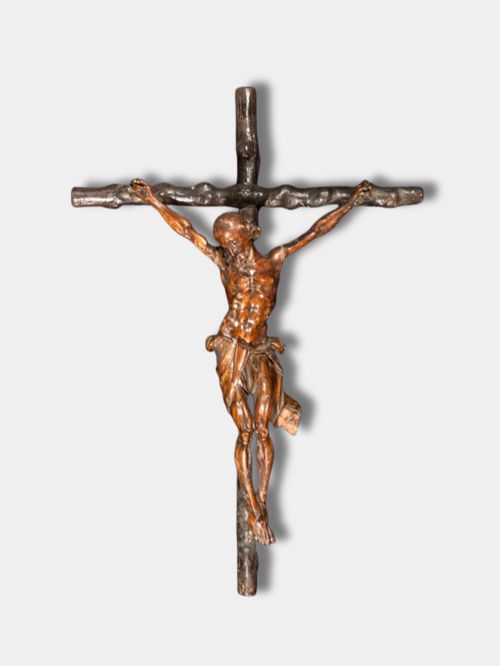
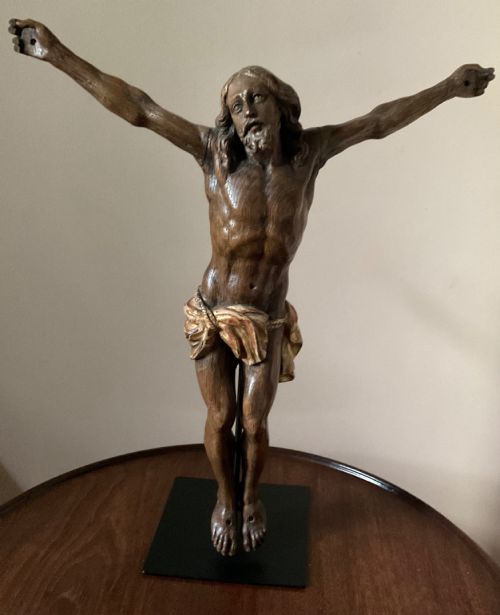
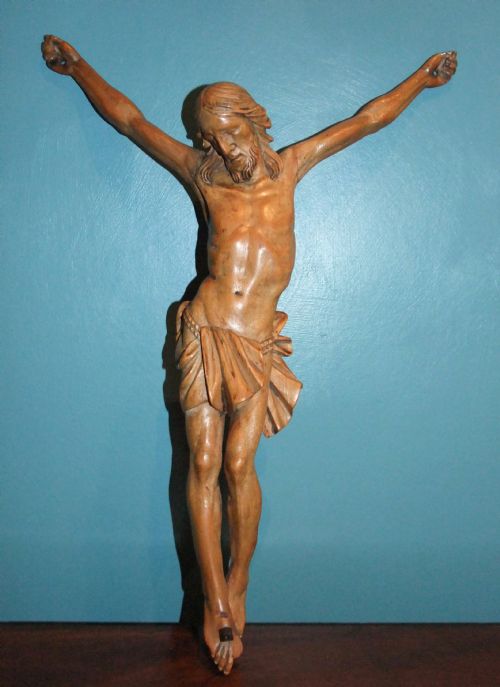
These brown wooden corpus christi carvings are devotional figures of Christ, prized for their carved detail and age.
Brown Wooden Corpus Christi
A brown wooden corpus christi is a sculptural representation of Christ on the cross, shaped by carvers working in continental workshops from the seventeenth century to the twentieth century. When you search for this phrase, you find standing crucifixes and individual religious sculptures fashioned in forms like Spanish Baroque and French Provincial styles.
You are most likely to meet seventeenth-century and eighteenth-century examples on this page, often originating from Spain, France, or the Low Countries. These pieces range from substantial standing crucifixes with olive wood crosses and bases to standalone carved figures incorporating boxwood, fruitwood, and oak.
How they were made
Some examples enhance the carved timber with parcel gilt highlights or incorporate secondary metal elements for structural support and ornamentation. Crosses frequently pair contrasting woods, mounting a pale boxwood or fruitwood figure against a darker oak or olive wood structure.
Brown Wooden Corpus Christi Retail Price Guide 2026
Typical asking prices for brown wooden corpus christi among the pieces listed under this phrase on Sellingantiques today, from the lower quarter to the upper quarter. They describe what is for sale here now, not the wider market.
What varies in quality
The choice and preservation of the timber also distinguish the work, with tight-grained boxwood and finely figured fruitwood allowing for sharper, more enduring detail than coarser woods. Additionally, the integration between the corpus and its cross reflects the original maker's skill.
The Brown Wooden Corpus Christi Glossary
- Corpus Christi
- Latin for Body of Christ, this term denotes the sculptured figure of Jesus mounted on a cross. It forms the central devotional focus of a crucifix.
- Baroque
- A European artistic style spanning the seventeenth and eighteenth centuries characterised by dramatic movement, deep carving, and emotional intensity. Spanish and French variants appear frequently in religious sculpture.
- Parcel Gilt
- A decoration method where only specific parts of an object are gilded with thin gold leaf, leaving other areas of the natural wood exposed. This technique highlights particular details on the figure or cross.
- Fruitwood
- Timber sourced from fruit-bearing trees such as pear, apple, or cherry, known for a smooth texture and warm colour. Carvers prized it for intricate sculptural work.
Brown Wooden Corpus Christi: Frequently Asked Questions
What is a corpus christi?
A corpus christi is the three-dimensional figure of Christ shown on the cross. It forms the focal point of a crucifix or functions as an independent devotional sculpture.
These pieces were carved from various timbers by European artisans and often mounted onto wooden crosses with dedicated bases for tabletop or altar display.
How old are these crucifixes?
The pieces span several centuries, with origins recorded from the seventeenth century through to the twentieth century. Seventeenth-century and eighteenth-century examples are common among continental European works.
Art Deco interpretations also appear, representing later twentieth-century ecclesiastical craftsmanship in oak.
Where did these carvings originate?
The geographical origins centre largely on continental Europe, particularly Spain, France, and the Low Countries. Regional workshops produced distinct sculptural styles, including Spanish Baroque and French Provincial forms.
Makers in these regions supplied both local churches and private households with devotional art.