

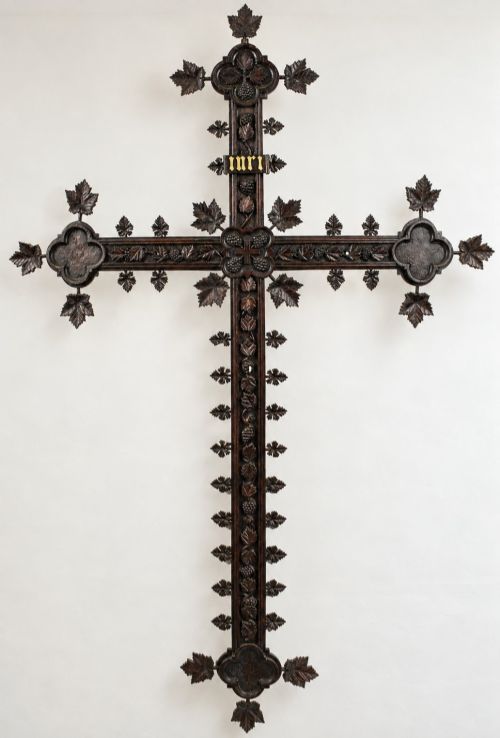
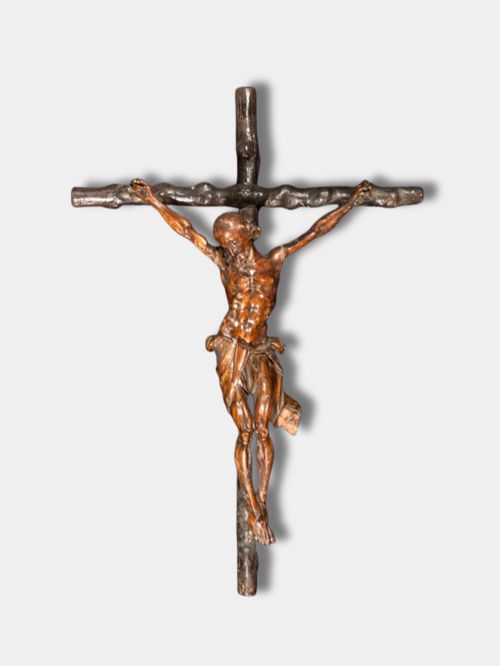


Antique Wooden Wall Cross
An antique wooden wall cross brings centuries of devotional craft and solemn artistry straight into your interior.
Antique Wooden Wall Cross
Most examples you meet on this page lean into traditional forms such as carved oak crucifixes or dark wood wall sculptures. These items capture spiritual devotion through distinct historical lenses, ranging from the Gothic Revival to French Provincial aesthetics.
The assortment includes not only standard wall crucifixes but also related devotional woodwork and iconography executed in timber. Each piece reflects the specific liturgical traditions and carving standards of its originating era.
Materials and construction methods
Makers shaped these devotional objects using robust timbers like oak, rosewood, and general hardwoods, often enhancing the natural grain with dark finishes. Artisans applied carved wood techniques directly to the timber, sometimes pairing the wooden structure with gilt metal details or glass elements.
Surface decoration frequently involved gilding or tempera paint applied directly to wood panels, as seen in traditional icon painting traditions. Carvers utilised hand chisels and gouges to render figures with deep relief, establishing strong shadows and three-dimensional presence on flat wall plaques.
Antique Wooden Wall Cross Retail Price Guide 2026
Typical asking prices for wooden wall cross among the pieces listed under this phrase on Sellingantiques today, from the lower quarter to the upper quarter. They describe what is for sale here now, not the wider market.
Listings feature items spanning from the sixteenth century through the Art Deco period of nineteen-thirty, utilising oak, rosewood, and gilt.
Judgements of quality in devotional woodwork
Quality in these devotional carvings rests primarily on the anatomical precision and expressive depth of the figurative work. Superior items display careful hand-carving that captures musculature and drapery with convincing realism, whereas lesser pieces rely on stiff, simplified proportions.
The integrity of the timber and the preservation of original surface treatments dictate the upper tier of the range. Master carvers integrated the natural qualities of the hardwood into the composition, avoiding heavy modern restorations that obscure historical tool marks.
The Antique Wooden Wall Cross Glossary
- Corpus Christi
- The physical figure of Christ affixed to a cross. This Latin term denotes the central sculptural body that defines a crucifix.
- Tempera
- A permanent, fast-drying painting medium consisting of coloured pigment mixed with a water-soluble binder. It is frequently found on early wooden icons and religious panels.
- Gilt
- Covered thinly with gold leaf or gold paint. This technique highlights raised wooden details and halo backgrounds.
- Gothic Revival
- An architectural and decorative style spanning the eighteenth and nineteenth centuries. It draws inspiration from medieval ecclesiastical design.
- Relief sculpture
- Sculptural elements that remain attached to a solid background of the same material. High relief projects significantly from the flat timber plane.
Antique Wooden Wall Cross: Frequently Asked Questions
How do I hang a heavy wooden wall cross?
Most antique wall crosses feature integrated hanging loops or substantial rear brackets designed for secure wall placement. You should assess the weight of the dense hardwood and utilise appropriate wall anchors suited to your plaster or masonry.
Ensure the hanging wire or bracket bears the full vertical load without straining the antique joints. Placing the cross at eye level usually provides the most balanced visual presentation in a room.
How do I clean an antique wooden cross?
Dust the timber gently with a dry, soft microfiber cloth to remove everyday surface accumulation. Avoid using chemical polishes, oils, or household detergents that can damage historic finishes or soften ancient tempera.
Maintain a stable indoor environment away from direct sunlight and excessive humidity to prevent the wood from warping or cracking. Gentle care preserves the original patina built up over centuries of handling.
How can I tell the period of a wooden cross?
Examine the tool marks left on the reverse of the wood, as hand-adzed timbers differ significantly from machine-cut equivalents. Stylistic indicators like Spanish Baroque flourishes or Art Deco geometry also point directly to specific decades of production.
Inspect the fasteners, adhesives, and mounting pins used in the construction of the corpus and cross. Older pieces often employ hand-forged iron nails or pegged wooden joints rather than modern steel screws.
Where were most wooden wall crosses made?
Devotional woodworking flourished across continental Europe, with distinct regional centres producing recognizable regional styles. German folk art traditions, Spanish Baroque workshops, and French provincial studios all generated unique interpretations of the cross.
Master craftsmen in these diverse regions utilised local timber supplies available to their specific workshops. This geographical variety accounts for the wide range of hardwoods and stylistic details found within the selections.