


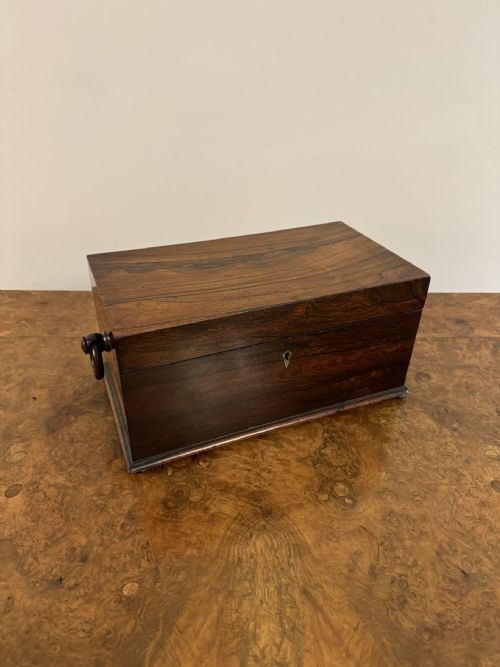
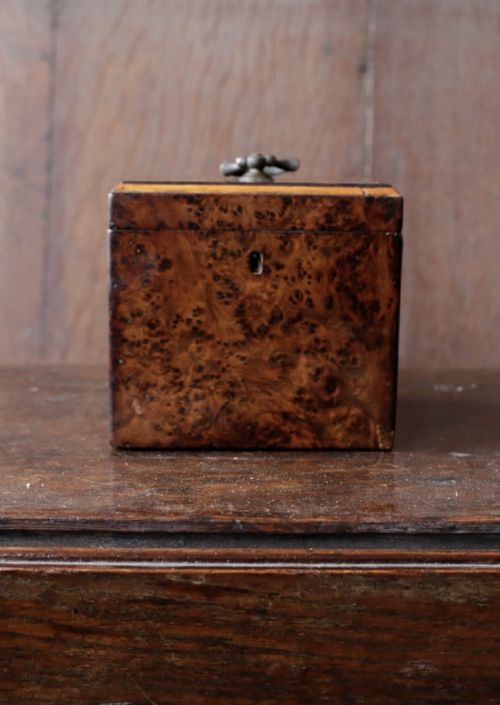


Brown Wood Tea Caddy
A brown wood tea caddy brings tactile warmth and historical craftsmanship to a room, designed to store valuable loose leaves safely.
Brown Wood Tea Caddy
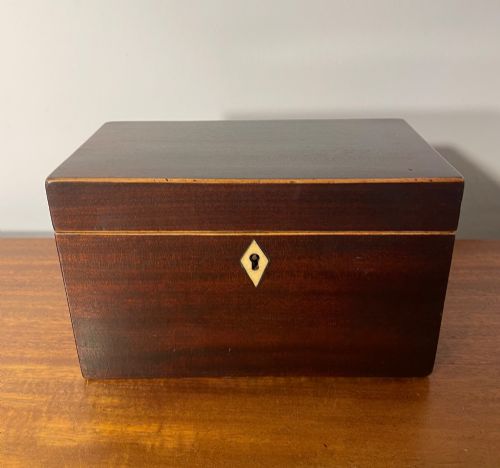
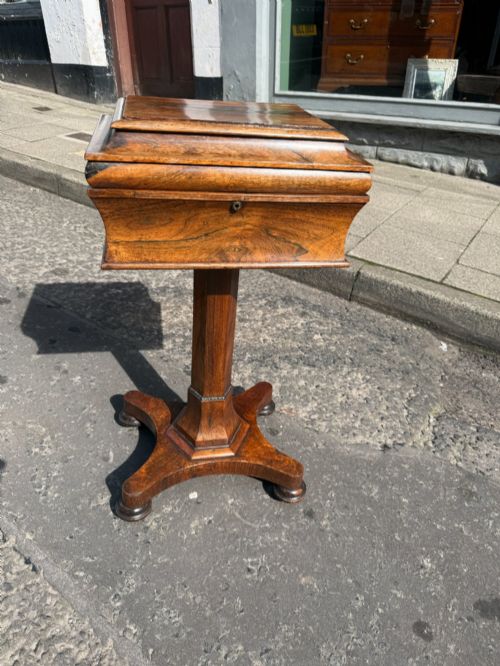
A brown wood tea caddy encompasses lidded containers built to preserve loose tea, appearing in forms ranging from compact cubical boxes to large multi-compartment chests and pedestal teapoys. The examples met on this page span the eighteenth century, the Georgian era, the Regency period, and the nineteenth century.
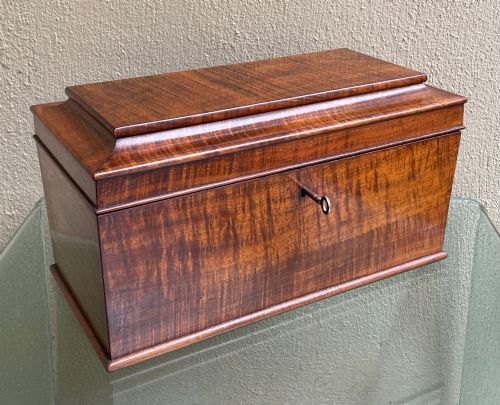
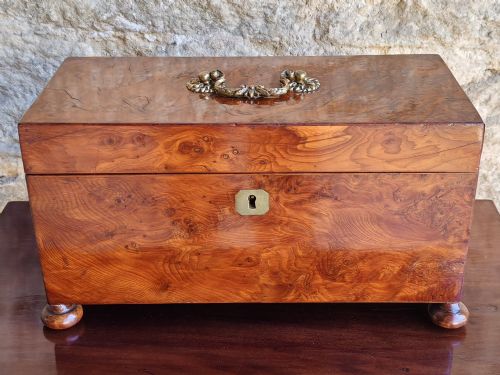
Makers shaped these vessels in mahogany, rosewood, yew, and partridge wood, frequently incorporating distinct geometric outlines or sarcophagus profiles. Interiors often retain remnants of foil lining or fitted wooden lids designed to keep delicate leaves dry and aromatic.
Examples stretch from simple rectangular caddies to elaborate inlaid specimens featuring shell motifs or banded borders. Buyers select these objects for their dense cabinet timbers and their tangible connection to historical dining customs.
Materials and construction methods
Cabinetmakers constructed a brown wood tea caddy using solid hardwoods like mahogany and rosewood, alongside decorative veneers such as burr yew, burr elm, harewood, and amboyna. Surfaces frequently display intricate boxwood stringing, shell marquetry, or specialised Tunbridge ware mosaic patterns.
Carpenters joined carcases with precise dovetail corners to ensure stability across seasonal humidity shifts. Brass escutcheons, hinges, and drop handles were fitted to secure the compartments and aid portability.
Brown Wood Tea Caddy Retail Price Guide 2026
Typical asking prices for brown wood tea caddy among the pieces listed under this phrase on Sellingantiques today, from the lower quarter to the upper quarter. They describe what is for sale here now, not the wider market.
Some nineteenth-century caddies included tiny internal glass bowls specifically intended for slops or mixing infusions.
Determinants of quality
The standard of a brown wood tea caddy rests upon the selection of timber figure, such as the depth of grain in burr yew or the richness of figured mahogany. Superior pieces display seamless veneer matching across all exterior faces and crisp execution of inlaid wood details.
Internal configuration also distinguishes finer examples, particularly those retaining original internal lids, crystal mixing bowls, or functioning locks with matching keys. The precision of the joinery and the restraint or ambition of the decorative scheme determine the standing of each piece.
Henry Hollamby
The Brown Wood Tea Caddy Glossary
- Tea caddy
- A small lidded box or chest originally manufactured to store loose tea leaves securely under lock and key.
- Teapoy
- A larger stand or pedestal table fitted with a compartment or caddy for holding tea, often positioned beside seating.
- Veneer
- A thin slice of ornamental wood applied over a secondary timber carcase to provide a decorative exterior surface.
- Escutcheon
- A small protective plate surrounding the keyhole of a cabinet or box, usually formed from brass.
- Tunbridge ware
- A specialised form of woodworking featuring mosaic geometric patterns built from thousands of tiny tinted wood blocks.
Brown Wood Tea Caddy: Frequently Asked Questions
What is a brown wood tea caddy?
A brown wood tea caddy is a historical storage box built from timbers such as mahogany, rosewood, or yew to keep dry tea leaves fresh.
These containers date predominantly from the Georgian, Regency, and Victorian eras, reflecting past domestic habits surrounding expensive imported tea.
How were tea caddies used historically?
Households used a brown wood tea caddy to store black and green teas under lock because tea was an expensive commodity managed directly by the host.
Many examples feature internal lidded compartments to separate different leaf varieties and sometimes include a glass bowl for blending infusions.
How do I care for a wooden tea caddy?
Maintain a brown wood tea caddy by keeping it away from direct sunlight, radiators, and rapid humidity changes that can crack old veneers.
Apply occasional appropriate wax polish gently with a soft cloth to nourish the historic timber surfaces without damaging delicate inlay.
How can I tell the period of a tea caddy?
Dating relies on observing construction methods, timber choices, and decorative styles such as Sheraton inlay or Regency sarcophagus proportions.
Interior elements like hand-cut dovetails, secondary lining woods, and original brass hardware offer further clues to the manufacturing decade.