



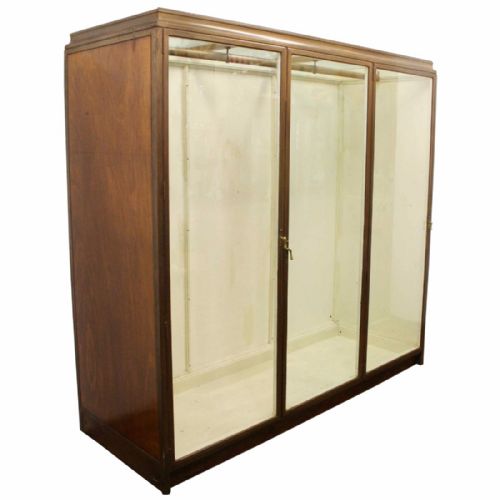


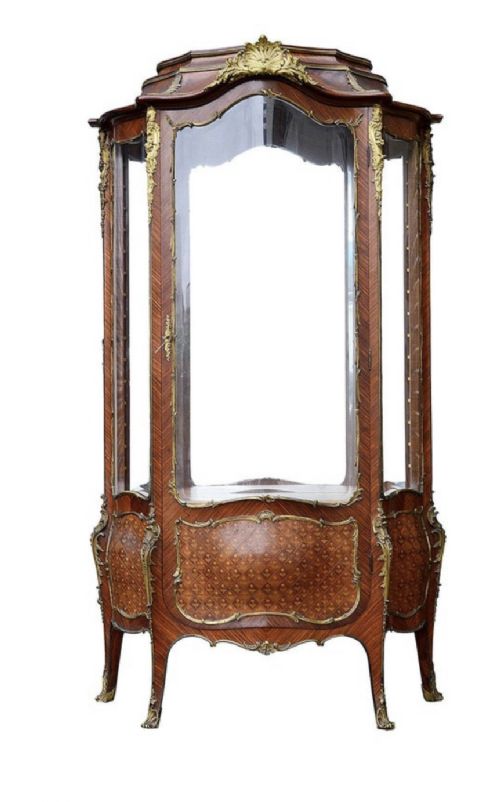

Brown Wood Showcase
These brown wood showcase pieces are glazed cabinets and domes designed to display precious objects, combining practical protection with clear visibility.
Brown Wood Showcase
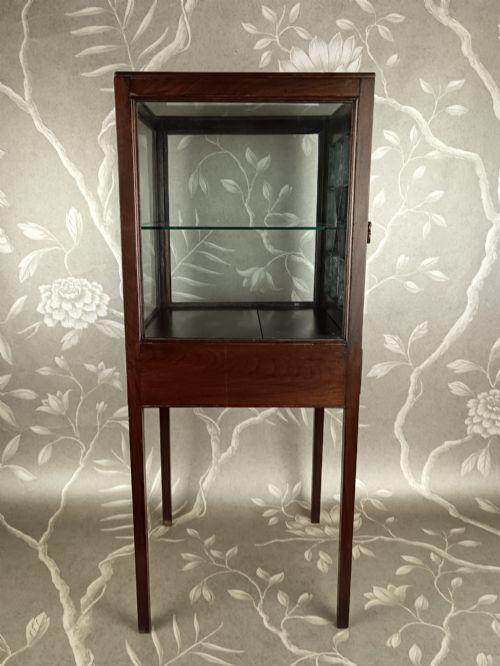
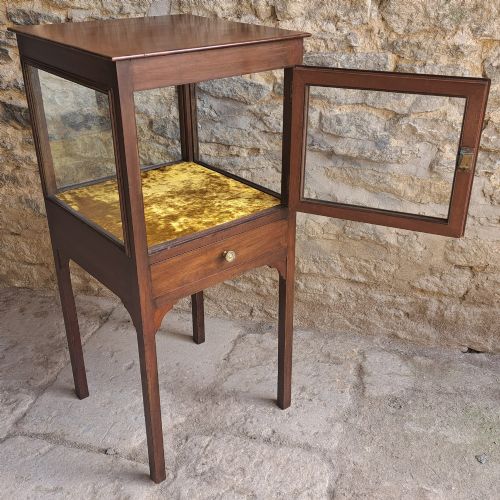
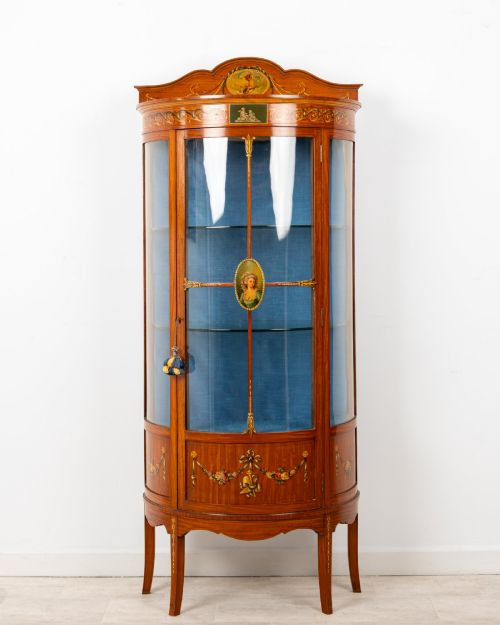
A brown wood showcase covers a broad spectrum of glazed display pieces, from towering Edwardian china cabinets and Georgian vitrines to compact tabletop bijouterie tables and wall-mounted cupboards. You are most likely to encounter mahogany and satinwood display cabinets spanning the Georgian, Victorian, and Edwardian periods.
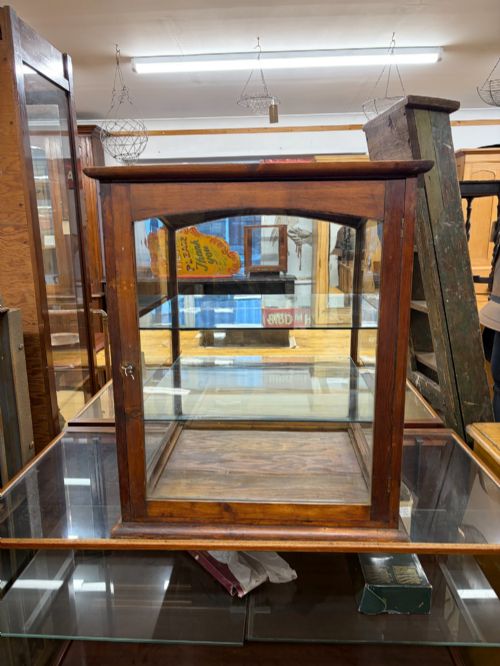
The category also encompasses specialised forms such as shop counter display cabinets, taxidermy display domes with oak bases, and collector cabinets with Indian style influences. These pieces served diverse roles, from domestic display to commercial retail and scientific preservation.
How they were made
Cabinet makers utilised solid timbers and veneers of mahogany, satinwood, oak, and cedar, often applying intricate crossbanding and marquetry inlay to enhance the primary wood surfaces. Brass hardware, including hinges and locks, functions alongside glazed panels to enclose the display space securely.
Internal elements frequently incorporate fabric linings such as velvet or satin to cushion objects and provide a contrasting background for glass shelves. Specialised commercial pieces integrated painted signage directly onto the timber or glass frames.
Brown Wood Showcase Retail Price Guide 2026
Typical asking prices for brown wood showcase among the pieces listed under this phrase on Sellingantiques today, from the lower quarter to the upper quarter. They describe what is for sale here now, not the wider market.
Listings feature woods including mahogany, satinwood, oak, cedar, and hardwood, paired with glass and brass elements.
What varies in quality
Quality in these showcases rests on the selection of timber veneers, the crispness of inlaid details like satinwood crossbanding, and the sophistication of period styling such as Sheraton Revival or French Rococo influences. Finer examples display meticulous joinery and balanced proportions that elevate them beyond utilitarian storage.
The integration of original glass panes, functional brass fittings, and well-preserved internal fabric linings distinguishes superior examples. Commercial counter units and shop displays derive their interest from authentic period branding and robust framing constructed for heavy daily use.
The Brown Wood Showcase Glossary
- Vitrine
- A glass display cabinet used primarily for exhibiting porcelain, curiosities, or fine objects. These freestanding or wall-mounted pieces place emphasis on maximum visibility through glazed doors and sides.
- Bijouterie cabinet
- A glazed tabletop or cabinet designed specifically for displaying small personal items, jewellery, and medals. They typically feature a shallow glazed compartment raised on slender legs.
- Marquetry
- Decorative veneer work created by fitting together small pieces of wood, shell, or ivory to form geometric or pictorial patterns. This technique decorates the surfaces of high-status cabinets.
- Crossbanding
- A border strip of veneer laid around the main panel of a piece with the grain running at right angles to the central design. It frames the primary timber and adds visual definition.
- Display dome
- A blown glass cover resting on a wooden base, historically utilised for preserving taxidermy or delicate decorative objects. The base is commonly fashioned from oak or other sturdy hardwoods.
Brown Wood Showcase: Frequently Asked Questions
What is a brown wood showcase?
A brown wood showcase is a glazed cabinet, dome, or counter unit constructed from timbers like mahogany or oak to display objects.
These pieces range from domestic vitrines and bijouterie cabinets to commercial shop counters and collector cabinets.
How do I style a showcase at home?
Showcases function best when used to exhibit cohesive collections of small ceramics, glassware, or curated curiosities.
Keep internal lighting clear and avoid overcrowding the glass shelves to maintain the intended visibility of the pieces inside.
How do I date a wooden display cabinet?
Dating relies on observing the primary wood, construction methods, decorative styles such as Sheraton Revival or Edwardian inlay, and hardware.
Comparing the stylistic markers and secondary timbers provides a reliable indication of whether a piece originates from the Georgian, Victorian, or Edwardian era.
Were these cabinets used in shops?
Many brown wood showcases originated in commercial environments as shop counter display units or wall cabinets.
Examples built for retail often feature maker inscriptions or painted business lettering relating to cocoa and confectioneries.