

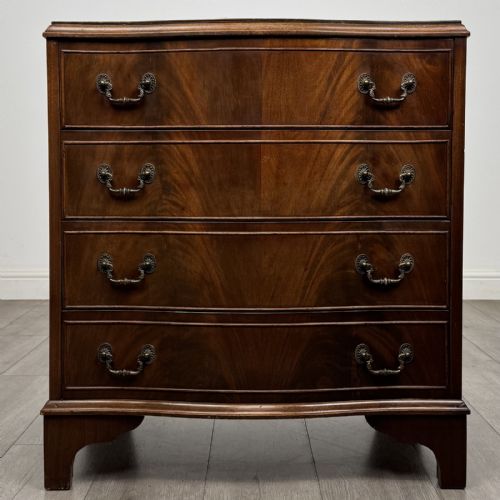
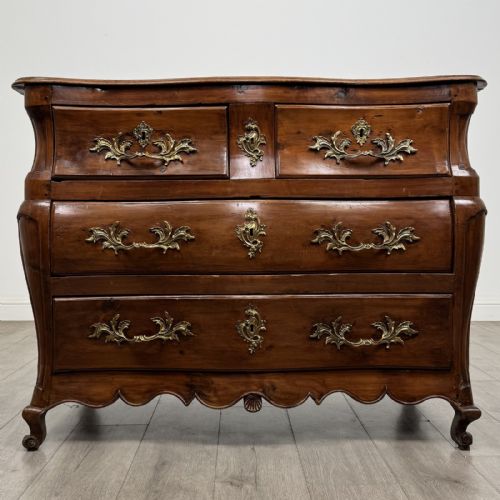
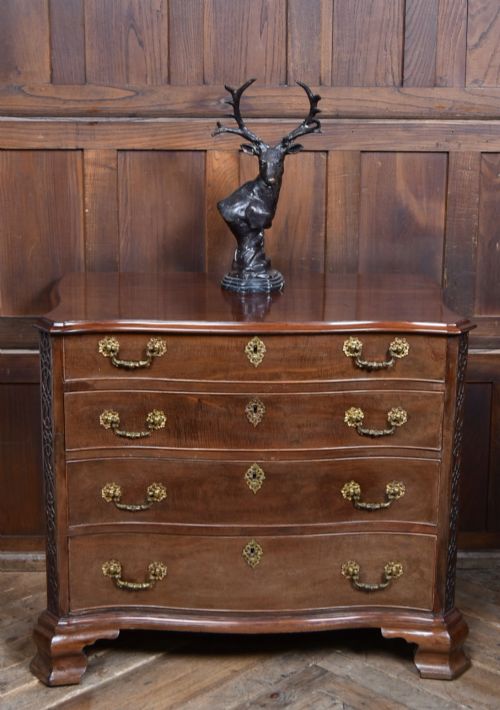
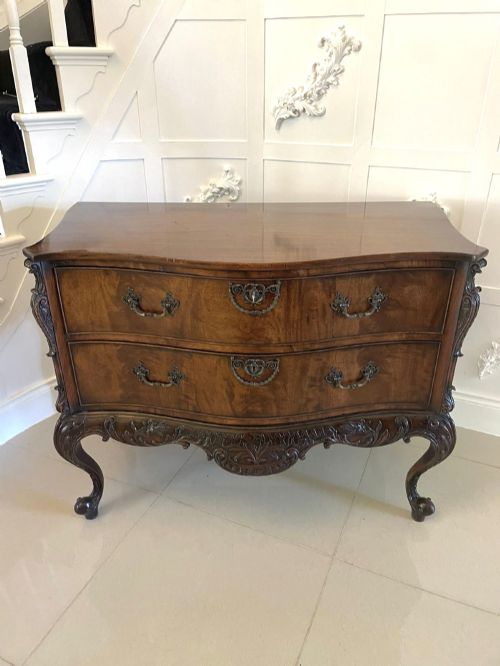
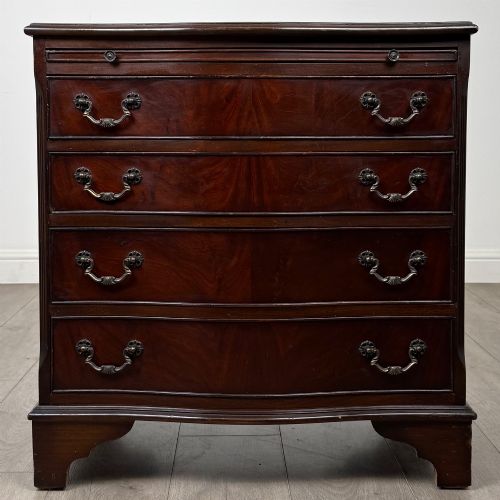
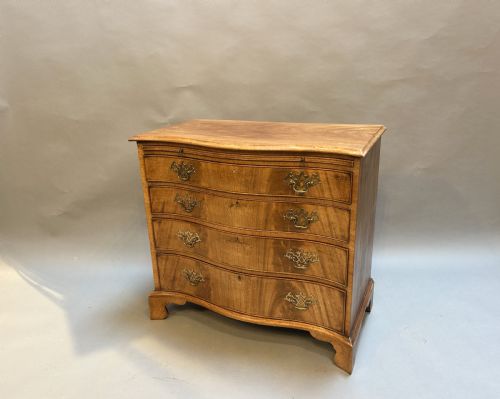
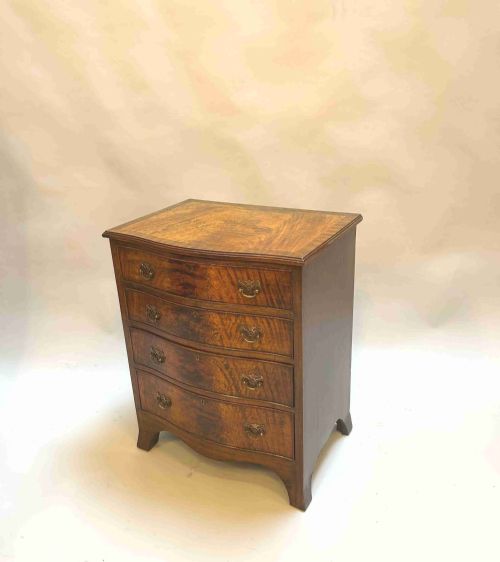
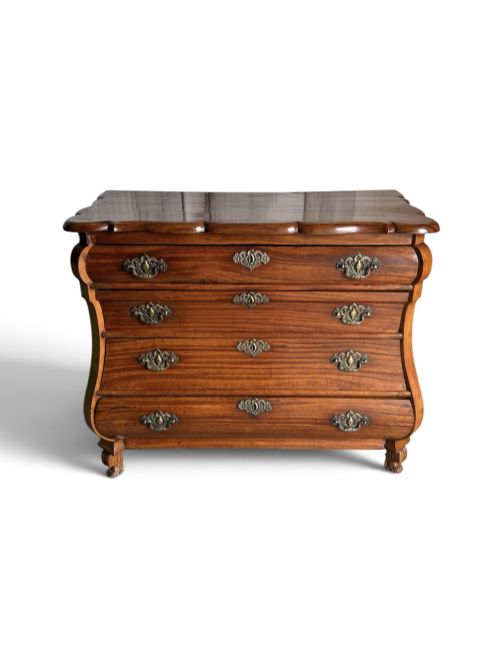
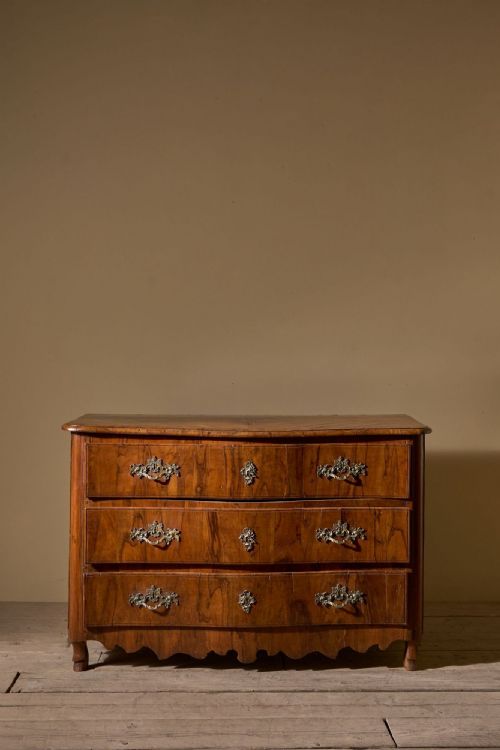
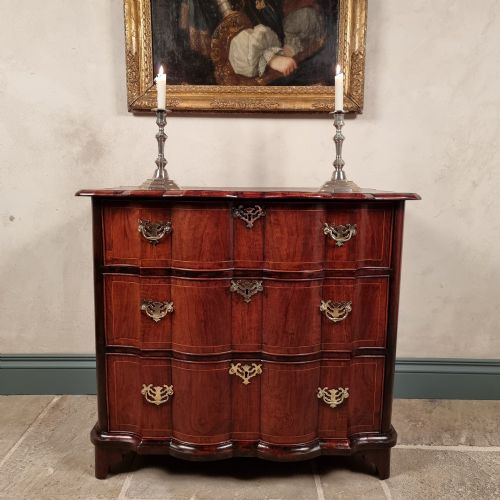
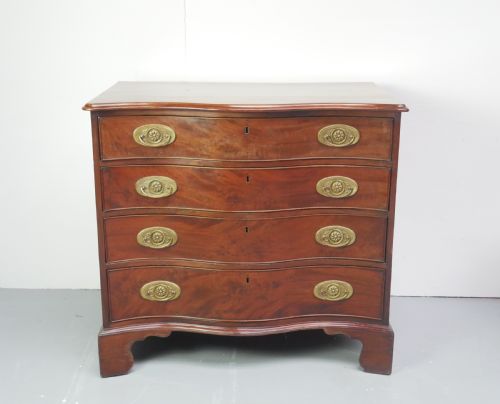

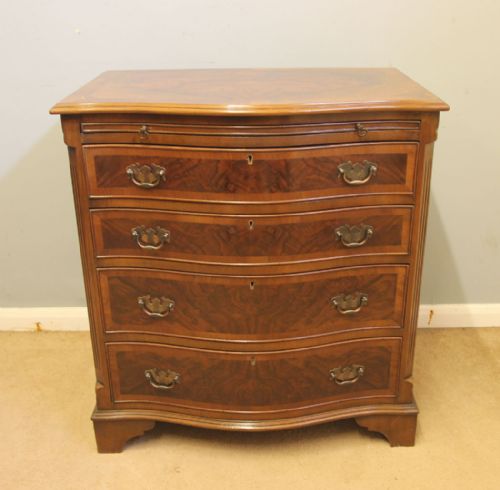


Brown Wood Serpentine Commode
A brown wood serpentine commode offers a sweeping, undulating drawer front that brings sculptural elegance and generous storage to a traditional interior.

Materials and construction methods
Cabinet-makers relied upon solid and veneered timbers such as mahogany, walnut, and kingwood applied over secondary woods like oak. Complex serpentine fronts required thick timber blanks shaped carefully by hand or delicate veneer work laid onto shaped carcases.
Decoration often involved boxwood inlay, marquetry patterns, and contrasting crossbanding to accentuate the curves. Mounts in brass, ormolu, and marble tops appear on continental examples, particularly those influenced by French Louis styles.
Drawers were constructed with hand-cut dovetails and fitted with brass handles or pulls designed to complement the undulating drawer profiles.
Evaluating quality and craftsmanship
Quality rests in the precision of the serpentine curve across the front and sides, where superior pieces maintain a crisp, harmonious contour without distortion. The selection of timber grain, such as highly figured mahogany or matched burr walnut, dictates the visual depth of the surface.
Internal construction reveals the maker's hand through the tidiness of drawer linings, the retention of original brass hardware, and the integration of decorative details like boxwood stringing or marquetry. Pieces retaining their original marble tops or fitted interiors command particular respect for their intact state.
Brown Wood Serpentine Commode Retail Price Guide 2026
Typical asking prices for brown wood serpentine commode among the pieces listed under this phrase on Sellingantiques today, from the lower quarter to the upper quarter. They describe what is for sale here now, not the wider market.
Listings feature pieces spanning the 18th century to the 1920s, constructed in mahogany, walnut, kingwood, and oak with brass, marble, and boxwood inlay.
Waring and Gillow
The Brown Wood Serpentine Commode Glossary
- Serpentine
- A furniture front shaped with a convex centre flanked by concave curves, creating an undulating wave effect. This contour demands exceptional skill from the cabinet-maker to execute successfully.
- Commode
- A low chest of drawers or cabinet, often originating from French furniture traditions. The term covers various elegant storage forms with doors or multiple drawers.
- Marquetry
- Decorative veneer work arranged in pictorial or geometric patterns using various coloured woods. Craftsmen assemble these thin wood sections to create elaborate surface designs.
- Ormolu
- Gilded bronze used for decorative mounts and furniture hardware. It adds a metallic lustre to continental and revival commodes.
- Bombe
- A swollen or bulging outward profile found on continental case furniture. This curvaceous form swells on the sides as well as the front.
Brown Wood Serpentine Commode: Frequently Asked Questions
What is a brown wood serpentine commode?
It is a practical storage chest featuring a distinct undulating front where the wood curves inward and outward. These pieces combine sculptural drawer profiles with traditional timber construction.
They serve as focal storage items in bedrooms, hallways, and living spaces, offering surface display area alongside deep drawer capacity.
How do I date a serpentine chest?
Dating relies on examining the timber species, construction methods inside the drawers, and stylistic details like hardware or inlay. 18th-century originals display hand-cut joinery and period-specific veneers.
Later Georgian Revival pieces from the early 20th century emulate these earlier aesthetics while utilising machinery-assisted construction and distinct secondary woods.
Where were these commodes made?
The evidence shows production across English provincial and metropolitan workshops, alongside continental centres including France, Italy, Austria, and the Netherlands. Each region brought distinct timber preferences.
English makers favoured mahogany and walnut, whereas continental workshops frequently utilised kingwood, satinwood, and burr elm alongside marble tops.
How should I care for timber surfaces?
Maintain the wood by keeping pieces away from direct heat sources and strong sunlight, which can dry out older timber and veneers. Regular dusting with a soft, dry cloth preserves the finish.
Occasional application of appropriate wax polish helps nourish the grain without building up heavy residues on the antique surface.