



Brown Wood Semainier
A brown wood semainier is a tall, slender seven-drawer chest designed for the bedroom, offering generous storage with a minimal footprint.
Brown Wood Semainier
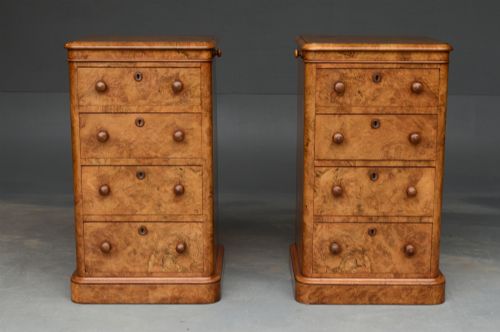
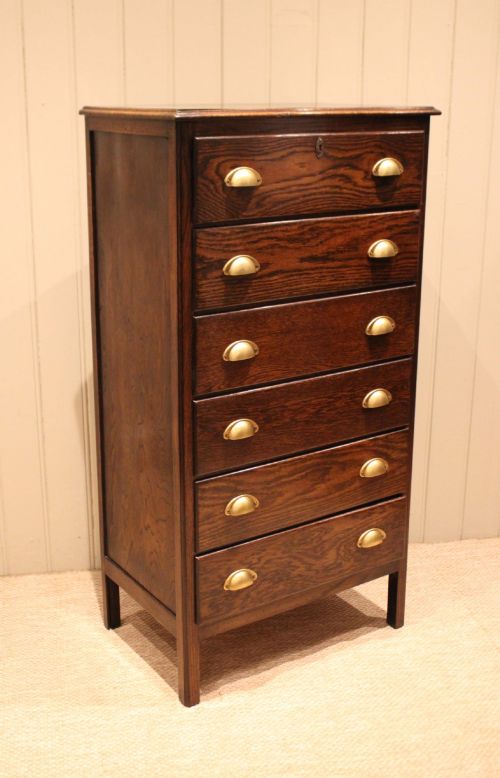
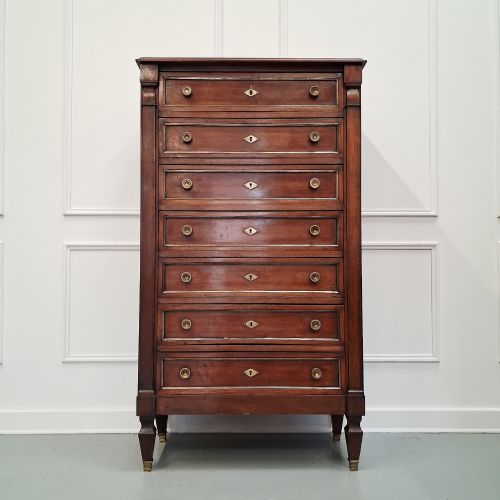
A brown wood semainier stands as a tall, narrow chest of drawers typically holding seven tiers, traditionally intended for each day of the week. This selection brings together nineteenth-century Continental, Victorian, and Edwardian pieces designed to maximise storage in compact floor spaces.
Most examples found here emerge from French and British workshops, spanning periods from the mid-Victorian era through to nineteen-hundred. Cabinet makers built these tall chests using timbers such as mahogany, walnut, and cherry, frequently pairing them with marble tops or intricate marquetry.
How they were made
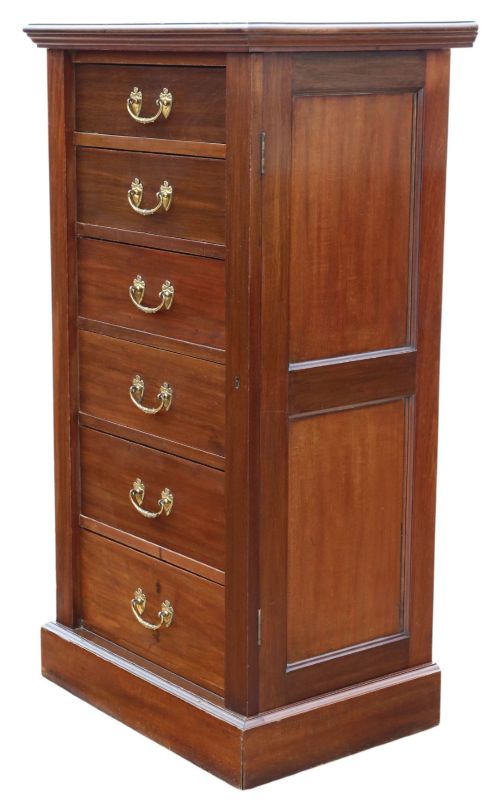
Cabinet makers constructed these tall chests using solid timbers and applied veneers, selecting figured woods like flame mahogany and burr walnut for the primary visual surfaces. Structural elements often incorporate brass for drawer pulls, escutcheons, and the distinctive locking mechanisms found on Wellington styles.
French workshops frequently topped their cherry and mahogany semainiers with fitted slabs of heavy marble, while British makers favoured timber tops framed by finely moulded edges. Drawers were built with traditional joinery, ensuring smooth movement within the tall vertical carcase.
Brown Wood Semainier Retail Price Guide 2026
Typical asking prices for brown wood semainier among the pieces listed under this phrase on Sellingantiques today, from the lower quarter to the upper quarter. They describe what is for sale here now, not the wider market.
Some tall chests conceal locking bars behind hinged pilasters, offering a discreet place to hide daily secrets.
What varies in quality
The refinement of the timber selection dictates much of the distinction between pieces, with continuous grain matching across the seven drawers marking superior cabinet work. Rich figure in flame mahogany and burr walnut elevates the visual impact of the tall facade.
Hardware integration and mechanical precision also divide the range, particularly in the fit of locking pilasters and secret mechanisms. Original brass fittings and intact marble slabs contribute substantially to the integrity of an antique example.
The Brown Wood Semainier Glossary
- Semainier
- A tall chest of seven drawers, traditionally one for each day of the week. This form originated in France during the eighteenth century.
- Wellington chest
- A tall British chest of drawers featuring a hinged locking pilaster on one side that secures all drawers simultaneously. The design is traditionally associated with the Duke of Wellington.
- Flame mahogany
- A veneer cut from the fork of the mahogany tree where the branch joins the trunk. It creates a distinctive, swirling flame-like pattern across the drawer fronts.
- Burr walnut
- Timber taken from a tree growth or wart, yielding highly figured wood with dense, swirling patterns. Cabinet makers prized this material for high-status drawer fronts and tabletops.
- Ebonised wood
- Timber treated with a chemical stain or finish to imitate ebony. This dark finish was popular during the nineteenth century for accentuating mouldings and architectural details.
Brown Wood Semainier: Frequently Asked Questions
What is a semainier used for?
A semainier provides tall, vertical storage designed originally to hold a week's worth of undergarments or daily attire. Its narrow footprint makes it suitable for tight bedroom spaces.
Today, these chests function effectively for storing linens, accessories, or paperwork while adding architectural height to a room.
How many drawers does a semainier have?
A traditional semainier contains seven drawers, one for each day of the week. Cabinet makers maintained this vertical layout across French and British interpretations.
Some variations in these listings feature six or seven tiers depending on the specific maker and regional tradition.
What is a Wellington chest?
A Wellington chest is a specific British variant of the tall chest featuring a locking side bar. This hinged pilaster fastens over the drawer edges and locks with a key.
This mechanism secured the contents safely in nineteenth-century townhouses and gentlemen's chambers.
Where did semainiers originate?
Semainiers originated in France during the eighteenth century as refined bedroom furniture for storing personal items. French cabinet makers favoured tall, elegant proportions.
By the nineteenth century, the form influenced British makers who developed related locking chest designs.