
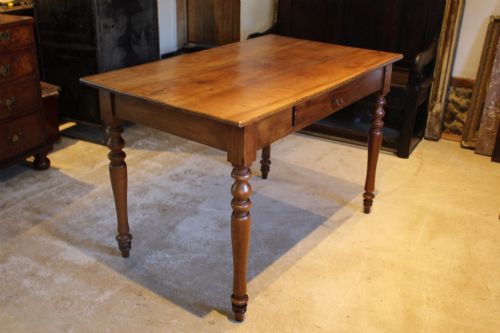
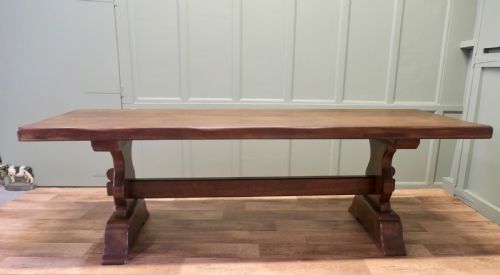
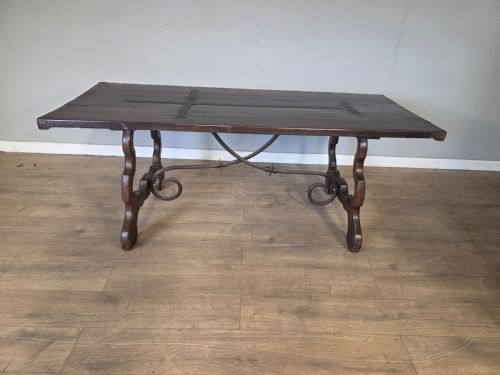
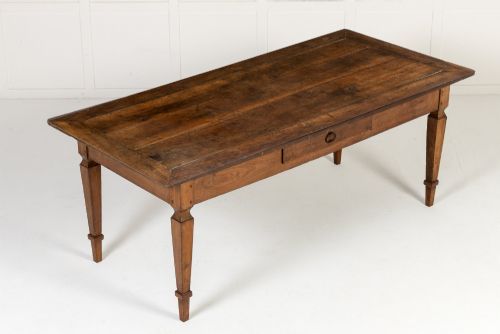
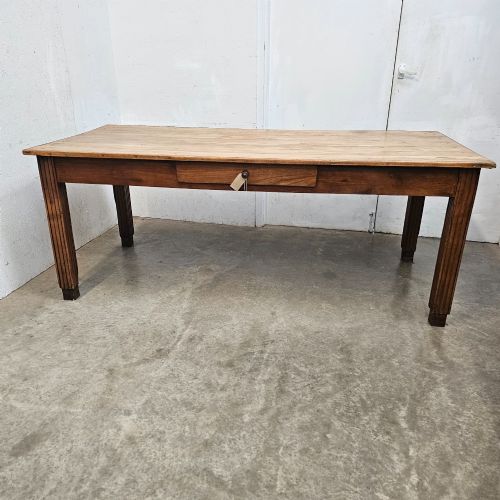
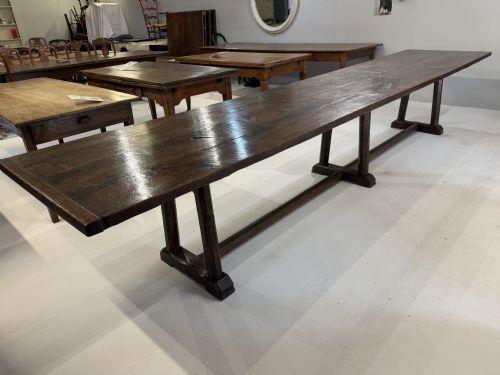
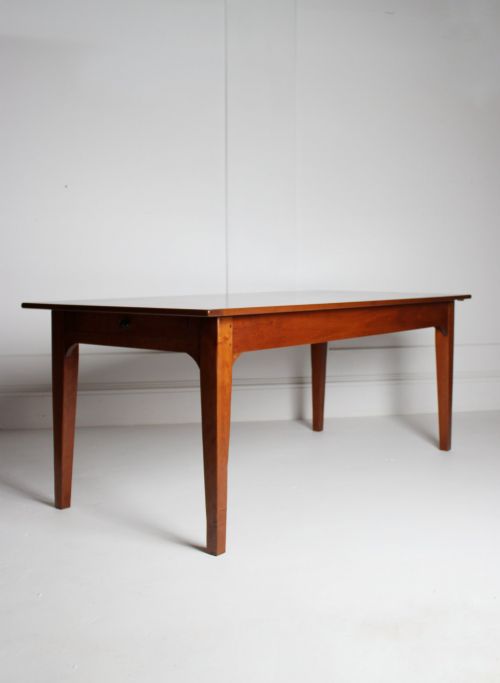
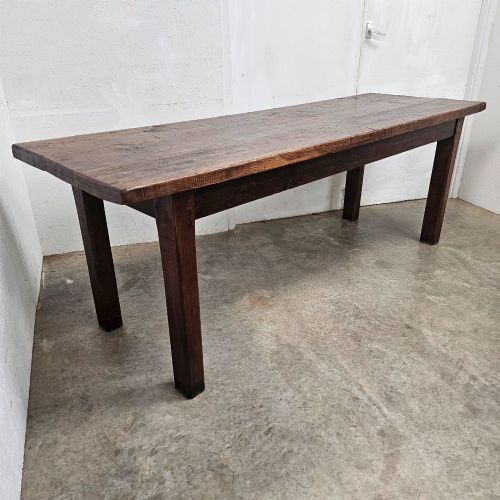
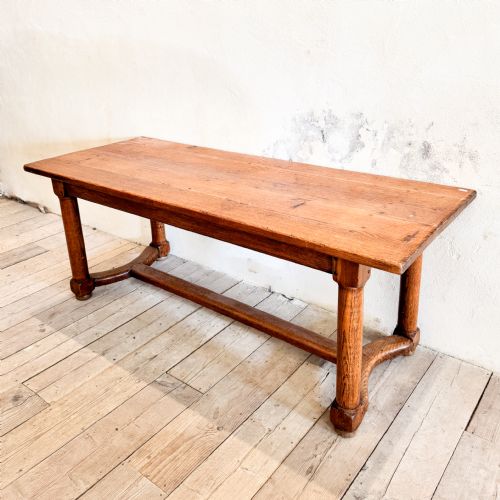


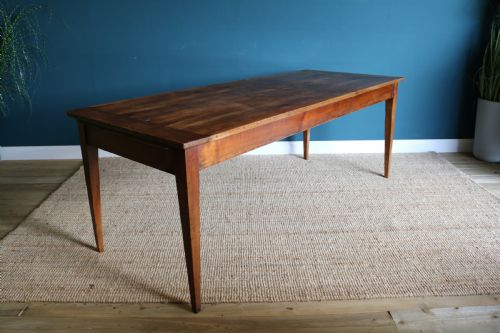
Brown Wood Refectory Table
A brown wood refectory table brings historic communal dining into a modern interior through honest timber construction and generous proportions.
Brown Wood Refectory Table
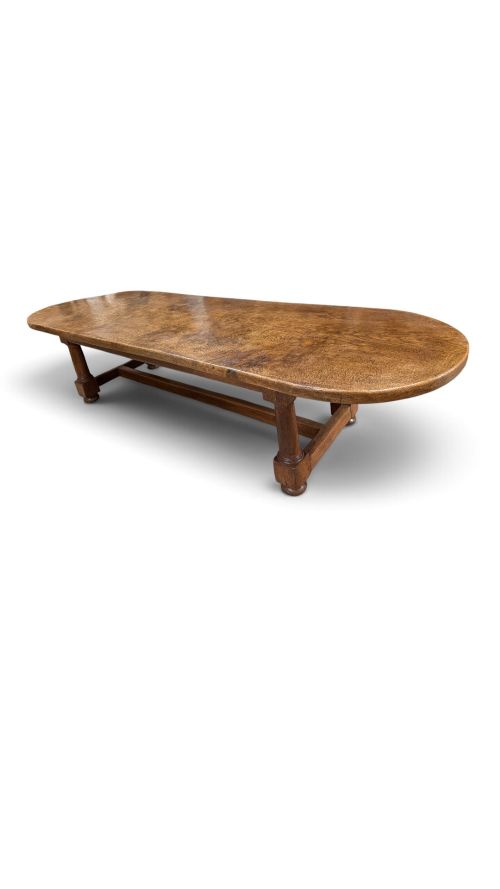
A brown wood refectory table serves as a long, heavy surface historically designed for shared meals in large halls, monasteries and country houses. When searching this phrase, a buyer encounters substantial dining and serving tables originating primarily from the eighteenth and nineteenth centuries.
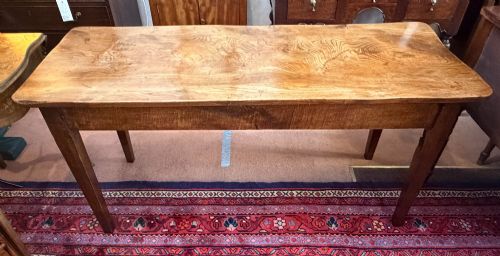
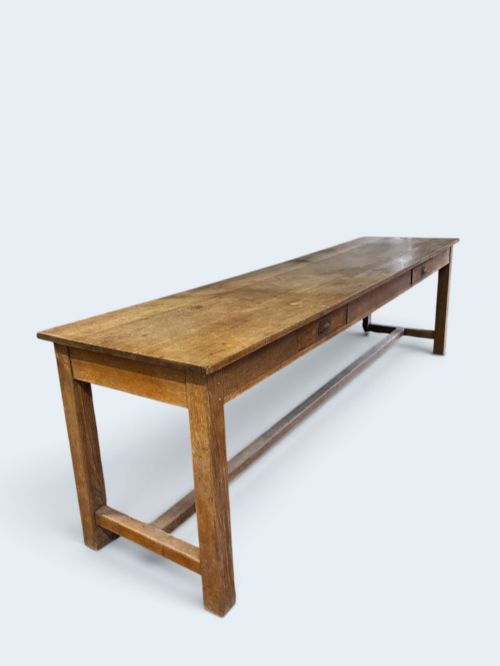
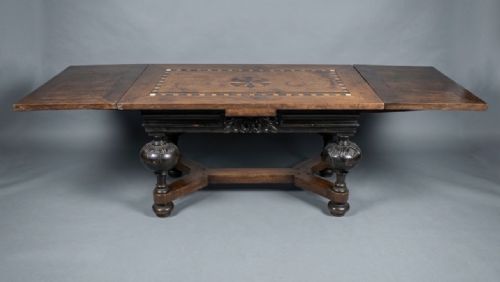
The examples most commonly met on this page span French, English and Spanish origins, taking the form of rustic farmhouse boards and formal oak dining pieces. These surfaces range from simple single plank tops to complex extending designs.
Makers shaped these utilitarian boards to seat many guests, resulting in long rectangular proportions supported by trestles, robust legs or draw leaf mechanisms. The category unites diverse regional traditions under the shared banner of heavy timber dining furniture.
Assessing quality in antique tables
Quality rests in the selection of the timber and the integrity of the original construction, particularly the thickness of the top boards and the tightness of the joinery. Superior pieces display harmonious grain patterns across wide planks that have seasoned naturally over centuries.
The balance between the base structure and the top dictates the visual success of the piece, with finer proportions and restrained regional detailing elevating certain tables above standard utility furniture. Original surface patination acquired through decades of daily use further separates notable examples from later or heavily restored alternatives.
Listings feature oak, walnut, cherry wood, fruitwood, beech and brass across periods spanning the eighteenth, nineteenth and early twentieth centuries.
The Brown Wood Refectory Table Glossary
- Refectory table
- A long, narrow dining table traditionally used for communal meals in monastic refectories and large domestic halls. These pieces are characterised by their substantial length and sturdy underframes.
- Draw leaf table
- A dining table equipped with two sliding leaves tucked beneath the main top that pull out to extend the surface length. This clever mechanism allows the table to accommodate extra diners without requiring separate storage leaves.
- Parquetry
- Geometric wood inlay work forming patterned surfaces on tabletops or furniture panels. Craftsmen arrange contrasting timber veneers to create decorative motifs.
- Trestle table
- A table supported by two or more vertical frames connected by a horizontal stretcher beam. This design provides robust structural support while maximising legroom along the length of the table.
Brown Wood Refectory Table: Frequently Asked Questions
How many people does a refectory table seat?
These long boards typically accommodate six to twelve diners depending on the overall length and the presence of extension mechanisms such as draw leaves.
The generous rectangular proportions were specifically engineered to seat large households or gatherings along both flanks.
Can I use an antique refectory table every day?
These robust hardwood surfaces were built for daily communal dining and handle regular family use with ease.
Applying sensible protection against excessive moisture and heat preserves the historic timber surface for future generations.
What is the difference between an oak and a cherry table?
Oak tables generally offer a heavier, more open-grained texture associated with English and Northern European vernacular traditions.
Cherry wood examples often display a warmer reddish-brown tone and a smoother grain commonly found in French provincial workshops.
How do I identify an 18th-century table?
Eighteenth-century examples reveal their age through hand-sawn timber marks, pegged joinery and deep surface patination accumulated over generations.
The construction methods display the individual hand of a traditional carpenter rather than mass-produced uniformity.