
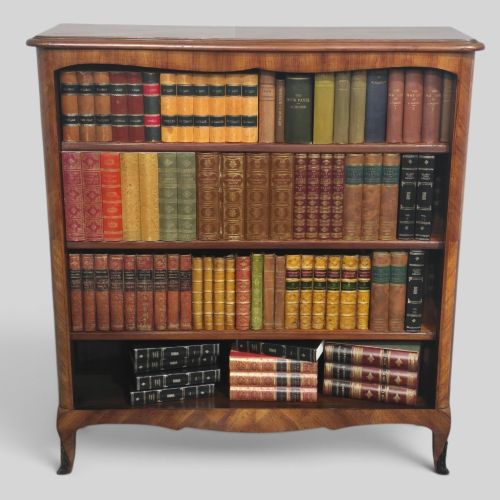
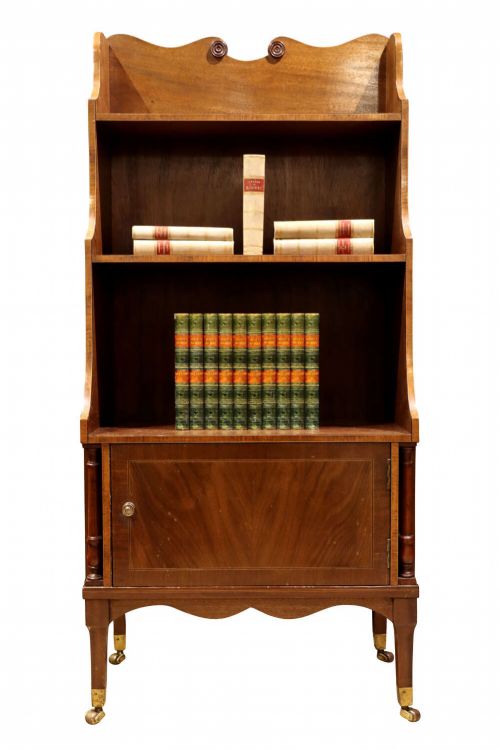


Brown Wood Library Stand
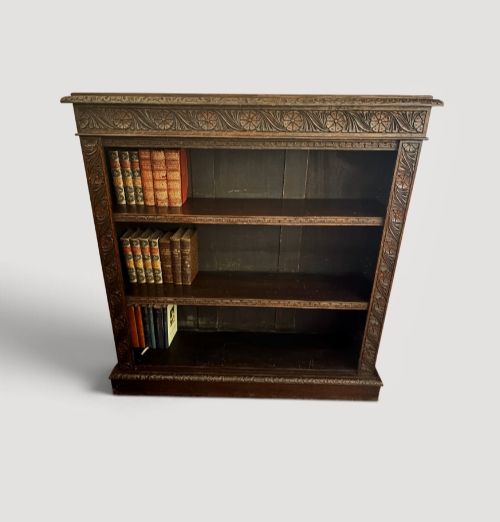
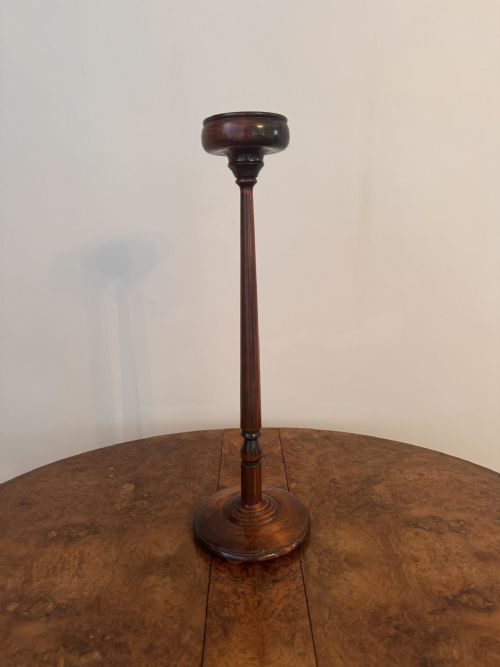
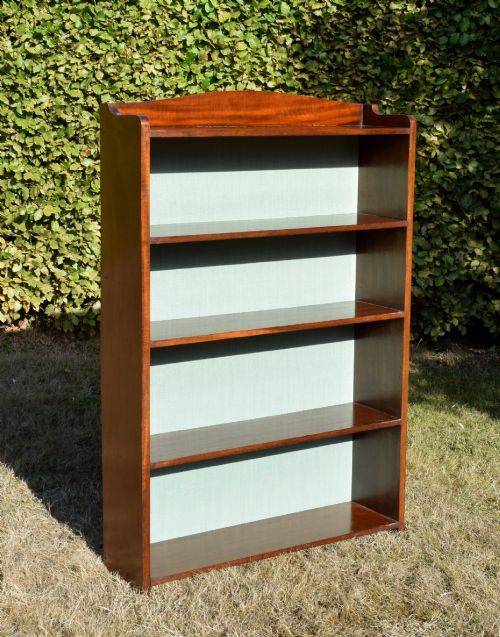
A brown wood library stand organises texts and journals close to hand, bringing period craft and timber grain directly into a study.
Brown Wood Library Stand
The most common formats met here are rotating bookstands in mahogany and upright open bookcases constructed from oak or walnut. Pieces range from grand scale Regency designs to petite Edwardian models suited for smaller domestic spaces.
How they were made
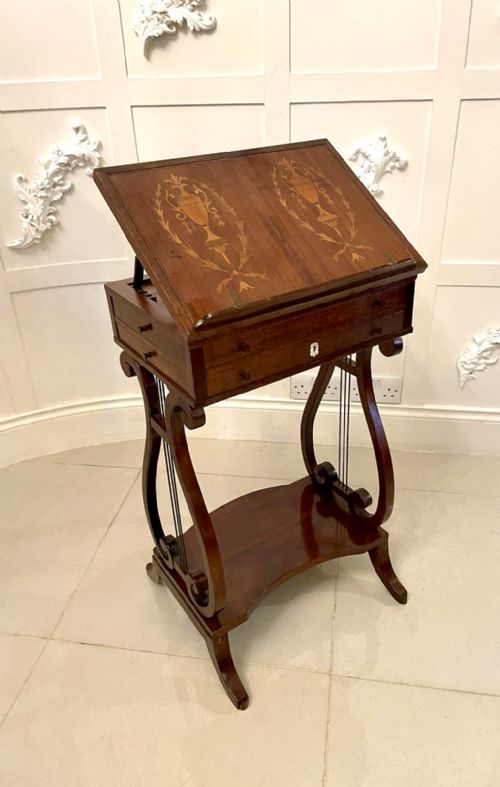
Makers utilised solid timbers and veneers, predominantly mahogany, oak, and walnut, often accenting surfaces with satinwood inlay or brass hardware such as castors. Construction relied on traditional joinery methods that allowed functional elements like revolving platforms and adjustable shelves to operate smoothly.
Finishes were applied to highlight the natural grain of the wood, while specialised items incorporated glass panels, paper globes, and plaster details. The integration of structural brass components ensured durability in pieces subjected to frequent handling.
Some revolving bookcases quietly spin through history, holding everything from weighty ledgers to quiet evening novels.
What varies in quality
Quality rests in the selection of timber figures, the crispness of inlaid details like satinwood banding, and the mechanical precision of revolving mechanisms or adjustable shelves. Superior examples display thoughtful proportions and harmonious wood selection across every visible surface.
The refinement of carved ornament and the integrity of original brass castors separate standard utility pieces from exceptional workshop productions. Construction depth, such as secondary woods used in carcases, marks the distinction between ordinary and distinguished specimens.
Gillow·Waring and Gillows·Carey·Malby
The Brown Wood Library Stand Glossary
- Revolving bookcase
- A freestanding tiered stand fitted with a central pivot that allows books to turn smoothly for easy selection. These were popular in Edwardian and late Victorian studies.
- Reading table
- A specialised piece featuring an adjustable or tilting top designed to support folios, books, or writing materials at a comfortable angle. Examples span the Regency and Georgian periods.
- Waterfall bookcase
- A standing set of open shelves where each tier steps back progressively from the one below, creating a silhouette resembling cascading water. This form appears frequently in mahogany and yew.
- Etagere
- A set of open tiered shelves used for displaying small objects, books, or papers. These portable stands often feature multiple tiers supported by slender uprights.
- Folio stand
- A substantial piece intended for holding large-format books, maps, and prints flat or upright. Grand scale examples date from the Regency era.
Brown Wood Library Stand: Frequently Asked Questions
How do I use a revolving bookstand?
Place the stand beside a desk or armchair to keep reference volumes and current reading within arm's reach.
The central pivot allows you to spin the tiers gently to access different titles without standing up.
Where should I place a reading table?
Position the table near a natural light source in a study or library where the adjustable top can be utilised for holding open volumes.
Free-standing versions work effectively away from walls where the timber grain on all sides remains visible.
How do I tell Victorian from Edwardian stands?
Victorian pieces tend to use heavier solid timbers, deeper finishes, and more robust carving. They often feature darker mahogany or oak.
Edwardian stands frequently incorporate lighter satinwood inlay, Sheraton styling, and slightly more delicate proportions.
Are these stands suitable for modern books?
Standard shelf heights and revolving tiers accommodate most modern hardbacks and paperbacks comfortably.
Adjustable shelf versions offer flexibility for taller volumes and modern art folios.