




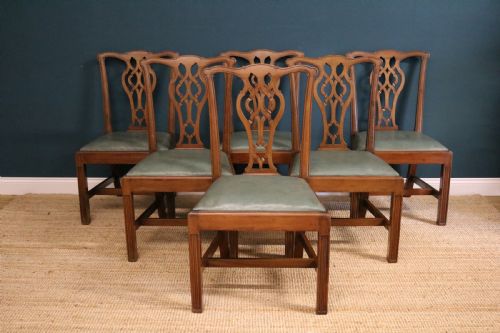


Brown Wood Leather Chair
A brown wood leather chair combines sturdy timber frames with supple hide, offering dependable seating for studies, libraries and dining rooms.
Brown Wood Leather Chair
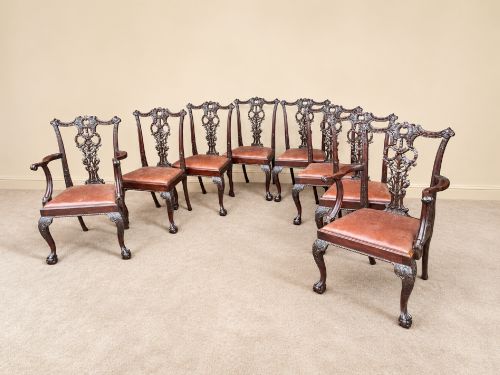
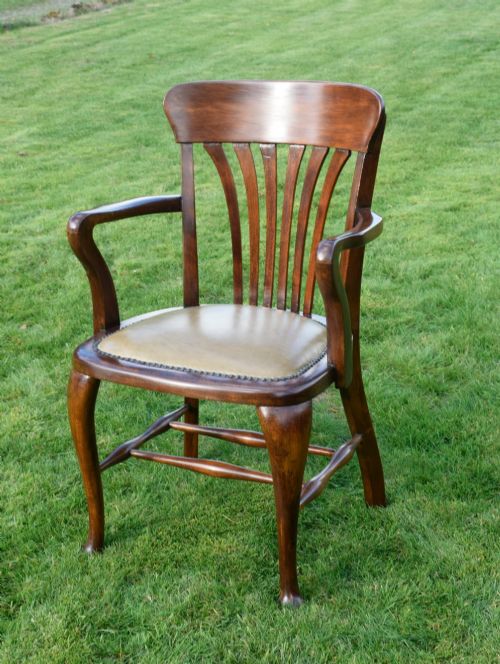
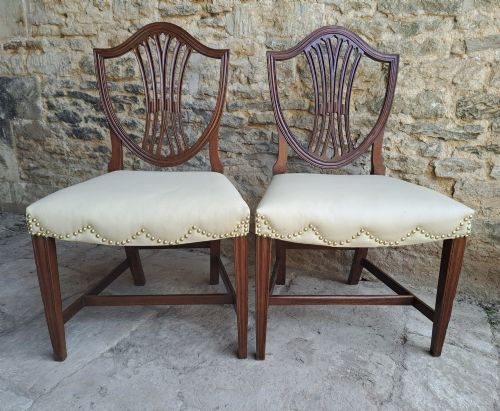
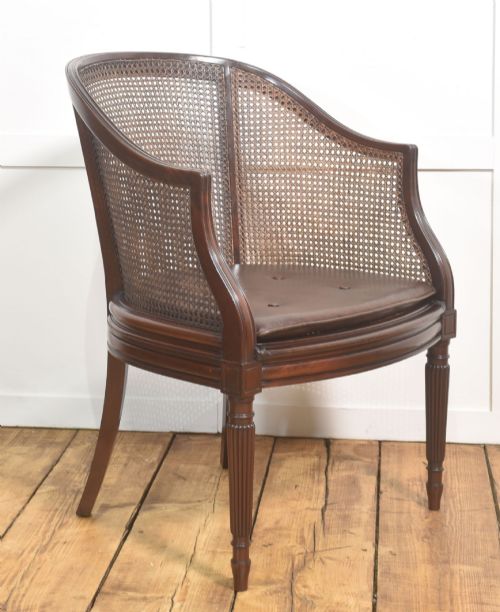
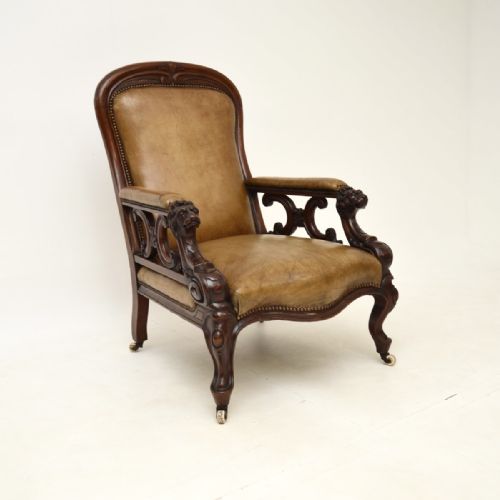
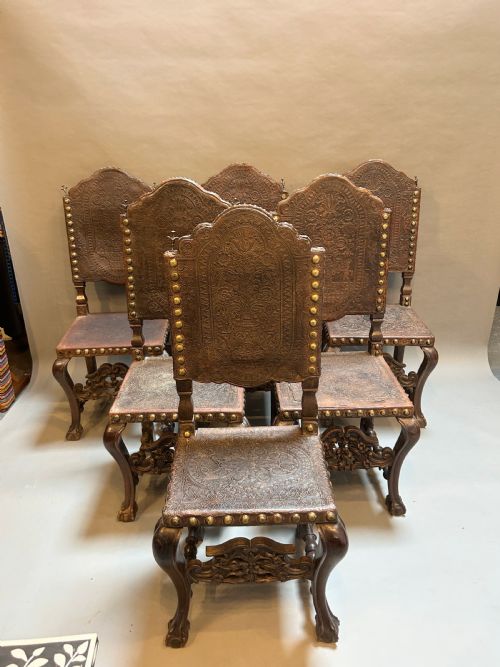
A brown wood leather chair encompasses seating forms ranging from swivel desk chairs and revolving piano stools to dining sets and library armchairs. Buyers searching for a brown wood leather chair typically encounter sturdy frames shaped from mahogany, oak and walnut.
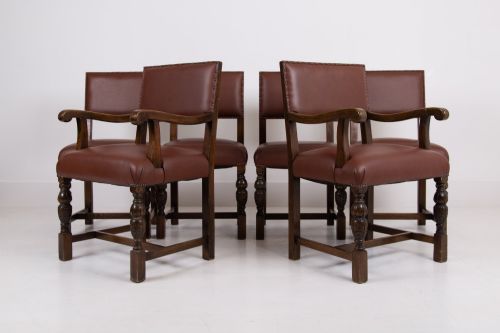
The selection on this page draws heavily from nineteenth-century pieces alongside Edwardian and early twentieth-century examples. Dining chairs appear frequently in sets, whilst swivel desk chairs and library armchairs survive as individual statement seating.
Revival styles heavily influence the selection, with Chippendale, Jacobean and Georgian designs appearing alongside Arts and Crafts and Spanish interpretations. This variety ensures that buyers find both formal dining arrangements and utilitarian office seating.
Materials and construction methods
Makers utilised dense hardwoods such as mahogany, oak, walnut, beech and fruitwood to construct enduring chair frames. These timbers were selected for their structural stability, often finished with hand-carving or turned details.
Hides and leathers were fastened to wooden frames using brass tacks or studs, frequently complemented by cane work or deep buttoning. Swivel models incorporate mechanical iron and brass adjustments to allow height rotation.
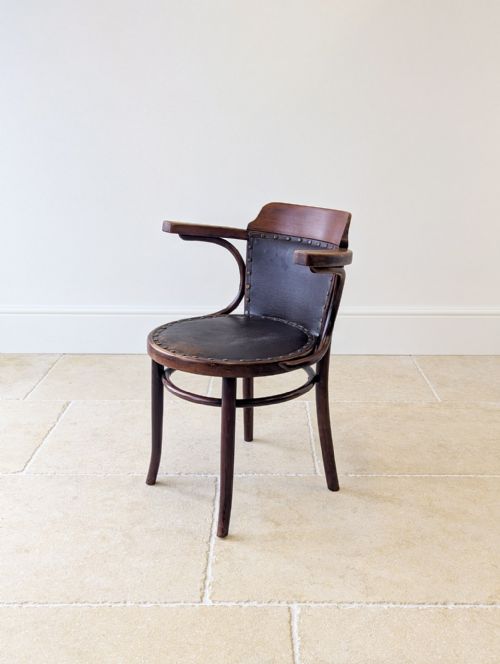
Joinery methods relied on mortise and tenon joints for dining and armchair frames, whilst bentwood techniques shaped curved frames for specific seating types.
Brown Wood Leather Chair Retail Price Guide 2026
Typical asking prices for brown wood leather chair among the pieces listed under this phrase on Sellingantiques today, from the lower quarter to the upper quarter. They describe what is for sale here now, not the wider market.
Listings feature oak, mahogany, walnut, beech and fruitwood frames paired with leather and brass.
Distinguishing quality in timber and leather
Quality rests on the depth of the timber grain and the integrity of the original construction, where tightly fitted joinery distinguishes superior workshop output from simpler production. Carved details show crisp definition rather than soft, worn edges, reflecting the skill of the original cabinet maker.
The condition and tanning of the leather dictate tactile appeal, with naturally aged hides displaying character while maintaining structural cohesion. Original brass hardware, castors and swivel mechanisms elevate the standing of a piece compared to later replacements.
Thonet
The Brown Wood Leather Chair Glossary
- Bentwood
- Wood softened by steam and bent into curved structural forms. This technique created lightweight, durable frames for nineteenth-century seating.
- Library armchair
- A large, upholstered seat designed for prolonged reading in private studies. These chairs often feature padded armrests and deep buttoned leather.
- Swivel desk chair
- A revolving seat fitted with an adjustable central spindle. These chairs allowed clerks and scholars to move freely between desk surfaces.
- X-framed stool
- A cross-legged seating form derived from ancient curule chairs. This architectural frame provides stable support beneath upholstered leather tops.
Brown Wood Leather Chair: Frequently Asked Questions
How do I care for antique leather?
Apply conservation-grade leather balms periodically to nourish the hide and prevent cracking along stress points. Avoid placing leather furniture near direct heat sources or in prolonged direct sunlight.
Dust surfaces regularly with a soft, dry cloth to prevent particulate accumulation within the grain and crevices of buttoned upholstery.
Were swivel desk chairs common in the Victorian era?
Office seating evolved rapidly during the nineteenth century to accommodate expanding commercial administration. Workshops developed mechanical desk chairs with revolving seats and adjustable heights.
These pieces utilised sturdy oak or mahogany frames paired with durable leather upholstery to withstand daily workplace use.
How can I identify Edwardian seating?
Edwardian furniture often reinterprets earlier eighteenth-century aesthetics with lighter proportions and refined inlay work. Mahogany and satinwood frequently appear alongside subtle stringing and simpler carved motifs.
These chairs balance decorative elegance with functional comfort, reflecting changing domestic tastes in the early twentieth century.
Can I use antique dining chairs daily?
Solid hardwood dining chairs from the Victorian and Edwardian periods were built for rigorous domestic use. Their mortise and tenon joinery provides lasting structural stability for everyday seating.
Routine inspection of leg joints ensures these chairs remain dependable for modern dining environments.